



British Marine Artist
These pieces by any British marine artist capture maritime life, coastal harbours and open waters across the nineteenth and twentieth centuries.
British Marine Artist
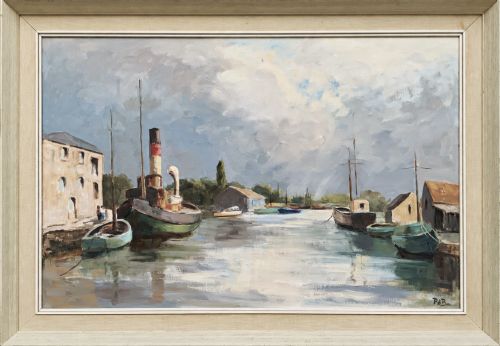
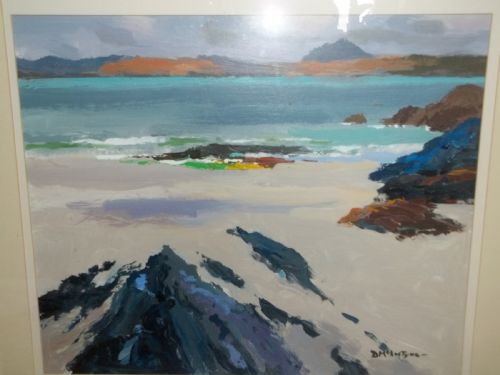
A British marine artist creates paintings and watercolours focused on coastal scenes, harbours and shipping lanes. When you search for a British marine artist, you encounter works ranging from Victorian watercolours to early twentieth century British pieces. Most of the watercolours and paintings on this page depict specific locations such as Cornwall, Venice and Whitby.
The selections span periods including the Victorian era, the nineteenth century, and the early decades of the twentieth century. Forms are dominated by watercolour on paper, alongside oil paintings on panel or canvas. Regional hubs like Newlyn and St Ives appear frequently in the subject matter.
How they were made
The works rely primarily on watercolour applied to paper, capturing transparent washes of sea and sky. Artists utilised fluid brushwork to render coastal light, atmospheric haze and movement on the water.
Where oils are present, pigments are laid upon canvas or wood panels to build heavier textures of ships and coastal architecture. Framing often involves gold mounts and gilt surrounds that complement the palette of the period.
British Marine Artist Retail Price Guide 2026
Typical asking prices for british marine artist among the pieces listed under this phrase on Sellingantiques today, from the lower quarter to the upper quarter. They describe what is for sale here now, not the wider market.
The listings span the nineteenth and twentieth centuries, featuring watercolours and oils from movements like British Impressionism and the Newlyn School.
What varies in quality
Quality rests in the precision of the draughtsmanship and the artist's handling of light and atmosphere. Stronger examples demonstrate confident brushwork that defines rigging, hull forms and coastal topography without stiffness.
The depth of provenance and the reputation of the individual painter within movements such as British Impressionism or regional schools also shape the standing of a piece. Condition of the paper and the integrity of the original gilt mount influence desirability.
Frank Kelsey·F J Aldridge·John Mitchell·Ernest F Hill·George Stanfield Walters·William Tatton Winter·William Lee Hankey·Rowland Henry Hill·George Stainton·John D Walker·James Aitken
The British Marine Artist Glossary
- Watercolour
- A paint consisting of a pigment suspended in a water-soluble vehicle, typically utilised on paper for transparent effects. It is the predominant medium found in these marine works.
- Gilt mount
- A decorative border finished in gold leaf or gold-coloured paint, surrounding the artwork. These frames enhance the visual weight of the paintings.
- Seascape
- A type of artwork that depicts the sea, coastal views or ships in open water. This genre forms the core of marine painting.
- Provenance
- The chronology of the ownership and history of a piece. Documented origins strengthen attribution to specific painters.
British Marine Artist: Frequently Asked Questions
What subjects do these artists paint?
The works focus heavily on coastal towns, working harbours, fishing boats and shipping vessels on open water. Many pieces record specific British ports and international destinations like Venice.
Pets, figures on piers and local fisherfolk frequently populate the foregrounds of these maritime scenes.
How do I date a watercolour?
Dating relies on signatures, artist life spans, stylistic traits of the period, and occasionally inscriptions on the reverse of the paper. Victorian and early twentieth-century works often carry distinct lettering or exhibition labels.
Paper stock and framing materials can also offer clues to the decade of production.
How should I display these watercolours?
Watercolours are sensitive to direct sunlight, which can fade pigments and discolour paper over time. Display them on interior walls away from bright windows using UV-filtering glass where possible.
Keeping them in stable humidity protects both the paper support and the gilt mount.
What is British Impressionism in marine art?
This style involves looser brushwork, a lighter palette, and an emphasis on capturing transient effects of light and weather on the sea. Painters moved outdoors to observe coastal conditions directly.
It marks a shift from rigid Victorian academic traditions towards more expressive interpretations of water and sky.