




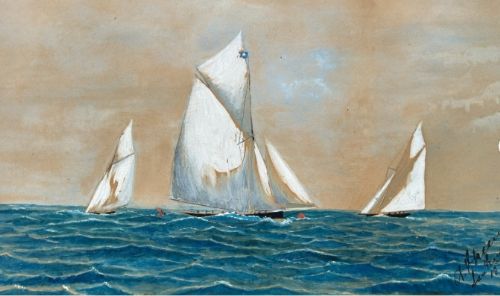


Paper Marine Watercolour Painting
A paper marine watercolour painting captures the changing light and movement of coastal life on delicate sheets.
Paper Marine Watercolour Painting
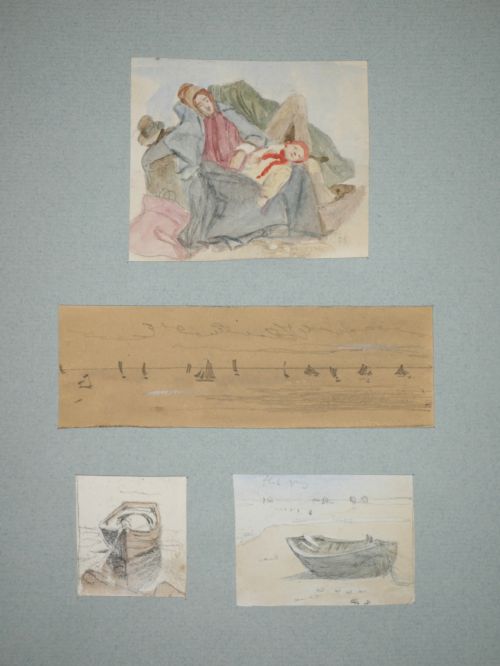
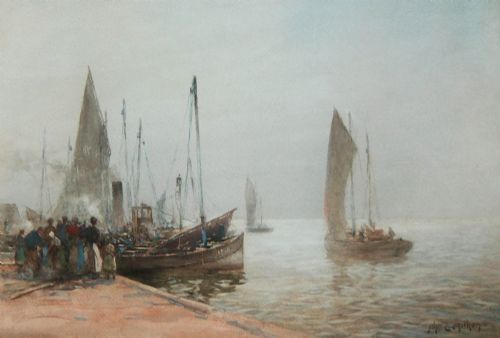
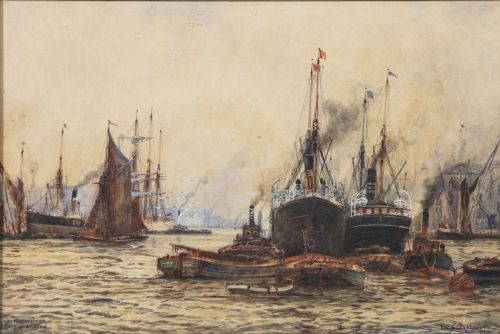
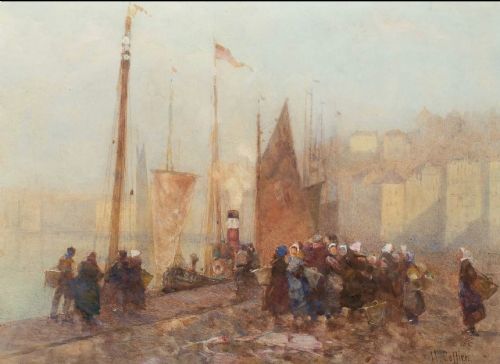
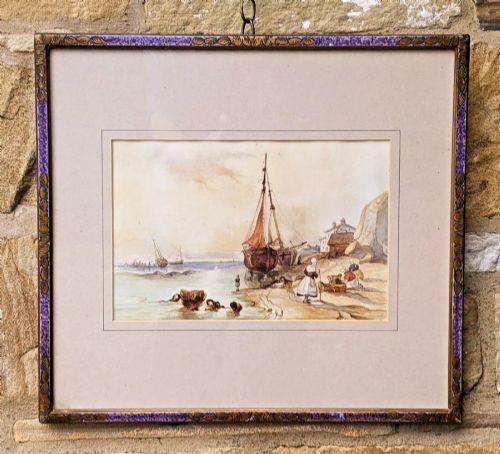
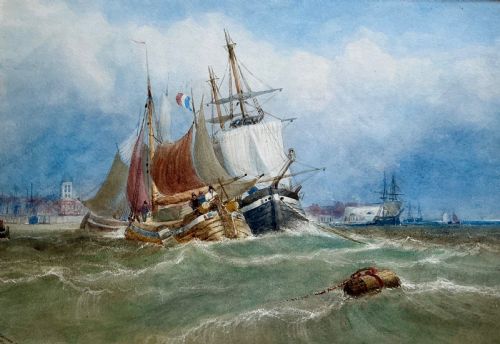
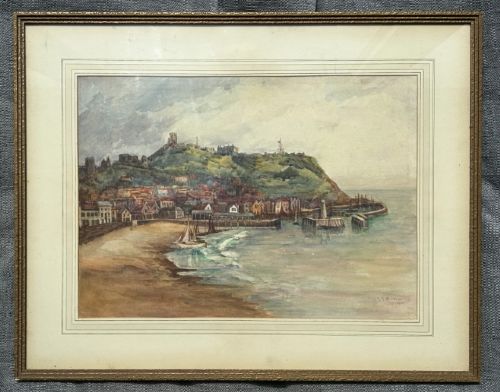
A paper marine watercolour painting focuses on coastal views, harbours, and shipping scenes rendered in aqueous pigment upon a paper support. These works range from late Victorian depictions of bustling Yorkshire fishing ports to mid-century modernist views of sailing vessels.
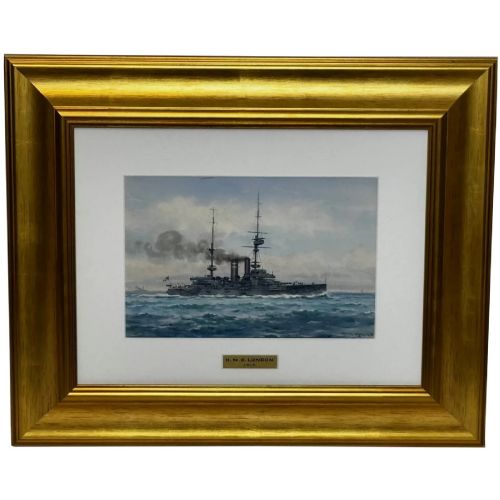
Buyers encountering this selection will find framed artworks spanning the nineteenth century through the mid-twentieth century, including Edwardian maritime sketches and British Impressionist coastal studies. Common subjects include local fishing boats, historic naval vessels, and Continental harbour scenes.
Many examples arrive protected beneath glass within traditional wooden frames, preserving the vulnerable paper surface from atmospheric moisture and handling damage.
Materials and technique
Artists applied fluid watercolour pigment and occasional ink linework directly onto absorbent paper sheets, relying on the natural white of the paper to supply highlights and luminosity.
The combination of water-soluble pigments and delicate paper supports required precise brushwork, as alterations proved difficult once the colour settled into the fibres.
Countless Victorian artists braved windswept Yorkshire piers with water pots that promptly froze solid.
Distinctions in quality
Superior works demonstrate a confident control of tone and atmospheric perspective, capturing the volatile atmosphere of the sea rather than merely recording topographical details.
The strength of a composition rests upon the artist's ability to balance rapid, expressive washes with precise linework that defines rigging, architecture, and hulls.
James Orrock·James Smetham·Frank Watson Wood·Frank William Scarbrough·Hector Caffieri·Henry Barlow Carter·William Frederick Settle·Alfred George Morgan·Thomas Bush Hardy·Tom Clough·F J Aldridge·John McDougal·Frank H Mason·George Hamilton Constantine·Frederick William Hattersley·James Thomas Watts·John Mitchell·Samuel Owen·Frederick William Booty·Charles Harmony Harrison·Kate E Booth·R P Noble·Clara Montalba·Ernest F Hill
The Paper Marine Watercolour Painting Glossary
- Watercolour
- A paint consisting of a colour pigment suspended in a water-soluble binder, traditionally applied to paper.
- Seascape
- A work of art depicting the sea, coastal views, ships, or marine scenes.
- Wash
- A thin, fluid layer of diluted watercolour pigment spread evenly across the paper to create sky or water effects.
- Support
- The physical material, in this case paper, upon which the watercolour pigments are painted.
Paper Marine Watercolour Painting: Frequently Asked Questions
How do I care for a watercolour painting?
Keep the artwork away from direct sunlight to prevent the watercolour pigments from fading over time. Ensure it remains behind glass in a dry environment to protect the paper from humidity.
Avoid hanging pieces in damp rooms such as kitchens or bathrooms where moisture can warp the paper or encourage mould growth.
Are these paintings original works?
The selection comprises original hand-painted works executed directly onto paper by individual artists rather than mechanical reproductions. Each piece bears the unique brushstrokes and tonal variations characteristic of direct watercolour application.
Signatures, monograms, and dates visible on many of the sheets further confirm their status as unique period artworks.
How do I identify the period of a marine watercolour?
Examine the style of the vessels, architectural details of the harbours, and the clothing of any figures depicted within the scene. Victorian works often feature detailed rigging and dramatic skies, while mid-century pieces tend toward looser, more modernist interpretations.
Signatures matched against historical artist records and framing materials can also provide reliable clues to the decade of creation.
Can I remove the frame?
Removing the original frame is generally discouraged, especially if the framing provides historic context or protects the vulnerable edges of the paper. Opening the frame exposes the delicate paper to dust, airborne pollutants, and physical tears.
Consult a professional conservator before attempting any reframing or conservation work on antique works on paper.