


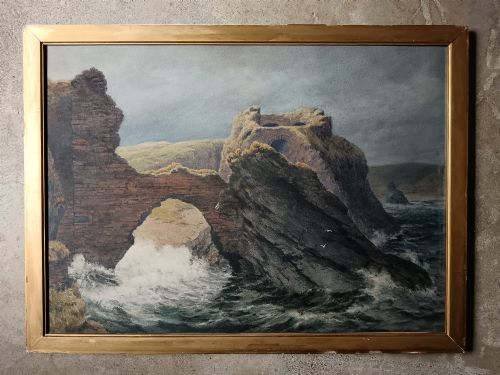


Antique Ocean Watercolour
When you search for an antique ocean watercolour, you are looking at original maritime scenes executed on paper during the nineteenth and early twentieth centuries.
Antique Ocean Watercolour
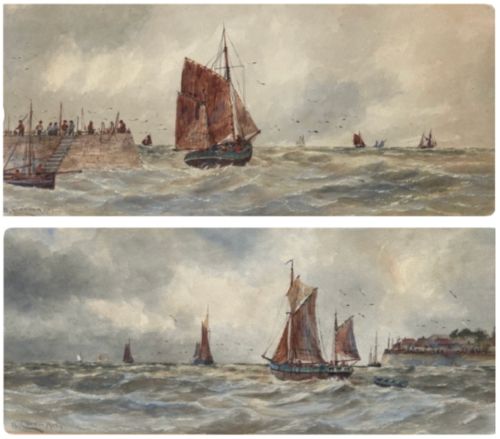
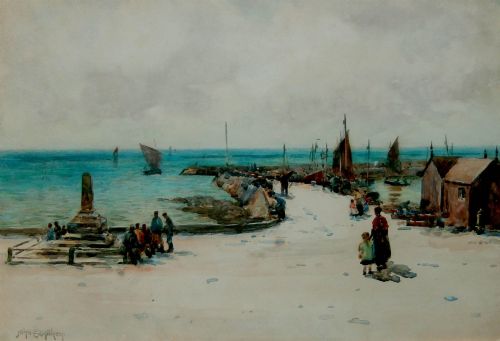
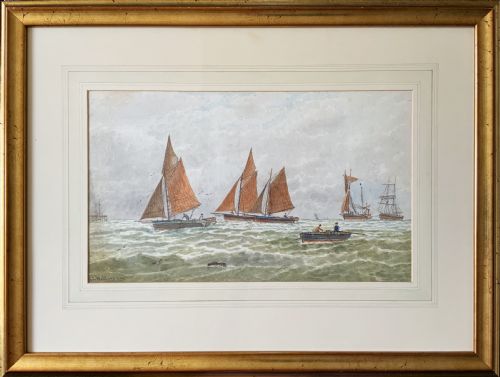
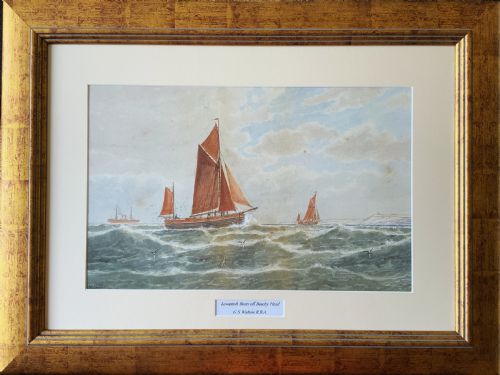
An antique ocean watercolour captures coastal views, harbours, and tall masted ships upon paper supports using water-soluble pigments. These works frequently document British and European coastal life, recording fishing fleets, lighthouses, and estuaries.
The pieces you meet most often on this page date from the Victorian and Edwardian eras, extending into the nineteen-twenties and thirties. They arrive framed in wood, often with gilt touches, preserving maritime history through the hands of named artists and regional painters.
How they were made
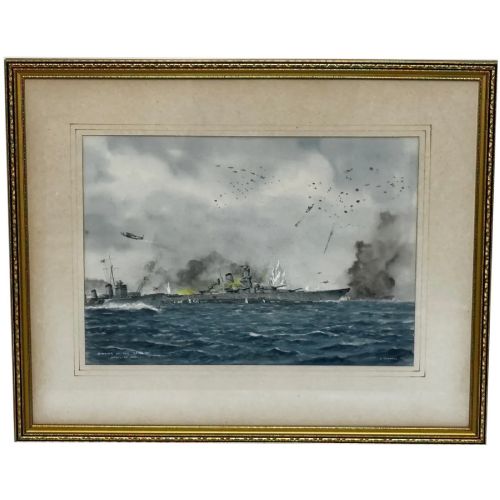
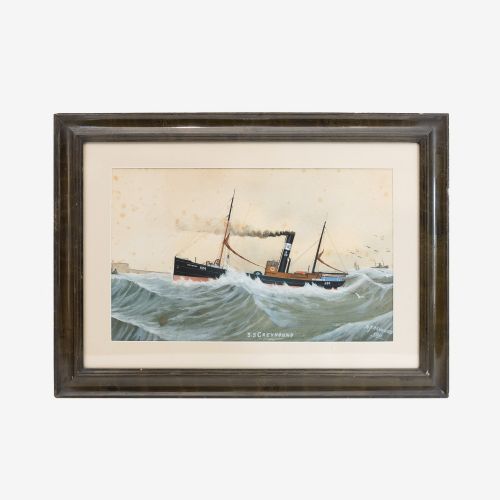
Artists painted primarily with watercolour pigment upon paper, sometimes adding gouache for opacity and highlighted detail in the churning water or ship rigging. These works were housed behind glass within wooden frames, occasionally ebonised or gilt, to protect the delicate pigment from moisture and light.
Makers applied washes of colour to build transparency in the sea and sky, relying on the white of the paper to render light on sails and breaking waves.
Artists occasionally captured passing steamboats alongside traditional sailing ships as iron hulls began to crowd the Victorian horizon.
What varies in quality
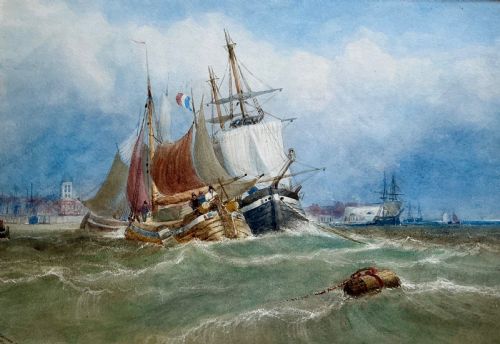
Quality rests upon the artist's command of atmospheric light, the crispness of vessel rigging, and the dynamic movement captured within choppy seas. Stronger works convey the weight of water and the architecture of shipping with confident brushwork rather than hesitant corrections.
The integrity of the paper support and the vibrancy of the surviving pigment also dictate standing, alongside the appropriateness of the period frame.
William Cannon·Charles Edward Dixon·John E Aitken·William Banks Fortescue·Alexander Harwood·George Stanfield Walters·Henry Barlow Carter·John Moxon·Charles William Adderton·Thomas Bush Hardy·Frank H Mason·Sir William Russell Flint·Samuel Owen·Kate E Booth·Frederick Stuart Richardson·Percy Brooke·John McDougal·Frank Wood·Joseph Newington Carter·William Boyce·S J Lamorna Birch·Samuel Edward Kelly·Montagu Barstow·Edmund Gouldsmith·J Syer
The Antique Ocean Watercolour Glossary
- Gouache
- An opaque watercolour paint consisting of pigment, water, and a binding agent such as gum, often used to add dense highlights to a watercolour painting. It provides solid areas of colour that contrast with transparent washes.
- Seascape
- A work of fine art depicting the sea, ships, or coastal views. These subjects were popular among British artists recording maritime trade and fishing communities.
- Barque
- A sailing vessel with three or more masts, depicted frequently in maritime watercolours of the nineteenth and early twentieth centuries. Artists prized them for their complex rigging and scale.
- Ebonised
- Wood finished to resemble ebony through staining or painting black. This framing technique appeared frequently on maritime watercolours from the Victorian era onward.
Antique Ocean Watercolour: Frequently Asked Questions
How do I date an ocean watercolour?
Dating relies upon artist signatures, exhibition labels on the reverse, costume details of any figures present, and the style of the vessel depicted. Paper types and framing methods also offer clues to the decade of creation.
Many works carry contemporary inscriptions or dates written by the artist in the margin or verso, helping to place the painting securely within the nineteenth or twentieth century.
Were these paintings made outdoors?
Artists often produced preliminary sketches and tonal studies en plein air along the coast before completing the final watercolour within a studio. This method allowed them to capture transient weather and shifting tides accurately.
Watercolour materials lent themselves well to portable use, enabling painters to travel easily to harbours and cliffs.
How should I frame and display them?
Watercolours require conservation mounting using acid-free materials to prevent discolouration of the paper over time. Glazing protects the delicate pigment from airborne pollutants and moisture.
Display the work away from direct sunlight to avoid fading the water-soluble pigments and the surrounding paper support.
What is the difference between watercolour and gouache?
Watercolour relies on transparent washes where the white paper reflects light back through the pigment. Gouache incorporates a white inert pigment to create an opaque medium.
Artists frequently combined both in maritime scenes, using gouache for dense highlights on crashing waves and ship sails.