



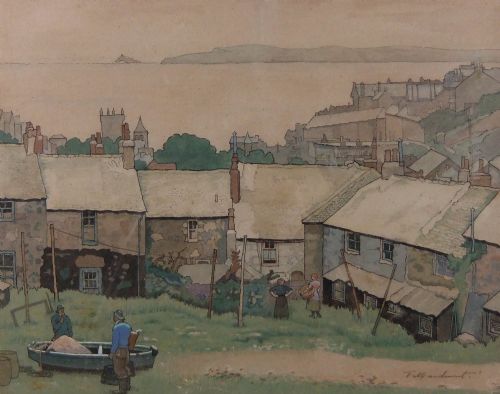
British Landscape Wall Picture
A british landscape wall picture brings the rolling hills, coastal waters and rural rivers of the islands into a room through oil paint and watercolour.
British Landscape Wall Picture
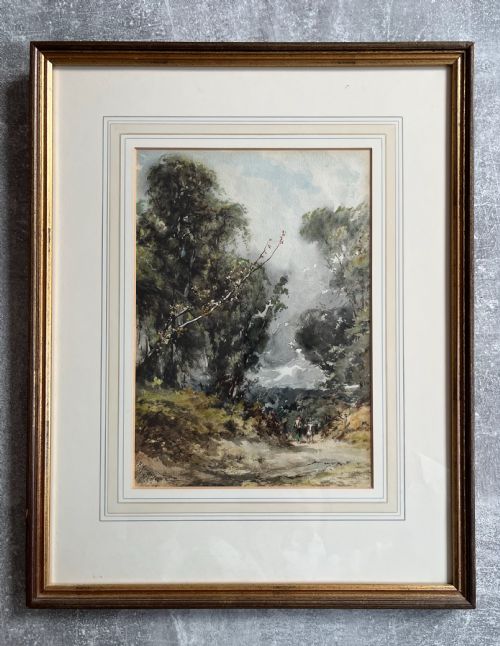
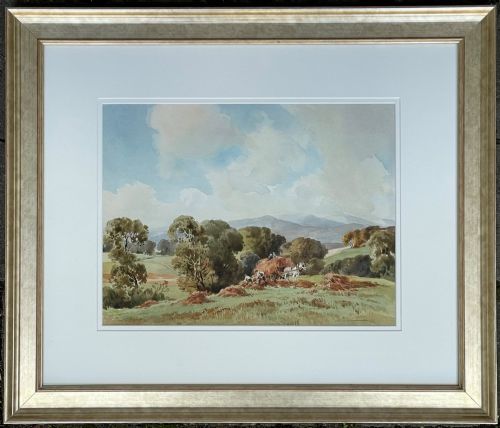
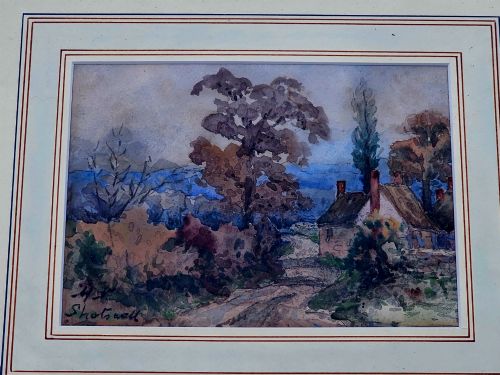
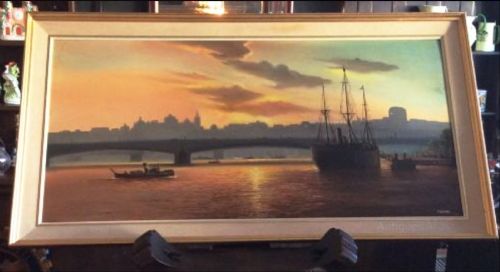
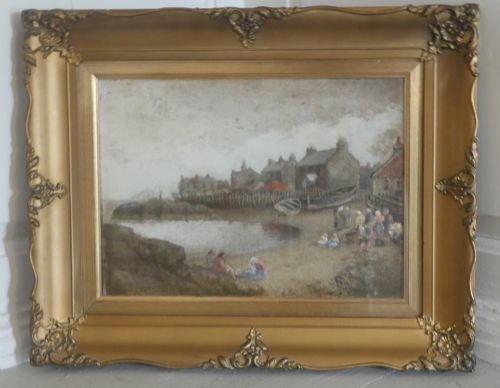
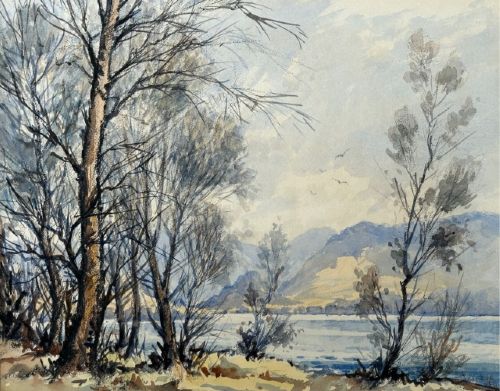
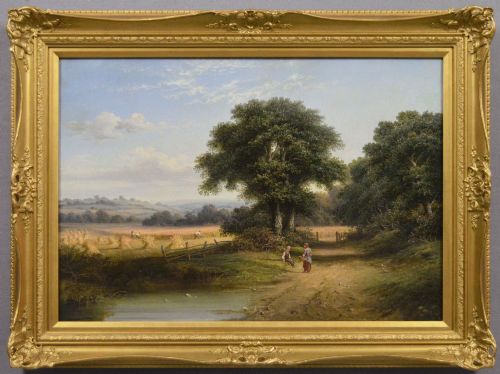
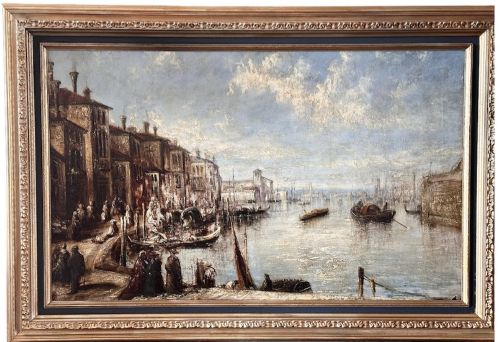
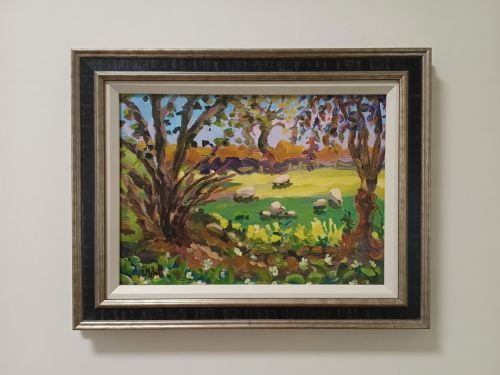
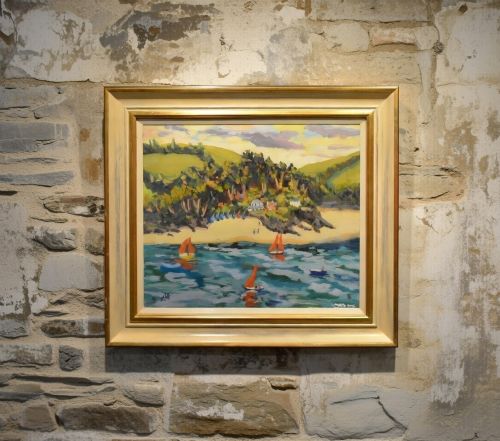
A british landscape wall picture comprises framed watercolours, oil paintings on canvas or board, and pastels capturing scenes from the nineteenth and twentieth centuries. These artworks depict rural valleys, coastal harbours, and pastoral river views created by British artists working across various regional traditions.
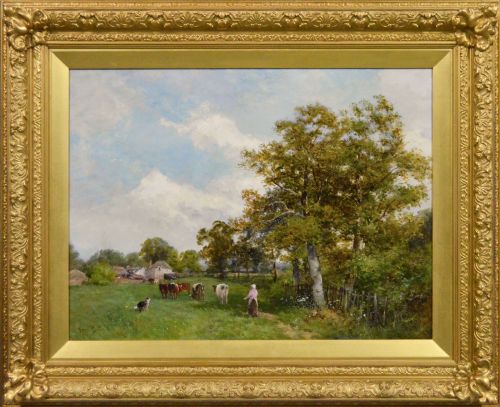
The selections available here lean heavily toward Victorian and Edwardian watercolours alongside mid-twentieth-century oil paintings on panel or canvas. Buyers frequently encounter rural livestock scenes, coastal shipping views, and mountainous terrain captured with traditional brushwork.
How they were made
Artists painted primarily with oil on canvas, wood panel, or board, building up rich textures with pigments bound in oil. Watercolours on paper utilised transparent washes layered delicately to capture light and atmosphere across river valleys and coastal estuaries.
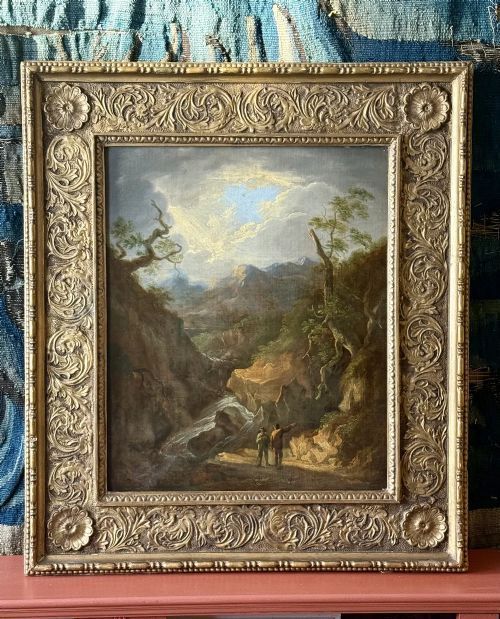
Frames frequently incorporated moulded gesso and wood to house the paintings securely, often finished with gilt layers that complemented the domestic interiors of the nineteenth and twentieth centuries.
Listings feature works spanning from the late nineteenth century through the mid-twentieth century, utilising paper, canvas, wood, and gesso.
What varies in quality
Quality rests upon the confidence of the brushwork and the artist's ability to render natural light and atmospheric depth convincingly. Stronger examples display deliberate composition and assured handling of pigment, whereas lesser works appear rigid or formulaic in execution.
The integration of the artwork with its period frame also influences the overall standard, as original matching mounts and gesso mouldings preserve the historical integrity of the piece.
Kenneth Cozens·George Fotherly Hargitt·William H Myers·Alfred Young Nutt·Percy Lancaster·David Bates·Walter Heath Williams·Francis Moltino·Lucy Pratt·Thomas Maidment·Frederick James Kerr·John Wilson Carmichael·John Bond·Maud Raphael Jones·Robert Leslie Howey·T C Hofland·Henry Martin Pope·David Cox·George Stanfield Walters·Charles Edward Wilson·Joseph Knight·Sydney Yates Johnson·F.J. Snell·John Ferneley Senior·Hubert Wellington
The British Landscape Wall Picture Glossary
- Watercolour
- A painting method where fine pigment is suspended in a water-based, translucent solution applied to paper. It relies on the white of the paper showing through to create luminous effects.
- Gesso
- A plaster-like mixture applied to wood panels or frames as a smooth base for painting or gilding. It provides a solid foundation that accepts decorative finishes.
- Impressionism
- A style of painting emphasising spontaneous brushstrokes and the shifting effects of light rather than meticulous detail. Artists captured the immediate visual impression of a scene.
- Lithograph
- A printmaking process based on the incompatibility of oil and water, utilising a flat stone or metal plate. It allows multiple ink impressions to reproduce original artworks accurately.
- Panel
- A flat piece of wood used as a rigid support for oil paintings instead of canvas. Artists often preferred wood panels for stability during the nineteenth century.
British Landscape Wall Picture: Frequently Asked Questions
What subjects appear in these pictures?
The artworks display rural farmland, cattle in woodland, mountainous terrain, and coastal shipping scenes across British locations. Rivers, estuaries, and village harbours are also frequent subjects.
Artists drew inspiration from specific regional topographies, recording local landmarks and everyday rural life in watercolour and oil.
How should these paintings be hung?
Paintings require placement away from direct sunlight and excessive moisture to protect the paper, canvas, and pigments. Stable interior wall environments prevent warping in wood panels and gesso frames.
Secure picture hooks rated for the weight of the frame ensure safe display on domestic walls.
How are different periods identified?
Periods are recognised through stylistic conventions, framing techniques, and the materials used for the support. Victorian works often feature heavy gilt gesso frames and detailed realism.
Twentieth-century pieces tend toward looser brushwork, impressionistic handling, and simpler framing materials that reflect modern interior tastes.
What is the difference between oil and watercolour?
Oil paintings utilise pigments bound in drying oils applied to canvas or wood boards, offering thick texture and deep colour saturation. Watercolours employ water-soluble paints on paper, creating light, transparent washes.
Oils generally require protective varnish rather than glass, whereas watercolours need glazing to prevent dust and moisture damage.