



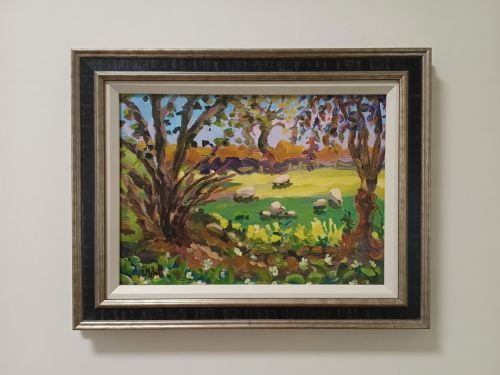
Pastoral Landscape Oil Canvas
A pastoral landscape oil canvas brings the quiet of rural fields and livestock indoors, offering a glimpse into historic countryside scenes.
Pastoral Landscape Oil Canvas
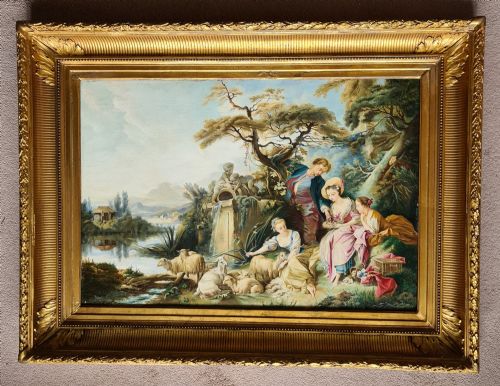
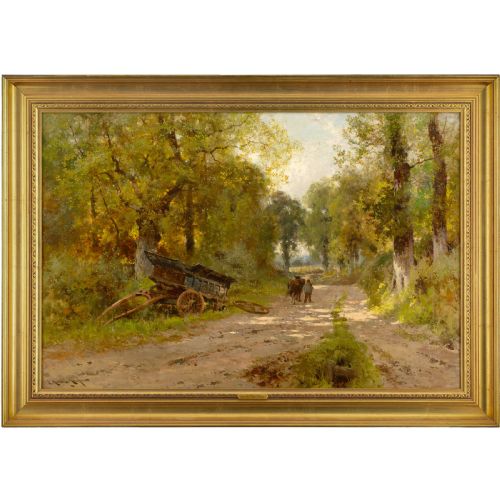
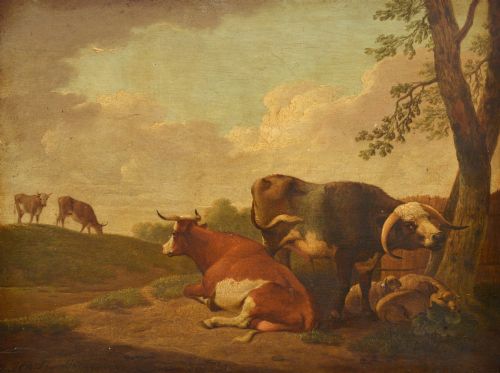
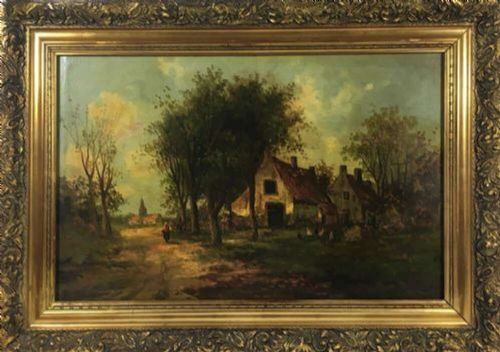
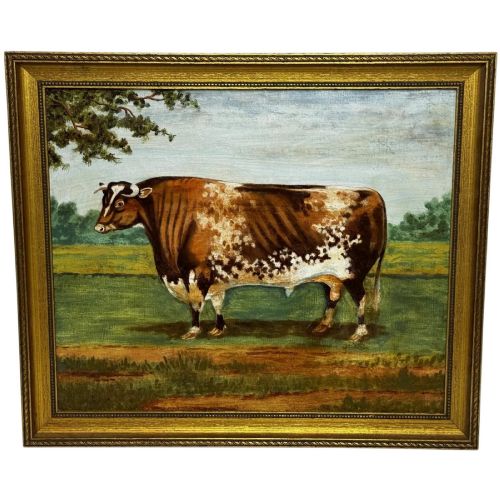
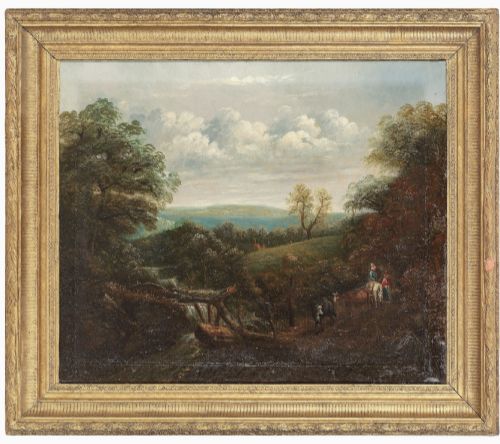
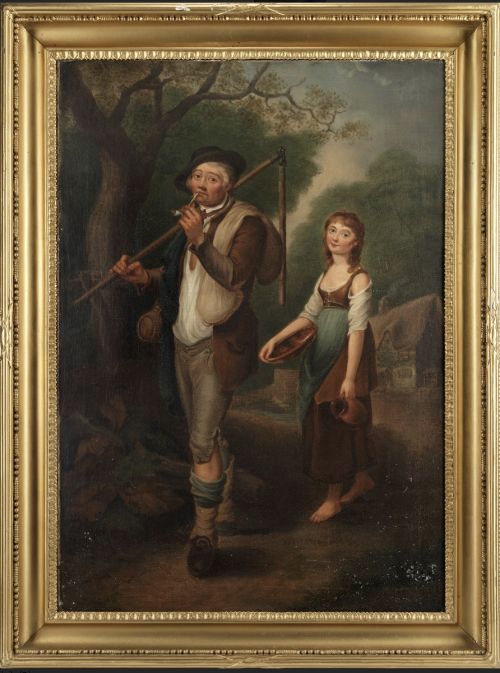
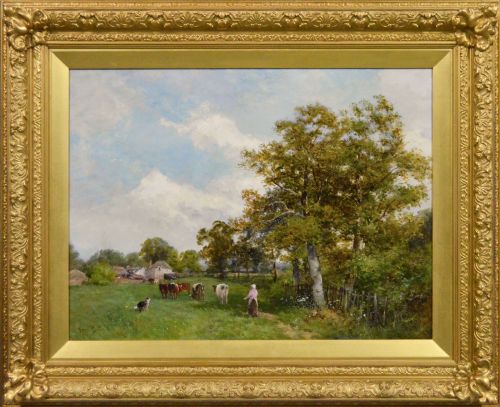
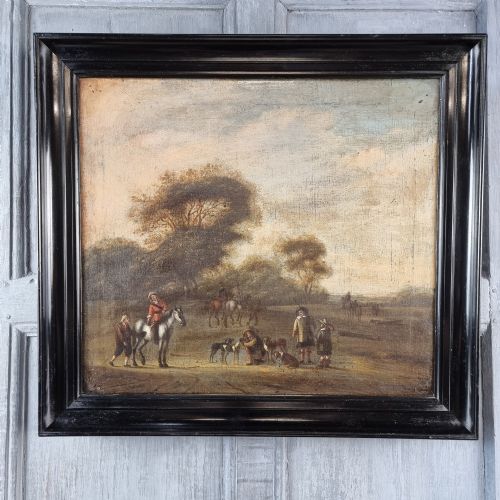
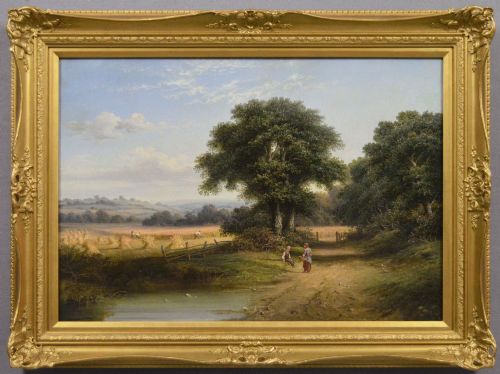
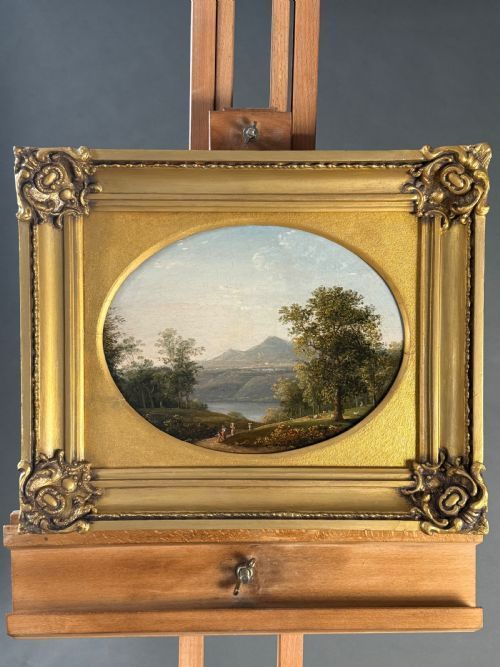
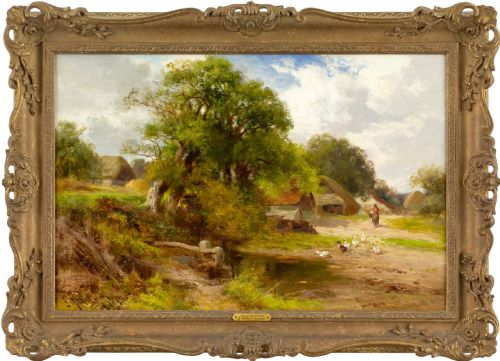
A pastoral landscape oil canvas depicts rural scenes filled with livestock, shepherds, rivers, and rustic cottages set in British and European countryside settings. These artworks capture quiet agricultural life and agrarian idylls through traditional painting techniques on woven support fabric.
Most examples found here originate from the nineteenth century, though earlier works from the seventeenth and eighteenth centuries alongside early twentieth-century pieces appear regularly. Common subjects include sheep flocks, cattle near water, harvest workers, and tranquil river vistas.
The aesthetic bridges realistic depictions of farm life with romanticized notions of nature, reflecting shifting artistic movements from the Barbizon School to British Impressionism. Buyers select these paintings to bring traditional warmth and historic atmosphere into domestic interiors.
How they were made
Artists painted primarily with oil paint on stretched canvas supported by wooden stretcher frames, often applying gesso as a preparatory ground layer. This combination allowed for rich colour blending, subtle light effects, and textured brushwork that built depth across fields and skies.
Many historical pieces feature elaborate giltwood or carved wooden frames finished with gesso ornamentation, which complemented the richness of the oil pigments. The physical structure relies on traditional joinery in the frames and durable woven canvas supports that have survived across centuries.
Listings feature works spanning from the seventeenth century through to the early twentieth century, executed in oil on canvas with wood and gesso frames.
What varies in quality
Quality in a pastoral landscape oil canvas rests upon the artist's handling of light, atmospheric perspective, and anatomical precision in rendering animals and figures. Masterful works display confident brushwork and harmonious tonal balances that create a genuine sense of air and space.
The integrity of the canvas support, the stability of the paint layers, and the originality of the historic frame contribute significantly to the overall standing of a piece. Finer examples exhibit minimal intervention and retain their original surface textures without heavy overpainting.
Eugène Verboeckhoven·William H Myers·George Graham·Francois Boucher·John Horace Hooper·Hendrik Willem Schweickhardt·Thomas Barker of Bath·David Bates·Walter Heath Williams·Jacob Philipp Hackert·Lucy Pratt·Thomas Sidney Cooper·Richard Redgrave·Ernest Higgins Rigg·Robert Watson·Albert Rieger·William Watson Jnr·Douglas Cameron·Johann Friedrich Voltz·Greiffenhagen·Henry H Parker·Henry Schouten·Jan Miel·John Emms·A M Gauci
The Pastoral Landscape Oil Canvas Glossary
- Oil on Canvas
- A painting medium where pigments bound in drying oil are applied to a woven fabric support stretched across a wooden frame. This combination became the standard method for fine art painting from the Renaissance onward.
- Gesso
- A plaster-like mixture used as a surface preparation on wood or canvas to create a smooth, stable base for oil paint. It also forms the moulded relief details on traditional picture frames.
- Giltwood
- Wood that has been thinly coated with gold leaf or gold powder, commonly used for ornate antique picture frames. It adds a warm metallic border that enhances the colours within the painting.
- Pentimento
- A visible trace of an earlier painting beneath the layers of paint, showing where the artist changed their composition. This occurrence often confirms the authenticity of an older oil painting.
- Barbizon School
- A nineteenth-century French art movement dedicated to naturalistic landscape painting, emphasising direct observation of rural life and atmospheric light. Its influence spread widely among British and European painters.
Pastoral Landscape Oil Canvas: Frequently Asked Questions
What subjects appear in these paintings?
These artworks typically show rural views featuring sheep, cattle, horses, farm workers, and riverside cottages. The focus rests on tranquil agricultural scenes and livestock in natural settings.
Herds of sheep and cows near water or grazing in meadows dominate the compositions. Figures are often secondary to the overarching landscape and the play of daylight.
How do I hang and display an oil painting?
Display these works on interior walls away from direct sunlight and fluctuating heat sources to protect the canvas and paint layers. Secure picture wire or D-rings to sturdy wall anchors matched to the weight of the frame.
Ensure the room maintains stable humidity levels to prevent warping in the wooden stretcher frames. Adequate wall space allows the giltwood frames to sit comfortably without crowding.
How can I tell the age of a canvas?
Age is determined by examining the weave of the canvas, the type of wooden stretcher frame, and the composition of the paint layers. Older canvases often show characteristic craquelure and oxidation in the oil pigments.
Signatures, artist records, and stylistic clues related to movements like British Impressionism or the Barbizon School also help narrow down the period of creation.