




British Coastal Painting
British coastal painting captures the changing light of shorelines, harbours and fishing fleets through more than a century of artistic tradition.
British Coastal Painting
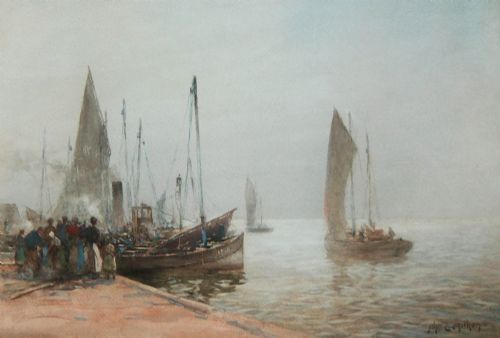
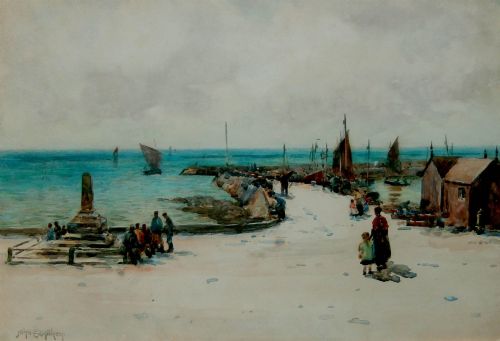
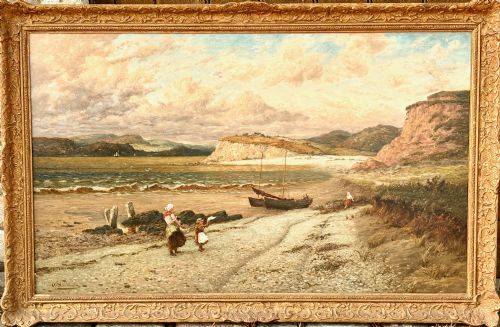
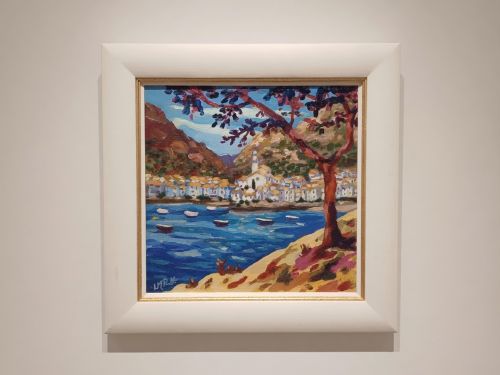
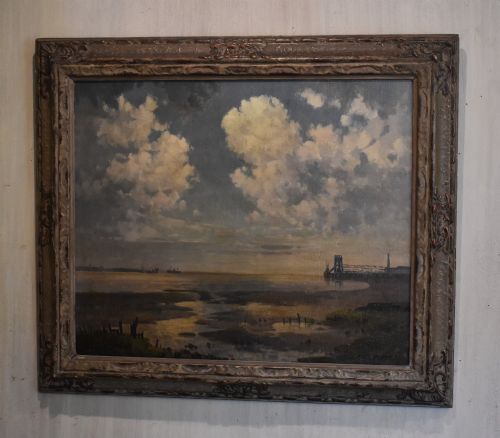
When you search for British coastal painting, you encounter works spanning the nineteenth century through to the mid-twentieth century, recording harbours, cliffs and fishing boats around the coastline. The selection on this page ranges from traditional Victorian maritime scenes to mid-century modern interpretations of seaside villages.
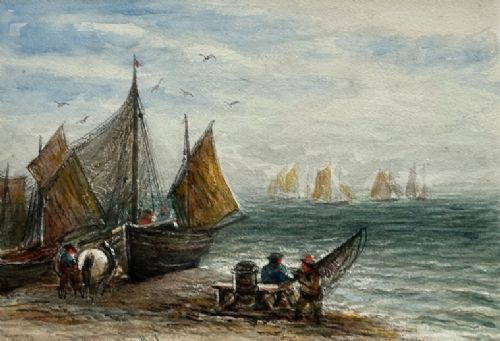
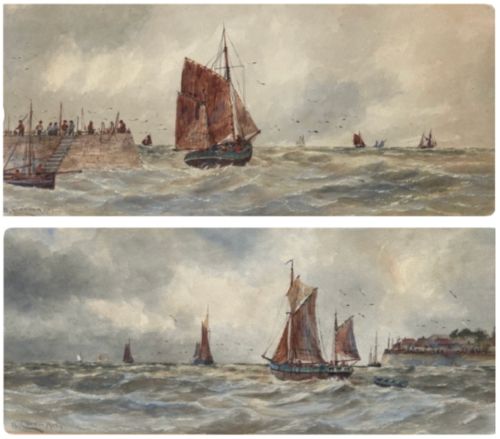
You will frequently find watercolours on paper alongside oil paintings executed on canvas or board, reflecting the diverse methods artists utilised to capture maritime subjects. Cornwall, Yorkshire and various Scottish havens appear repeatedly across these regional views.
The assortment includes precise academic depictions alongside looser plein air studies, showing how different generations approached the sea, sand and shipping traffic.
Materials and technique
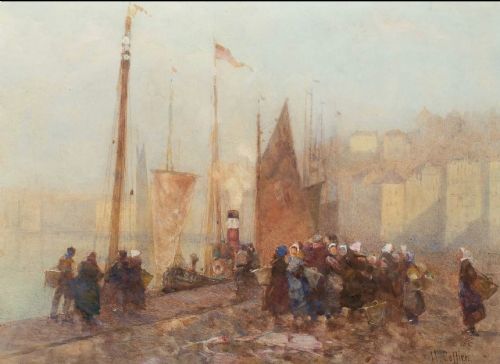
Artists deployed watercolour pigment on paper for delicate atmospheric effects, often capturing transparent washes of light over coastal towns and estuaries. Watercolour works typically relied on the white of the paper to generate highlights across sea spray and breaking waves.
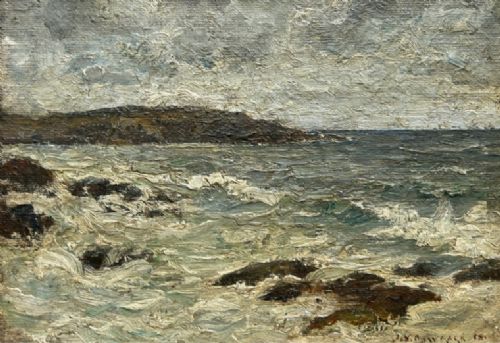
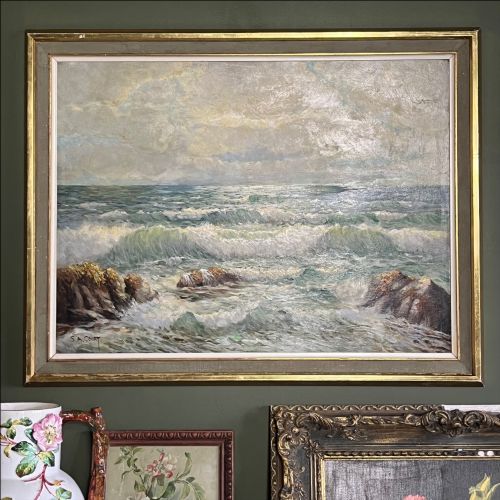
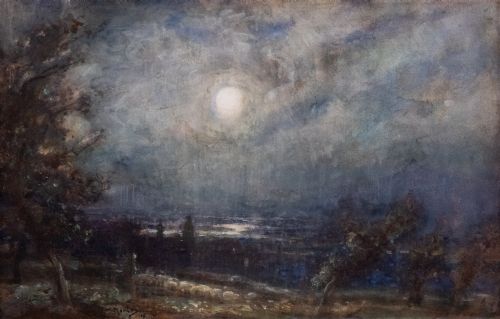
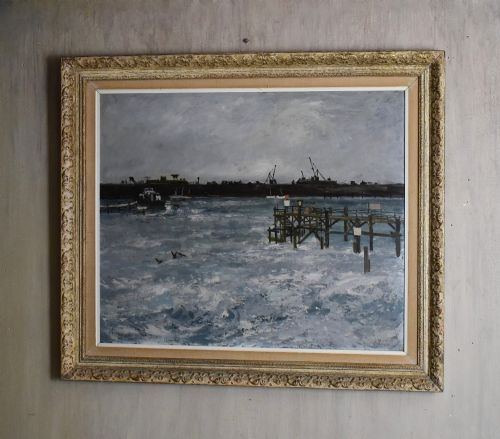
Oil paint applied to canvas, board or wood panels allowed painters to build heavier impasto textures, recording the rough surface of cliffs or the turbulence of stormy water. These oil compositions frequently utilised glazing and layering techniques to create depth within the sky and sea.
Listings feature works spanning the 1860s to the 1960s, executed in oil and watercolour on paper, canvas, board and wood.
Distinctions in quality
Quality rests upon the artist's ability to handle atmospheric light and capture the movement of water rather than mere technical neatness in depicting boats or buildings. Superior works demonstrate confident brushwork and a convincing tonal balance between sea and sky.
Compositional strength separates standard topographical records from exceptional paintings, where perspective and colour harmony draw the viewer into the coastal scene.
James Orrock·William Cannon·Clifford Hanney·Sidney A Court·James E Aitken·John E Aitken·William Banks Fortescue·Thomas William Morley·Clive Browne·Peter Brannan·Hector Caffieri·Bernard Benedict Hemy·Thomas Creswick·James Fry·Ethel Sands·Thomas Maidment·TB Hardy·Donald McIntyre·Cecil Allan Mould·John Wilson Carmichael·Alfred G Morgan·Abraham Cooper·William Matthison·William Henry Williamson·John Holland
The British Coastal Painting Glossary
- Impasto
- Paint applied thickly to a canvas or board, leaving visible brush or palette knife marks that give physical texture to the surface. This technique frequently emphasises the choppy movement of waves or the rugged texture of cliffs.
- Plein air
- Painting outdoors in direct natural light rather than inside a studio. This method enabled artists to record rapid shifts in weather and coastal illumination.
- Seascape
- A work of art depicting the sea, coastal views, shipping or maritime activity. These pieces focus primarily on marine environments rather than inland scenery.
- Watercolour
- A paint consisting of water-soluble pigments used on paper supports. It requires swift execution and careful control of washes to achieve translucent effects.
British Coastal Painting: Frequently Asked Questions
What periods do these paintings cover?
The works span from the nineteenth century through the Edwardian era and into the mid-twentieth century. Artists recorded changing artistic styles across these decades, moving from detailed Victorian maritime art to impressionist and modern interpretations.
Specific periods visible include the eighteen-sixties, the early nineteen-hundreds and the nineteen-fifties, showing the enduring appeal of coastal subjects.
Where were most of these coastal scenes painted?
Locations concentrate heavily around traditional fishing ports and harbours in Cornwall, Yorkshire, Scotland and Wales. St Ives, Whitby, Scarborough and various North Sea havens appear frequently.
Artists favoured these working ports for their lively maritime activity, sailing vessels and distinct coastal architecture.
How should I care for a watercolour painting?
Watercolours require careful framing behind glass using conservation-grade mounting materials to prevent paper deterioration and fading. Direct sunlight causes pigments to degrade over time, so placement away from bright windows is essential.
Maintaining stable indoor humidity levels also protects both the paper support and the surrounding frame.
How do I distinguish between oil and watercolour works?
Oil paintings utilise thick paints on canvas, board or wood, often displaying a glossy or matte textured finish with visible brushstrokes. Watercolours use thinner pigments on paper, presenting a flatter, more translucent appearance beneath glass.
Examining the surface closely reveals whether the medium sits on top as a heavier layer or sinks directly into the paper fibres.