


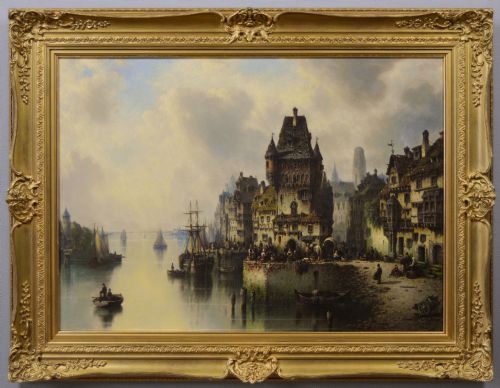


Ochre Coastal Painting
Ochre coastal painting works earth pigments and marine light together, offering collectors genuine sea views rendered in warm tones.
Ochre Coastal Painting
An ochre coastal painting captures seaside views using warm earth pigments, ranging from Victorian marine realism to mid-century impressionism. Buyers searching for an ochre coastal painting encounter works executed on canvas, board, and paper.
The selections span from the late nineteenth century through to the mid-twentieth century, featuring British and continental harbours, cliffs, and shipwrecks. Most pieces arrive housed in period wood and gesso frames.
The subjects focus on maritime life, including depictions of fishing towns, townscapes, and coastal cliffs rendered by named artists and anonymous hands.
How they were made
Artists applied oil paint and watercolour pigment onto canvas, prepared board, and heavy paper supports. Ground earth tones dominated the palettes to capture natural light along shores and harbours.
Makers enclosed many of these works within wood frames, frequently finished with gesso moulding to complement the maritime subject matter.
Dutch fisherwomen make unexpected guest appearances along French and British shores.
What varies in quality
The strength of the composition and the handling of light separate standard depictions from accomplished works. Stronger pieces demonstrate confident brushwork and a clear sense of atmosphere.
Condition of the medium and the originality of the frame influence the overall character of each painting. Intact pigment layers and period frames preserve the historical context of the piece.
Raymond Picque·Cecil Rochfort D Oyly John·Ernest Dade·Arthur Tucker·Charles Malfroy·Claude Thomas Stanfield Moore·Alfred Robert Quinton·Madeline Hughes·Ludwig Hermann·Joseph West
The Ochre Coastal Painting Glossary
- Ochre
- An earthy pigment containing iron oxide, ranging from pale yellow to deep brownish-red. This colour forms the foundation of coastal scenes dominated by cliffs and sandy shores.
- Gesso
- A plaster-like mixture applied to wood frames to provide a smooth surface for gilding or painting. It helps secure decorative mouldings around antique artworks.
- Marine Realism
- An artistic style focused on accurate depiction of the sea, ships, and coastal environments. This approach was particularly prominent during the Victorian period.
- Post-Impressionism
- An art movement extending beyond impressionism, focusing on symbolic motifs and heavier brushwork. It appears in mid-century interpretations of coastal landscapes.
- Watercolour Pigment
- Colour suspended in a water-soluble binder, applied to paper supports. It creates luminous maritime washes favoured by nineteenth-century artists.
Ochre Coastal Painting: Frequently Asked Questions
How do I date a coastal painting?
Examine the materials, support type, and framing style used in the work. Canvas preparation and wooden stretcher construction offer clues to the period.
Signatures, artist records, and stylistic movements like Victorian marine realism or mid-century impressionism help narrow down the creation date.
Are these paintings on canvas or paper?
The selection includes both oil paintings on canvas and board alongside watercolours on paper. Each medium was chosen by the artist to suit their specific coastal subject.
Watercolours often appeared on paper supports during the Victorian era, whereas oils frequently utilised canvas or prepared wooden boards.
How should I frame an antique painting?
Keep the original wood and gesso frame if it is intact and suits the artwork. Period frames preserve the historical integrity of the piece.
Consult a professional restorer if the frame requires structural stabilization to protect the painting from further damage.
What subjects appear in these coastal scenes?
Common subjects include busy harbour towns, shipping vessels, shipwrecks, and chalk cliffs. Artists recorded working ports and quiet shorelines across Britain and continental Europe.
These views reflect local maritime industries and popular seaside locations from the nineteenth and twentieth centuries.