
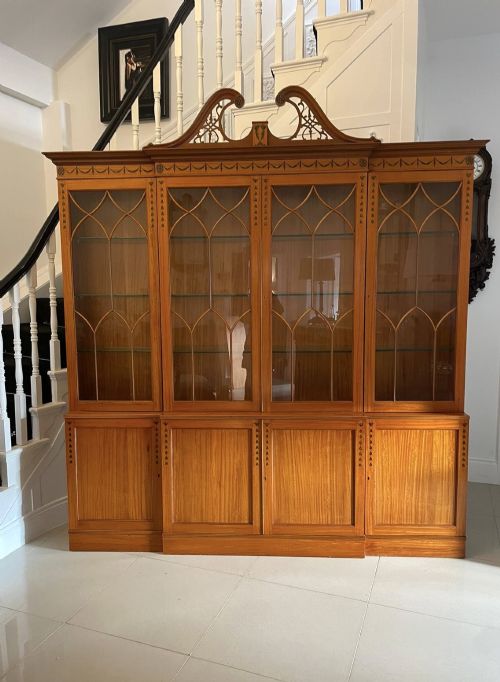
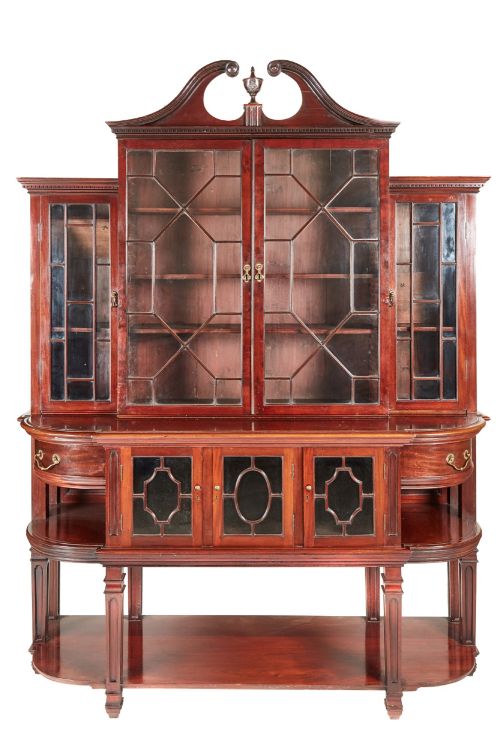
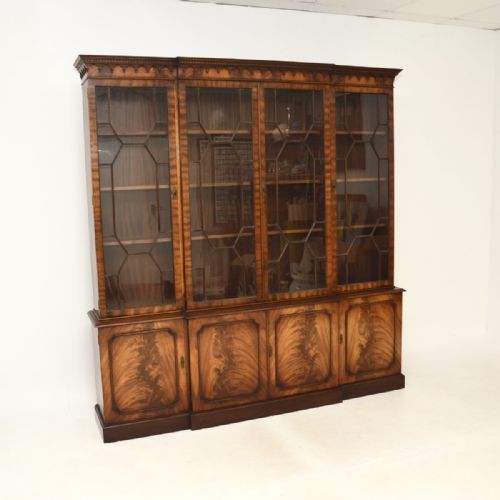
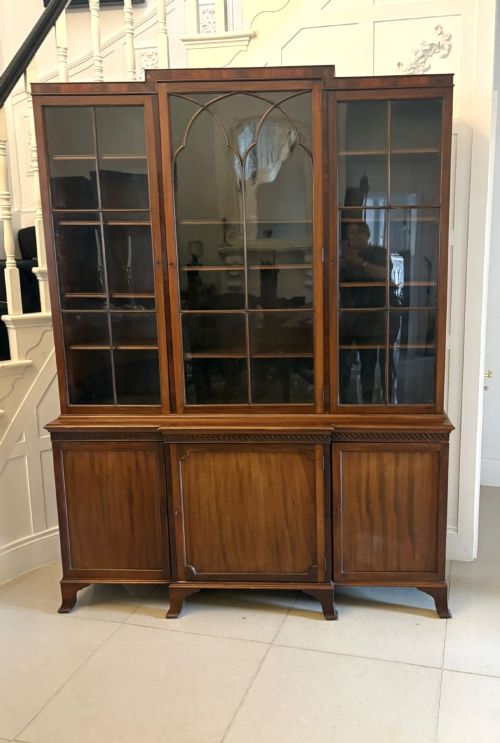
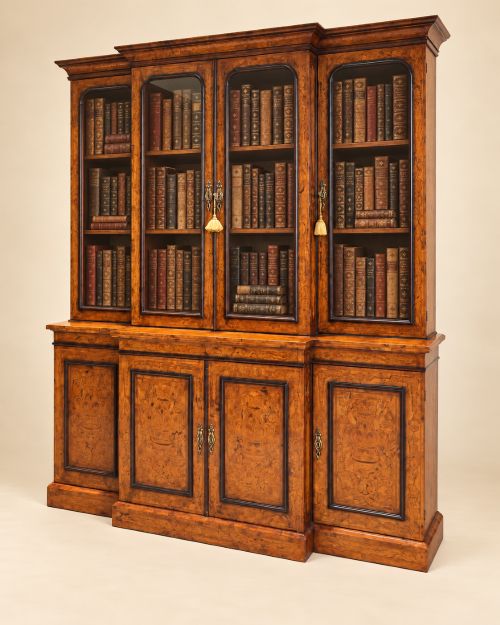

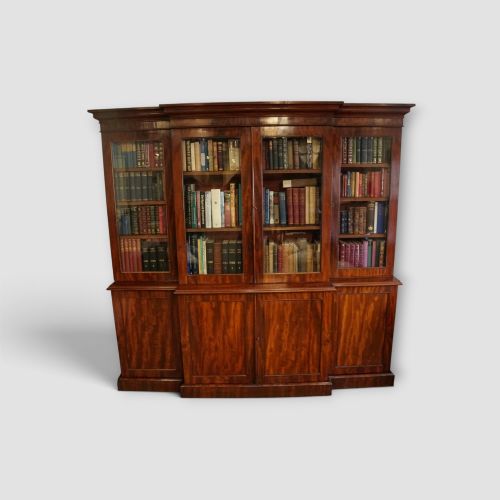
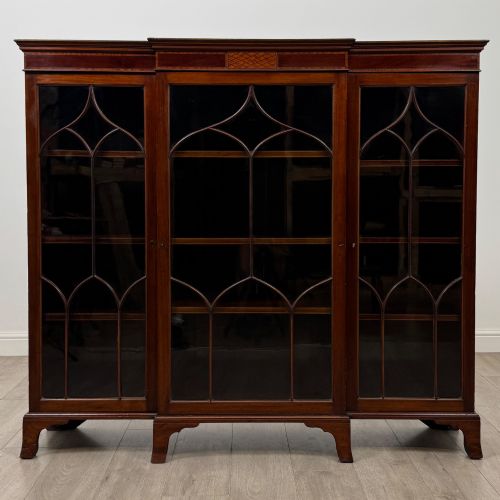
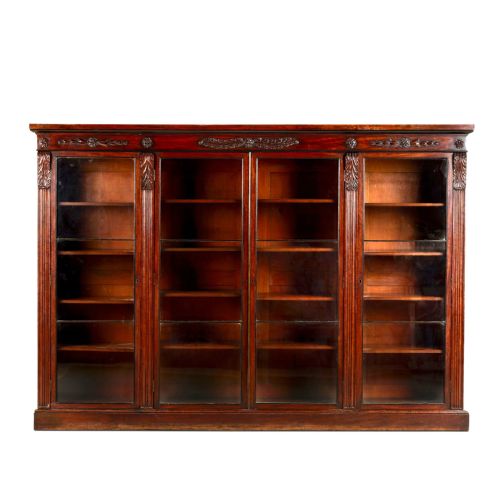
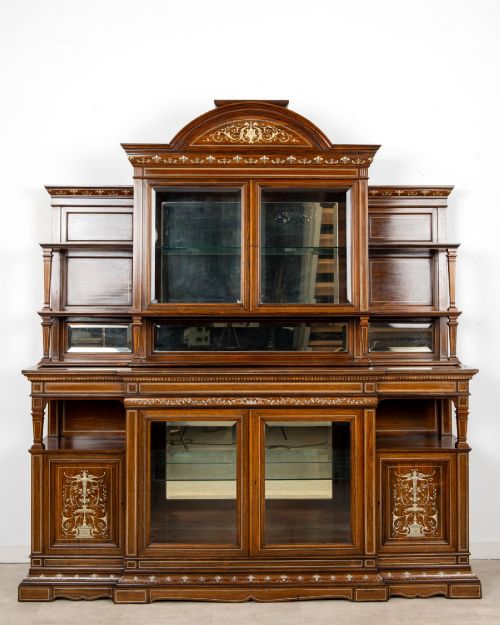
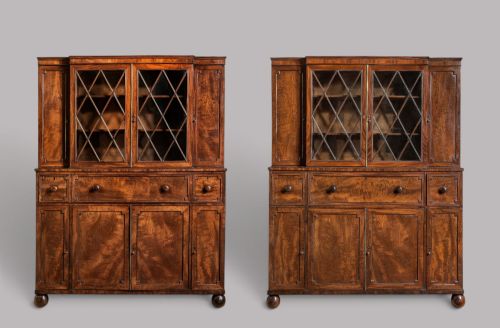
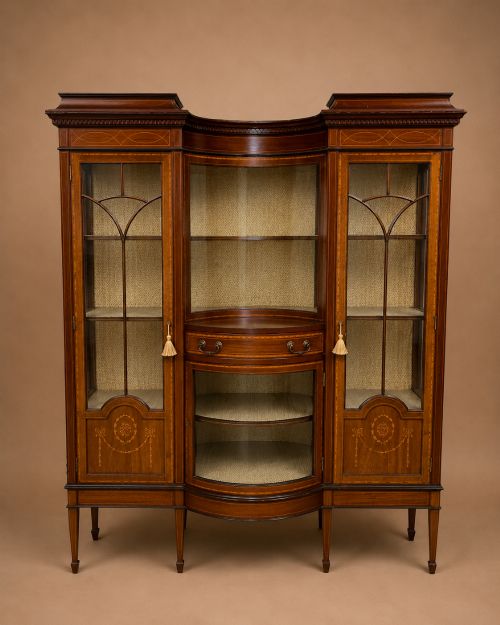
Breakfront Glazed Bookcase
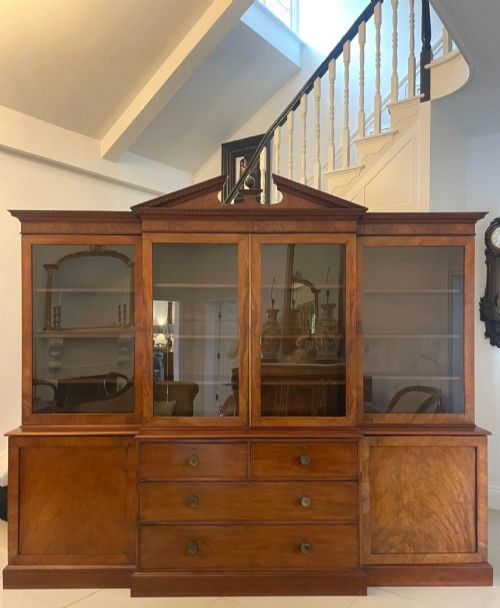
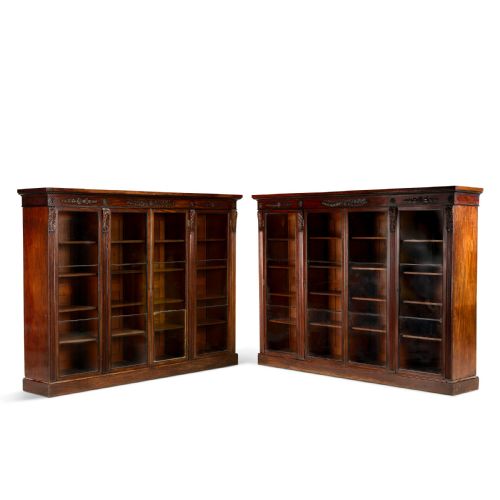
A breakfront glazed bookcase commands a room with its projecting central section and generous glass doors designed for displaying and protecting treasured volumes.
What they are
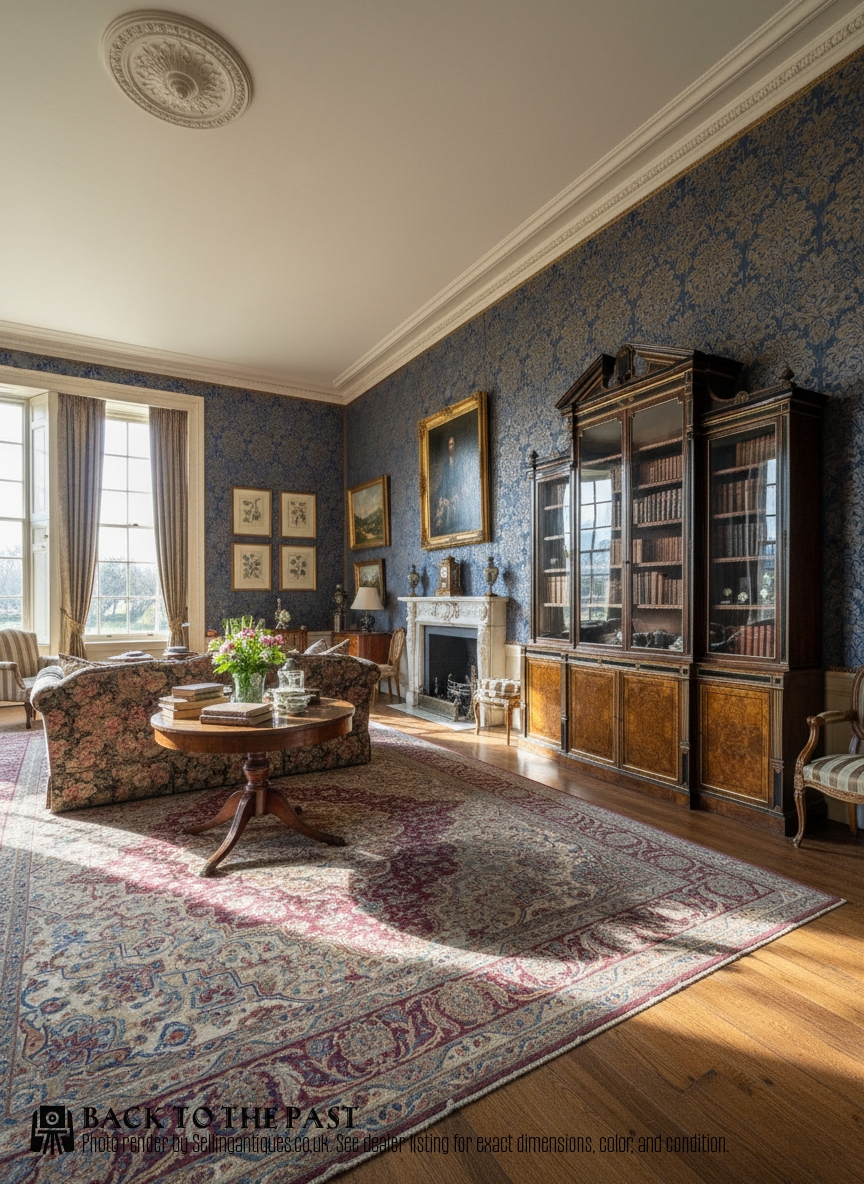
A breakfront glazed bookcase is a substantial piece of furniture defined by its stepped facade, where the central section projects forward from the wings. You will most frequently meet mahogany and walnut examples dating from the nineteenth century, ranging from William IV and George IV library pieces to Victorian display cabinets.
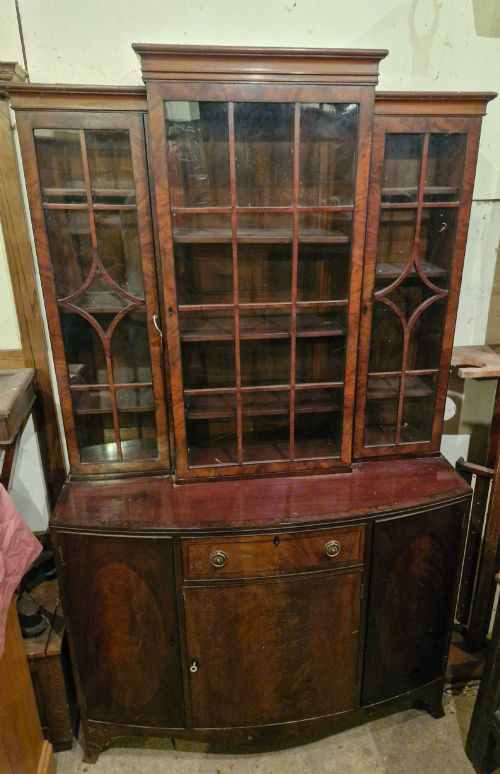
The form encompasses large architectural bookcases with cupboards below and astragal glazed doors above, alongside French provincial dressers and Anglo-Indian variants. These pieces served as the grand storage backbone for private libraries and formal reception rooms, combining visible display space with secure enclosed shelving.
The configuration of doors varies widely across the evidence, appearing in three-door, four-door, and five-door triple breakfront formats. Interiors commonly feature adjustable shelving housed behind glass panels, sometimes complemented by inlaid details or heavy carved decorations depending on the specific Victorian or Georgian style.
How they were made
Cabinet makers constructed these large library pieces using solid hardwoods like mahogany, oak, walnut, and padouk, often applying flame mahogany or burr walnut veneers to the prominent surfaces. Brass hardware was utilised for locks and hinges, whilst glass formed the large panes for the upper display doors.
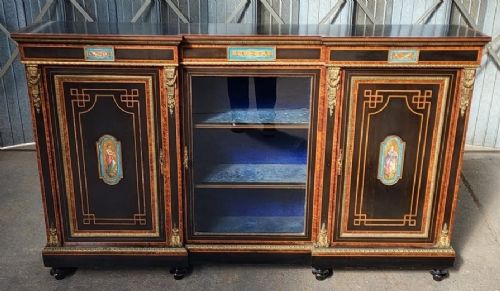
Surface decoration relied on natural wood grains, inlay, and carved elements such as the architectural details seen on Gothic revival or heavily carved Burmese and Victorian examples. Ebonised wood was also employed to create striking dark finishes on specific regional or period cabinets.
Retail Price Guide 2026
Typical UK retail prices for breakfront glazed bookcase, calculated from the Sellingantiques database of over a million retail prices indexed since 2003. This retail price guide relies exclusively on Sellingantiques data; no external sources or auction records are used, so the figures do not describe the wider market.
Some nineteenth-century library bookcases are so monumental they practically require their own zip code.
What varies in quality
The architectural presence of the breakfront relies on the crispness of the timber selection, where carefully matched flame mahogany veneer or rich burr walnut creates a harmonious facade. Superior examples demonstrate meticulous joinery in the individual glazing bars that form the astragal framework.
Carved detailing separates standard production from exceptional library pieces, with deep, hand-carved ornamentation showing superior depth and precision compared to simpler moulded surfaces. The integration of functional elements, such as smoothly adjustable shelving and well-fitted cupboards, distinguishes the more ambitious workshop commissions.
The Breakfront Glazed Bookcase Glossary
- Breakfront
- A cabinet design where the central section projects further forward than the flanking side sections. This creates a pronounced architectural rhythm across the front of the piece.
- Astragal glazed
- Glass doors divided into smaller panes by narrow wooden bars known as astragals. These glazing bars often form geometric or Gothic arch patterns.
- Burr walnut
- Timber taken from the gnarled growths of a walnut tree, yielding highly figured, swirling grain patterns. It was sliced into thin veneers for high-status cabinet doors.
- Padouk
- A dense tropical hardwood with a reddish hue, utilised in Anglo-Indian furniture production. It provides exceptional durability and a distinct deep colour.
- Ebonised wood
- Timber treated with a chemical stain or black finish to imitate ebony. This technique was popular for creating stark contrasts in nineteenth-century furniture.
Frequently Asked Questions
How do I style a breakfront bookcase?
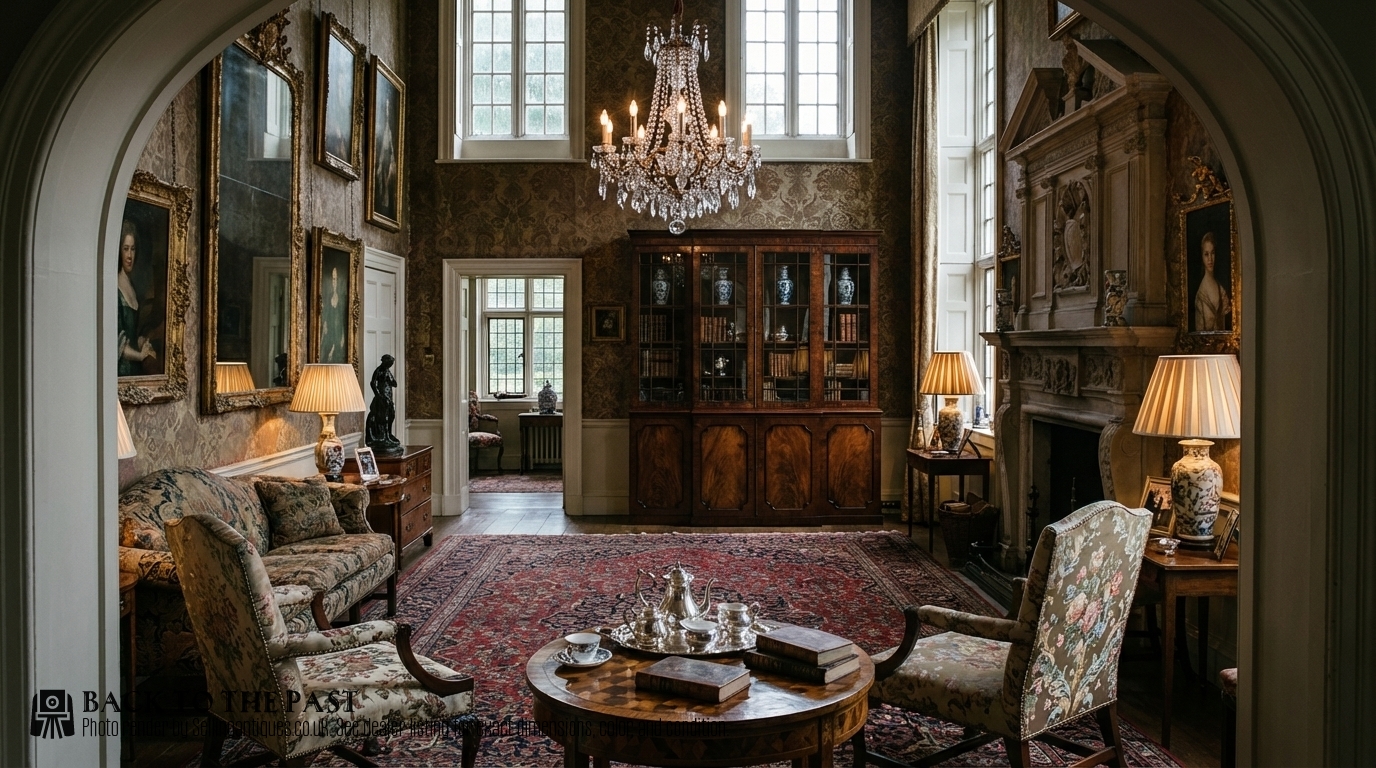
Allow the architectural scale of the piece to anchor the room by placing it against a substantial wall with adequate clearance. Balance the interior display by mixing vertical book stacks with decorative ceramic objects behind the glass doors.
Keep surrounding furniture understated so the timber grain and projecting central section remain the focal point. Ensure the room has sufficient natural light to highlight the polished mahogany or walnut surfaces.
What is an astragal glazed door?
An astragal glazed door uses a lattice of slender wooden mouldings to hold multiple smaller panes of glass in place rather than a single large sheet. This technique provided structural stability for large nineteenth-century library cabinets before manufacturing methods allowed for massive plate glass.
The geometric patterns created by these wooden bars add distinct visual texture to the front of the bookcase. They are particularly characteristic of Georgian and Victorian library furniture.
How do I date a mahogany bookcase?
Examine the timber selection, construction methods, and overall architectural style visible in the proportions and decorative carving. Pieces from the Georgian and Regency periods often feature refined astragal glazing bars and simpler classical lines, whilst Victorian examples frequently incorporate heavier cornices and elaborate carvings.
Look closely at the secondary woods used inside the cupboards and drawer linings for further clues about regional workshop practices. Burr walnut and flame mahogany veneers also point strongly toward specific nineteenth-century revival and high-status Victorian manufacturing trends.
Can shelves be adjusted in antique bookcases?
Many nineteenth-century breakfront bookcases feature adjustable wooden shelving supported by rack-and-pinion systems or traditional wooden fillets. This allowed owners to alter the shelf heights to accommodate folio volumes of varying sizes.
When inspecting a piece, check the interior vertical walls for the original adjustment mechanisms. These functional details confirm the library origins of the cabinet.