
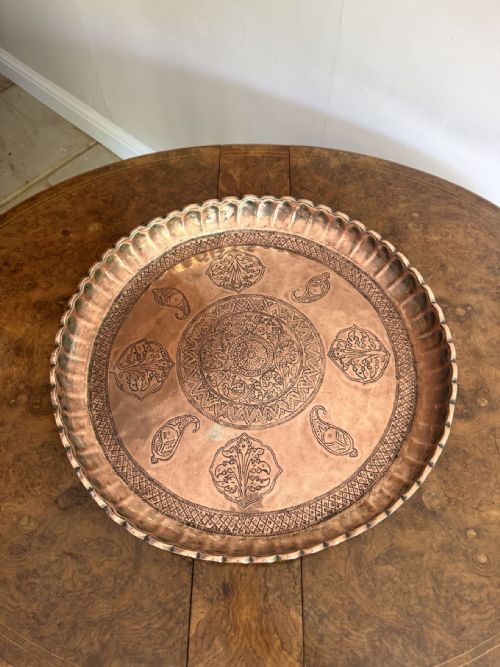


Brass Wall Dish
A brass wall dish brings rich texture and centuries of craftsmanship directly to a room, offering an immediate focal point with its polished or patinated surface.

Brass Wall Dish
A brass wall dish encompasses a diverse selection of decorative chargers, plaques, and heavy circular trays designed primarily for display rather than dining. When searching for this phrase, collectors encounter pieces spanning the eighteenth, nineteenth, and early twentieth centuries, reflecting varied global aesthetics.
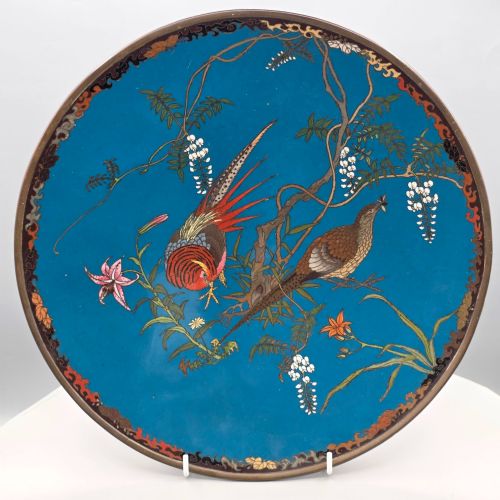
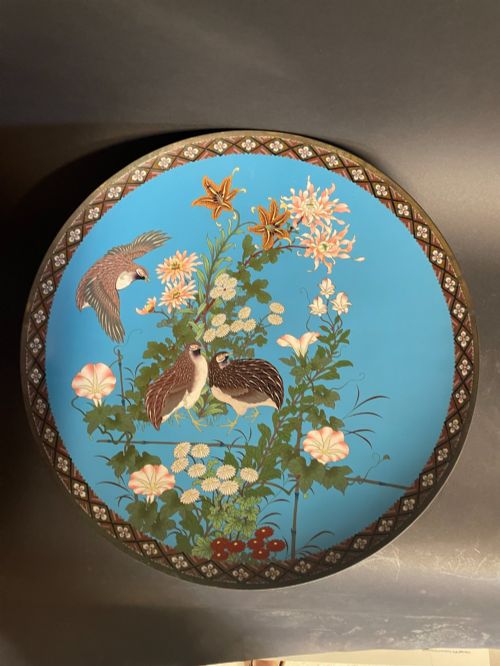
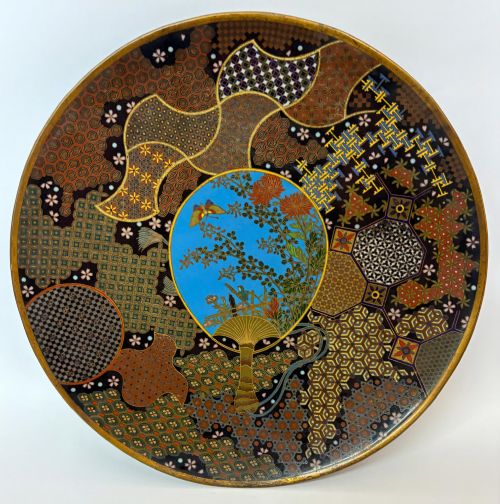
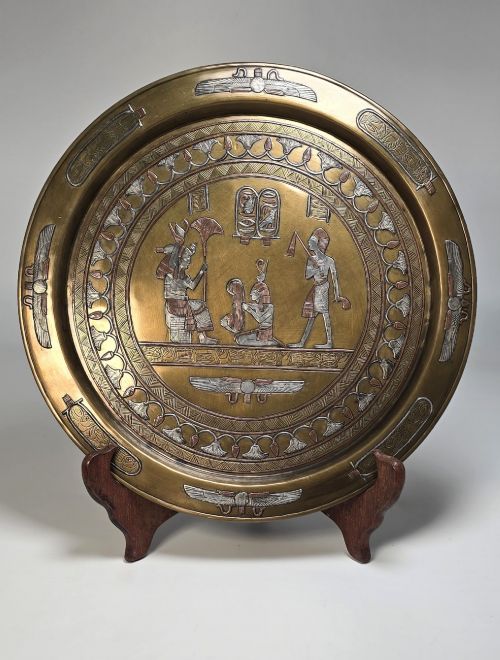
The selections available on this page lean heavily towards nineteenth-century craftsmanship, including large Japanese cloisonné enamel chargers, intricate Middle Eastern silver-inlaid copper work, and British Arts and Crafts hammered brass. Alongside these, buyers find European embossed plaques and Anglo-Indian Raj period repoussé platters.
Forms range from modest plates depicting animals and mythological scenes to massive fifty-centimetre chargers illustrating complex landscapes, flora, and fauna. Whether cast, hammered, or enamelled, these items serve as historic wall art carrying distinct regional signatures.
Materials and technique
Construction relies primarily on base metals such as brass, copper, and bronze, often enhanced through hammering, embossing, and repoussé work. Artisans shaped these malleable materials into deep circular forms, utilising hand tools to press or beat intricate motifs into the metal surface from front and back.
Many examples incorporate mixed media, utilising silver and gold inlay or vibrant glass enamels fused to the metal base via cloisonné techniques. Patinated finishes, applied chemical treatments, and hand-pierced detailing further define the physical character of these decorative dishes.
Several dishes feature elaborate depictions of leaping koi, owls, and leaping shrimp, proving that nineteenth-century artisans appreciated eccentric animal subjects.
What separates the best examples
Quality rests on the precision of the handwork, the depth and complexity of the design, and the integrity of the surface finish. Superior pieces demonstrate crisp chasing, perfectly executed enamel cells without pitting, or deeply articulated repoussé work that holds its definition across a wide surface.
The finesse of the iconography - such as finely rendered feathers on a bird or detailed scales on a dragon - distinguishes masterwork chargers from standard production items. Additionally, the preservation of original patination and the absence of clumsy repairs dictate the standing of a piece within the range.
The Brass Wall Dish Glossary
- Charger
- A large ornamental plate or dish intended for display rather than functional service at the table. These substantial pieces provide a broad canvas for detailed engraving or enamelling.
- Cloisonné
- An ancient metalworking technique where thin wire partitions are soldered to a metal base to create compartments, which are then filled with coloured enamel paste and fired.
- Repoussé
- A metalworking method in which a malleable sheet of metal is hammered from the reverse side to create a raised design in relief on the front.
- Cairo Ware
- Nineteenth-century metalwork originating from Egypt, typically executed in brass or copper and heavily inlaid with silver and other contrasting metals in intricate Islamic patterns.
Brass Wall Dish: Frequently Asked Questions
How do I hang a heavy brass wall dish safely?
Displaying a heavy metal charger requires a specialised wall bracket or a spring-loaded plate hanger designed to support the specific weight and diameter of the object. Ensure the mounting fixings secure directly into wall studs or utilise appropriate masonry anchors.
Avoid standard adhesive disk hangers for heavy copper or bronze pieces. Inspect the rim depth before purchasing a hanger to guarantee a secure, even grip without scratching the metal surface.
What is the difference between a charger and a tray?
While both share a circular metal form, a charger is strictly manufactured for ornamental display, often featuring hanging loops, flat bases, or deep wells intended to showcase intricate imagery. Trays typically include integral handles or flat rims designed for carrying items.
In historic listings, however, the terms frequently overlap because large decorative trays were routinely repurposed for wall display due to their size and visual appeal.
How do I identify the origin of Cairo Ware?
Cairo Ware typically presents as patinated copper or brass heavily decorated with geometric and calligraphic silver inlay, reflecting nineteenth-century Egyptian Revival aesthetics. Many of these pieces were produced for the Grand Tour market catering to European travellers.
Look for characteristic Islamic-style brasswork motifs combined with nineteenth-century manufacturing marks or characteristic weight associated with workshops in Cairo from that period.