
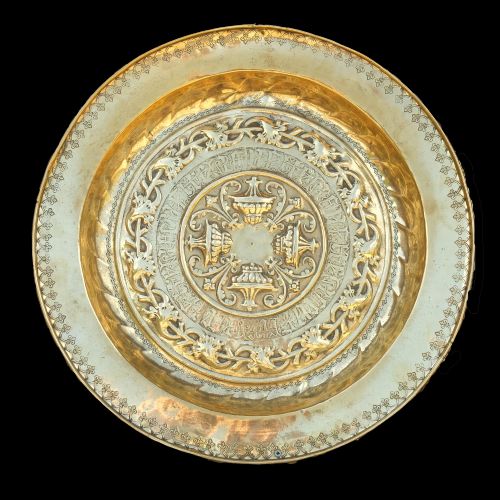


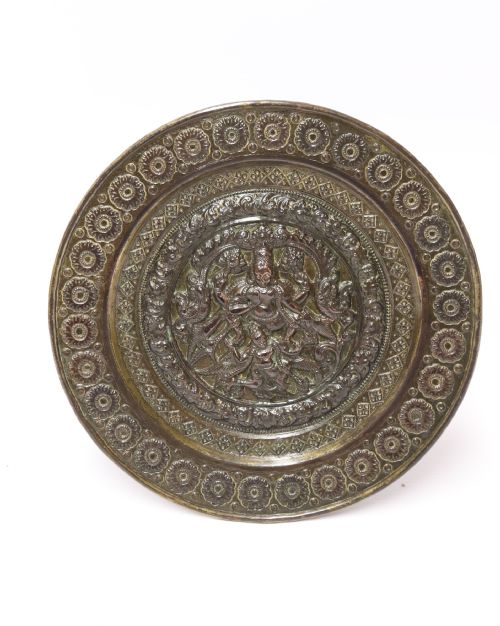
Repousse Brass Charger
These repousse brass charger pieces bring heavy hand-worked metal into a room, offering bold circular forms that catch the light.

Repousse Brass Charger
A repousse brass charger is a wide, shallow metal dish formed by hammering the metal from the reverse side to create raised designs on the front. On this page, you will find circular trays, display plaques, and wall chargers originating from several periods including the sixteenth, eighteenth, and nineteenth centuries, alongside Edwardian and 1930s examples.
The decorative subjects span classical figures, heraldry, animals, and mythological scenes such as Neptune and Diana the Huntress. Anglo-Indian Raj pieces sit alongside European examples, showing varied cultural approaches to hammering and piercing brass and copper.
Forms range from traditional alms dishes and display platters to large circular trays intended for wall hanging. The materials primarily involve brass and copper, sometimes paired with bronze or latten.
What Varies in Quality
Quality rests in the crispness and depth of the hammered relief, where sharper detailing demonstrates greater control by the maker. Thicker metal plates hold their shape better and allow for deeper, more dimensional modelling.
The complexity of the chased and punched background work also distinguishes finer examples from simpler production. Surface integrity, balanced composition, and the clarity of figurative or animal motifs separate standard utility trays from exhibition-grade wall chargers.
Listings feature brass, copper, latten, and bronze, spanning the sixteenth century through the Edwardian period and the 1930s.
The Repousse Brass Charger Glossary
- Repousse
- A metalworking technique where the design is hammered into relief from the reverse side. This method creates tactile, three-dimensional surface decoration.
- Alms dish
- A shallow metal basin historically used for collecting church donations or charity. These early examples often feature religious or heraldic motifs.
- Latten
- A durable yellow metal alloy similar to brass, widely used in earlier centuries for domestic vessels and churchware. It contains copper and zinc.
- Raj period
- The era of British governance in the Indian subcontinent, spanning the nineteenth and early twentieth centuries. Pieces from this time often combine brass and copper work.
- Chasing
- Working metal from the front by sinking the surface with punches to refine repousse details. It sharpens the contours of the raised design.
Repousse Brass Charger: Frequently Asked Questions
How were repousse brass chargers used?
These large metal dishes served both functional and decorative purposes in domestic and religious settings. Many functioned as display pieces on sideboards or were hung on walls to catch the light.
Earlier examples like alms dishes had specific roles in charitable collections or household service before becoming purely decorative wall plaques.
How do I hang a heavy brass charger safely?
Hanging a heavy metal plaque requires wire or adjustable brass spring clips designed to distribute weight evenly across the rim. Ensure the fixing goes directly into a wall stud or uses a rated wall anchor.
Avoid relying on simple adhesive hooks or small picture nails given the substantial weight of large brass and copper trays.
How do I clean and polish an antique charger?
Dust the surface regularly with a soft, dry cloth to prevent grime accumulation in the hammered recesses. Avoid harsh chemical dips that strip away the aged patina and historic character of the metal.
If polishing is necessary, use a mild non-abrasive metal cream applied sparingly with a cotton cloth, working gently around the repousse relief.
How can I tell a sixteenth century dish from a nineteenth century copy?
Sixteenth-century pieces, such as Nuremberg alms dishes, typically exhibit heavy hand-beating, specific gothic or renaissance script, and distinct wear patterns associated with early brass production. Nineteenth-century revival pieces often display machine-rolled edges or different hammering signatures.
Examining the construction methods, tool marks on the reverse, and the specific composition of the brass or latten helps determine the exact period.