


Antique Indian Wall Plaque
An antique indian wall plaque brings heavy metalwork and deep-relief carving into a room, offering rich foliate decoration and centuries of craftsmanship.
Antique Indian Wall Plaque
When you search for an antique indian wall plaque, you encounter substantial metal chargers, shields, and carved wooden panels originating from the nineteenth and early twentieth centuries. These pieces encompass styles such as Anglo-Indian, Indo-Persian, and Raj period designs, reflecting a distinct colonial and regional aesthetic.
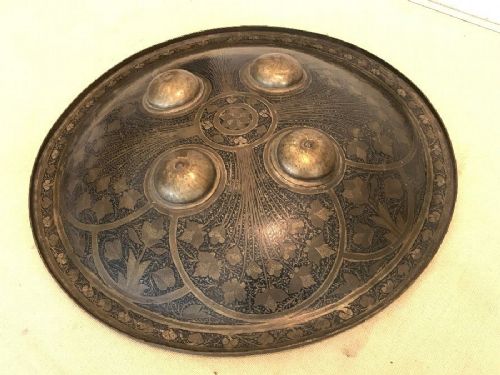
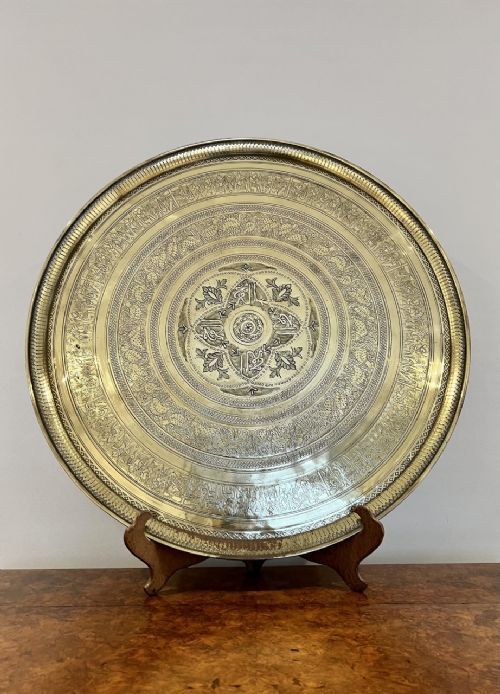
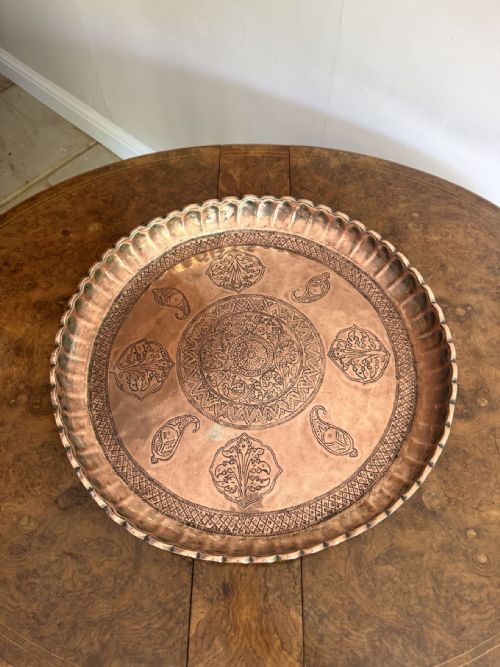
You are most likely to meet large circular brass and copper chargers alongside heavy hardwood wall panels on this page. Formats range from pierced repoussé trays to deep relief specimen wood panels and metal dhal shields.
The objects serve primarily as decorative wall art, transforming plain surfaces through intricate surface work. Their origins stretch across varied workshops and eras, spanning from early nineteenth-century Islamic shields to Edwardian specimen wood panels.
Materials and methods
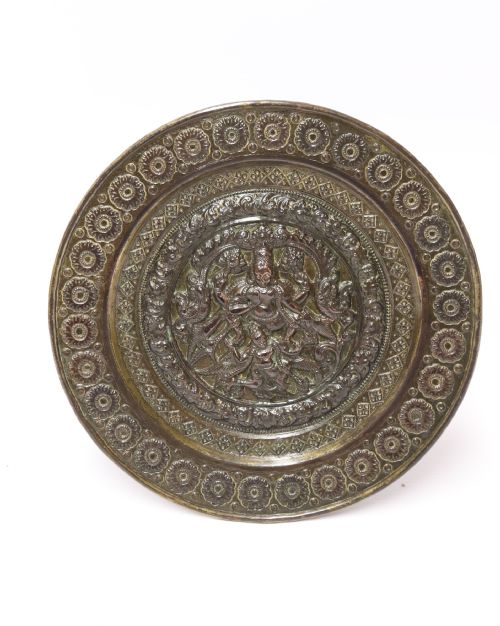
Artisans employed brass, copper, bronze, and mixed metal to create chargers and shields, utilising hammering, engraving, and hand piercing techniques. Repoussé work raised patterns in high relief from the reverse side, building complex foliate and geometric motifs.
Makers utilised teak and other hardwoods for carved and framed wall panels, applying deep relief techniques to specimen wood. Silver plating frequently enhanced copper and brass surfaces, creating contrast across intricate tray designs.
Some shields originally designed for combat spent their later years catching admiring glances from Victorian drawing room visitors instead of spears.
Factors of quality
Depth and crispness of relief work separate standard decorative plates from exceptional examples. Fine pieces display sharply defined chiselling and dense, confident hand-piercing across the entire metal surface.
The weight of the metal and the complexity of the mixed metal inlay dictate the standing of a plaque. Superior specimens combine heavy gauge brass and copper with balanced composition and intact structural framing.
The Antique Indian Wall Plaque Glossary
- Repoussé
- A metalworking technique where the artisan hammers metal from the reverse side to form raised designs in relief on the front. This method creates tactile depth across chargers and plaques.
- Charger
- A large ornamental platter or plaque intended for display rather than table use. These circular metal pieces frequently feature engraved foliate borders.
- Dhal Shield
- A traditional Indian defensive shield adapted for decorative display in nineteenth-century interiors. They often incorporate brass bosses and elaborate surface engraving.
- Anglo-Indian
- A style blending traditional Indian craftsmanship with British aesthetic preferences of the nineteenth century. It frequently appears in decorative metalwork and carved furniture.
- Specimen Wood
- Timber assembled from various distinct tree species to showcase contrasting grain patterns and natural colours. Panels utilising this method highlight varied botanical tones.
Antique Indian Wall Plaque: Frequently Asked Questions
How do I hang a heavy metal plaque safely?
Metal chargers and shields require secure wall anchors rated for substantial weight rather than simple picture hooks. Utilising the existing rim or integrated rear fixings ensures the plaque stays firmly against the wall.
For wooden panels, heavy-duty brackets supporting the frame distribute the load evenly across the wall studs.
What is the difference between a tray and a wall plaque?
Many decorative metal trays share identical construction methods with wall plaques and were produced for both domestic use and display. Trays often feature flat bases or shallow rims designed to rest on surfaces.
Wall plaques usually incorporate hanging loops or heavier gauges suited strictly for vertical display.
How should I clean antique brass and copper?
Polishing antique metalwork removes patination that accumulates over decades, which collectors generally prefer to preserve. Gentle dusting with a soft, dry cloth keeps the surface clear without stripping historic character.
Harsh chemical cleaners damage the original chased details and alter the colour of the metal permanently.
How do I identify a Raj period piece?
Raj period items date from the period of direct British rule in India during the nineteenth and early twentieth centuries. They frequently combine traditional Indian repoussé techniques with forms tailored for European homes.
Documentation or distinct stylistic markers like mixed metal composition often point directly to this era.