
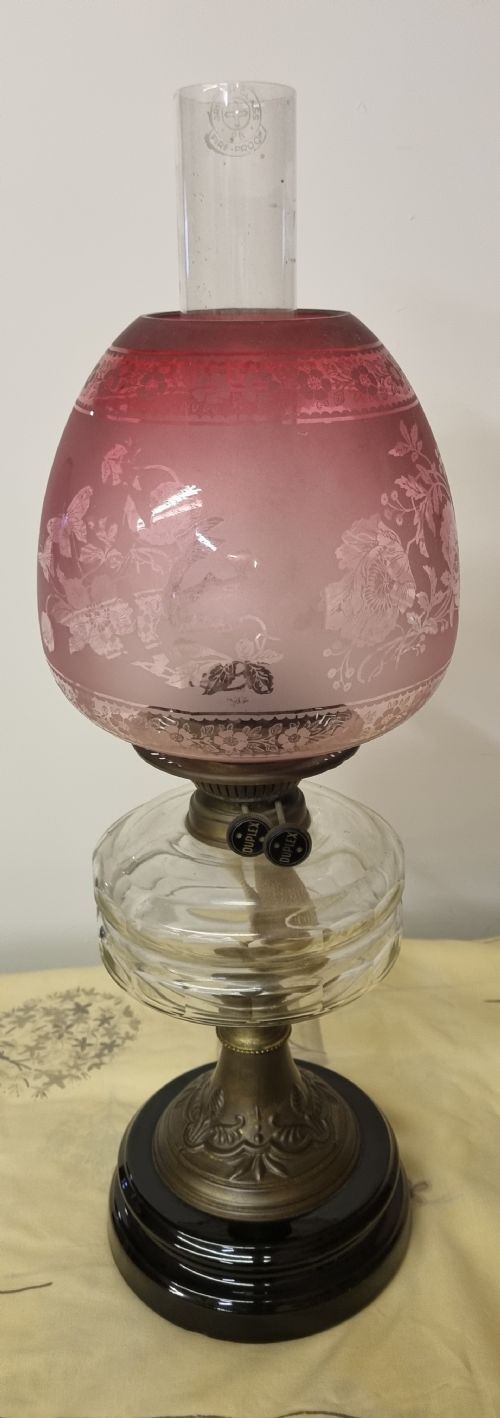
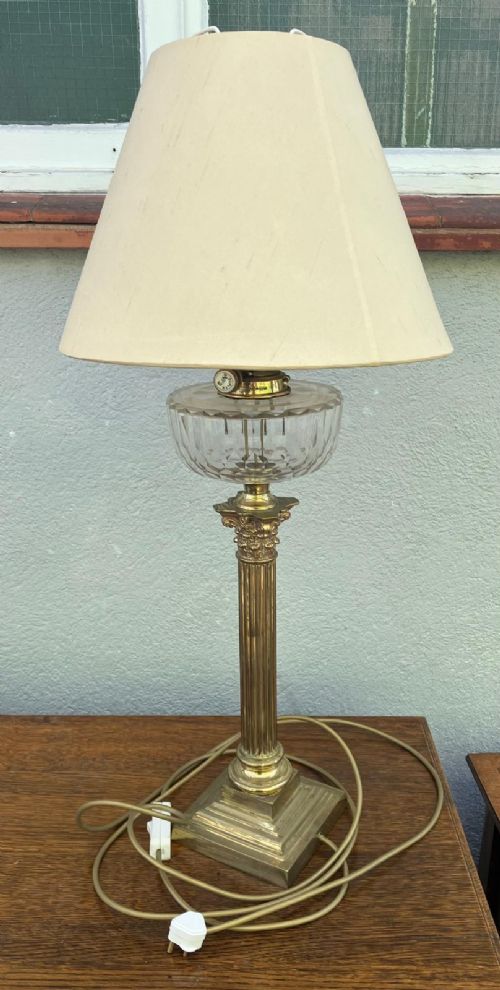
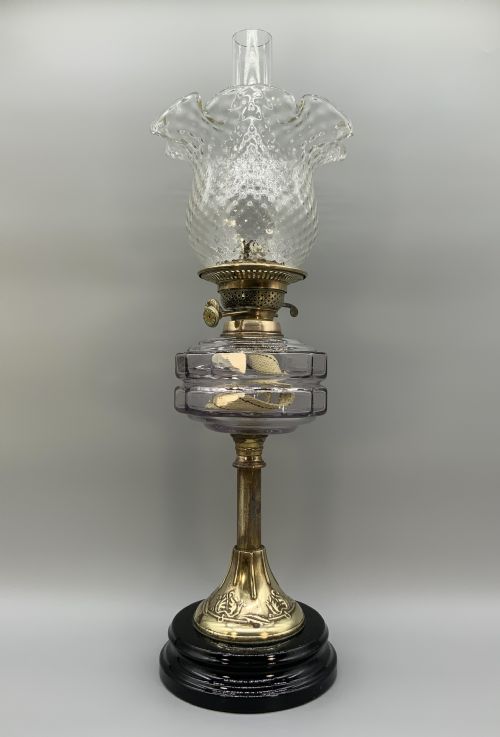
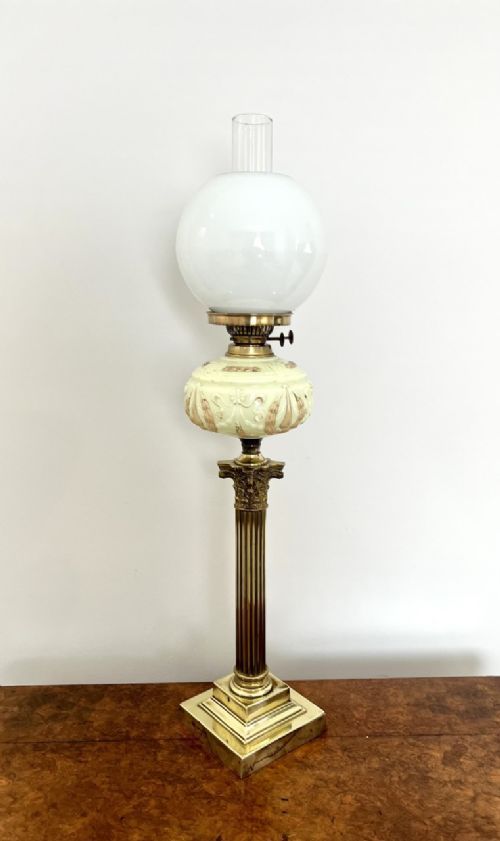

Brass Table Oil Lamp
When you search for a brass table oil lamp, you are looking at nineteenth and early twentieth century lighting built from solid metal, glass and ceramic.
Brass Table Oil Lamp
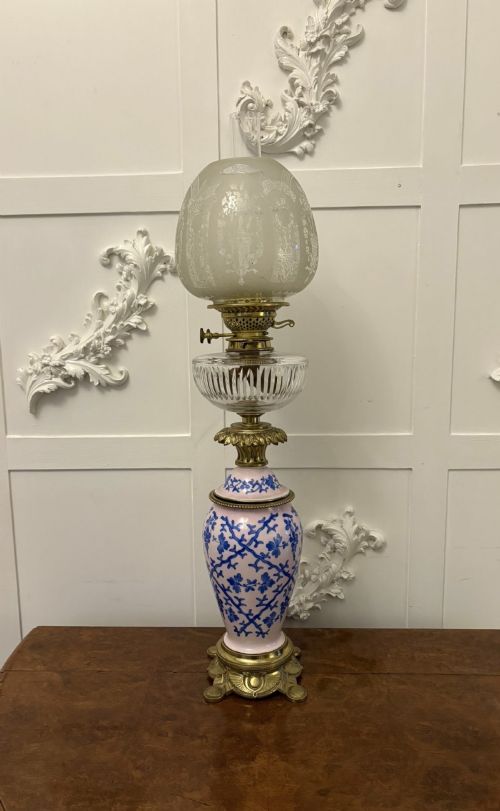
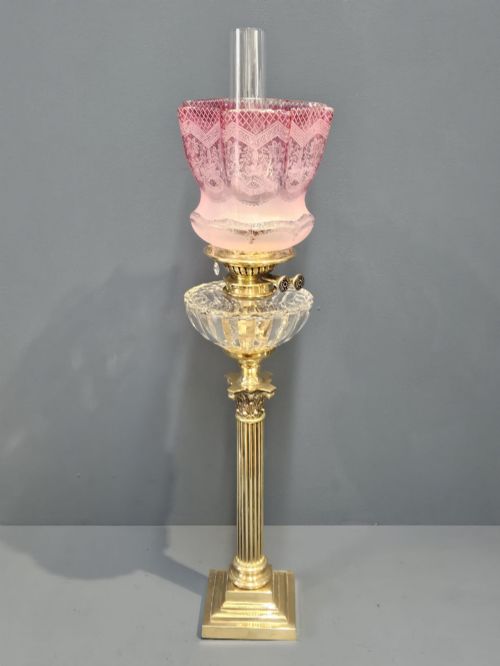
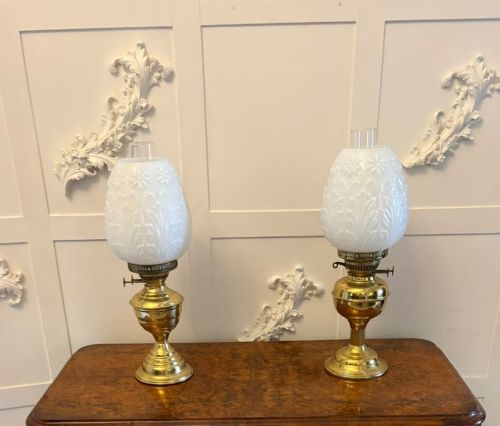
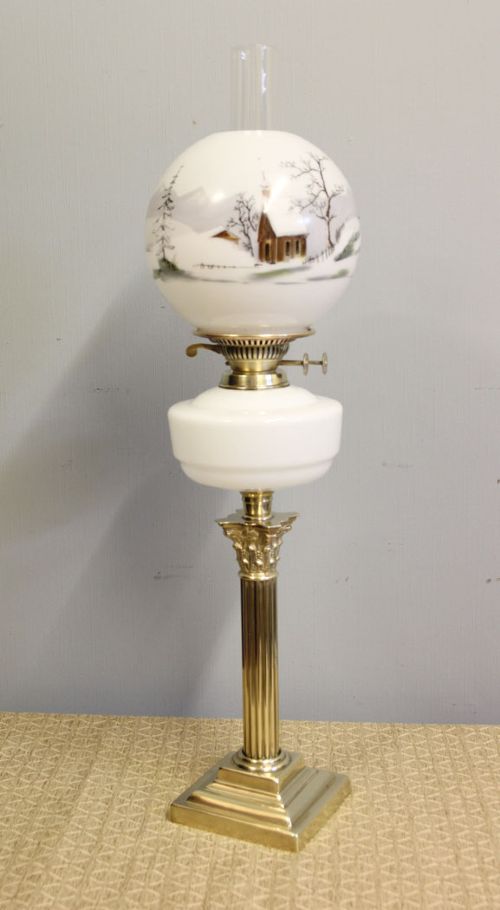
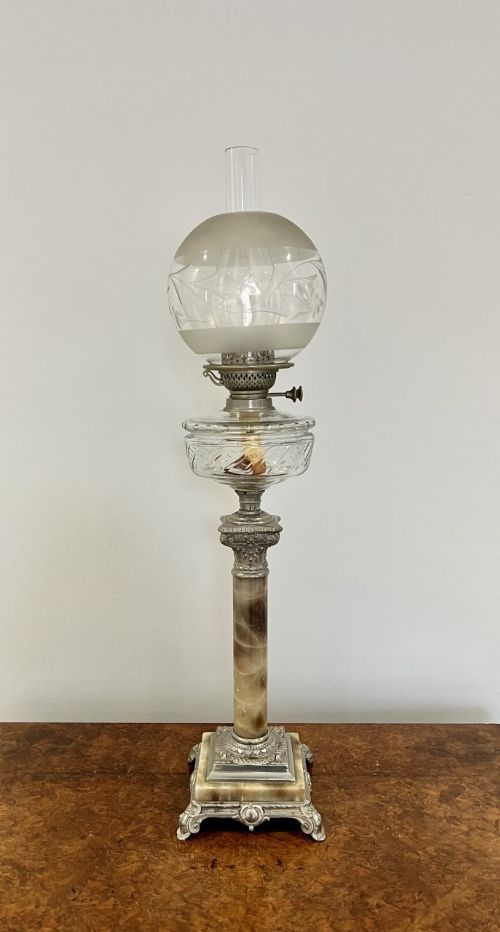
A brass table oil lamp is a domestic lighting piece designed to sit upon a surface, combining a metal reservoir and column with a burner mechanism. You will most frequently encounter Victorian examples featuring classical columns, alongside Edwardian variations and late nineteenth century designs.
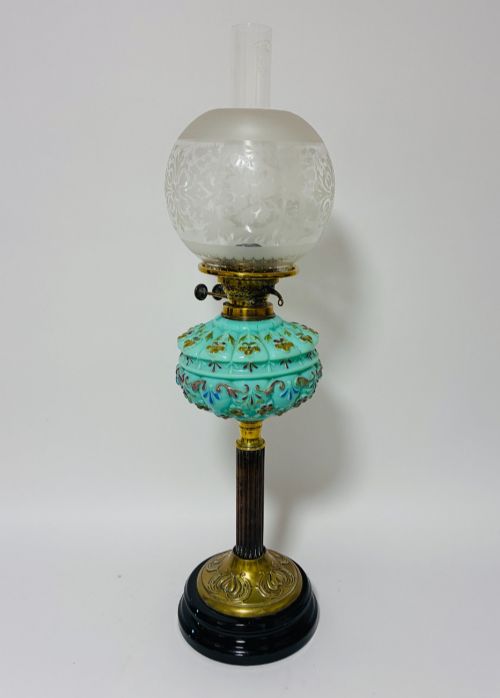
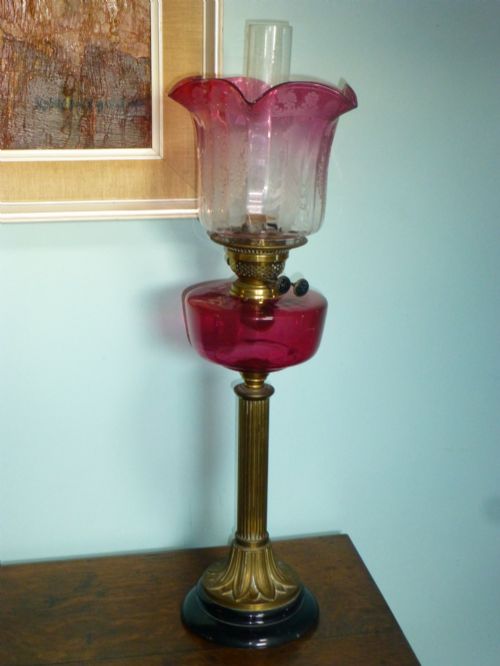
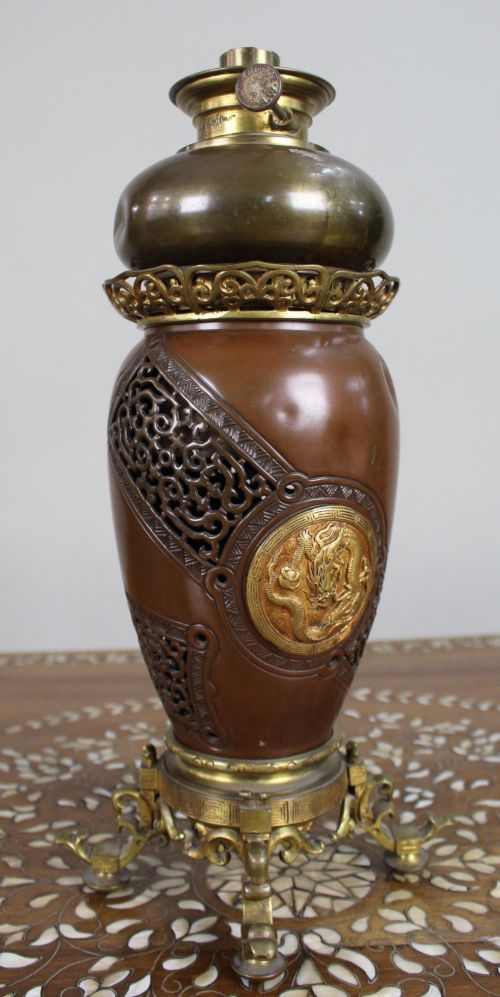
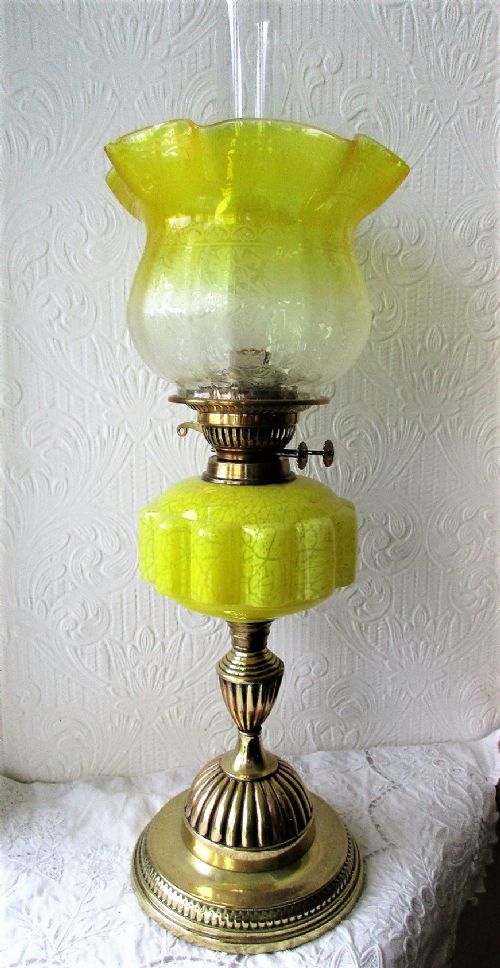
The materials span cast and spun brass paired with glass fonts, ceramic bodies, and contrasting copper elements. Many examples incorporate coloured or hand-painted glass shades in cranberry, opaline, or etched finishes to diffuse the light.
Makers such as Hinks, Wild and Wessel, and Taylor Tunnicliff produced standard columns alongside figural, student, and duplex models. These objects survive from periods spanning the eighteen-fifties through to the nineteen-thirties, often retaining their original burners or shade galleries.
Materials and Construction
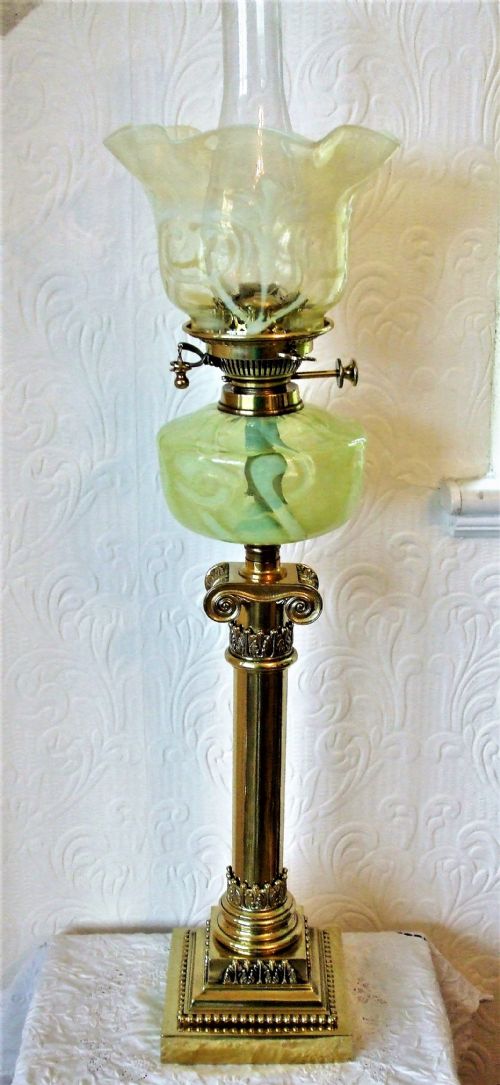
Foundry casting created the heavy brass bases, stepped plinths, and Corinthian capitals seen on columns, while sheet brass was spun to form fonts and galleries. Makers combined these metal bodies with hand-blown glass shades, opaline fonts, and earthenware or porcelain reservoirs.
Burner mechanisms utilised complex brass engineering, including double-wick duplex systems and specialised adjusters by makers like Hinks. Assembly relied upon threaded brass collars, weighted iron bases for stability, and soldered joints connecting the fuel chamber to the column.
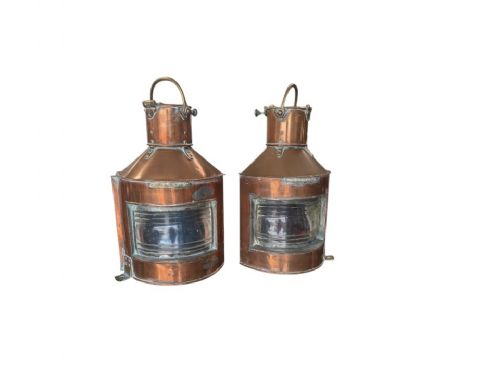
Some maritime examples doubled as starboard and port navigation lights, ensuring ships could read by the same metal that guided their course.
Separating Ordinary from Exceptional
The distinction between standard production and top tier pieces lies in the crispness of the brass casting and the weight of the metal components. Better examples display finely detailed acanthus leaves on Corinthian columns and heavy gauge brass that resists denting.
The quality of the associated glass elevates a piece significantly, with hand-blown cranberry shades, etched tulip designs, and layered opaline glass marking superior output. Maker signatures on the brass burner thumbscrews and matching registered design numbers confirm higher manufacturing standards.
Hinks of Birmingham·Wild and Wessel·Taylor Tunnicliff·Alderson and Gyde Ltd·Gustave Serrurier Bovy
The Brass Table Oil Lamp Glossary
- Duplex burner
- A burner mechanism utilising two parallel flat wicks to produce a significantly brighter flame than single-wick models. This system became standard on high-output Victorian lighting.
- Corinthian column
- An architectural column style featuring ornate acanthus leaves at the capital, frequently cast in brass to form the stem of nineteenth century lamps. It remains one of the most popular classical revival motifs.
- Font
- The reservoir container that holds the paraffin or lamp oil beneath the burner. These containers are found in matching brass, coloured cranberry glass, or painted porcelain.
- Gallery
- The metal ring fitted around the base of the burner designed to hold the glass shade securely in place. It often includes adjustable prongs or screws.
- Student lamp
- A functional desk lamp design featuring an offset oil font intended to provide unobstructed light for reading or writing. These typically incorporate simpler, utilitarian brass construction.
Brass Table Oil Lamp: Frequently Asked Questions
How do I identify a Victorian brass table oil lamp?
Victorian examples typically feature heavy cast brass bases, classical column stems, and maker marks stamped directly onto the burner mechanisms. Look for substantial weight and traditional period proportions rather than lightweight modern replicas.
Check for components such as brass galleries, wick winders bearing patent names, and original glass chimneys or coloured shades. The integration of ceramic fonts or Corinthian capitals also points directly to nineteenth-century production.
Can these lamps still burn oil today?
Many surviving lamps retain their original operational brass burners and can function with modern lamp oil if the internal mechanisms remain intact and clean. However, many owners choose to display them in their original state or have them professionally adapted for electric lighting.
If you plan to burn oil, ensure the wick carrier moves freely and the font seals correctly without leaks. Converted pieces retain their aesthetic appeal while offering safer integration into contemporary household wiring.
What is a duplex burner?
A duplex burner is a dual-wick mechanical system developed in the Victorian era to maximise illumination from paraffin fuel. It uses two flat wicks operating side by side beneath a shared gallery.
This design required heavier brass construction and larger chimneys to handle the increased heat output. Finding a marked duplex mechanism often indicates a higher quality piece of period lighting.