
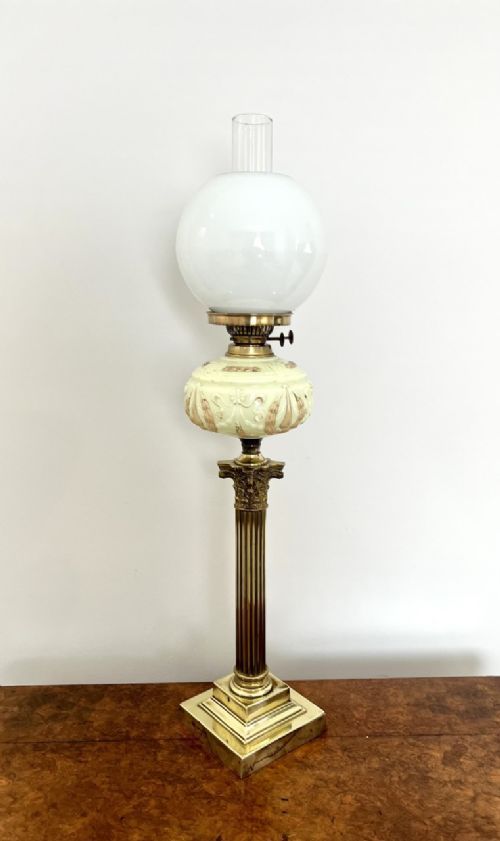
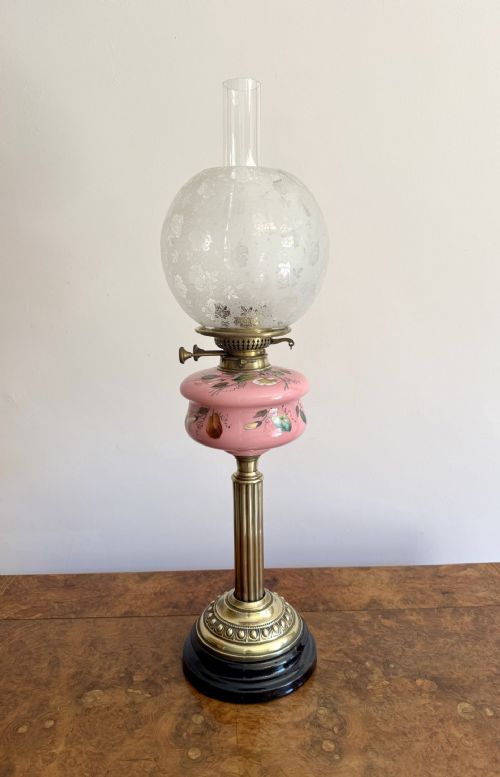


Brass Reservoir Lamp
A brass reservoir lamp brings nineteenth-century illumination into a modern room through polished metal and tinted glass.
Brass Reservoir Lamp
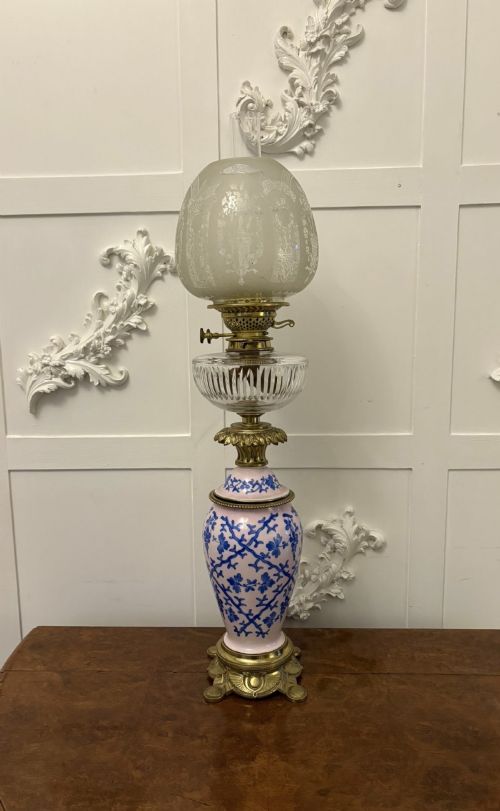
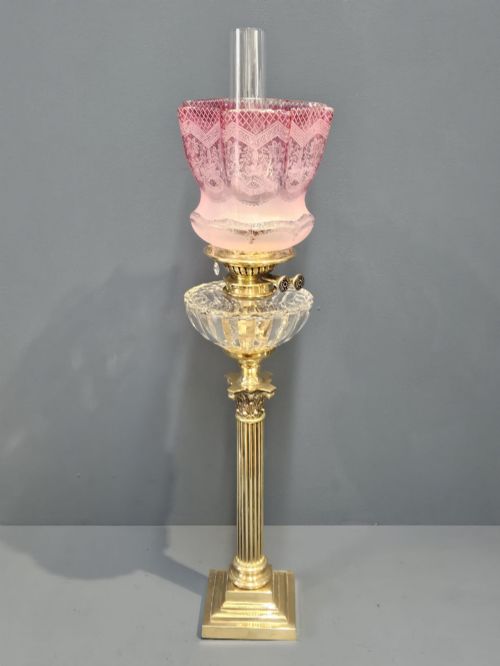
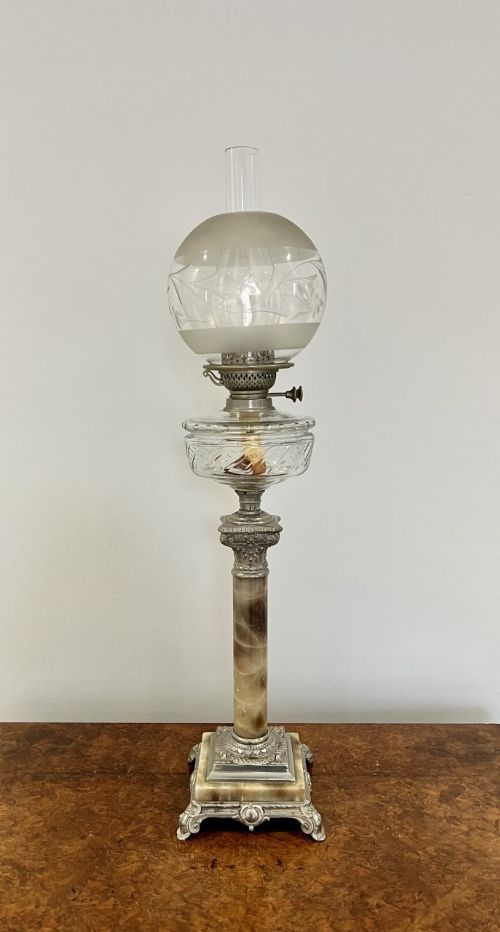
A brass reservoir lamp is a lighting fixture designed to burn paraffin or oil, typically combining a solid metal base with a glass or ceramic fuel container. When you search for a brass reservoir lamp, you encounter items primarily from the Victorian and Edwardian periods, running from the mid-nineteenth century up to nineteen hundred. These pieces range from simple domestic table lamps to monumental Corinthian columns paired with coloured glass shades.
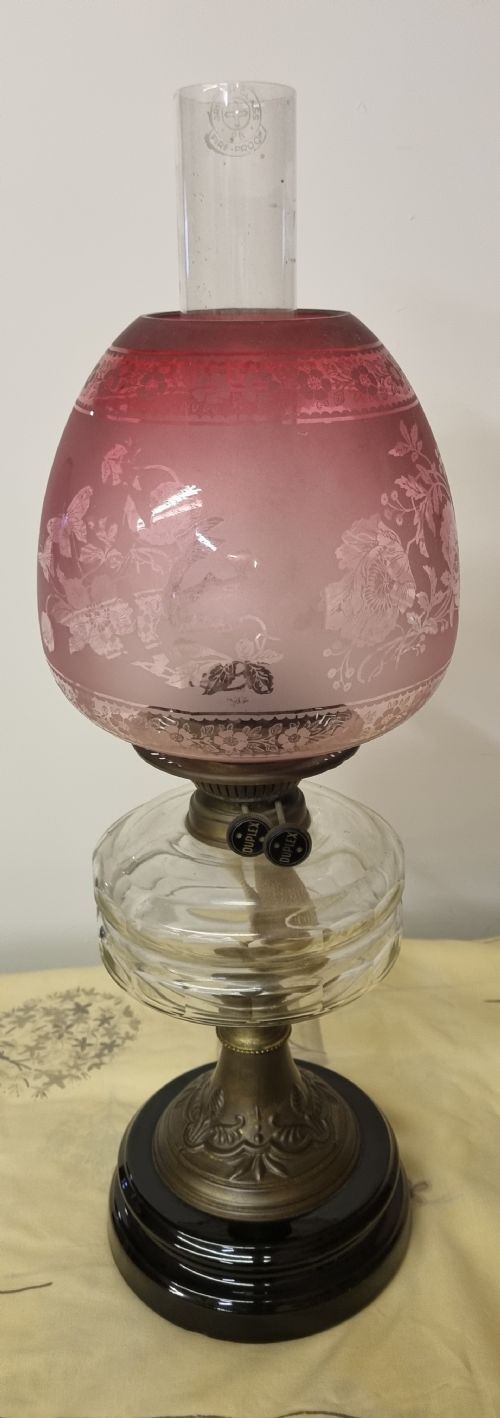
The most common examples on this page are standard Victorian table lamps featuring spun or cast brass bases supporting glass fonts. You will also find Italian cast brass and bronze pieces alongside British productions from makers such as Hinks and Messenger. Many survive with their original shades in cranberry, blue, or green glass, while others have been converted to electricity for contemporary use.
Evaluating quality and execution
The standard of a brass reservoir lamp is determined by the crispness of its casting and the weight of its metal components. Finer examples display deeply carved acanthus leaves on Corinthian capitals and thick, heavy-gauge brass that resists bending. Heavier metal provides the necessary stability to support substantial glass reservoirs without tipping.
The quality of the reservoir itself separates standard production from exceptional work. Cut glass fonts exhibit sharp, clean facets that refract light clearly, whereas inferior moulded glass often shows softer edges and visible seam lines. The integration between the metal collar, the burner mechanism, and the glass vessel further indicates the original maker's investment in time and materials.
Several Victorian lamps retain their original burners stamped with patent numbers, proving that even nineteenth-century housework required a clever gadget.
Hinks of Birmingham·Messenger·Young's·Harrods·Tilley
The Brass Reservoir Lamp Glossary
- Reservoir
- The container that holds the oil or paraffin fuel, frequently made from cut, moulded, or coloured glass. It sits atop the metal column and secures the burner.
- Font
- An alternative term for the oil reservoir, often used when describing the glass or ceramic vessel that holds the liquid fuel.
- Corinthian column
- A classical architectural column style featuring an ornate capital decorated with acanthus leaves. This form was widely adopted for nineteenth-century lighting.
- Peg lamp
- A small oil lamp designed with a protruding metal or glass peg at the base to fit directly into the socket of an existing candlestick or wall sconce.
- Duplex burner
- A double-wick mechanism that produced a brighter flame than single-wick burners. It became a standard fitting on better-quality Victorian lighting.
- Lucerna
- An ancient style of oil lamp, reproduced in cast brass and bronze during the nineteenth century, particularly associated with Italian manufacture.
Brass Reservoir Lamp: Frequently Asked Questions
Are these lamps still safe to burn with oil?
Most of these lamps are now wired for electricity to suit modern homes. Using them with oil requires professional inspection of the burner and font for hairline cracks.
For practical daily use, conversion preserves the original appearance while removing the risks associated with burning paraffin indoors.
How do I identify a Victorian lamp?
Victorian examples typically feature heavy cast brass bases, classical revival columns, and hand-blown or cut glass reservoirs. Maker marks stamped onto the brass gallery or burner thumb-turn often confirm the period.
Stylistic cues such as Art Nouveau whiplash lines or Neoclassical proportions help narrow down the decade of production.
Can I replace a missing glass shade?
Finding a matching replacement shade is possible, though collectors prefer pieces retaining their original coloured or frosted glass components. Measurements of the brass fitter ring dictate the required base diameter for any new shade.
Cranberry, green, and blue glass shades were produced in vast quantities during the nineteenth century, matching many standard burner sizes.
What is the difference between an oil lamp and a paraffin lamp?
In nineteenth-century terminology, the words were often used interchangeably, though paraffin became the standard refined fuel by the eighteen-sixties. Both terms describe fixtures designed to burn liquid fuel through a cotton wick.
Later Victorian listings frequently specify paraffin to indicate compatibility with the cleaner-burning petroleum distillate.