




Brass Lamp Clear Chimney
These brass lamp clear chimney pieces combine functional illumination with period metalwork, offering authentic Victorian and Art Nouveau character for your interior.
Brass Lamp Clear Chimney
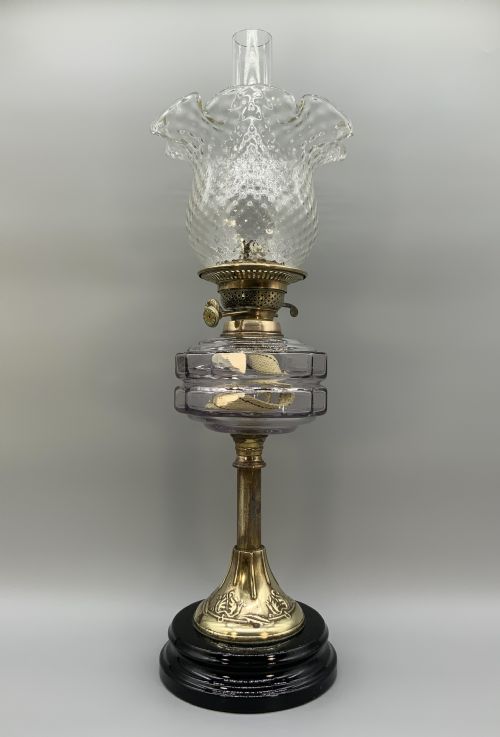
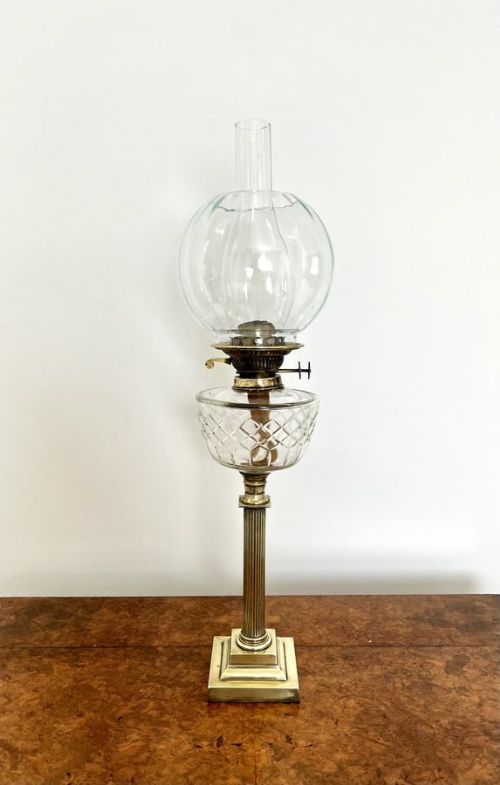
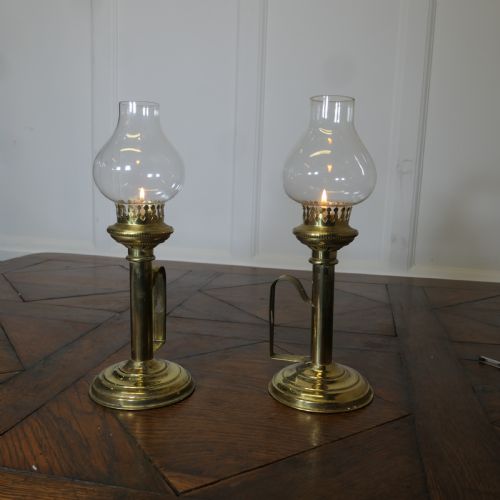
When you search for brass lamp clear chimney, you find domestic lighting apparatus designed to burn oil, principally oil lamps and candlesticks fitted with transparent glass chimneys. These functional domestic items date across the nineteenth and twentieth centuries, spanning the Victorian era and the turn of the twentieth century.
You are most likely to encounter Victorian oil lamps featuring brass reservoirs and columns, often paired with ceramic elements, cut glass, opal glass, or milk glass. Some examples incorporate hand-blown shades or terrestrial globe designs alongside the clear glass chimney.
The selection includes tall table models, twin-burning configurations, and pairs of candlesticks equipped with glass chimneys. Dating ranges from the 1860s through to 1900, reflecting the stylistic shifts from mid-Victorian production to Art Nouveau aesthetics.
How they were made
Makers constructed these pieces primarily using cast and spun brass for the structural bodies, columns, and bases, frequently combining the metal with ceramic components or glass reservoirs. This combination provided both the necessary weight for stability on a table and a decorative contrast to the metallic sheen.
Transparent glass chimneys and various shades were produced through glassblowing techniques, yielding clear tubes designed to stabilise the flame and direct airflow. Cut glass, opal glass, and milk glass variants demonstrate the range of decorative glass-forming methods employed by period artisans.
What varies in quality
The refinement of the casting and finishing on the brass components distinguishes standard production from finer examples. Heavier gauge metalwork and crisper surface detailing indicate superior execution.
The complexity of the associated glass elements, such as intricate hand-blowing, terrestrial globe shaping, or deep crystal cutting, elevates the overall standard of the piece.
Messengers·Harrods
The Brass Lamp Clear Chimney Glossary
- Chimney
- A tubular glass guard placed over the burner of an oil lamp to steady the flame and improve combustion. It ensures a clean burn and protects the surrounding room from soot.
- Oil Lamp
- A domestic lighting device that burns liquid fuel via a wick held in a burner. These units typically feature a metal reservoir and a supporting base.
- Opal Glass
- A translucent, milky-white glass used for shades and reservoirs. It diffuses light softly while adding an opaque decorative element to the fixture.
- Cut Glass
- Glass decorated by grinding and polishing facets into the surface. This technique catches and refracts light from the flame or surrounding room.
Brass Lamp Clear Chimney: Frequently Asked Questions
What is a brass lamp clear chimney?
These items are nineteenth and early twentieth-century domestic lighting fixtures, specifically oil lamps and candlesticks made of brass and fitted with transparent glass chimneys.
They combine metallic bases and reservoirs with functional glass components designed to protect and steady the flame during use.
How do I date a brass oil lamp?
Dating relies on stylistic indicators such as Victorian proportions, mid-nineteenth-century cut glass details, or later Art Nouveau curves found in the metalwork and shades.
Evidence from this category spans from the 1860s through the turn of the twentieth century, with materials like milk glass and opal glass pointing to specific manufacturing periods.
How were these lamps used historically?
Households relied on these pieces for interior illumination before the widespread adoption of electric lighting. They sat on tables or sideboards to provide steady, adjustable light through burning oil.
The clear chimney served the practical purpose of shielding the flame from drafts while ensuring proper oxygen flow to maintain brightness.
Can I still use an antique oil lamp?
Many collectors choose to display these pieces as decorative antiques rather than functional lighting sources. Converting them for modern use requires careful assessment of the original burner and fuel mechanism.
When living with these items, placement on stable surfaces ensures the glass chimneys and shades remain secure.