



Traditional Brass Oil Lamp
A traditional brass oil lamp brings warm, tactile illumination into a room, grounding modern spaces with heavy metal columns and coloured glass fonts.
Traditional Brass Oil Lamp
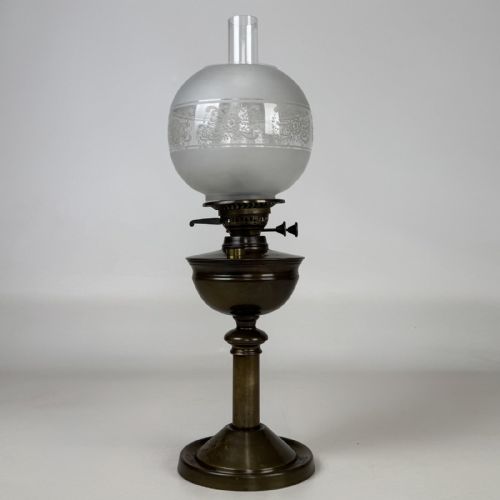
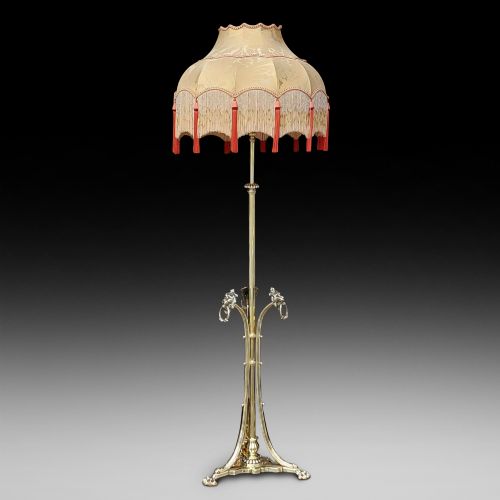
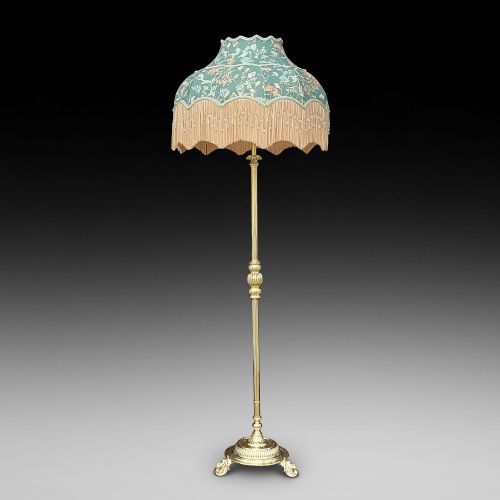
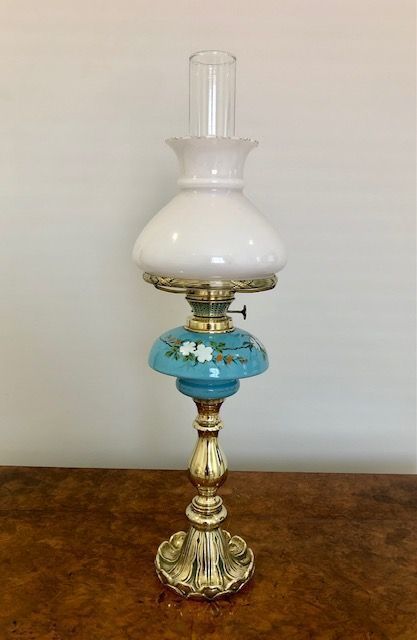
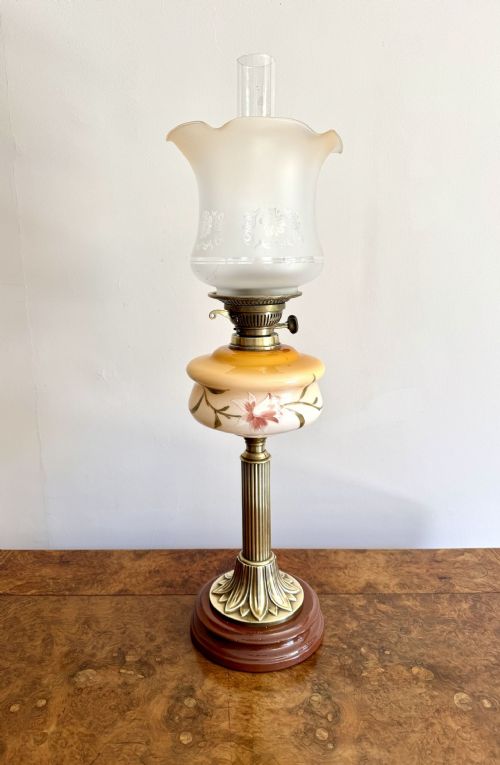
A traditional brass oil lamp is a lighting fixture designed to burn paraffin or oil, commonly appearing across Victorian and Edwardian periods alongside earlier Georgian examples. These pieces typically take the form of table lamps, floor standards, or student lamps, often combining polished brass bases with contrasting glass reservoirs.
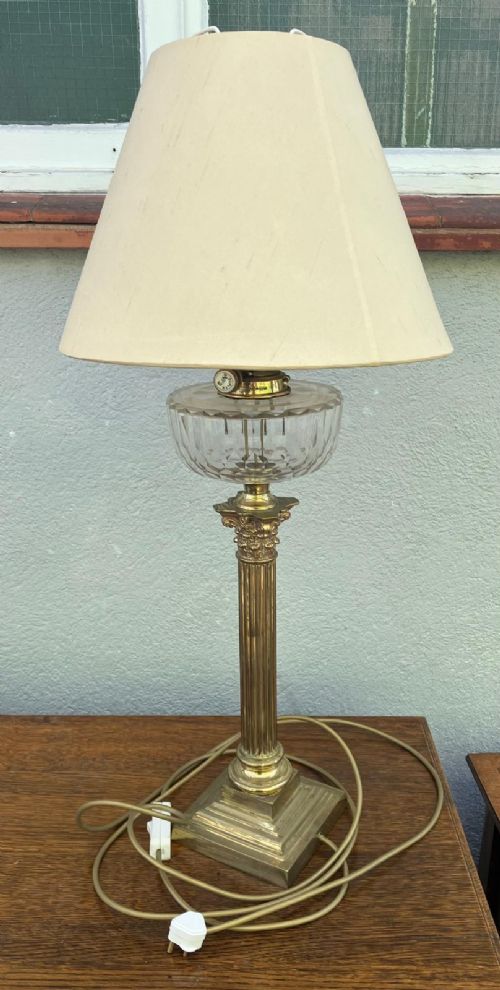
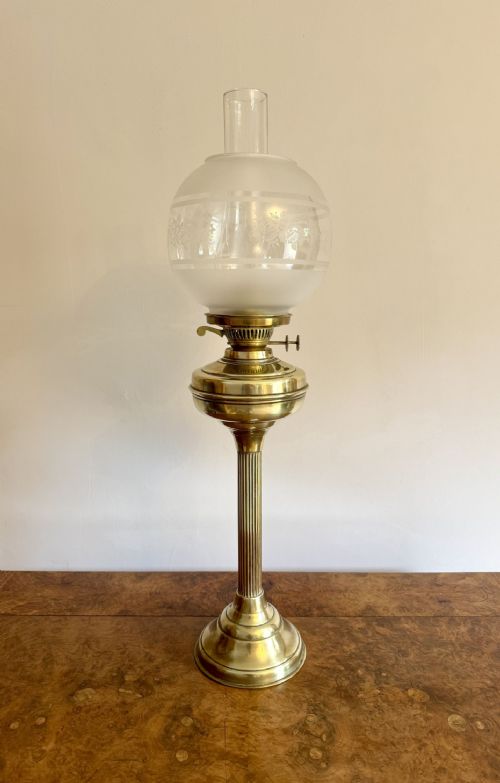
The versions most frequently met on this page span the nineteenth century, including tall Corinthian column designs and adjustable standards. Many retain their original glass shades, ranging from simple white globes to etched tulip forms and striking cranberry or opaline glass.
Alongside standard domestic lighting, the selection encompasses specialised forms such as hanging Sabbath lamps and Himalayan butter lamps. This variety reflects a broad geographic and cultural range while maintaining a shared reliance on brass construction.
Markers of distinction
Quality in these lamps rests on the weight and crispness of the brass casting, particularly in architectural details like Corinthian capitals and fluted columns. Finer examples display sharp definition and substantial heft, whereas simpler pieces utilise lighter gauge metal and pressed components.
The integration of the glass font elevates the piece, especially when utilising coloured cranberry glass, cut crystal, or etched opaline shades in original configurations. Completeness also dictates the standing of a lamp, with surviving burners, chimneys, and matching shades marking out superior examples.
Messengers·Harrods
The Traditional Brass Oil Lamp Glossary
- Duplex burner
- A double-wick burner mechanism that produced a brighter flame than single-wick variants. These twin systems require two flat wicks housed side by side.
- Font
- The reservoir that holds the oil or paraffin before it reaches the burner. Also known as a reservoir, this part is frequently formed from glass or brass.
- Corinthian column
- An architectural column style featuring an ornate capital decorated with acanthus leaves. Makers frequently adopted this classical form for tall table and standard lamps.
- Student lamp
- A utilitarian desk lamp featuring an offset font designed to cast light over a workspace without blocking the view. These functional pieces often include adjustable arms and implement holders.
- Repoussé
- A metalworking technique where the design is hammered into relief from the reverse side. French examples frequently showcase this ornate decorative hammering on the base.
Traditional Brass Oil Lamp: Frequently Asked Questions
Can these lamps still burn oil?
Many of these lamps retain their original burner mechanisms and can function with paraffin or oil if the seals and wicks remain sound.
However, numerous examples have been converted to electricity over the years to suit modern domestic lighting needs.
How do I date a brass oil lamp?
Dating relies on stylistic clues, such as the architectural revival forms popular in the Victorian period or the simpler lines of Edwardian pieces.
Maker marks stamped onto the brass burner turn screws also help pinpoint the manufacturing era.
Are glass shades usually original?
Finding a lamp with its matching period shade, whether etched tulip, opaline, or cranberry glass, is common but not guaranteed.
Shades were often replaced or swapped over decades of use, so matching the glass type to the base period requires careful observation.
What is a standard lamp?
A standard lamp refers to a tall floor-standing lighting fixture designed to illuminate a wider area of a room.
These pieces often feature adjustable heights and heavy weighted brass bases to maintain stability.