
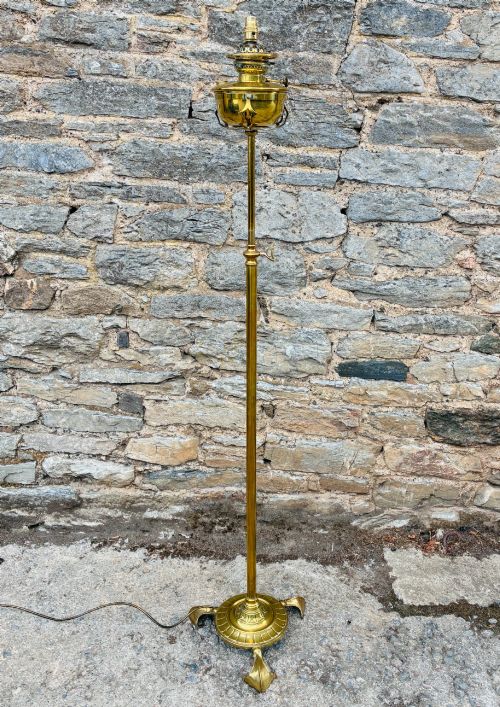


Electric Oil Lamp
These electric oil lamps are period font vessels and column standards adapted for modern wiring, bringing Victorian and Edwardian warmth to a room.
Electric Oil Lamp
When you search for electric oil lamp, you encounter lighting fixtures originally built to burn paraffin or kerosene that have since been adapted for domestic electricity. Most examples on this page date from the nineteenth and early twentieth centuries, spanning the Victorian and Edwardian eras alongside French Napoleon III and Art Nouveau designs.
The standard forms include table lamps, wall sconces and tall standard lamps designed to stand upon the floor. Many retain their original telescopic columns or heavy weighted bases, while others take the form of Corinthian columns or slender font holders.
Materials range from heavy cast brass and copper to silver plate, iron and ceramic, frequently paired with opaline, milk or cut-glass reservoirs. The conversion process typically preserves the burner mechanism and collar while routing a modern flex through the central column or font.
What varies in quality
Quality rests in the weight and crispness of the metal casting, particularly in the definition of Corinthian capitals, cherubs or stamped brass ornamentation. Heavier gauge brass and thick cut-glass or opaline reservoirs indicate superior manufacture compared to lighter, plain-spun metal bodies.
The standard of the electrical conversion also distinguishes the pieces, with professional rewiring that conceals internal components and retains original burners commanding greater appreciation among collectors.
Napoleon III cherubs happily orchestrate your reading corner from a converted brass oil lamp.
Hinks
The Electric Oil Lamp Glossary
- Font
- The oil reservoir of the lamp, typically formed from glass, ceramic or metal and positioned above the base.
- Telescopic column
- A central shaft designed to adjust in height, allowing the lamp to serve as both a desk and floor standard.
- Opaline glass
- An opaque, milky-white or pastel-tinted glass popular during the nineteenth century for lamp reservoirs and shades.
- Corinthian column
- A classical architectural column style featuring ornate acanthus leaves upon the capital, frequently used for grand table lamp bases.
- Tilley lamp
- A pressure paraffin lamp brand whose robust metal bodies are occasionally adapted for domestic electric conversion.
Electric Oil Lamp: Frequently Asked Questions
Are these lamps safe to use daily?
Most period lamps found here have been converted to electricity using modern wiring standards to ensure safe domestic operation.
Buyers should check that the internal flex and lamp holder meet current regulations before plugging them in for everyday use.
Can the height of a telescopic lamp be adjusted?
Telescopic standards generally retain their original sliding mechanism, permitting height adjustment along the central brass column.
Once wired, however, the internal cord length limits how far the stem can be extended safely.
What type of bulbs do converted oil lamps require?
The required bulb depends on the specific lamp holder fitted during the electrical conversion, which often matches standard modern domestic fittings.
Consulting the specific lampholder type inside the burner gallery ensures the correct wattage and cap size are selected.
How do I distinguish Victorian from Edwardian examples?
Victorian pieces frequently display heavier brass castings, Corinthian columns, and ornate or cut-glass reservoirs dating through the nineteenth century.
Edwardian and later Art Nouveau items introduce softer floral enamelling, whiplash metalwork and lighter opaline glass forms.