




Brass Studded Leather Seat
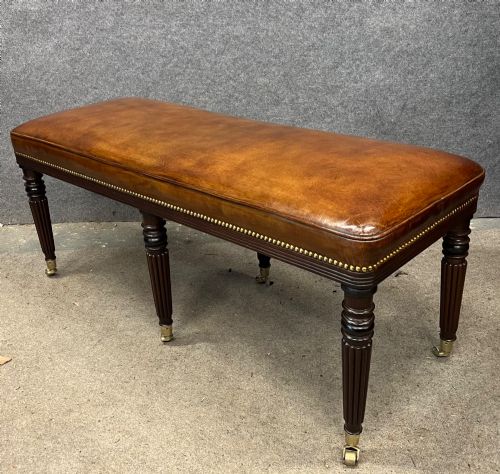
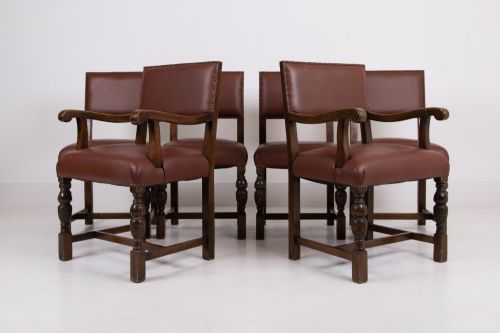
A brass studded leather seat combines functional durability with classic upholstery, offering sturdy support through visible metal fastening.
Brass Studded Leather Seat
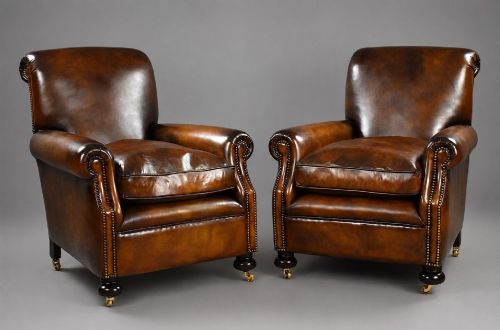
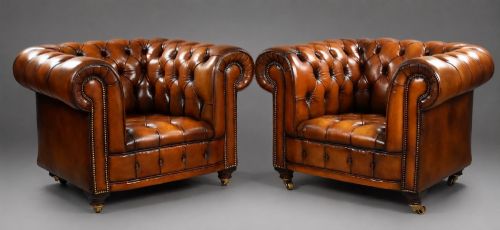
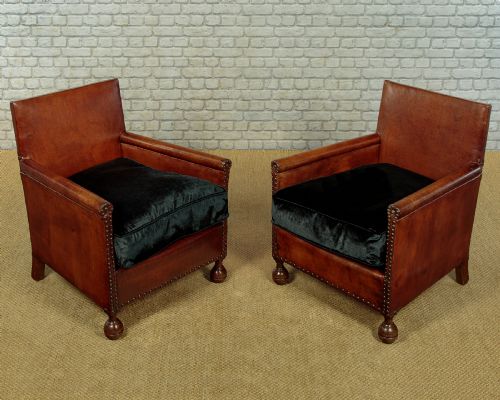
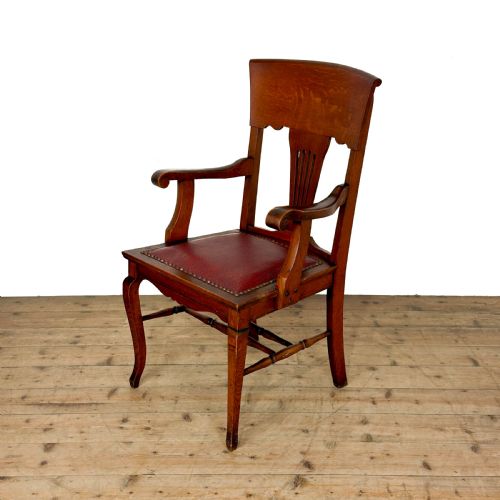
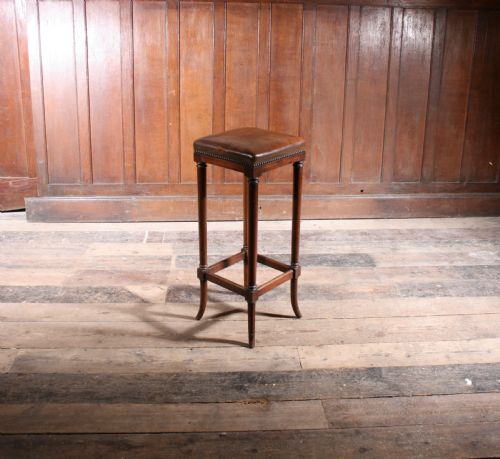
A brass studded leather seat spans multiple forms including dining chairs, armchairs, club fenders, and stools originating from the eighteenth century onwards. Buyers searching for a brass studded leather seat will find substantial seating options framed in oak, mahogany, walnut, and rosewood, often displaying styles ranging from Georgian and Victorian to Edwardian and Art Deco.
Materials and construction methods
Makers utilised hardwoods such as oak, mahogany, walnut, yew, and rosewood to form the structural frames of each brass studded leather seat. These timbers were often carved, turned, or polished to complement the accompanying upholstery.
Hides of leather were stretched over internal padding and secured to the wooden frames or metal structures using individual brass studs. This manual fastening method kept the upholstery taut while adding a decorative perimeter border of metal heads.
Some nineteenth-century music chairs featured internal mechanisms that allowed performers to swivel in place while seated on leather.
Distinctions in quality
The caliber of a brass studded leather seat rests upon the choice of timber and the depth of the frame's construction, where dense hardwoods and traditional joinery outperform lighter softwoods. The weight and finish of the timber frame indicate the original maker's investment in longevity.
Quality also manifests in the grain and suppleness of the leather used for the upholstery, alongside the uniformity and spacing of the individual brass studs. Hand-dyed finishes and buttoned detailing distinguish superior examples from simpler utilitarian seating.
The Brass Studded Leather Seat Glossary
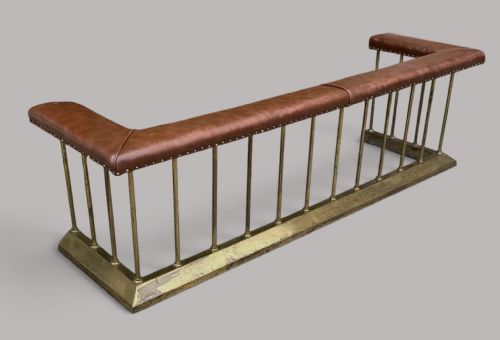
- Club Fender
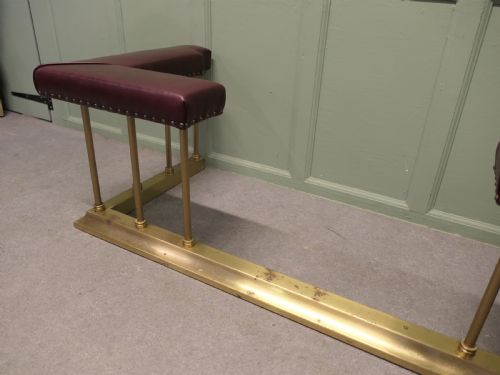
- A low fireside seat with a metal frame and padded leather top, originally designed to enclose an open hearth. These fixtures provide extra seating directly around the fireplace.
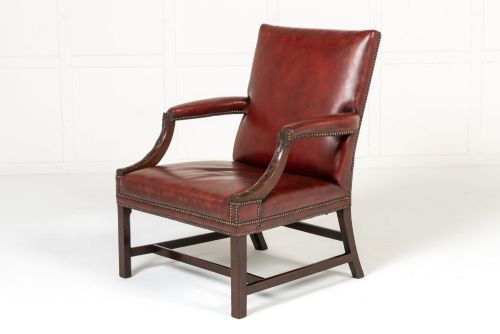
- Gainsborough Chair
- A wide, upholstered armchair with open arms and a low seat, typically dating from the eighteenth century. Mahogany is commonly utilised for the wooden framework of these library seats.
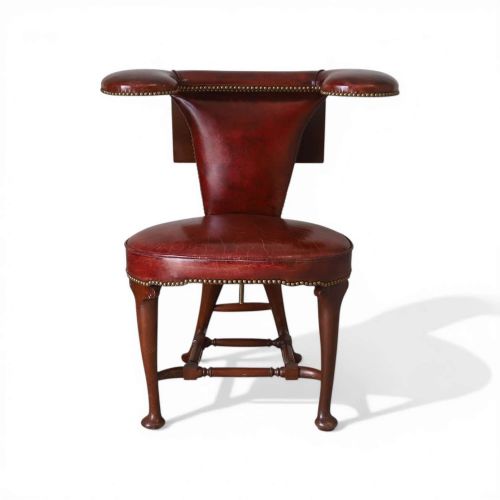
- Cockfighting Chair
- A specialised low chair featuring a padded backrest designed to be straddled by the sitter. These historical pieces often incorporate turned wooden supports and leather upholstery.
- Chesterfield
- A deep-buttoned upholstered sofa or armchair characterised by arms and back of the same height. This traditional form utilises leather stretched tightly across interior padding.
Brass Studded Leather Seat: Frequently Asked Questions
What is a club fender?
A club fender is a low, supportive fireside bench featuring padded leather seats positioned above a metal framework. These pieces were traditionally placed around hearths to provide comfortable seating near the fire.
They combine steel or brass structures with upholstered leather tops, creating a durable perimeter around domestic fireplaces.
How do I date a leather armchair?
Dating a leather armchair involves examining the underlying timber frame, the style of the legs, and the method of upholstery. Structural characteristics often align with distinct periods such as Victorian, Edwardian, or Georgian.
Secondary woods, turning styles, and the wear patterns on the leather provide further clues to the manufacturing era of the piece.
Are brass studs original?
Brass studs secure the leather upholstery tightly to the wooden or metal frame of the seat. Original studs typically display oxidation and wear consistent with the age of the surrounding materials.
Replacements often appear overly bright or lack the minor irregularities found in older hand-driven metal fastenings.
What wood was used for frames?
Frames were constructed from a variety of hardwoods including oak, mahogany, walnut, rosewood, and yew. These dense timbers provided the necessary structural stability for heavy daily use.
The choice of wood frequently reflects the prevailing style and period of the furniture, ranging from dark carved oak in earlier eras to polished mahogany in later designs.