
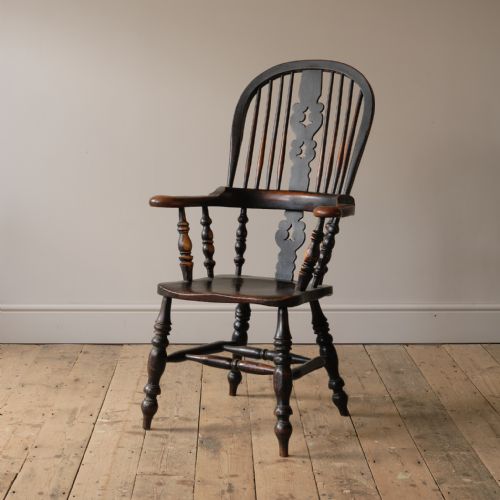
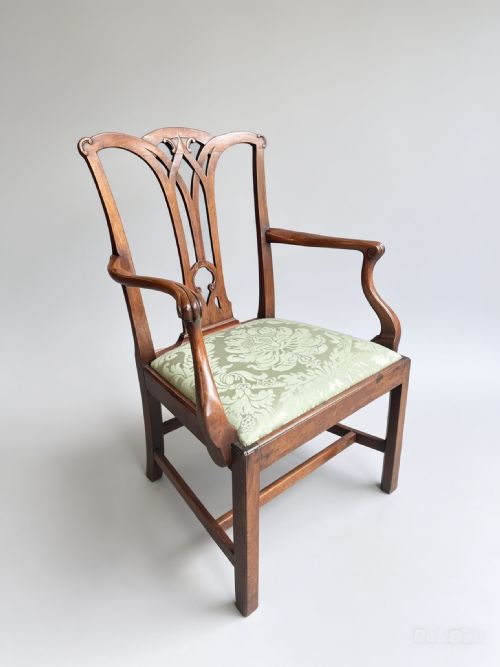
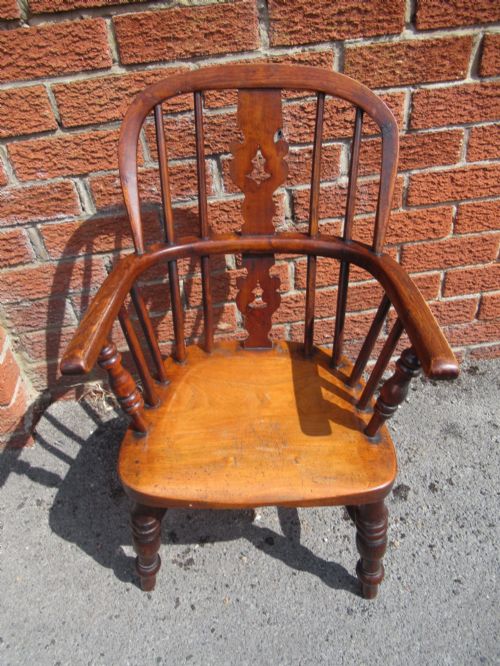
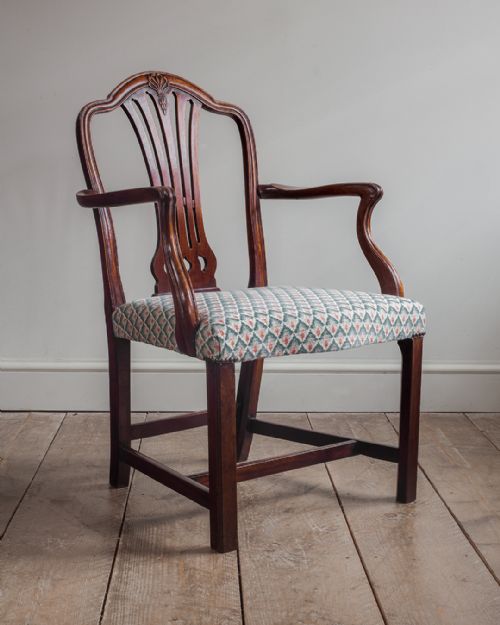

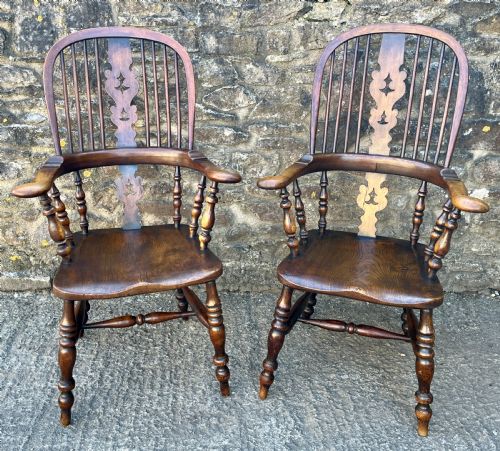


Pierced Splat Arm Chair
A pierced splat arm chair brings enduring British joinery into a room, offering refined mahogany frames alongside robust country elm.
Materials and construction methods
Cabinet makers and country joiners utilised timber combinations such as elm seats paired with ash bends and yew wood spindles. Mahogany dominated formal Georgian workshops, shaped into elaborate splats and tapering legs.
Traditional joinery relied on mortise and tenon joints, steam bending for curved armrests, and sculpted solid wood seats. Leather and fabric upholstery added padding to select eighteenth and nineteenth century models.
Assessing build and material standard
The distinction between tiers rests upon timber selection and the crispness of the joinery. Fine examples display rich natural grain patination on solid yew and mahogany without excessive restoration.
Proportion and structural integrity dictate the grade of a piece. Original components, uncompromised splats, and sturdy arm supports distinguish superior examples from heavily altered stock.
Lobster pot comb back chairs remind us that historical joiners named their most intricate stick structures after coastal fishing traps.
The Pierced Splat Arm Chair Glossary
- Splats
- The vertical wooden strip down the centre of a chair back. Pierced splats are cut through with decorative openwork designs.
- Carver
- An armchair, typically matching a set of smaller single dining chairs. These often sit at the head of a dining table.
- Windsor
- A chair built with a solid wooden seat into which the legs and back spindles are bored directly. These employ woods like elm, ash, and yew.
- Broad arm
- An armchair featuring an extended, wide flat wooden armrest on one or both sides. This style appears frequently on nineteenth century Windsor chairs.
- Crest rail
- The top horizontal member of a chair back. It often shapes into curves or ears reflecting period styles.
Pierced Splat Arm Chair: Frequently Asked Questions
What is a pierced splat arm chair?
It is a seating form defined by a central vertical back panel pierced with decorative cutouts. These chairs span formal mahogany dining models and robust country house designs.
Craftsmen produced them across the Georgian and Victorian eras, combining decorative joinery with practical seating needs.
How do I identify a Georgian armchair?
Georgian armchairs typically feature mahogany or walnut construction with classical proportions and carved decorative motifs. Details like pierced splats and claw and ball feet indicate eighteenth century origins.
Later Victorian and Edwardian pieces often revive these specific eighteenth century forms while utilising local woods like yew and elm.
Where were Windsor chairs used?
Windsor chairs served primarily in country houses, libraries, and farmhouse kitchens due to their sturdy construction. Their solid timber seats and comfortable arm configurations made them practical for daily use.
Today they integrate easily into modern dining rooms and studies as functional seating.
What woods are common in country chairs?
Country chairs frequently utilise native British timbers such as elm, ash, yew wood, and beech. Elm provided strong, split resistant solid seats.
Ash and yew offered flexible strength for steam bent bows and slender spindles.