

Georgian Dining Room Carver
A georgian dining room carver anchors the head of a table with substance and proportion, bringing period character to a room.
Georgian Dining Room Carver
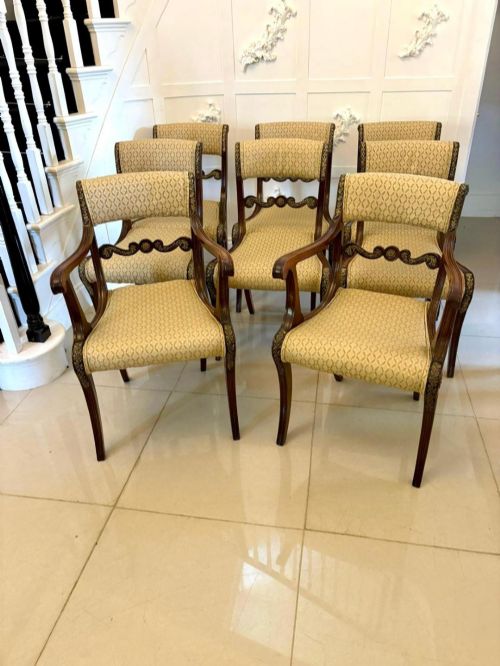
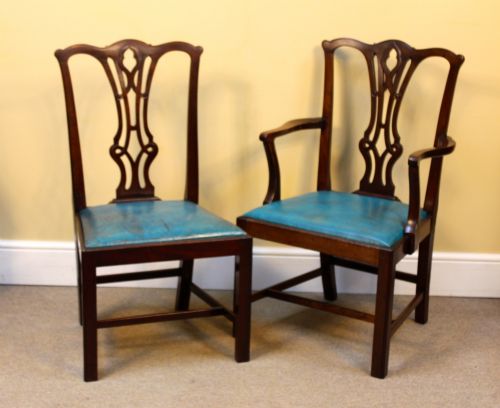
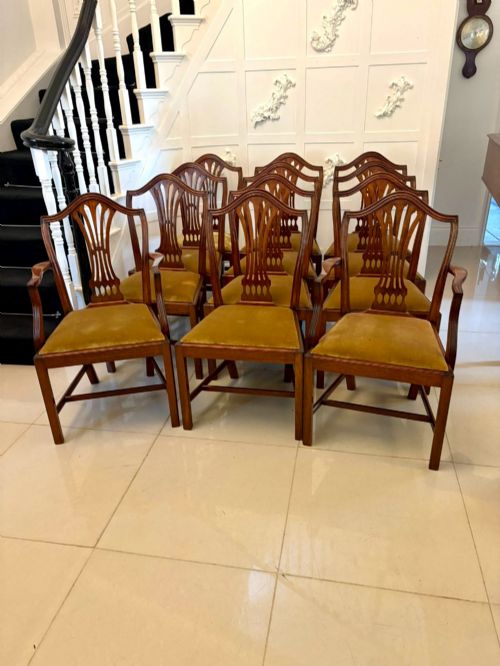
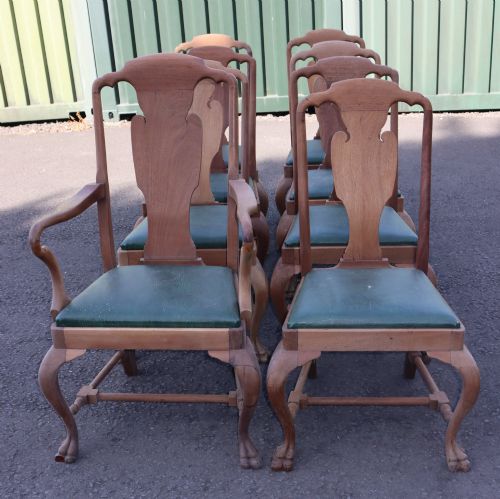
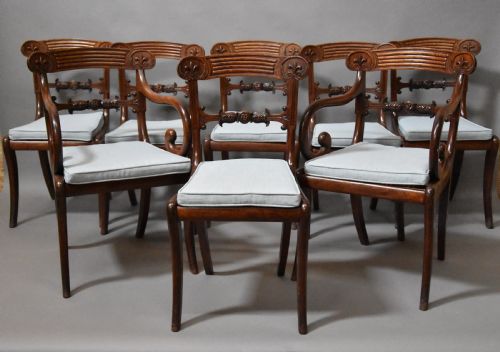
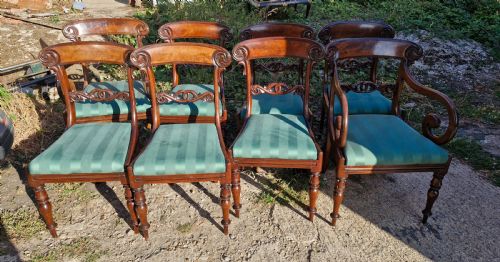
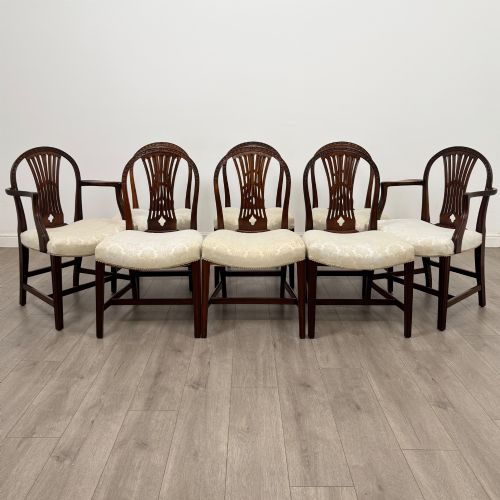
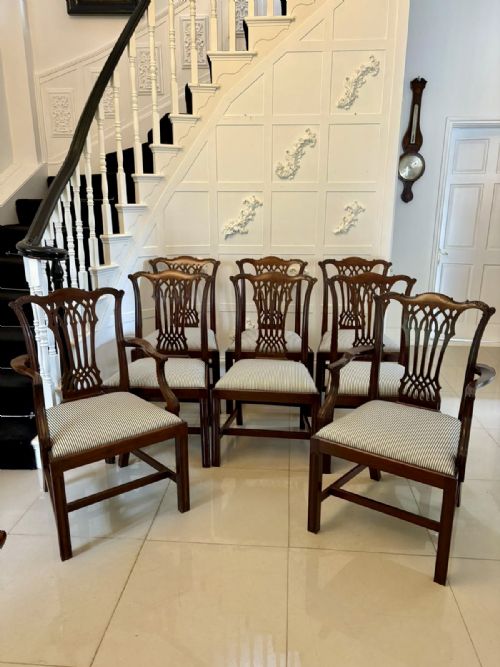
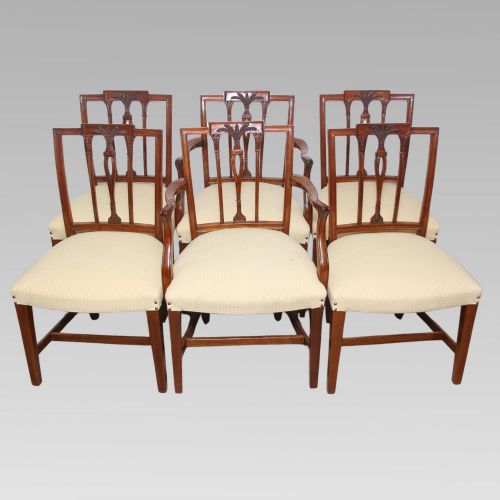
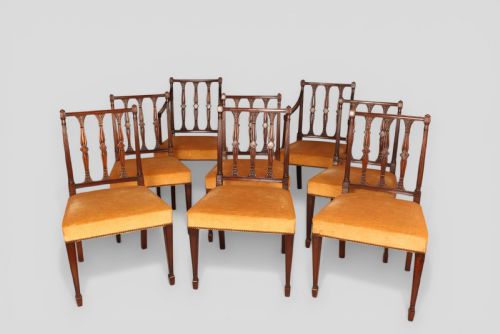
A georgian dining room carver is an open-arm chair designed to sit at the head or foot of a dining table, pairing with matching single chairs or standing alone. You will most frequently encounter mahogany examples dating from the eighteenth century through the nineteenth century, alongside later revival interpretations.
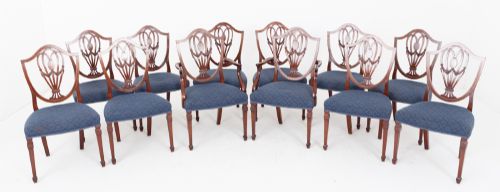
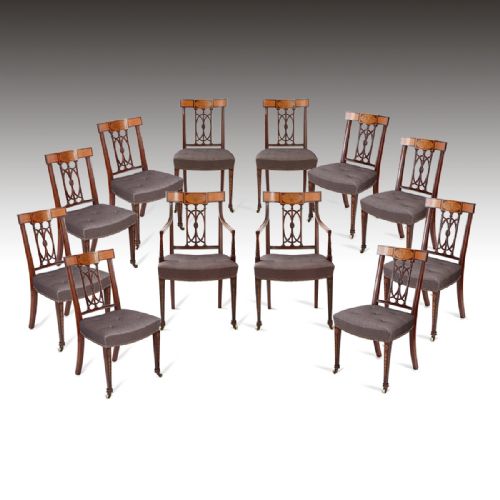
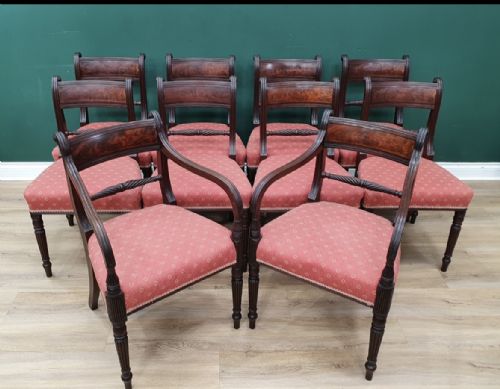
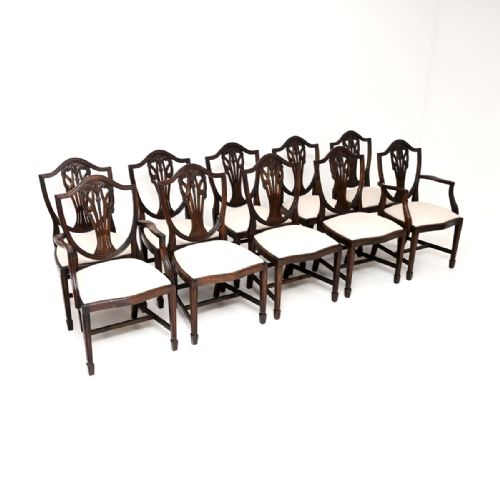
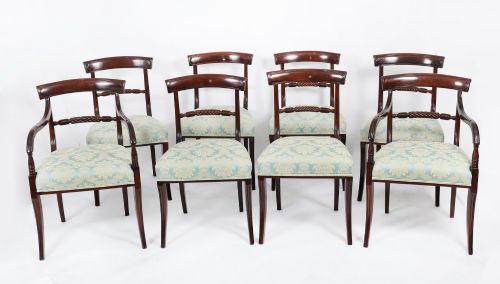
The form encompasses distinct stylistic vocabularies, including shield backs, bar backs, and intricate pierced splats associated with Chippendale and Hepplewhite designs. These armchairs often appear individually or as part of larger dining sets that include matching armchairs and side chairs.
Origins span authentic Georgian workshops, Regency periods, and subsequent revival eras stretching into the twentieth century. The seating section commonly accommodates drop-in pads or upholstered panels finished in leather, fabric, or velvet.
How they were made
Makers relied primarily on solid mahogany, shaping structural frames with mortise and tenon joints to support daily use at the dining table. Burr walnut also appears in specific revival interpretations.
Carving defines the ornamentation, with artisans rendering drapery, wheat ears, or interlaced splats directly into the timber by hand. Brass accents occasionally reinforce structural stress points or decorate foot terminals.
Upholstery materials such as leather, velvet, and woven fabric are secured over webbing or stuffing, frequently using brass tacks along the seat rails.
Listings feature mahogany predominantly, alongside walnut examples, with periods spanning the eighteenth century through the nineteen-thirties.
What varies in quality
The crispness and depth of the timber carving separate standard production from master craftsmanship, as finer pieces display sharp tool work and balanced proportions without excessive bulk.
Timber selection dictates overall visual weight, with dense, deeply figured mahogany grains commanding higher regard than plain or heavily repaired stock.
Originality of the frame construction and the survival of early upholstery foundations influence the integrity of the piece, distinguishing untouched survivors from heavily altered examples.
The Georgian Dining Room Carver Glossary
- Carver
- An armchair designed specifically for use at a dining table, traditionally placed at the head or foot. These chairs feature open arms to accommodate wider clothing styles.
- Shield back
- A chair back shaped like an uptended heraldic shield, popularised by Hepplewhite in the late eighteenth century. This design often incorporates carved drapery or feathered motifs within the central splat.
- Bar back
- A horizontal wooden rail spanning the uprights of a chair back, frequently rounded or reeded. This form is particularly characteristic of the Regency period.
- Splatted
- A central vertical strip of wood connecting the seat to the top rail of a chair back. Makers shaped and pierced these elements in various geometric or organic patterns.
- Drop-in seat
- A removable wooden frame upholstered separately and dropped into the seat rebate of a chair. This construction allows for straightforward re-covering.
Georgian Dining Room Carver: Frequently Asked Questions
How do I use a carver chair?
Carver chairs traditionally sit at the head and foot of a dining table to mark the position of the host. Their open arms provide comfortable support during long meals.
You can also use a single carver as a desk chair or place one in a hallway against a wall. Their substantial proportions allow them to stand independently away from a dining setting.
Are carvers sold individually or in sets?
Dining carvers frequently appear paired with matching single chairs as part of a larger suite. Sets often include a specific ratio of side chairs to armchairs, such as six singles and two carvers.
You will also find individual carvers offered alone. These solo pieces work well as accent seating in living spaces or libraries.
How do I tell original Georgian from revival pieces?
Original pieces from the eighteenth and early nineteenth centuries exhibit period tool marks, timber shrinkage appropriate to age, and construction methods like hand-cut joints. The wear patterns on the feet and armrests reflect extended domestic use.
Revival versions made around nineteen hundred or later often display heavier machine-cut components and timber finishes typical of twentieth-century manufacturing. Examining the underside and joint construction helps clarify the date of manufacture.
What maintenance do leather seats require?
Leather seats benefit from occasional conditioning with appropriate balms to keep the material supple and prevent cracking. Keeping them away from direct heat sources preserves the natural hide.
Gentle dusting with a dry cloth prevents surface grit from accumulating in the grain. Avoid chemical cleaners that can strip hand-dyed finishes.