




Brass Mounted Centre Table
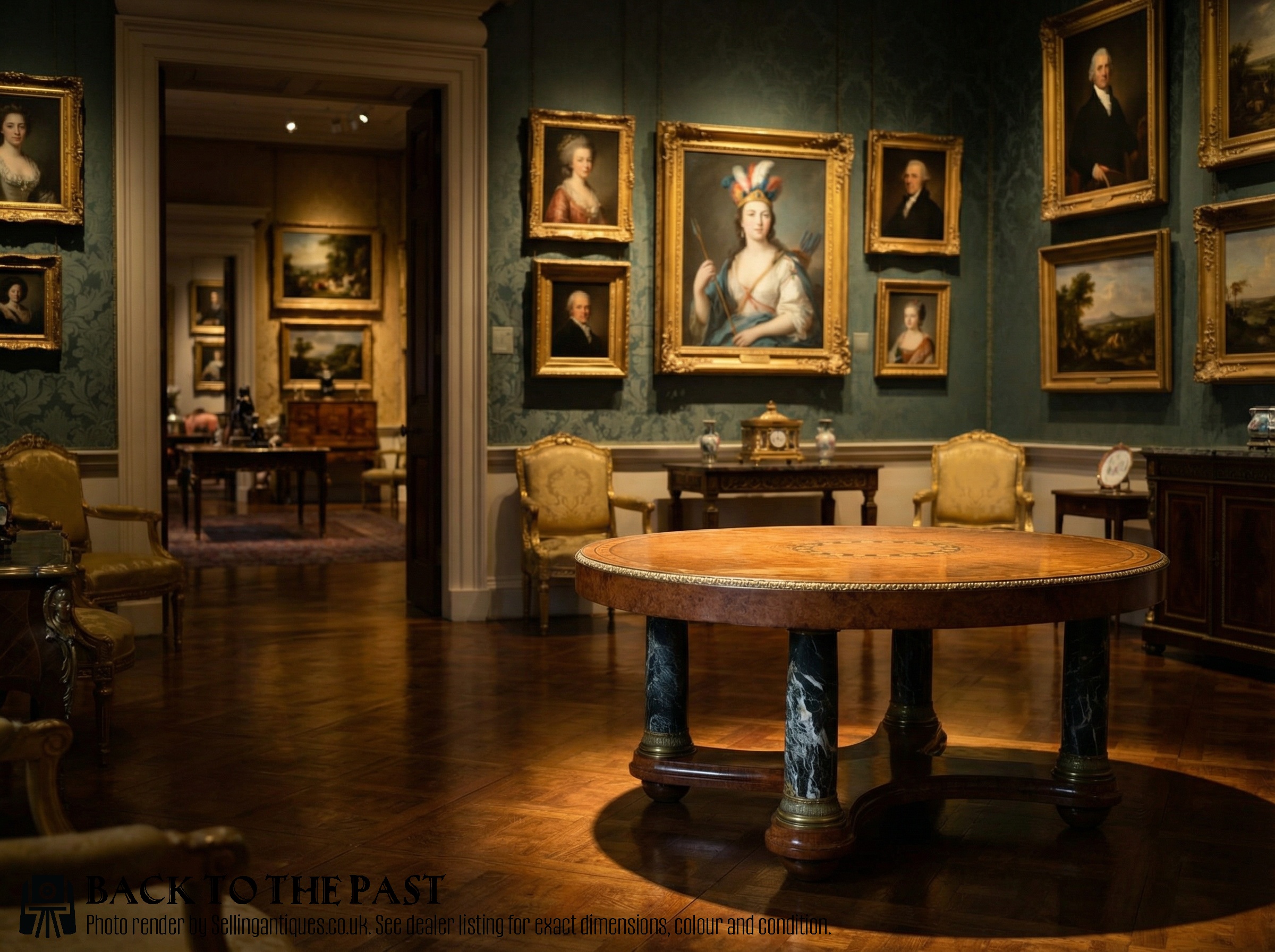
A brass mounted centre table brings the grandeur of the drawing room right to the middle of the floor.
What these tables are
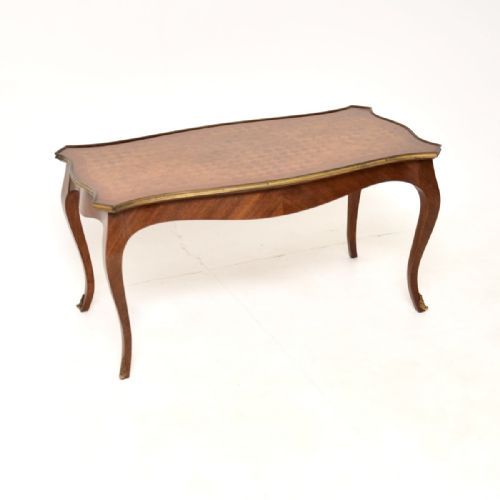
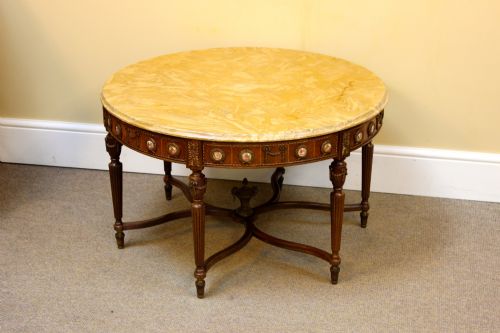
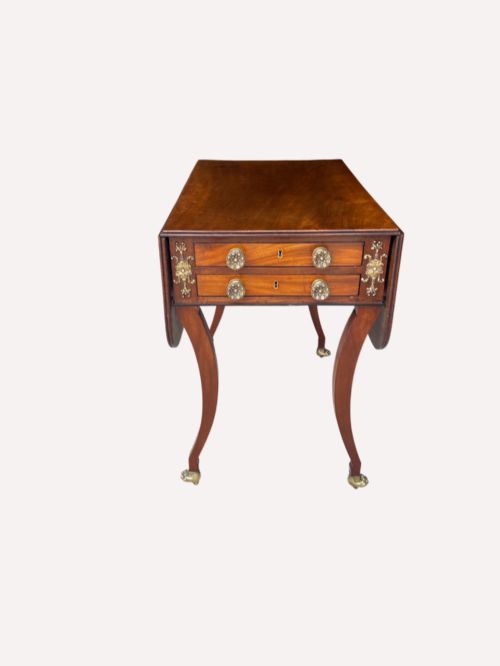
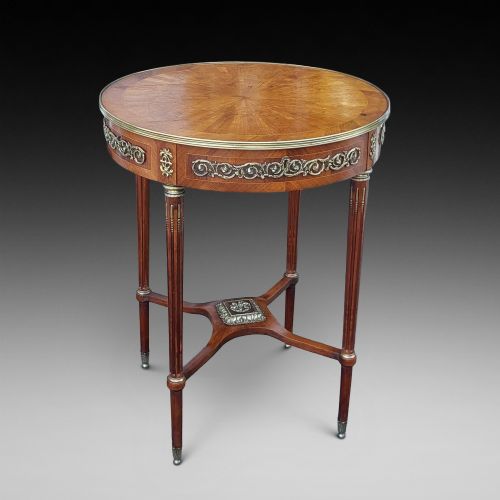
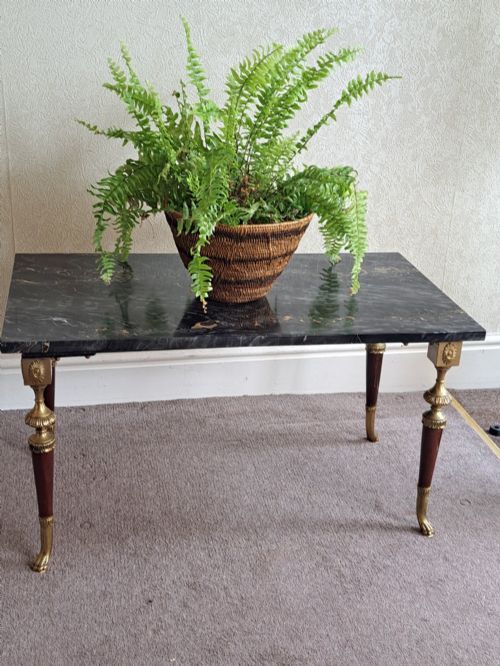
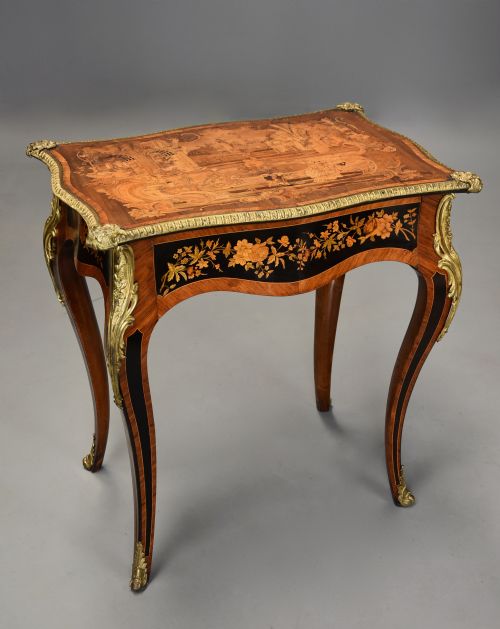
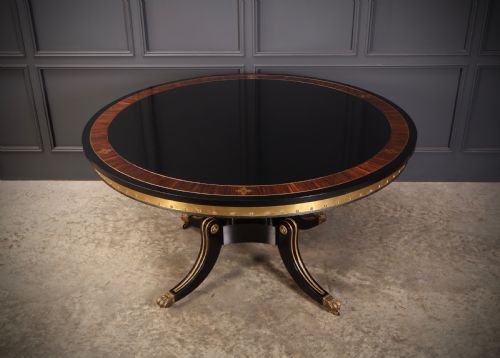
A brass mounted centre table stands apart from wall furniture by demanding a view from every angle, designed specifically to sit freestanding in the middle of a room. The selections across this page span from Regency style George IV rosewood pieces to Victorian French marquetry and parquetry examples, alongside later 1920 ebonised rounds and 1890 designs.
The materials recorded in these pieces include rich rosewood, walnut, burr walnut, and ebonised wood, frequently enhanced by marble tops and intricate marquetry inlay. Many follow French styles, Louis XV revivals, and Napoleon III aesthetics, incorporating gilt brass and bronze mounts.
Buyers will encounter both round and oval formats, often serving multipurpose roles as occasional, side, lamp, or desk tables. Each piece relies on decorative brass mounts and distinct wood veneers to establish its period character.
How they were made
Cabinet makers constructed these tables using sturdy carcases of wood veneer, rosewood, walnut, or ebonised wood, often finished with striking marquetry and parquetry inlay. The surfaces frequently incorporated fitted marble tops, adding substantial weight and a cool tactile contrast to the surrounding timber.
Gilt brass and bronze mounts were cast and applied to corners, legs, and aprons, serving both a decorative and a structural framing purpose. These metal elements required precise hand-fitting to follow the complex curves of French style and Regency style mouldings.
Retail Price Guide 2026
Typical UK retail prices for brass mounted centre table, calculated from the Sellingantiques database of over a million retail prices indexed since 2003. This retail price guide relies exclusively on Sellingantiques data; no external sources or auction records are used, so the figures do not describe the wider market.
The styles recorded span Regency, George IV, Napoleon III, and various French Louis XV revivals.
What varies in quality
The distinction between ordinary and exceptional tables rests in the depth of the marquetry inlay and the crispness of the gilt brass and bronze mounts. Superior examples exhibit intricate, multi-timber patterns that remain tight and flush with the surrounding rosewood, walnut, or ebonised wood.
Heft and material selection also define the upper tier, particularly where heavy marble tops meet robust underlying timber frames without sagging or misalignment. The refinement of the carving around Louis XV revival curves or George IV turnings dictates the overall elegance of the silhouette.
The Brass Mounted Centre Table Glossary
- Marquetry inlay
- Decorative patterns formed by inserting thin slices of wood, shell, or metal into a veneer carcase. This technique allowed cabinet makers to create elaborate floral or geometric scenes across the tabletop.
- Parquetry
- A geometric mosaic of wood pieces used for decorative floors and tabletops. It differs from marquetry by strictly employing angular, repeating shapes.
- Gilt brass
- Brass treated with a gold-coloured wash or leaf to mimic solid gold mounts. It provides a bright, reflective accent against dark rosewood and ebonised timber.
- Ebonised wood
- Timber stained or painted black to imitate expensive ebony. This dark finish was particularly favoured for highlighting bright brass inlay.
Frequently Asked Questions
Where should I place a centre table?
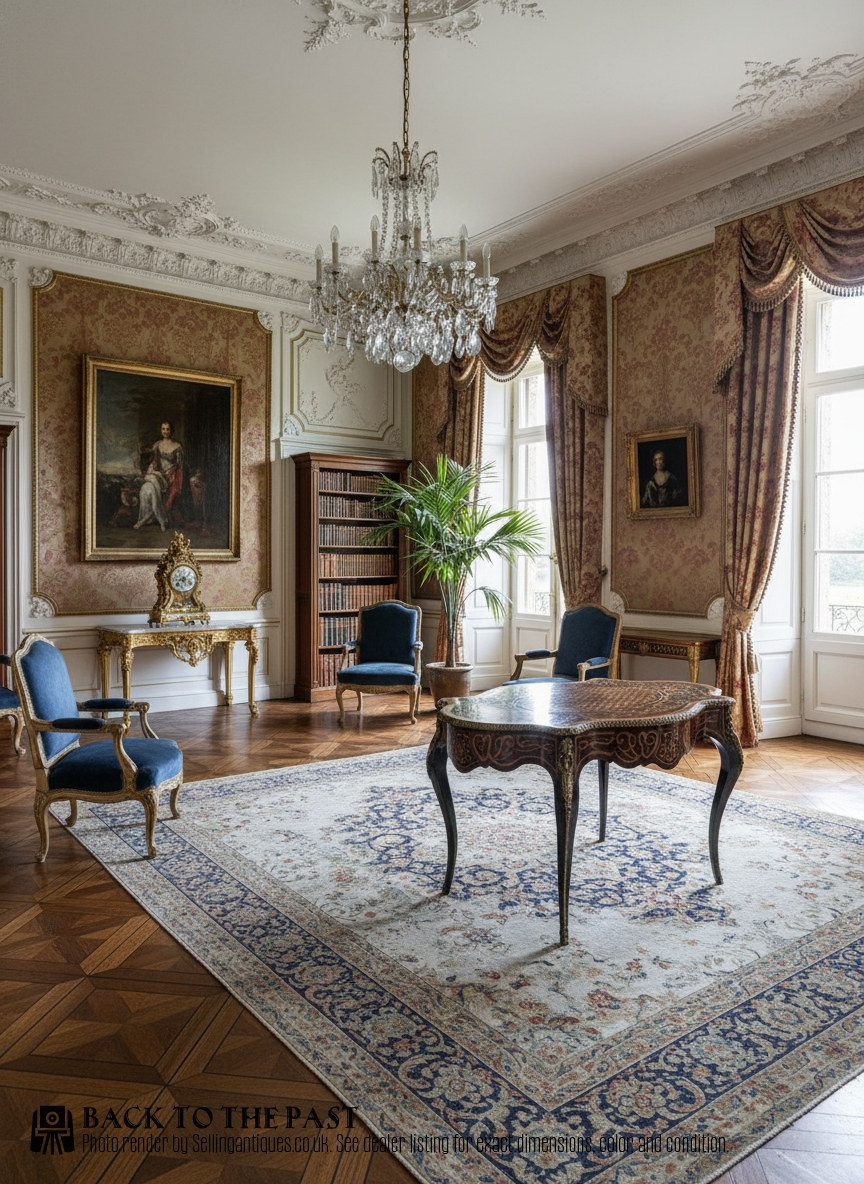
These tables are built to be freestanding, making them ideal for the middle of a spacious room or a large hallway where they can be appreciated from all sides.
Because they lack a traditional front or back, they create a natural focal point and allow people to walk completely around the piece.
How do I care for a marble top?
Marble surfaces require simple dusting with a soft cloth and immediate wiping of any liquid spills to prevent staining. Avoid harsh chemical cleaners that can dull the polished stone finish over time.
Using felt pads under decorative objects placed on the marble will help protect the surface from scratches.
Are these tables sturdy enough for daily use?
Most of these pieces were constructed as robust functional furniture, utilising dense hardwoods like rosewood and walnut alongside sturdy joinery. They easily accommodate lamps, books, and everyday items.
However, tables featuring delicate marquetry or heavy marble tops benefit from careful placement away from heavy foot traffic or unstable flooring.
How do I identify the period of a table?
Dating relies on observing the combination of wood species, mounting styles, and construction techniques, such as Regency rosewood or Victorian marquetry. Comparing the decorative motifs, such as Louis XV revival curves or Napoleon III gilt bronze, provides further clues to the era of manufacture.
Examining the underside and interior framework often reveals the aged patination and tools marks characteristic of older workshop practices.