




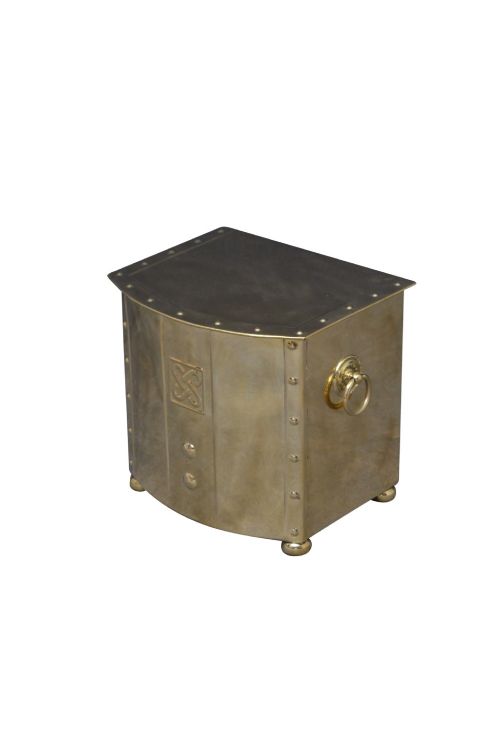


Brass Log Store
Brass log store pieces bring polished metal and timber hearthside warmth to a room, keeping fuel ready beside the fire.
Brass Log Store
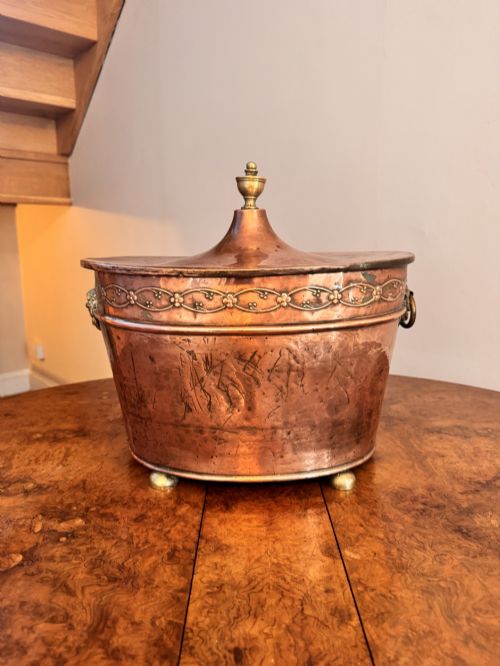
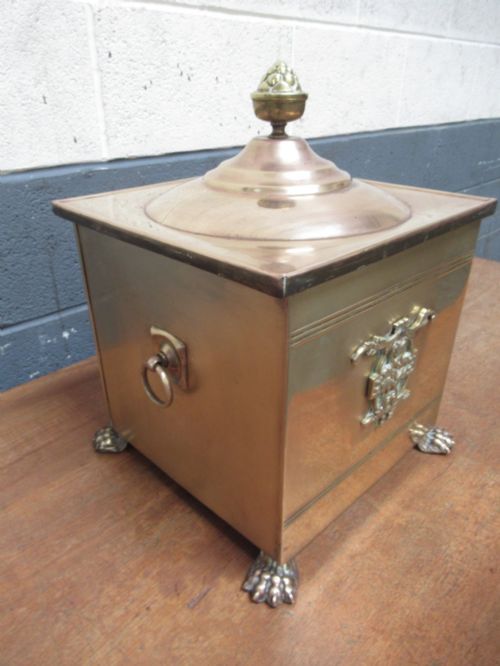
A brass log store serves as a practical hearthside container for fuel, appearing across periods from the Georgian era through to the 1930s. These pieces encompass coal scuttles, buckets, purdoniums and bins designed to hold logs, peat or kindling.
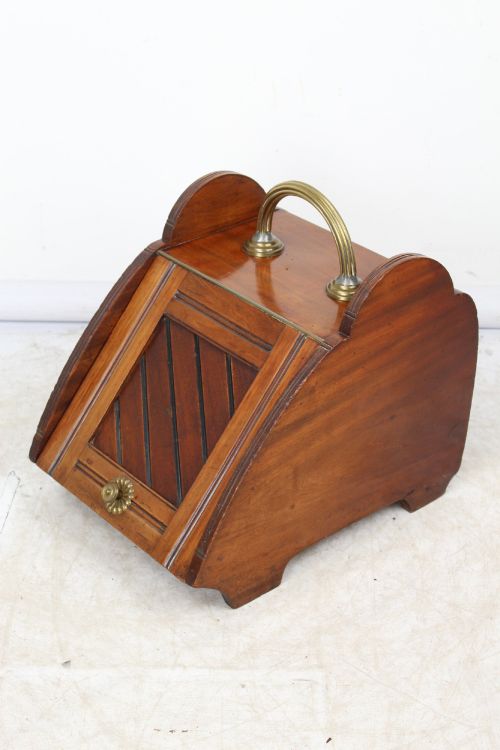
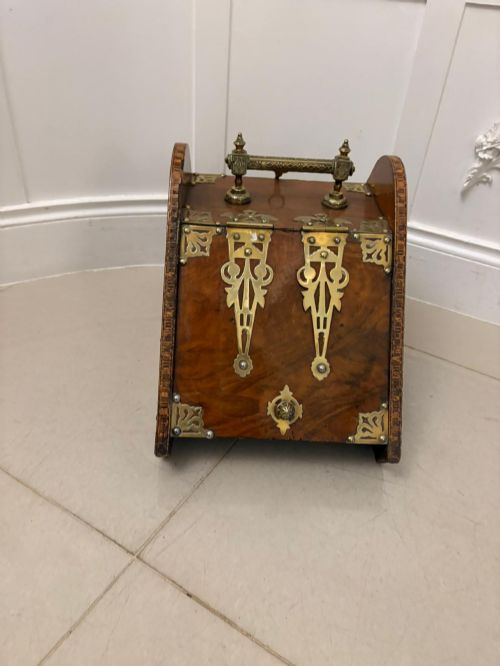
Victorian and Edwardian examples dominate the current selection, often combining heavy timber bodies with brass mountings, handles and bands. Buyers frequently encounter copper and brass combinations alongside traditional mahogany and oak constructions.
Origins span English workshops, Scottish coopered designs, French provincial vessels and Belgian decorative bins. Forms range from simple cylindrical buckets to elaborate lidded cabinets and shaped boxes intended for fireside storage.
Materials and construction
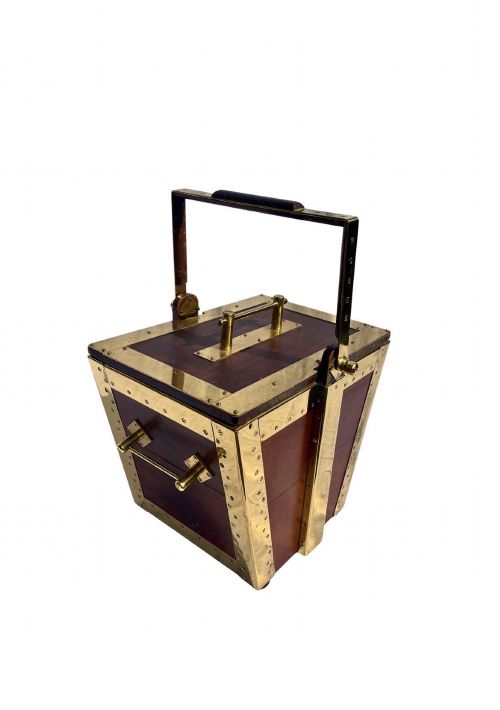
Constructed from resilient hardwoods such as mahogany, oak and walnut, these containers often feature hand-hammered or riveted copper and brass plates. Metal bands, mounts and swing handles provide structural reinforcement while adding a polished decorative element to the body.
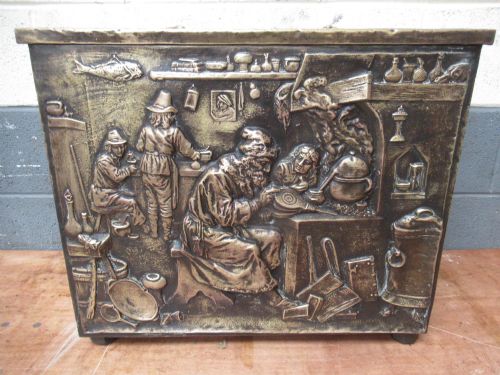
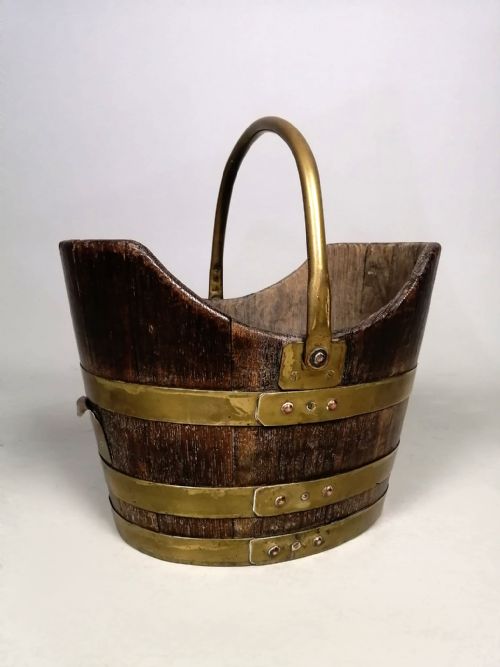
Coopered techniques appear in wooden stave buckets bound with metal hoops, echoing traditional barrel-making methods. Other examples utilise embossed or hand-beaten sheet metal shaped into helmets, bins and purdonium boxes.
Brass Log Store Retail Price Guide 2026
Typical asking prices for brass log store among the pieces listed under this phrase on Sellingantiques today, from the lower quarter to the upper quarter. They describe what is for sale here now, not the wider market.
Some nineteenth-century workers decorated mundane fuel bins with bright canal folk art, turning coal storage into floating masterpieces.
Assessing quality
Quality rests in the weight and gauge of the metalwork, the precision of the joinery and the integrity of the timber framing. Thicker brass panels and robust dovetail or coopered joints separate sturdy utilitarian pieces from lighter decorative items.
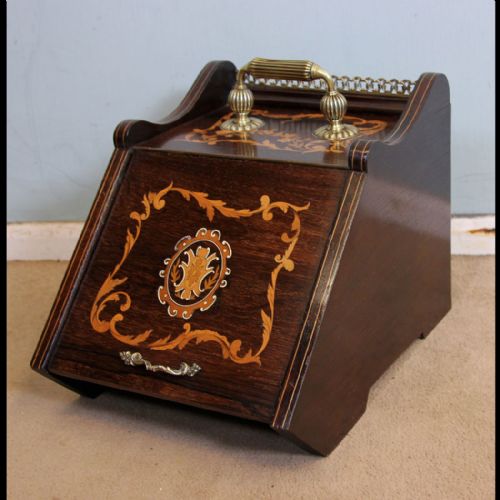
The sophistication of decorative details, including hand-beaten relief work, applied brass mounts and inlaid woodwork, distinguishes finer examples. Original handles, liners and fixings preserve the structural authenticity of the piece.
William Soutter & Sons
The Brass Log Store Glossary
- Purdonium
- A specialised coal or log cabinet featuring a hinged sloping front and an internal metal liner for carrying fuel. This form became popular during the Victorian period.
- Coopered
- Built from vertical wooden staves fitted together and held tightly by external metal hoops, similar to barrel construction. Scottish peat buckets frequently utilise this method.
- Coal scuttle
- A domestic vessel designed to hold solid fuel, typically fitted with a swing handle and a tapered mouth for pouring. Variants include helmet-shaped designs and lidded boxes.
- Arts & Crafts
- A design movement prioritising traditional craftsmanship and simple forms, visible in hand-beaten copper and brass metalwork. Pieces from this style often display visible riveted construction.
Brass Log Store: Frequently Asked Questions
What is a brass log store used for?
These vessels hold firewood, kindling or coal beside an open hearth, keeping fuel tidy and accessible. They combine practical storage with decorative metal and timber presentation.
Historically, they served domestic coal fires and wood-burning hearths in grand and modest homes alike. Today, they function as interior focal points while retaining their original storage purpose.
How do I clean brass and copper?
Cleaning requires a soft cloth and a gentle metal polish formulated for brass or copper. Avoid harsh abrasives that can strip historical patination from the surface.
Regular dusting keeps the metal bright without removing the natural ageing accumulated over decades. Gentle care preserves the finish of hand-beaten and riveted panels.
How do I date a coal bucket?
Dating relies on observing construction methods, timber types and stylistic indicators associated with periods like the Victorian or Edwardian eras. Hand-beaten riveted construction often points towards specific late nineteenth-century movements.
Examine the fixings, interior liners and wood ageing for clues about the manufacturing decade. Georgian and Regency pieces display different proportions and joinery compared to later Victorian items.
Are wooden bins lined with metal?
Many wooden coal boxes and purdoniums feature interior metal liners to contain dust and moisture from the fuel. These removable liners protect the surrounding mahogany or oak structure from wear.
Metal buckets and bins made entirely of brass or copper require no internal lining. Wooden items without liners were generally intended for dry logs or kindling rather than coal.