






Edwardian Brass Scuttle
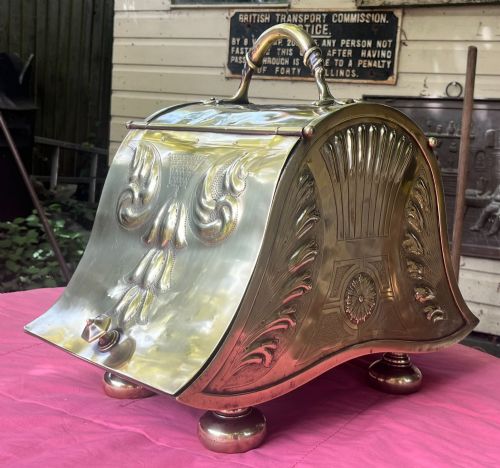
An edwardian brass scuttle stands beside the hearth to hold coal or logs, bringing bright metal and honest function to the fireplace.
Edwardian Brass Scuttle
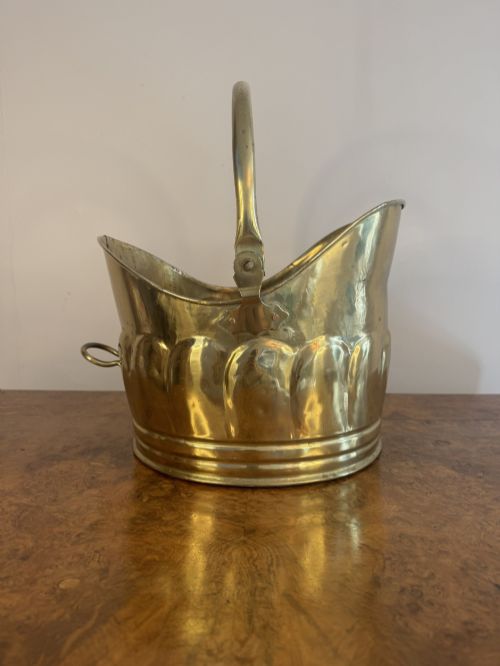
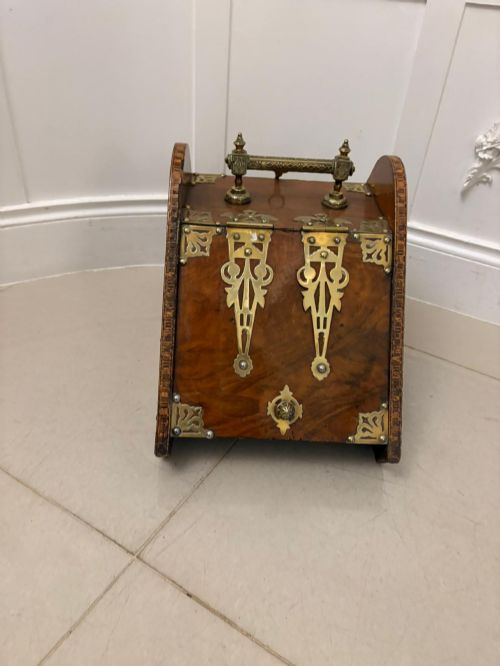
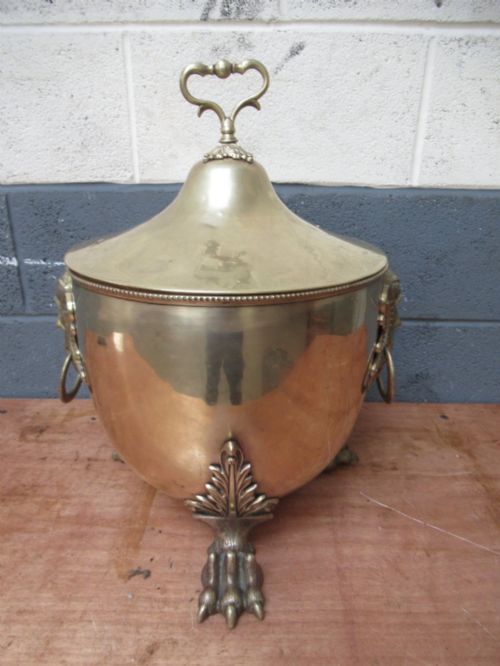
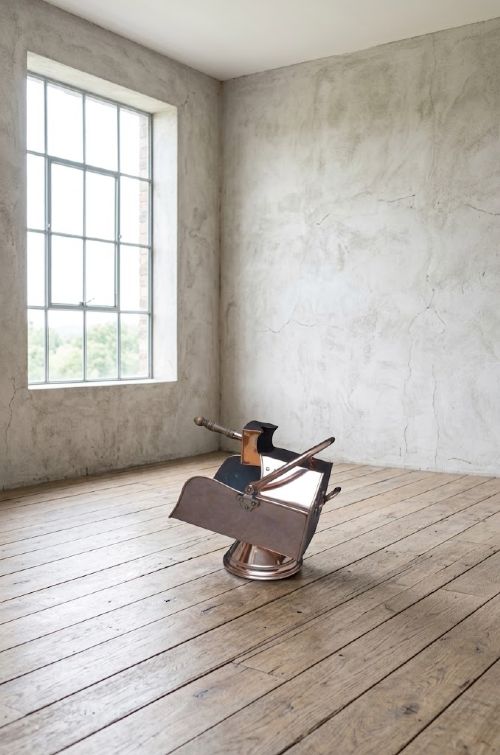
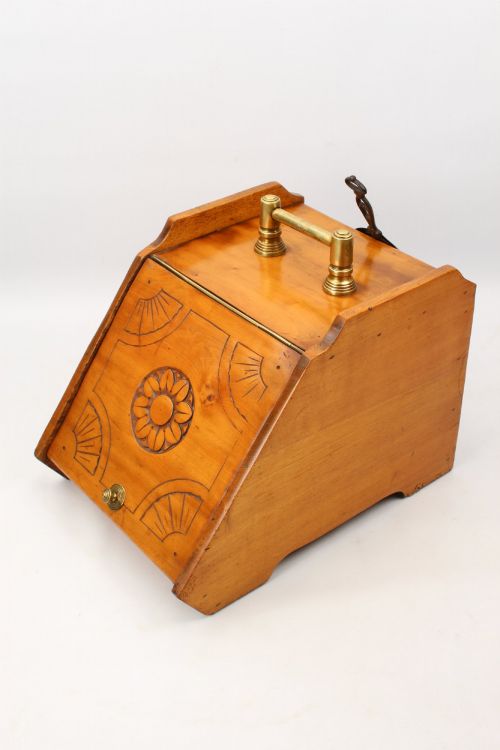
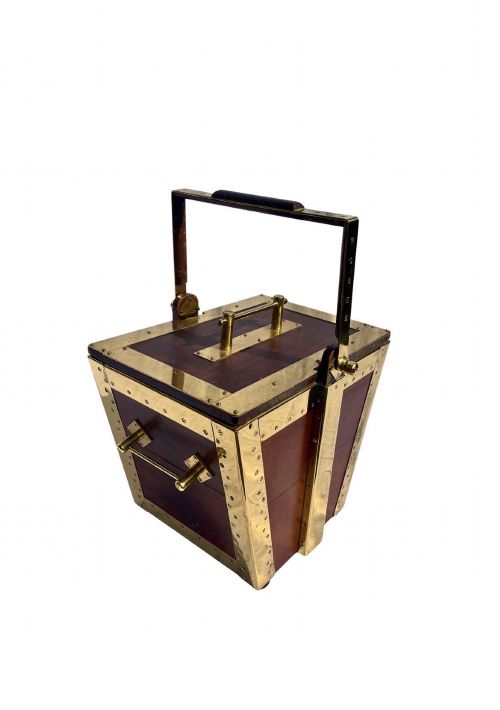
The edwardian brass scuttle is a fireside accessory designed for holding coal, logs or kindling near the fireplace. These pieces range from simple buckets and helmets to fitted cabinets known as purdoniums, often complete with shovels.
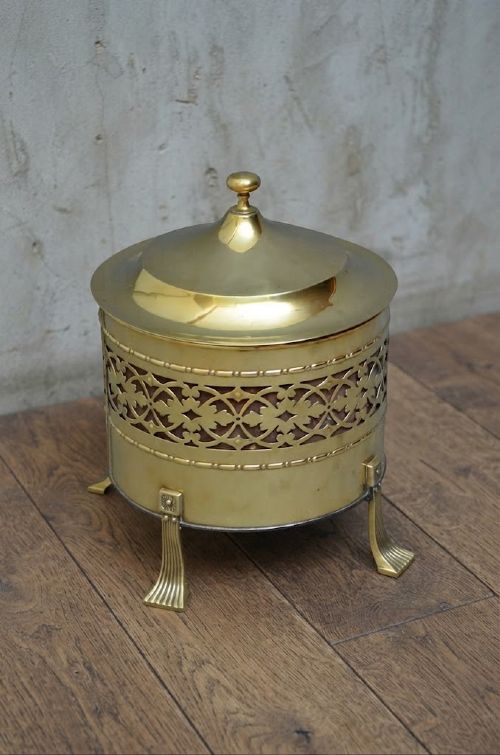
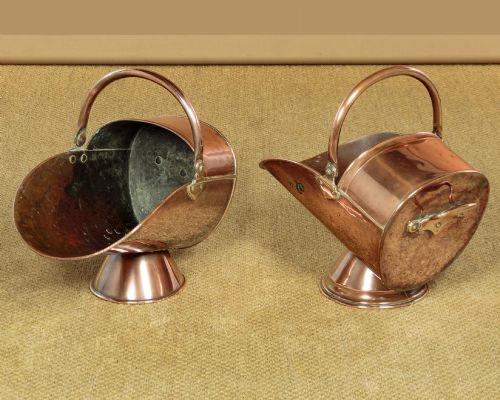
You are most likely to meet bright brass helmet-shaped buckets or cylindrical bins dating from the early twentieth century. Many feature handles for carrying fuel and metal liners to contain dust and debris.
The materials and styles cross over with late Victorian and Arts and Crafts design, bringing beaten copper, oak, mahogany and ironwork into domestic hearths.
How they were made
Brass and copper form the primary sheet metal bodies, shaped by hammering, spinning or riveting. Handles, feet and rims are cast in brass and attached with rivets or screws.
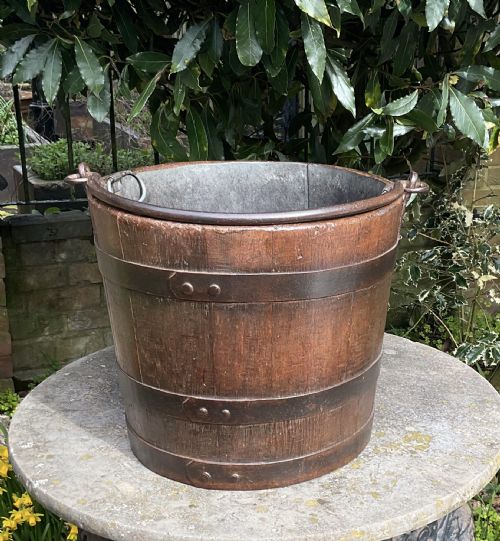
Wooden examples utilise traditional coopered stave construction or solid oak and mahogany boards, frequently joined with dovetails and mounted with brass hinges and handles.
Edwardian Brass Scuttle Retail Price Guide 2026
Typical asking prices for edwardian brass scuttle among the pieces listed under this phrase on Sellingantiques today, from the lower quarter to the upper quarter. They describe what is for sale here now, not the wider market.
Listings feature brass, copper, oak and mahogany across Edwardian and Victorian periods.
What varies in quality
The thickness of the brass sheet and the weight of the cast fittings determine the durability of a piece. Heavier gauges resist denting and hold their shape better beside a busy hearth.
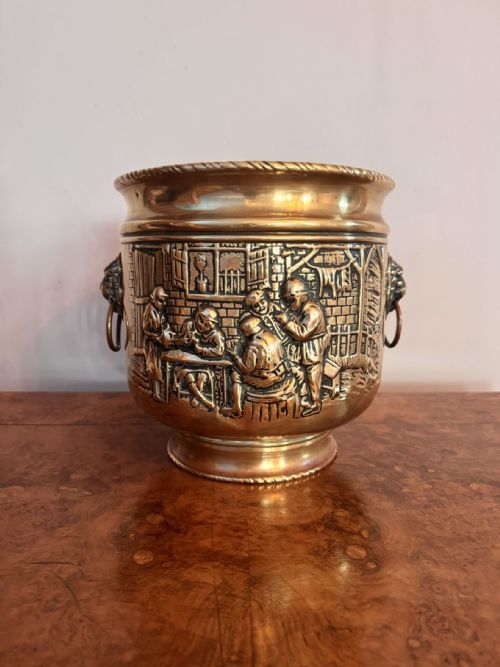
Refinement in surface decoration distinguishes standard utility items from finer work, seen in crisp repoussé embossing, hand-beaten hammering marks, fretwork panels and intact original metal liners.
Benham and Froud
The Edwardian Brass Scuttle Glossary
- Scuttle
- A metal or wooden container designed for holding coal or fuel near a fireplace. It usually includes a handle for carrying.
- Purdonium
- A box or cabinet made to store coal indoors, typically featuring a hinged front flap, a sloping lid and an internal metal liner.
- Helmet
- A traditional shape for a coal scuttle with a high back and a flared spout at the front, intended for pouring fuel cleanly.
- Coopered
- A method of construction where curved wooden staves are bound together with metal hoops, much like a barrel.
- Repoussé
- A metalworking technique where the pattern is hammered into relief from the reverse side to create decorative designs.
Edwardian Brass Scuttle: Frequently Asked Questions
How do I use an edwardian brass scuttle today?
These pieces serve well beside a modern woodburning stove or open fireplace as a container for logs, kindling or briquettes. They also function as umbrella stands or large indoor planters.
The removable metal liners make them practical for everyday holding and easy cleaning.
How can I tell Edwardian pieces from Victorian ones?
Edwardian items tend to feature lighter proportions and simpler geometric or Arts and Crafts decoration, reflecting changing interior tastes around nineteen hundred. Victorian pieces often display heavier cast ornamentation, denser carving or more elaborate revival styles.
Stylistic overlap remains common as workshops continued producing traditional designs into the new century.
Why do some scuttles have liners?
Metal liners protect the main body of the scuttle from moisture, dirt and coal dust. They allow owners to lift out the fuel contents easily without tipping the entire heavy vessel.
Finding a piece with its original liner remains a bonus for collectors.