
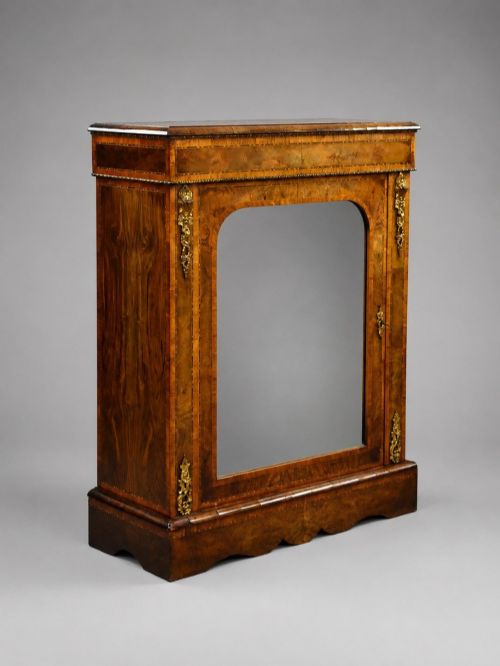
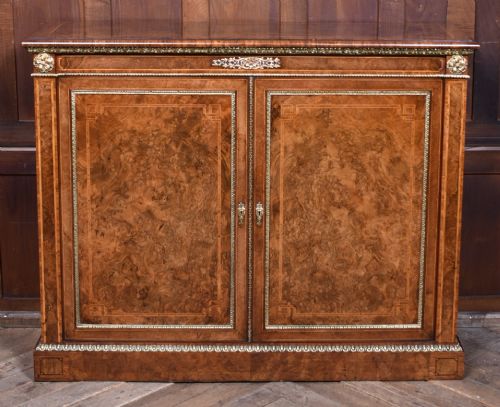

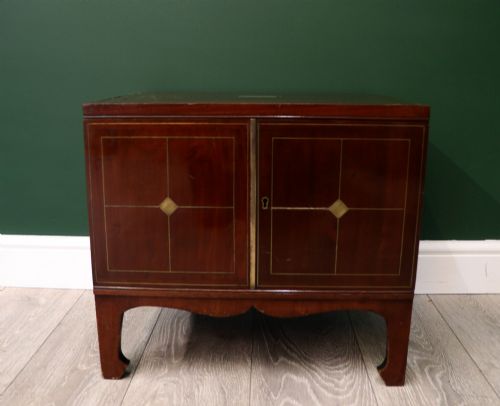
Brass Inlaid Sideboard
These brass inlaid sideboard pieces bring remarkable cabinetwork into a room, offering both generous storage and striking metallic detail.
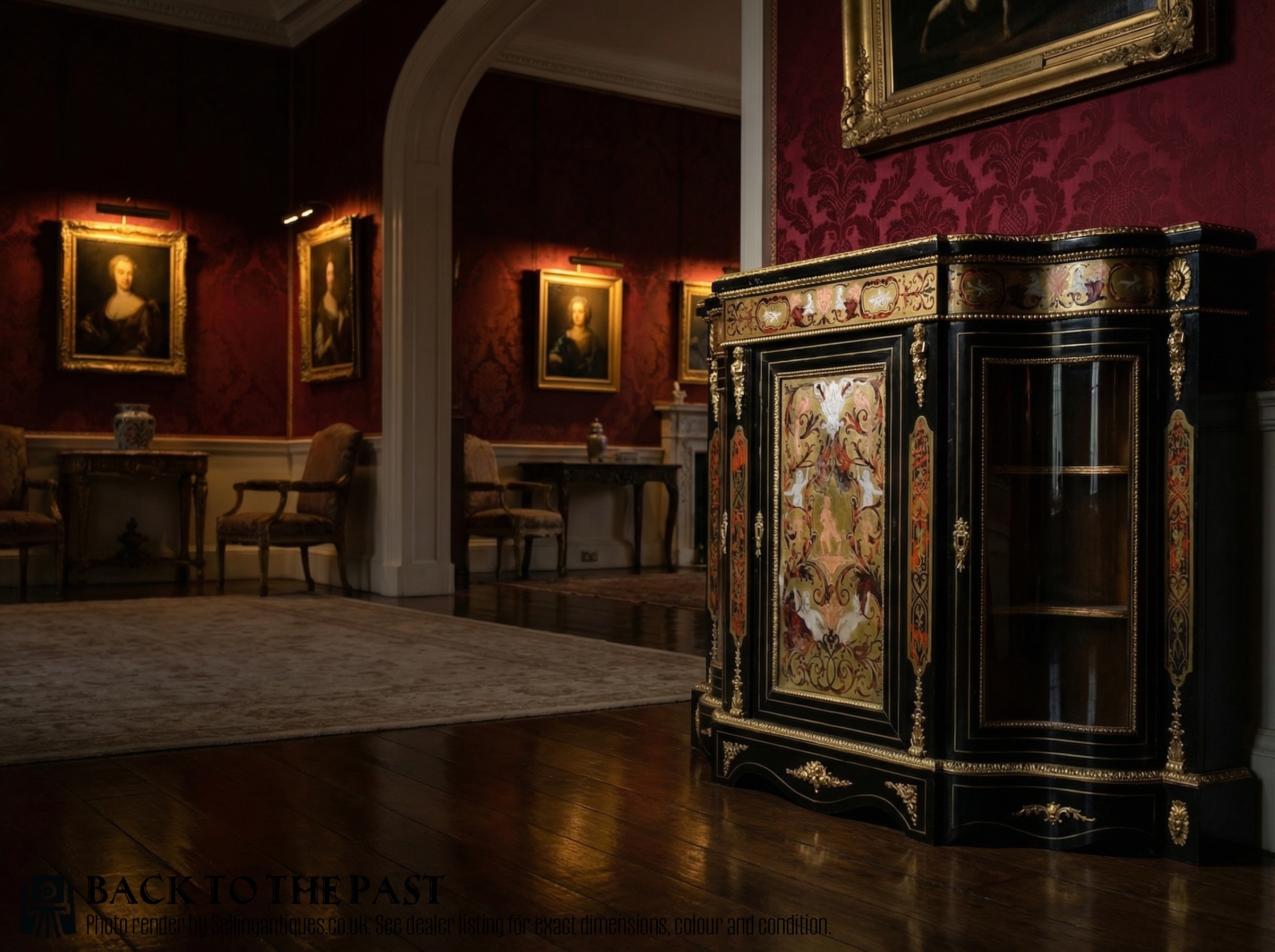
Brass Inlaid Sideboard
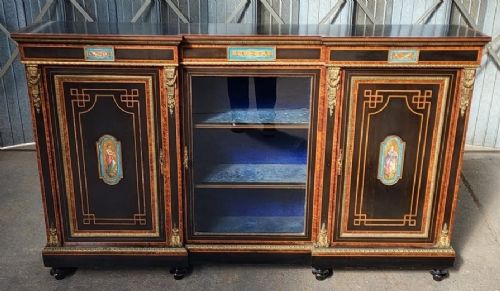
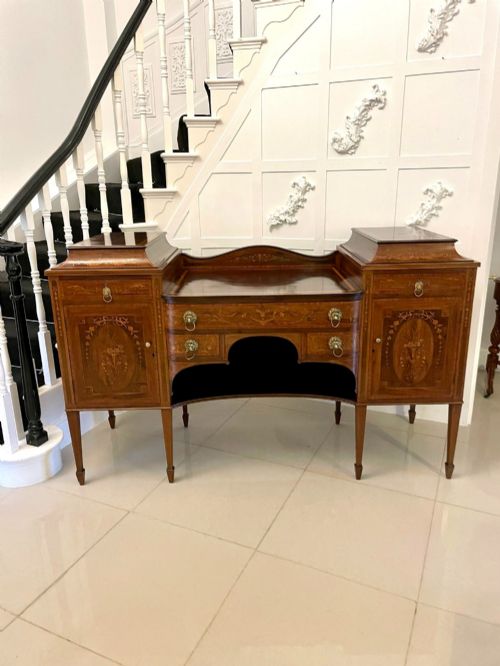
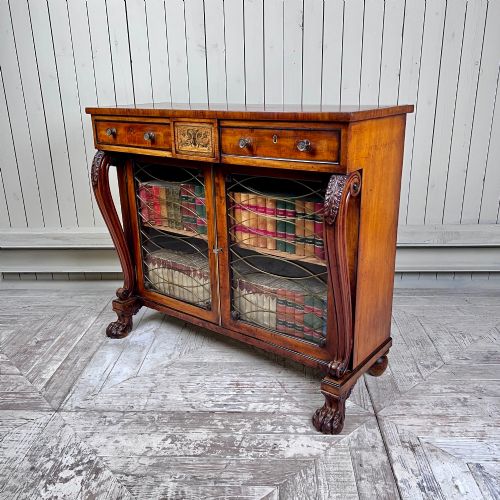
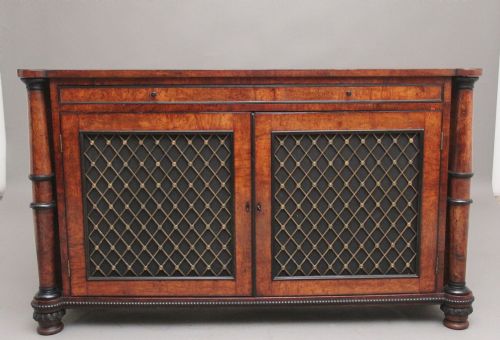
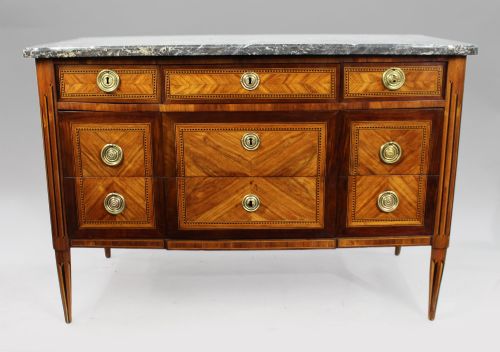
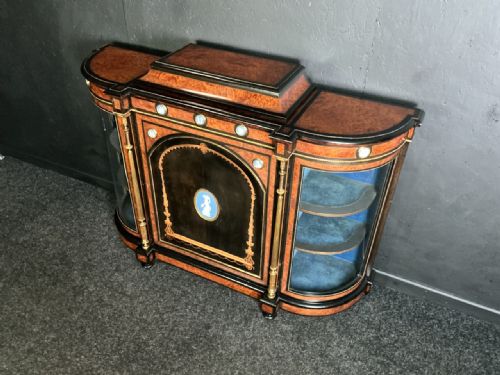
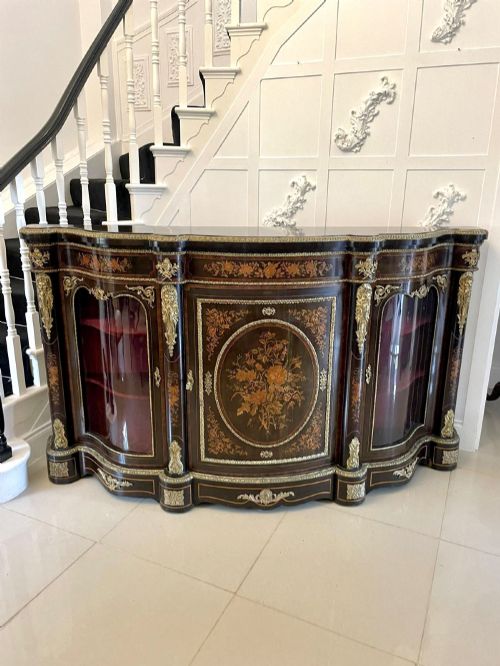
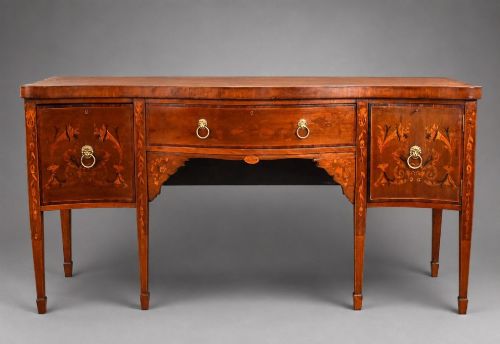
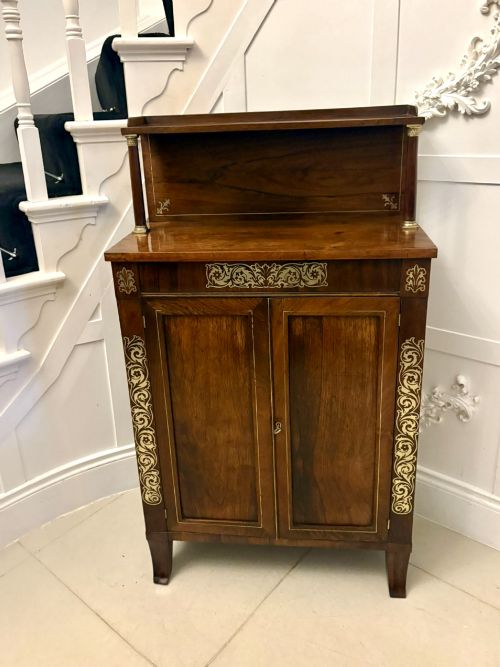
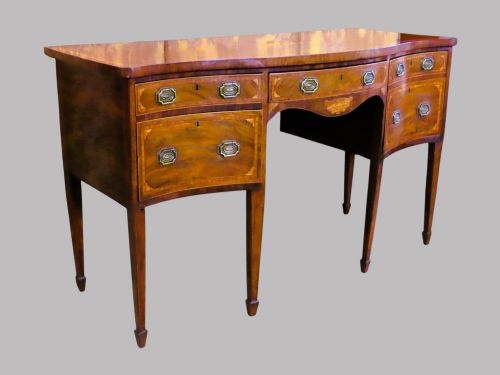
A brass inlaid sideboard is a substantial dining or drawing room cabinet designed for storage and display, originating predominantly from the Regency and nineteenth century periods. These pieces combine timber carcases with precise metalwork, taking the form of breakfront sideboards, credenzas, chiffoniers, and side cabinets.
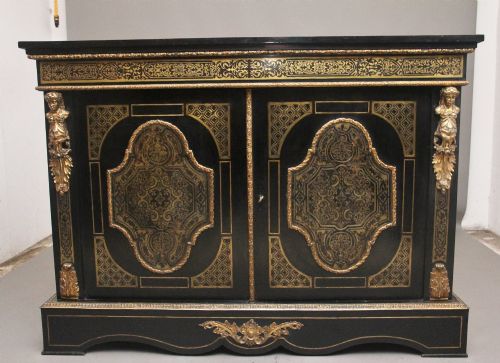
The version most frequently encountered on this page is the Regency mahogany or rosewood sideboard, often featuring breakfront proportions and delicate metal lines. Buyers also discover nineteenth century ebonised examples influenced by French taste, such as boulle work cabinets.
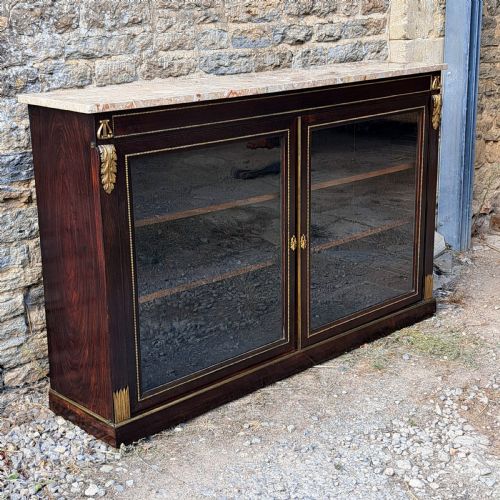
These servers range from serving credenzas with glass doors to architectural sideboards equipped with brass rails. Each variation reflects the evolving domestic requirements for formal dining rooms and formal reception spaces across the decades.
How they were made
Cabinetmakers constructed the carcases using dense timbers such as mahogany, rosewood, and ebonised wood, sometimes incorporating tortoiseshell and ormolu mounts. The surfaces were prepared with channels to receive flat brass wire and sheets cut into geometric or scroll designs.
Makers fixed the brass inlay into the wood substrate using animal glue and tiny pins, then scraped and polished the timber and metal flush together. Additional decorative elements like fabric panels behind glass doors and cast brass galleries completed the construction.
Brass Inlaid Sideboard Retail Price Guide 2026
Typical asking prices for brass inlaid sideboard among the pieces listed under this phrase on Sellingantiques today, from the lower quarter to the upper quarter. They describe what is for sale here now, not the wider market.
Some nineteenth-century makers hid secret compartments behind decorative brass inlay to guard family valuables.
What varies in quality
Quality rests in the precision of the brass cutting and the tightness of the fit into the timber ground. Superior pieces display continuous, unbroken lines of metalwork where the inlay curves smoothly without gaps or excess filler.
The choice of timber grain also dictates distinction, with highly figured rosewood and rich flame mahogany elevating the piece. Furthermore, the crispness of secondary brass mounts, ormolu details, and original glass influences the overall standing of the cabinet.
The Brass Inlaid Sideboard Glossary
- Breakfront
- A cabinet design where the central section projects forward from the flanking outer sections. This configuration adds architectural depth and shadow to large dining room furniture.
- Boulle work
- A method of marquetry using brass and tortoiseshell inlaid together in elaborate scrolling patterns. It takes its name from the master cabinetmaker André-Charles Boulle.
- Chiffonier
- A low cabinet or sideboard featuring shelves and enclosed lower cupboards. These pieces became popular in the nineteenth century for smaller reception rooms.
- Ormolu
- Gilded bronze used for mounts, feet, and decorative accents on fine furniture. The technique involves applying a mercury and gold amalgam to cast bronze.
- Ebonised
- Timber treated with a dark stain or finish to imitate ebony. This process provides a high-contrast dark ground that accentuates bright brass inlay.
Brass Inlaid Sideboard: Frequently Asked Questions
What is a brass inlaid sideboard used for?
These cabinets served historically in dining rooms and parlours for storing silver, linen, and serving dishes while providing a surface for display. Today they function as statement storage pieces in living rooms and hallways.
Their substantial tops accommodate lamps and decorative objects, whilst the internal shelving organises books, glassware, or tableware.
How do I tell Regency from Victorian pieces?
Regency cabinets typically rely on clean architectural lines, rosewood or mahogany timbers, and precise geometric brass stringing. They reflect classical proportions and restraint.
Victorian examples, particularly those from the mid to late nineteenth century, often incorporate ebonised finishes, French boulle marquetry, and curved glass doors influenced by continental revival styles.
Are brass rails original?
Many Regency sideboards included brass galleries or rails designed to hold plates and serving platters upright during meals. Some rails are original survivals, whilst others are period-correct replacements.
Examining the mounting holes and patina helps determine whether the brass rail has remained with the cabinet since its manufacture.
Where should I place a sideboard?
These large cabinets require a wall with sufficient length and clearance to showcase their breakfront proportions and inlay work. Avoid placing them in direct sunlight or near heat sources, which can dry out rosewood and mahogany.
Allow enough space in front of the cabinet for doors and drawers to open fully without obstruction.