
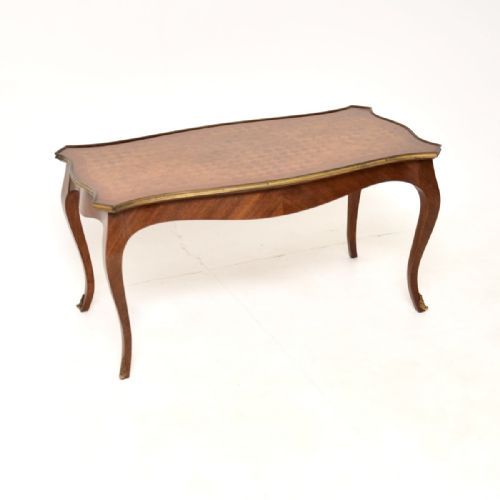
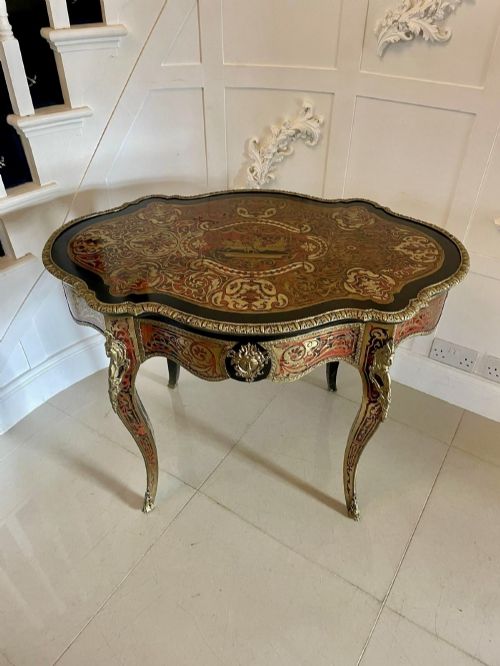
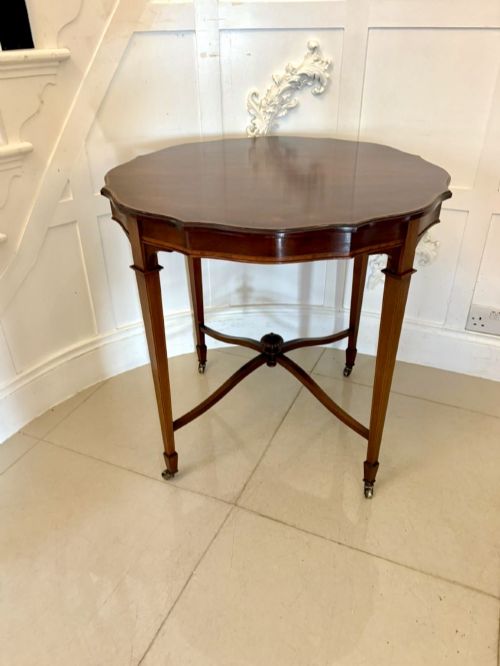
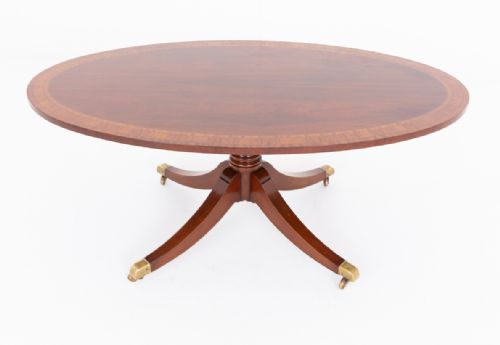


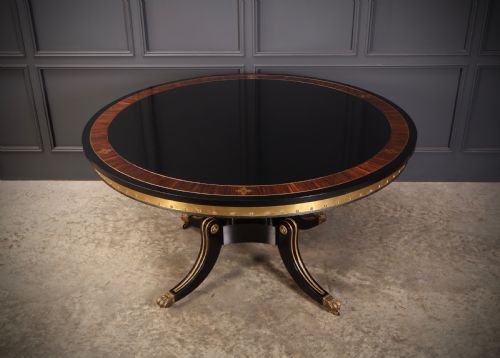


Brass Inlaid Centre Table
A brass inlaid centre table commands the middle of a room, bringing figured timber and bright metalwork together in a single freestanding piece.
Brass Inlaid Centre Table
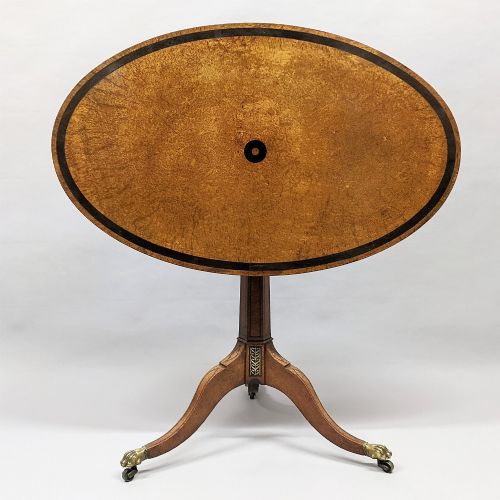
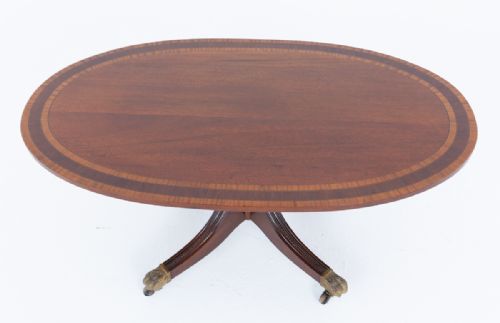
A brass inlaid centre table is a freestanding item designed to be viewed from all sides rather than pushed against a wall. When searching this phrase, a buyer encounters circular pedestal forms and four-legged tables dating from the Georgian and Regency periods through to the Edwardian era.
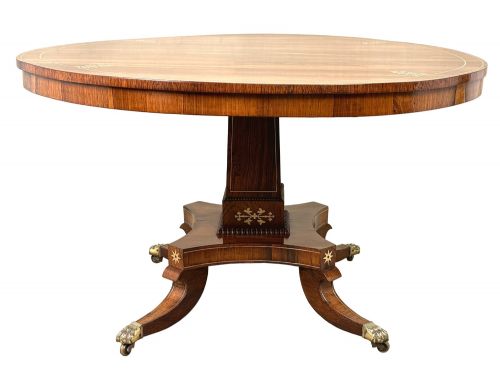
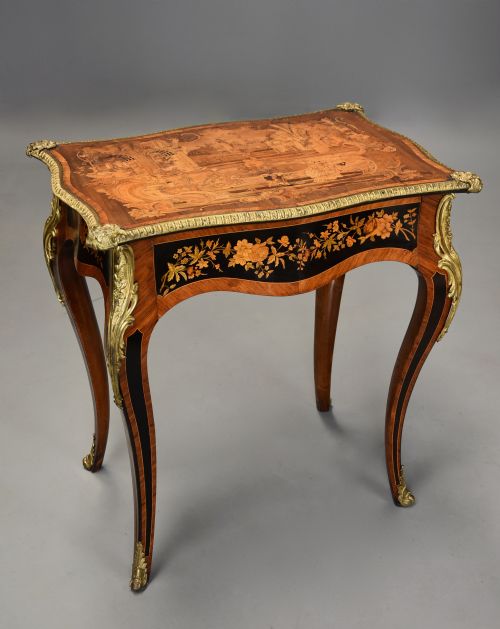
The version most commonly met on this page is the Regency rosewood circular table decorated with precise brass stringing and floral motifs across the top. Alongside these English examples appear French designs incorporating tortoiseshell, ebony, and cast ormolu mounts.
Makers and designers working in these styles included Gillows of Lancaster, George Bullock, Maison Millet, and A. Beurdeley. Forms range from compact lamp tables to large library and dining tables.
How they were made
Cabinetmakers constructed the foundational carcase from dense timbers such as mahogany, rosewood, walnut, or ebonised wood, often over a pine or oak subframe. They selected these woods for their deep natural grain and stability.
Artisans channelled the timber surface to receive thin strips and cut-out shapes of sheet brass, securing the metal inlay with animal glue and pinning where necessary. They then polished the wood and brass flush to create a smooth, continuous plane.
Several tables include hidden drawers originally designed to hold secret love letters or visiting cards out of sight.
What varies in quality
The distinction between tiers rests upon the precision of the brass inlay and the choice of timber veneer. Superior examples display tight, unbroken brass lines and richly figured grain without filler or clumsy patches.
Proportion and structural integrity also separate standard production from masterwork output. Tables that retain their original pedestals, brass mounts, and stable joints demonstrate the skill of the original workshop.
Gillows of Lancaster·George Bullock·Maison Millet·A. Beurdeley
The Brass Inlaid Centre Table Glossary
- Boulle
- An elaborate marquetry technique using tortoiseshell and brass inlay developed in France. It creates a contrasting pattern of dark organic shell and shining metal.
- Ormolu
- Gilded bronze used for mounts, feet, and decorative cast details. It adds a golden metallic accent to timber surfaces.
- Stringing
- Thin inlay lines of contrasting wood or metal set into the surface. It outlines the borders and geometric panels of table tops.
- Parquetry
- Geometric patterns formed by small wood veneers fitted together. It creates repeating squares, triangles, or cubes across the table top.
- Drum table
- A round table with a deep frieze containing drawers, resembling the shape of a drum. These often feature leather inset tops and brass handles.
Brass Inlaid Centre Table: Frequently Asked Questions
Where do you put a centre table?
A centre table stands in the middle of a room, functioning as a focal point rather than sitting against a wall. It allows access from all sides and often holds lamps, books, or decorative objects.
Because these tables are finished on every side, they anchor large reception rooms, libraries, and entrance halls effectively.
How do I identify a Regency table?
Regency tables date from the early nineteenth century and frequently feature rosewood or mahogany combined with precise brass inlay. They often utilise central pillar pedestals supported by sabre legs with brass paw castors.
Proportions are typically classical and restrained, drawing inspiration from ancient Greek and Roman furniture designs.
What is the difference between French and English tables?
English tables from the Regency period tend to rely on dark rosewood highlighted by clean geometric brass stringing. French tables from the Napoleon III and Louis periods often incorporate ebonised wood, tortoiseshell Boulle work, and elaborate ormolu mounts.
French pieces frequently lean towards curved cabriole legs and ornate marquetry panels depicting flowers or architectural scenes.
Can these tables be used every day?
These antique tables are structurally robust and serve well for daily use as lamp tables, writing desks, or coffee tables. Standard care involves using coasters and avoiding excessive moisture or direct sunlight.
Polishing the timber and brass occasionally with appropriate wax maintains the protective finish and sheen of the materials.