



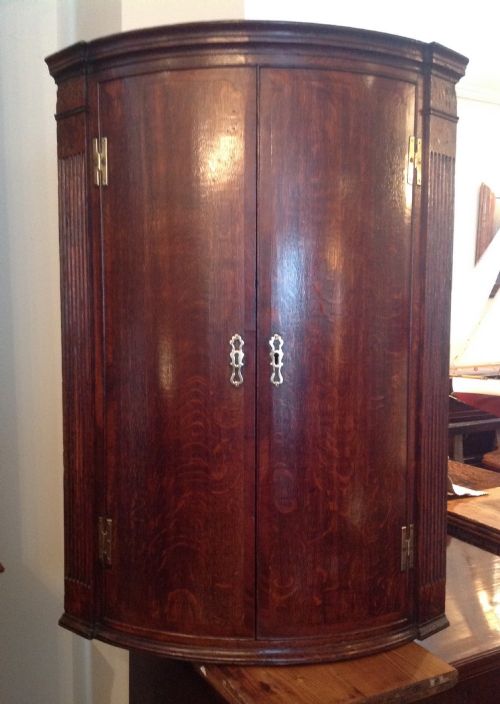
Brass Hinge Corner Cabinet
A brass hinge corner cabinet makes efficient use of awkward domestic spaces while offering period storage.
Brass Hinge Corner Cabinet
When you search for a brass hinge corner cabinet, you are looking at fitted storage designed to occupy room intersections, predominantly appearing in Georgian and Victorian guises. These pieces utilise sturdy timbers and architectural profiles to turn unused junctions into display and storage areas.
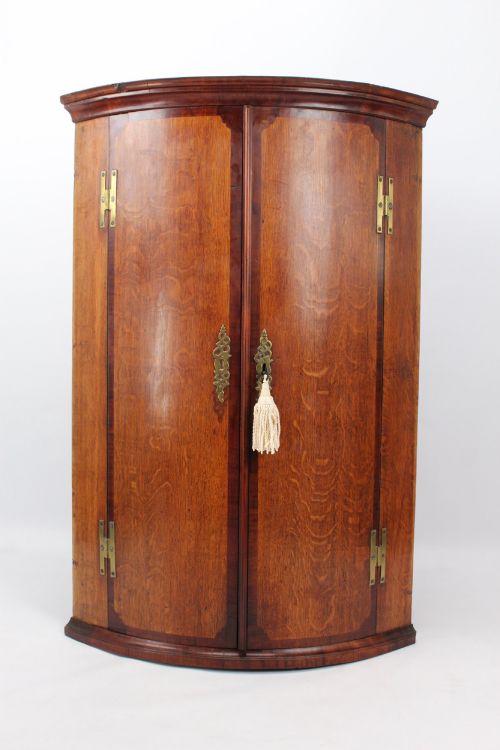
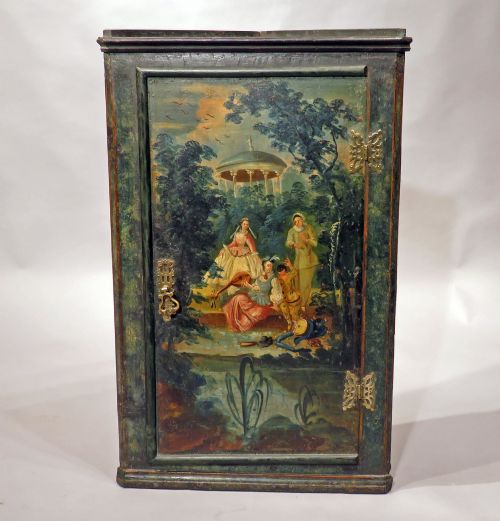
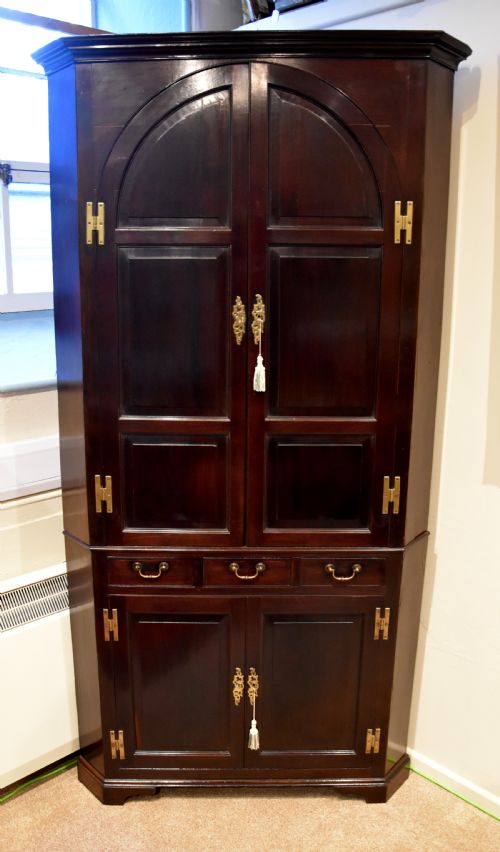
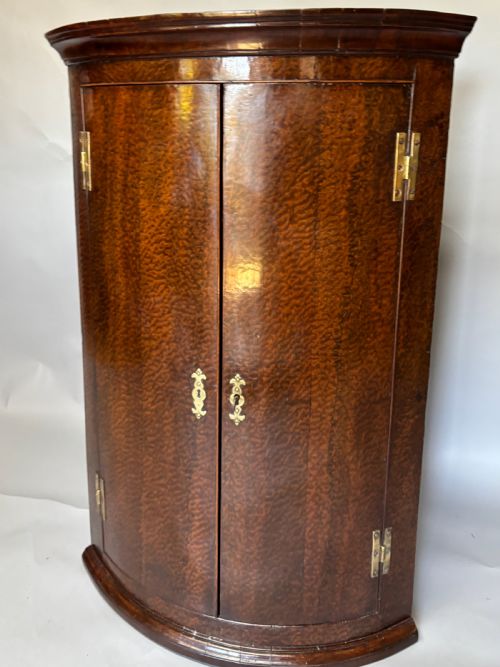
The versions you meet on this page include hanging wall cupboards and bow fronted floor-standing or wall-mounted examples. Oak and mahogany are the prevailing timbers, often finished with distinctive brass H-hinges and escutcheons.
How they were made
Joiners constructed these cabinets using solid oak, mahogany, or painted pine, shaping curved doors for the bow front examples from dense hardwoods. Flame and plum pudding grain variations were selected for their visual impact on the primary facades.
Hardware played a structural and decorative role, with brass hinges screwed securely to the door frames and cabinet bodies to support heavy timber doors over centuries of use.
Brass Hinge Corner Cabinet Retail Price Guide 2026
Typical asking prices for brass hinge corner cabinet among the pieces listed under this phrase on Sellingantiques today, from the lower quarter to the upper quarter. They describe what is for sale here now, not the wider market.
Listings feature Georgian and Victorian periods, with materials spanning oak, mahogany, painted wood, and brass hardware.
What varies in quality
The distinction between standard and superior pieces rests on timber selection and joinery execution, particularly in the handling of curved bow fronts and tight corner joints. Grain matching on mahogany doors and the presence of fine figured woods separate utilitarian cupboards from grander examples.
Hardware also dictates the grade of the piece, as hand-finished brass hinges and original escutcheons indicate a higher level of workshop attention during original manufacture.
The Brass Hinge Corner Cabinet Glossary
- Bow front
- A convex curved cabinet front that projects outward from the corner. This shape required advanced joinery to curve solid mahogany or oak accurately.
- Hinge
- A movable joint used to attach doors to the cabinet frame. Brass H-hinges are characteristic of early cupboards and provide both support and surface decoration.
- Escutcheon
- A flat plate of brass surrounding a keyhole. It protects the surrounding wood from wear and often matches the finish of the door hinges.
- Hanging cupboard
- A cabinet designed to be mounted directly onto a wall rather than resting on the floor. These often feature shaped bases or bracket feet.
Brass Hinge Corner Cabinet: Frequently Asked Questions
Where do I hang a corner cabinet?
These cupboards suit dining rooms, kitchens, or hallways where unused wall angles require functional storage.
Ensure the wall structure can support the weight of solid oak or mahogany before mounting.
How do I date a corner cabinet?
Examine the timber species, construction joints, and hardware styles to determine the period.
Georgian examples frequently utilise oak or mahogany with brass H-hinges, while later Victorian pieces show different stylistic influences such as Gothic Revival.
What timber was used most?
Oak and mahogany are the predominant woods seen in these traditional corner storage pieces.
Painters also finished pine and other softwoods in period colours for decorative domestic interiors.
Are bow fronts harder to find?
Curved front cabinets required more sophisticated carpentry skills from the original makers.
They appear alongside flat-fronted hanging cupboards across Georgian and later periods.