



English Oak Corner Cabinet
An english oak corner cabinet turns neglected room angles into display space with functional architectural presence.
English Oak Corner Cabinet
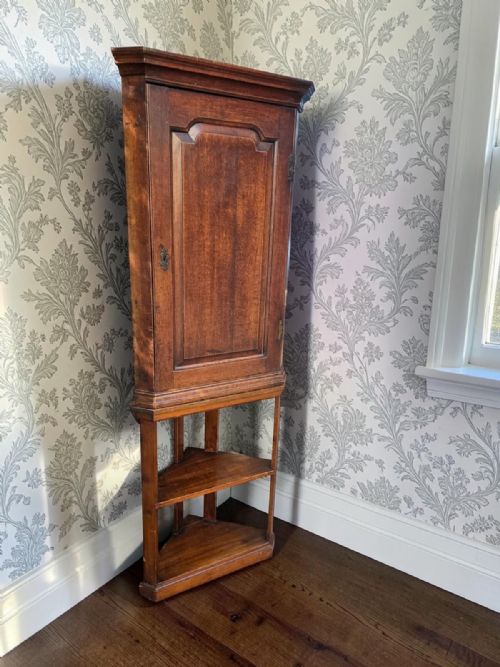
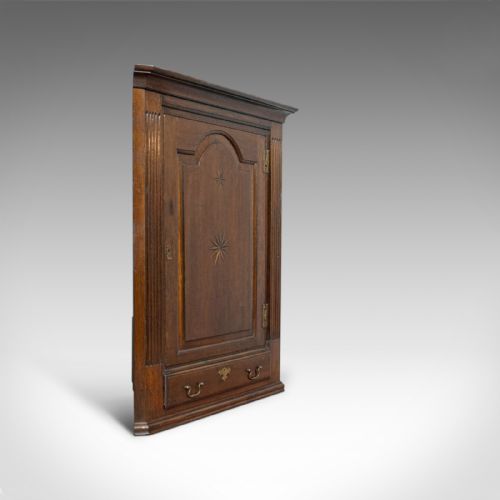
The english oak corner cabinet appears in various formats designed to utilise empty domestic angles, ranging from small wall-hanging cupboards to tall floor-standing storage units and glazed display pieces.
Examples from this selection span several periods, with Georgian and 18th century pieces appearing alongside later Victorian and Edwardian interpretations.
Makers utilised oak as the primary timber, sometimes incorporating fruitwood, mahogany, and satinwood details to accent the structure of these corner cupboards.
Materials and construction
Carpenters constructed the primary frames of solid oak, applying brass hinges, locks, and handles to secure doors and interior shelving.
Selected pieces incorporate mahogany crossbanding, fruitwood inlay, and wood inlay to contrast against the dense grain of the oak.
Glazed doors utilise glass panels held by timber framing, while certain wall-mounted versions feature internal shelves for holding kitchen or display items.
Several cupboards include secret interior drawers hidden away behind the main shelving for private storage.
Distinctions in craftsmanship
The sophistication of decorative details such as crossbanding, inlay work, and carved mouldings separates standard utilitarian cupboards from finer examples.
Proportion and structural balance dictate the visual weight of the piece, particularly when comparing tall floor-standing furniture to compact wall-hanging cabinets.
Waring and Gillow
The English Oak Corner Cabinet Glossary
- Crossbanding
- A narrow strip of veneer applied to the border of a panel, running perpendicular to the grain of the central wood.
- Astragal
- A moulding profile used to divide glass panes within a glazed cabinet door.
- Bow front
- A convex curved front profile found on specific cabinets and cupboards.
- Inlay
- A technique where contrasting materials are inserted into depressions within the solid oak surface to form decorative patterns.
English Oak Corner Cabinet: Frequently Asked Questions
How do I hang a wall cabinet?
Wall-hanging cupboards require secure fixings into wall studs or masonry to support the weight of solid timber.
Professional installation ensures the cabinet remains level and stable when loaded with items.
Were these made for kitchens?
Many examples served as utilitarian storage for food, crockery, and household goods within domestic interiors.
Larger floor-standing units provided extensive storage across multiple shelves and lower drawers.
How do I date an oak cabinet?
Dating relies on construction methods, timber selection, hardware, and stylistic indicators associated with periods like the Georgian era.
Later Victorian and Edwardian revivals often incorporate machine-sawn elements and different secondary woods.
What is a standing corner cupboard?
Standing versions rest directly on the floor, often built as two-part double units offering maximum capacity.
These taller pieces require sufficient floor space and ceiling height to fit into a room corner.