
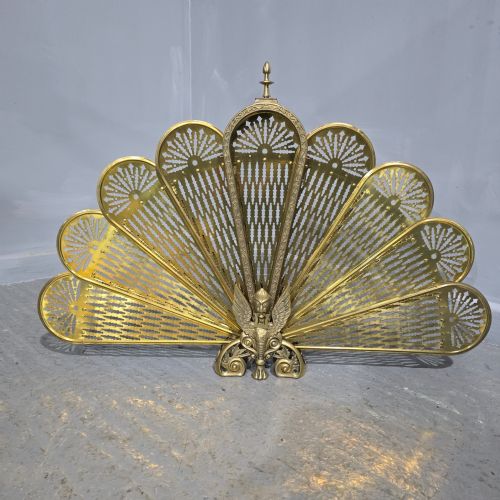


Brass Hearth Accessory Guard
These brass hearth accessory guard pieces protect the room from stray sparks while anchoring the fireplace with polished metal.
Brass Hearth Accessory Guard
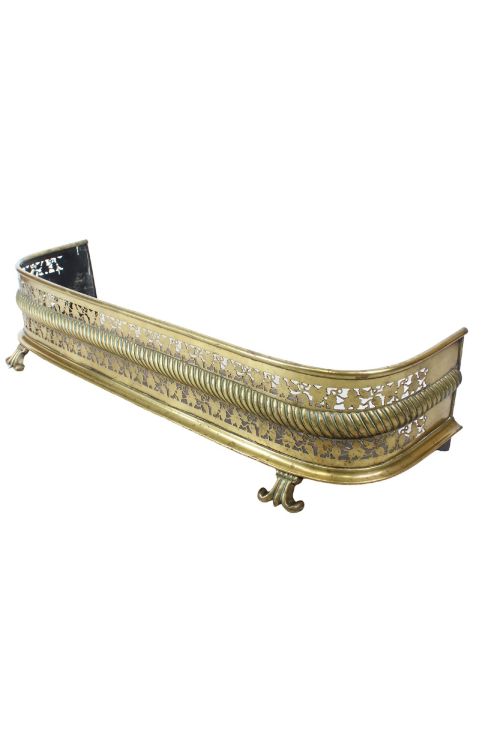
When you search for a brass hearth accessory guard, you encounter a range of protective fire screens, fenders, and companion sets designed for period hearths. These items span Victorian, Edwardian, Regency, and Georgian periods, alongside continental styles such as French Louis XVI and Rococo revival.
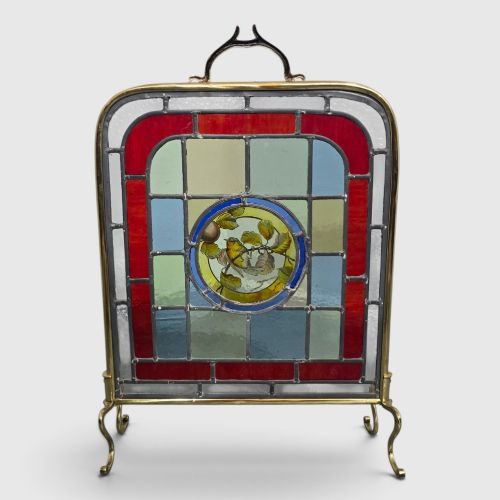
The most common forms on this page include folding or peacock fire screens, pier-pierced and embossed brass fenders, and structural fireguards. Many examples combine brass with steel, wire mesh, or gilt bronze to balance decorative appeal with practical containment.
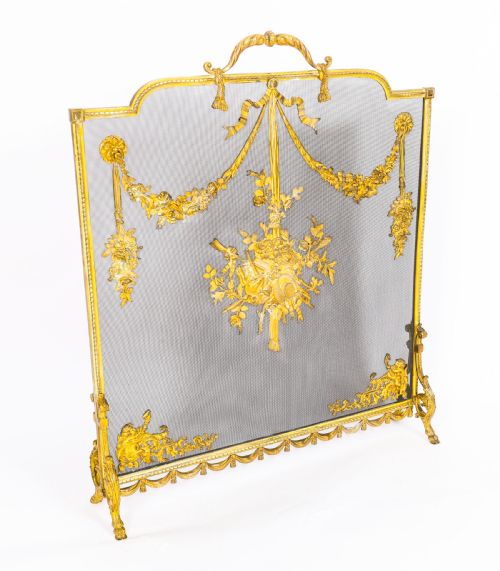
Origin and period dictate the character of each piece, ranging from ornate nineteenth-century French floral trophies to sturdy British domestic fenders. Buyers find both simple utilitarian guards and elaborate formal screens suited to period fireplaces.
Materials and construction
Makers utilised cast and sheet brass, often combined with polished steel, wire mesh, and gilt bronze to build these hearth furnishings. Pierced metalwork, embossing, and poker work panels demonstrate the primary metal-working techniques applied across these centuries.
Structural elements such as cast iron and lead provide weight and stability to fenders and chenets, while delicate wire mesh and stained glass form the protective screens. Ormolu mounts and applied trophies enrich the surfaces of French revival pieces.
Listings feature brass, wire mesh, gilt bronze, steel, cast iron, and stained glass across Victorian, Edwardian, and Regency periods.
Evaluating craftsmanship and condition
Quality separates through the crispness of chased detail in gilt bronze and ormolu mounts, and the depth of hand-piercing in brass fenders. Finer examples display rigorous casting and secure joins rather than superficial stamping.
The integrity of the wire mesh, the weight of the underlying steel or brass frame, and the survival of original patination determine the overall standard of a hearth guard.
The Brass Hearth Accessory Guard Glossary
- Fender
- A low metal guard placed on the hearth in front of an open fireplace to contain rolling embers and ash. Fenders range from simple plain brass rails to heavily pierced Victorian and Regency designs.
- Fire screen
- A movable panel placed before a fireplace to shield the room from radiant heat when the fire is low. They appear in solid brass, wire mesh, and fabric or poker work panels.
- Chenet
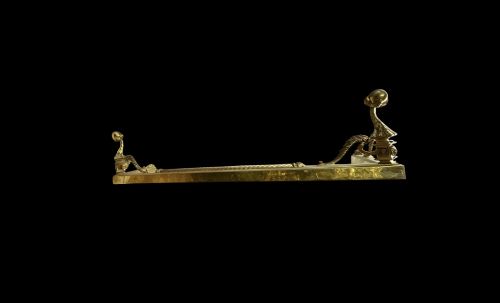
- An alternative term for firedogs or firedogs used to support logs in a hearth. They often feature decorative bronze or ormolu mounts.
- Ormolu
- Gilded bronze applied to ornamental metalwork and fire screens, particularly in French revival styles. The technique imparts a rich gold-coloured finish to the bronze base.
- Pierced brass
- Sheet metal perforated with decorative patterns such as flowers or geometric motifs. This technique lightens the visual weight of fenders and spark guards.
Brass Hearth Accessory Guard: Frequently Asked Questions
How do I measure for a brass fender?
Measure the width and depth of your fireplace opening and hearth stone to ensure the fender sits correctly without blocking foot traffic. Allow adequate clearance for the hearth rug and fire tools.
Take note of the internal and external dimensions listed, as older fenders vary significantly in proportions compared to modern hearths.
What is the difference between a fire screen and a fire guard?
Fire screens often feature solid decorative panels, glass, or needlework designed primarily to block heat and adorn an unused fireplace during summer months. Fire guards typically incorporate wire mesh to actively contain sparks while a fire is burning.
Both items share overlapping terminology in historical listings, so examine the material construction to determine its primary function.
How do I clean antique brass hearth pieces?
Dust regularly with a soft cloth and avoid harsh chemical abrasives that strip the aged patination from the metal. Gentle cleaning preserves the historic surface character.
For pieces with wire mesh or steel components, keep moisture away from joined areas to prevent rust formation.
Are these guards suitable for modern open fires?
Many period mesh guards and fenders function effectively with active open fires provided the dimensions match your hearth safety requirements. Sturdy steel and brass construction handles standard domestic heat.
Verify that folding screens and spark guards stand stable on uneven hearth stones before lighting a fire.