


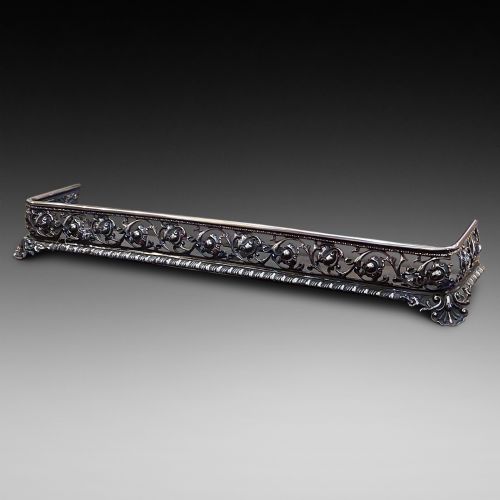
Victorian Pierced Metal Fender
These Victorian pierced metal fender examples frame a hearth with character, offering both protective function and period style.
Victorian Pierced Metal Fender
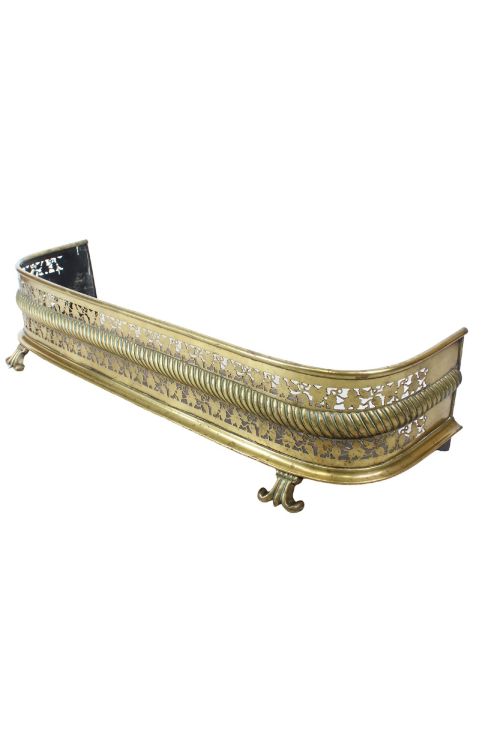
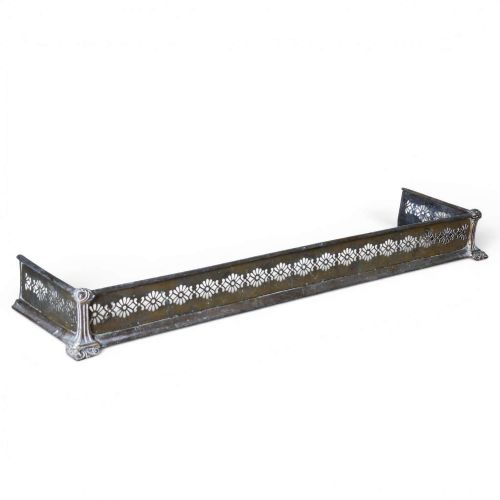
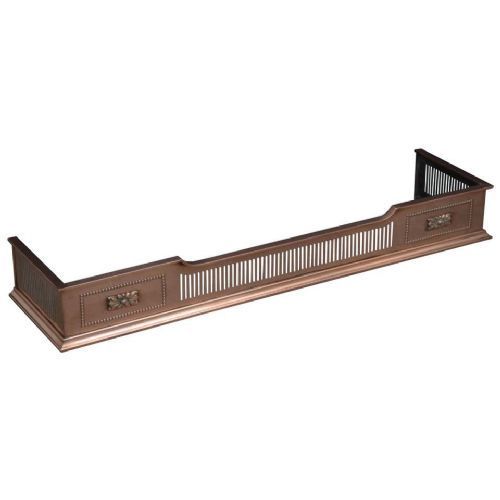
A victorian pierced metal fender sits directly on the floor in front of a fireplace to contain embers and sparks while defining the hearth. The pieces encountered on this page span the nineteenth century, including specific dates from the middle and latter decades.
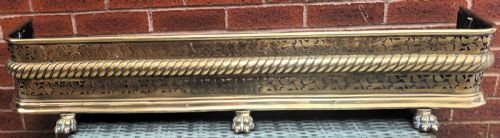
Most examples are constructed from brass or steel, frequently featuring pierced ornamentation and decorative details such as flower patera or dragon motifs. Forms include standard fireplace fenders alongside kerbs and combinations incorporating fire tools.
How they were made
Metalworkers used brass, steel, iron, and copper, often combining materials within a single piece such as a brass and steel construction. Piercing techniques created openwork patterns across the metal body.
Surface decoration involved applied motifs like flower patera and beaded decoration, alongside patination and polished steel finishes achieved through careful manual preparation.
Listings feature items spanning the Victorian period, with specific dates noted from eighteen-fifty, eighteen-eighty, and eighteen-ninety.
What varies in quality
The distinction between standard examples and superior pieces rests on the weight of the metal and the crispness of the pierced work. Heavy quality construction provides a sturdier presence by the fireplace.
Detailing creates further separation, such as hand-finished flower and dragon motifs or the warmth of a wonderfully patinated surface compared to plain utilitarian forms.
The Victorian Pierced Metal Fender Glossary
- Fender
- A low metal guard placed around the hearth to keep burning coals from rolling onto the floor. It also provides a neat boundary for fire tools.
- Kerb
- An alternative term for a hearth fender, often used interchangeably in nineteenth-century listings. It denotes the low barrier enclosing the fireplace space.
- Patera
- A round decorative ornament resembling a classical libation dish, frequently carved or stamped with floral patterns. These appear inset into the body of the metal.
- Patina
- The surface sheen and coloration developed through age, handling, and polishing over many decades. A good patina reflects the history of the piece.
Victorian Pierced Metal Fender: Frequently Asked Questions
What is a victorian pierced metal fender used for?
These metal guards sit around the hearth to keep sparks and rolling embers contained safely within the fireplace area.
They also serve to frame the hearth visually, creating a finished boundary between the fire and the room's flooring.
How do I measure for a fender?
Measure the width and depth of your fireplace opening and hearth space carefully before selecting a piece. Ensure you account for the clearance needed around the fire tools or hearth rug.
Fenders are stationary floor pieces, so exact dimensions prevent awkward gaps against the chimney breast.
What metals were used?
Victorian makers worked primarily in brass, steel, iron, and copper to construct these hearth accessories. Some examples combine brass and steel within a single design for contrasting visual effect.
Finishes range from highly polished steel to patinated brass and black-finished iron.
Are tools included?
Certain listings include matching fire tools alongside the main fender structure. You should check individual descriptions to see if pokers or shovels form part of the set.
Standalone fenders focus entirely on the hearth barrier itself.