
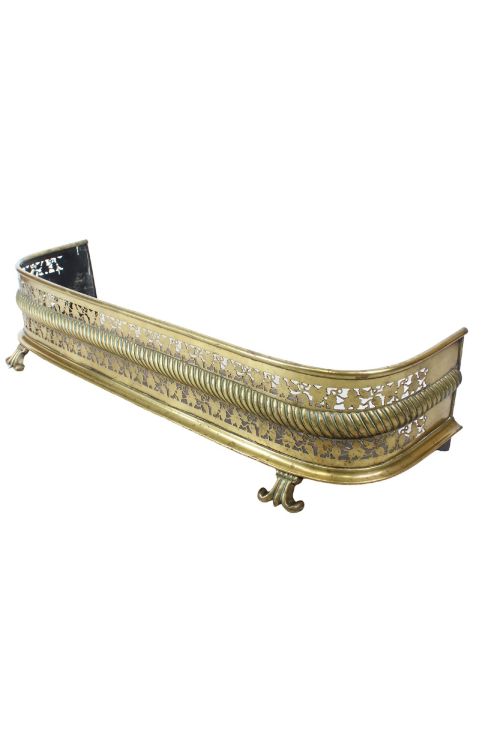
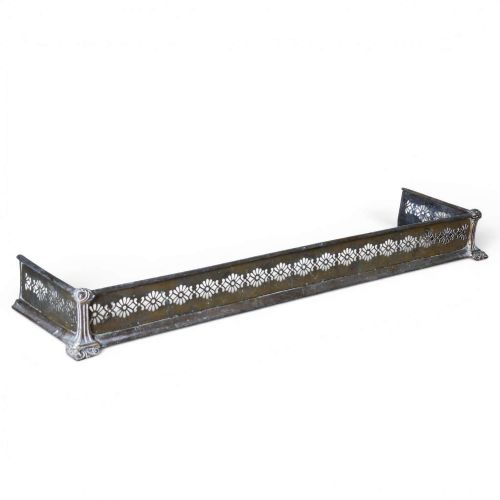
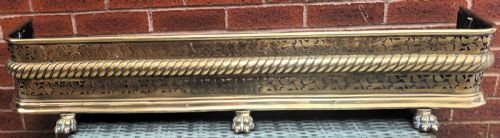
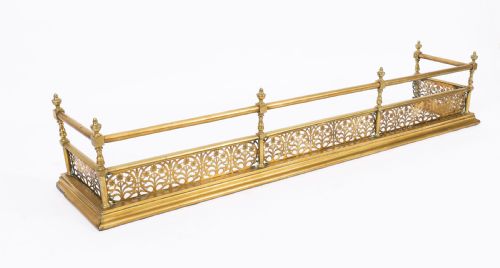




Victorian Pierced Hearth Surround
These Victorian pierced hearth surround pieces protect the room and frame the fire with nineteenth-century metalwork.
Victorian Pierced Hearth Surround
A victorian pierced hearth surround sits directly on the floor in front of an open fireplace to contain embers and frame the hearth. These metal guards appear primarily as brass, iron, steel, and copper structures shaped to fit the base of a chimney opening.
Most examples found here date across the nineteenth century, spanning decades from the eighteen-fifties through the eighteen-nineties. Forms include standard fireplace fenders alongside combinations that incorporate fire tools or feature distinct kerb designs.
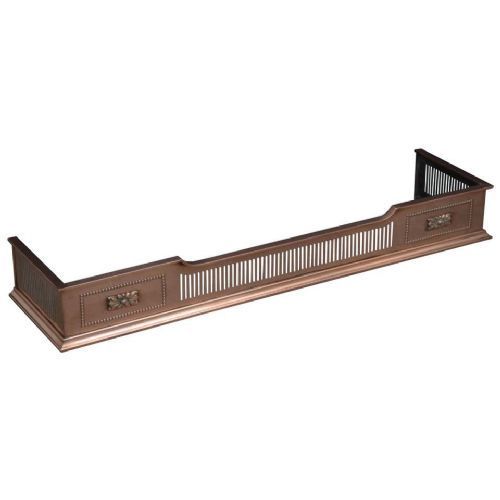
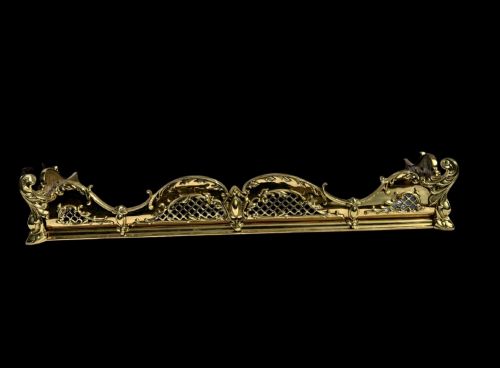
Makers and designers of the period employed specific stylistic vocabularies, producing pieces in Victorian, Regency, Gothic, and Art Nouveau taste. The resulting metalwork ranges from simple heavy industrial bars to decorative panels adorned with flower patera and beaded decoration.
How they were made
Artisans constructed these surrounds using cast iron, wrought iron, polished steel, and sheet or cast brass. Copper also appears as a primary material or accent, providing contrasting metallic tones around the fireplace opening.
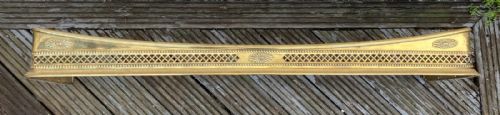
Piercing techniques involved cutting intricate patterns through metal sheets by hand or machine to create openwork grilles and friezes. Additional details such as flower and dragon motifs, beaded borders, and applied brass ornaments were then fitted to the main body.
What varies in quality
Quality rests upon the weight of the metal used and the crispness of the pierced or cast details. Fenders built from heavier gauge brass, iron, or steel maintain structural rigidity and display sharper decorative definition along the pierced panels.
The degree of preservation and the character of the surface finish dictate distinction among pieces. Original patination on brass and polished steel, alongside intact decorative elements like flower patera, separates standard utility guards from finer examples.
The Victorian Pierced Hearth Surround Glossary
- Pierced hearth surround
- A metal barrier placed around the hearth opening featuring cut-out openwork decoration. These pieces prevent stray coals from reaching the room while framing the fireplace.
- Fender
- A low metal guard positioned on the floor around a fireplace. It serves both practical safety functions and decorative room framing.
- Kerb
- An alternative term for a fireplace fender outlining the hearth boundary. It often denotes a low stone or metal barrier fixed to the floor.
- Patera
- A round decorative ornament resembling a classical libation dish. These circular motifs frequently appear carved or cast with floral patterns on nineteenth-century metalwork.
- Patina
- The surface appearance acquired by metal through age, use, and cleaning. Natural patination shows variations in tone and oxidation across brass, copper, and steel.
Victorian Pierced Hearth Surround: Frequently Asked Questions
What is a hearth surround?
A hearth surround is a metal guard placed on the floor to contain wood ash and glowing embers falling from the fire. It creates a physical boundary between the hearth and the main room.
These pieces also serve a decorative purpose, framing the fireplace opening with polished metals and pierced patterns characteristic of nineteenth-century design.
How do I measure for a fender?
Measure the width and depth of your hearth space to ensure the fender fits comfortably around the perimeter of the fireplace opening. Allow adequate clearance for the fire tools and the hearth stone itself.
Consider the height of the metal barrier in relation to your fireplace grate and surrounding floor tiles to maintain correct proportions.
Are these pieces made of solid brass?
Many nineteenth-century fenders utilise solid cast or sheet brass for their main body and decorative pierced panels. Others combine brass components with iron or steel structural frames for added weight and strength.
Inspect the weight and construction methods of the individual piece to understand its specific material makeup and metal combinations.
How do I clean nineteenth century brass?
Remove surface dust using a soft dry cloth before applying any cleaning agents to the metal surface. Avoid abrasive pads that can scratch the original brass or remove historic patination.
Maintain the metal by using a mild brass cleaner specifically formulated for antique metalwork, rubbing gently along the direction of the grain.
What styles are common in these surrounds?
Victorian designs dominate these listings, ranging from plain industrial iron frames to ornate pierced brass panels. Examples also incorporate Gothic Revival elements and flowing Art Nouveau floral motifs.
Details such as beaded borders and flower patera reflect the changing aesthetic preferences of makers operating throughout the nineteenth century.