




Polished Brass Fireguard
A polished brass fireguard brings bright reflection to a hearth, combining sturdy metalwork with the ornamental styles of past centuries.
Polished Brass Fireguard
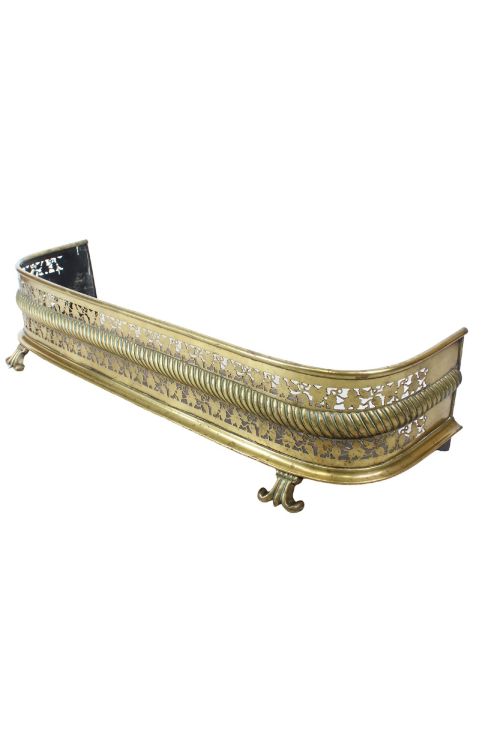
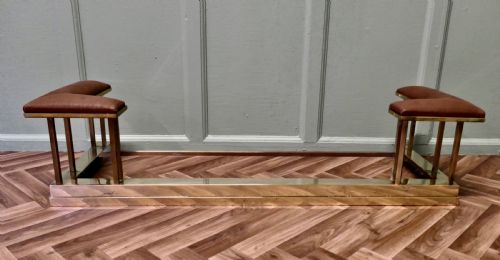
A polished brass fireguard encompasses a range of hearth protection pieces including fenders, curb fenders, and club fenders. These items frame the fireplace opening while offering a reflective metallic surface that catches the light of the room.
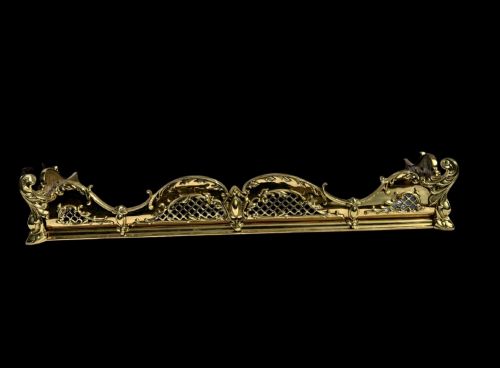
The selections span several distinct eras, with Victorian pieces appearing frequently alongside Edwardian, Art Nouveau, Art Deco, and Georgian examples. Such items utilise brass predominantly, often paired with materials like cast iron or leather.
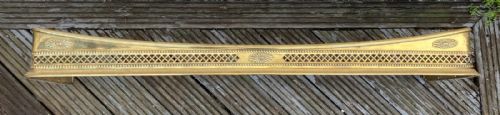
Forms vary from pierced brass plates and gate fronted designs to low curb structures meant to contain stray embers. Each version reflects the interior design priorities of its specific period of manufacture.
Materials and construction
Construction relies heavily on brass, which is frequently polished to achieve a bright finish. Makers combined this primary metal with cast iron for internal structure and added leather upholstery on specific forms such as club fenders.
Techniques visible across the listings include metal piercing to create decorative patterns and the assembly of heavy curb fenders. Copper and steel also appear in supporting roles within the broader category of fireplace accessories.
Some club fenders were built wide enough for two people to sit near the flames, effectively turning the hearth into the cosiest seat in the house.
Assessing quality and craftsmanship
Quality in these pieces rests upon the precision of the metalwork, particularly in pierced designs where intricate patterns require careful execution. The gauge of the brass and the solidity of the underlying construction dictate how well a fender withstands decades of hearthside use.
Stylistic execution distinguishes standard utilitarian items from those displaying deliberate artistic ambition, such as flowing Art Nouveau motifs or geometric Art Deco lines. The integration of secondary materials, including stitched leather on club fenders, further separates exceptional examples from simpler counterparts.
The Polished Brass Fireguard Glossary
- Curb fender
- A low metal barrier placed around the hearth to keep coals and ash contained within the fireplace area. These pieces sit directly on the floor and define the boundary of the hearth.
- Club fender
- A low, upholstered seat built into a metal frame that surrounds the fireplace. This form allows people to sit close to the fire while providing a sturdy brass structure.
- Pierced brass
- Metal sheet perforated with decorative cut-out patterns to allow light through and create visual texture. This technique appears frequently on Victorian examples.
- Fire dogs
- Andirons used to support logs within a fireplace, often listed alongside companion tools. They elevate wood to improve airflow and combustion.
Polished Brass Fireguard: Frequently Asked Questions
How do I clean polished brass?
Cleaning requires a suitable metal polish applied gently with a soft cloth to maintain the reflective surface without removing the underlying material. Care must be taken around pierced sections or adjacent leather components.
Regular dusting prevents soot and ash build-up from dulling the finish over time. Avoid harsh abrasive pads that can scratch the polished metal.
What is a club fender?
A club fender is a low hearth surround featuring integrated upholstered seats on either side. It provides a comfortable seating position directly adjacent to the fire.
This form combines a sturdy metal base, often in brass, with leather cushioning. It became a popular addition to nineteenth and early twentieth century drawing rooms.
How do I date a brass fender?
Dating relies on identifying stylistic markers such as Victorian pierced ornamentation, Edwardian gate front configurations, or geometric Art Deco lines. Construction methods and secondary materials like cast iron or copper offer further clues to the period of origin.
Reference points include specific design movements associated with the nineteenth and early twentieth centuries. Comparing decorative motifs helps narrow down the likely decade of manufacture.
Can these pieces be used with open fires?
These metal guards and fenders were originally designed to function practically around active hearths by containing sparks and falling embers. Their robust construction in brass and cast iron suits them for traditional fireplace settings.
Modern users should ensure the dimensions match their specific hearth layout before placement. They serve both a protective barrier function and a decorative role.