
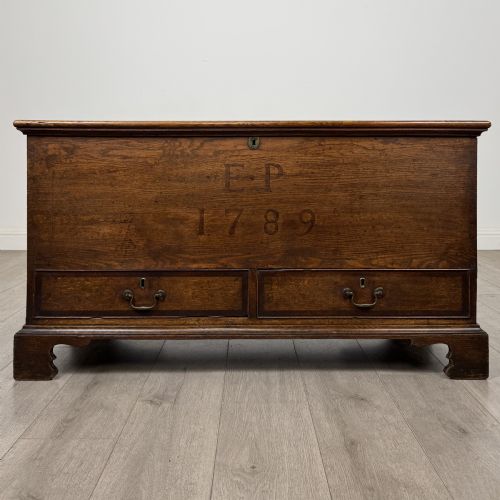
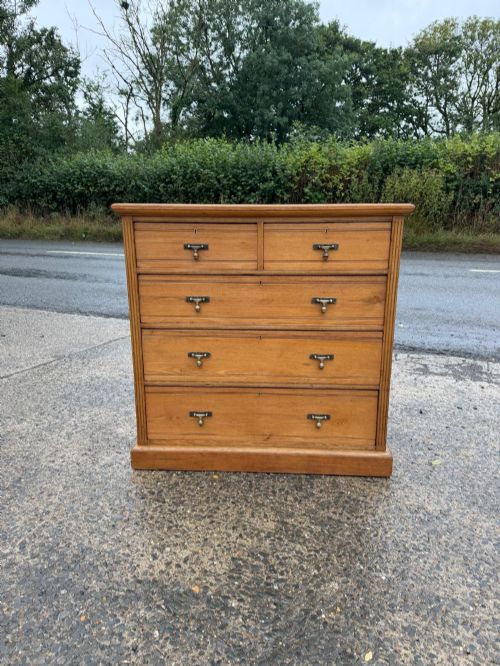
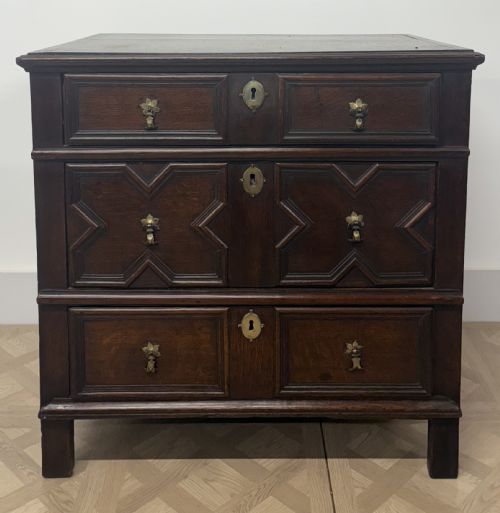
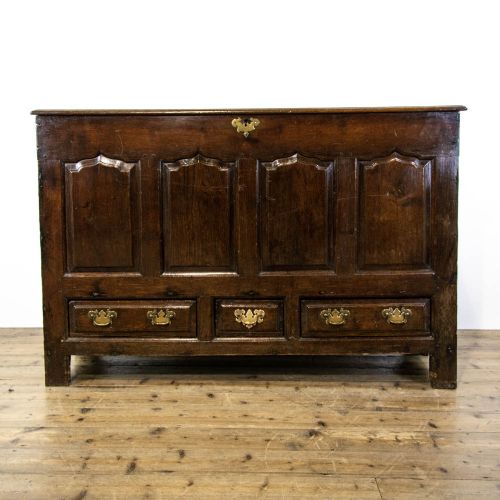
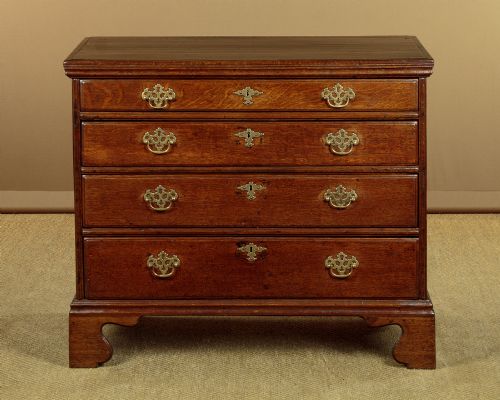
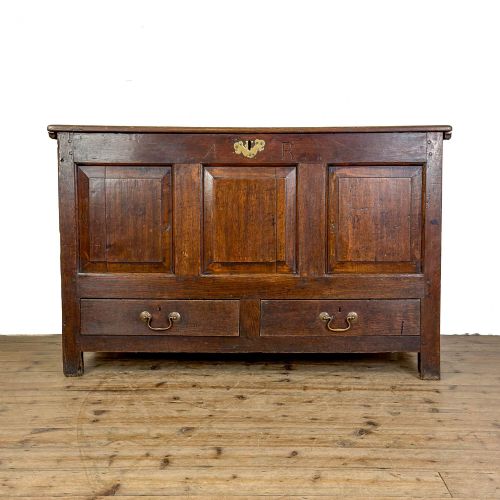
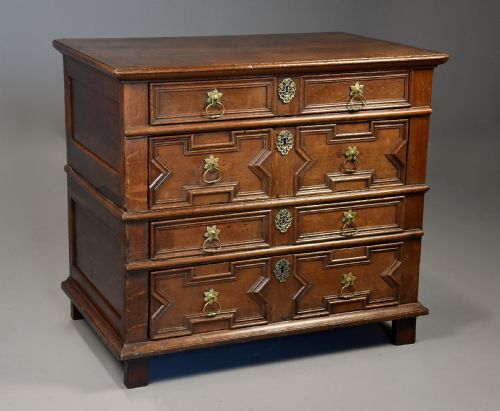
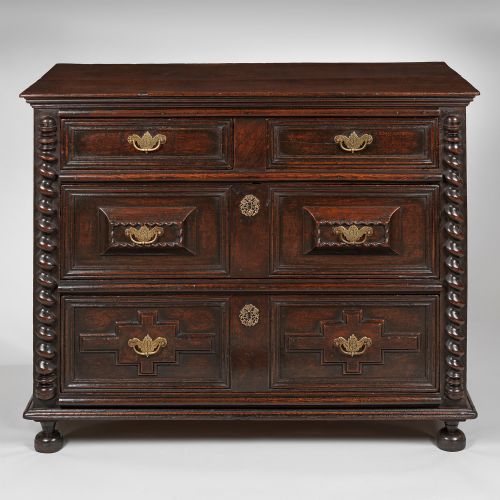


Brass Handle Oak Coffer
A brass handle oak coffer brings centuries of sturdy storage and rich timber grain directly into a modern hallway or bedroom.
Brass Handle Oak Coffer
A brass handle oak coffer represents a robust tradition of domestic storage, appearing across the seventeenth, eighteenth, and nineteenth centuries. When searching for a brass handle oak coffer, a buyer encounters forms that range from simple boarded boxes to panelled mule chests and fitted cellarets. These pieces bridge the gap between utilitarian rural joinery and the more refined vernacular styles of the Georgian and Regency periods.
The selection on this page draws heavily from seventeenth-century origins through to the nineteenth century, encompassing regional variants like Welsh vernacular pieces and Lancashire chests. Structural variations include multi-panelled fronts, geometric mouldings, and chip-carved surfaces paired with functional metalwork. Buyers find everything from compact apprentice boxes to large travelling trunks built for endurance.
Materials and construction methods
Joiners built these items primarily from solid English oak, occasionally incorporating walnut or mahogany for contrast in high-status pieces. Boards were joined using traditional framing techniques, panel construction, and sometimes dovetails for drawers, ensuring durability across generations.
Metal components such as brass handles, drop pulls, and iron hinges were secured by hand, providing both operational strength and visual contrast against the dark timber. Surfaces developed character through moulded details, chip carving, and waxed finishes rather than heavy pigmentation.
Current listings span from the seventeenth century through the nineteenth century, uniting oak, brass, and iron across regional furniture forms.
Assessing quality and craftsmanship
Quality in these pieces rests upon the integrity of the timber selection and the precision of the joinery. Superior examples display tight grain patterns in the oak, well-balanced proportions, and original hardware that integrates harmoniously with the primary structure.
The sophistication of the surface decoration, from geometric mouldings to crisp chip carving, separates workshop output of higher ambition from standard utility items. Preservation of the natural timber surface, including aged patination, distinguishes pieces that retain their original character.
The Brass Handle Oak Coffer Glossary
- Cofer
- A traditional wooden chest used for storing valuables, linens, or domestic goods. These heavy storage boxes often formed the primary furniture in early homes before fitted cupboards became common.
- Mule chest
- A chest featuring one or more drawers at the base beneath a primary compartment. This form developed during the seventeenth and eighteenth centuries to offer easier access to stored textiles.
- Cellaret
- A lockable container designed for holding bottles or decanters, often heavily built. Regency examples frequently adopted neoclassical design motifs to resemble architectural pedestals.
- Moulding
- A shaped strip of timber applied to create decorative relief on a flat surface. Seventeenth-century examples often utilise geometric configurations to add depth to drawer fronts.
- Patina
- The surface sheen and colour developed by timber through age, handling, and waxing. A desirable patination reflects decades of light exposure and use.
Brass Handle Oak Coffer: Frequently Asked Questions
What were these chests used for originally?
Households utilised these heavy wooden chests to store valuable textiles, blankets, family documents, and personal clothing. In a time before built-in wardrobes, they served as the primary secure storage in a room.
Over later periods, specific variants like mule chests and cellarets evolved to accommodate bottom drawers for smaller items or secure compartments for bottles.
How do I date an oak coffer?
Dating relies on observing construction methods, timber preparation, and decorative styles. Seventeenth-century examples often feature hand- cleft oak boards, frame-and-panel construction, and geometric mouldings.
Later eighteenth and nineteenth-century pieces incorporate dovetail joints, brass drop handles, and softer vernacular styling associated with Georgian provincial workshops.
Where should I place a coffer at home?
These sturdy pieces sit well at the foot of a bed, along an entrance hallway wall, or acting as a low coffee table in a living space. Their durable oak surfaces easily support everyday decorative objects.
Ensure placement avoids direct heat sources and strong sunlight to protect the historic timber and maintain the stability of the wood.
What is the difference between a coffer and a mule chest?
A standard coffer consists of a simple lidded box structure opening from the top for general storage. A mule chest incorporates one or more drawers beneath the main compartment.
This drawer addition allowed users to retrieve items without lifting the heavy lid or disturbing objects stacked on top of the chest.