
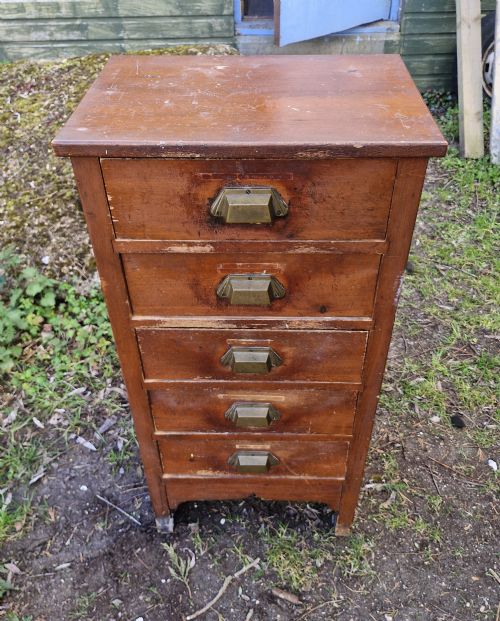


Brass Handle Filing Cabinet
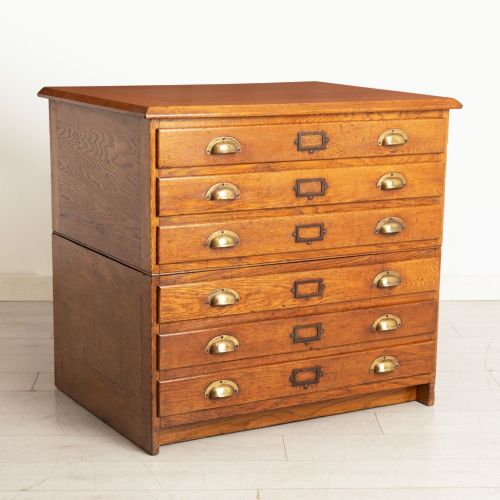
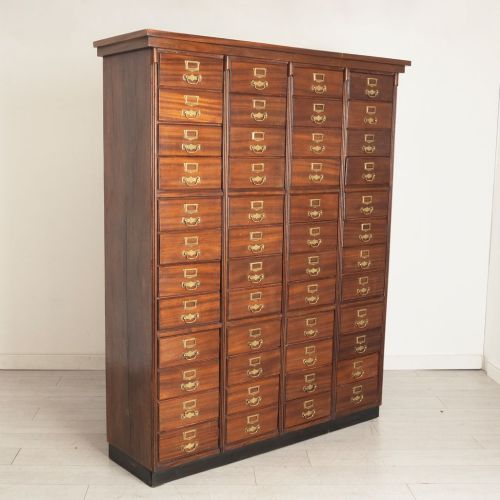
A brass handle filing cabinet brings serious workspace function into domestic rooms through generous timber banks and polished hardware.
Brass Handle Filing Cabinet
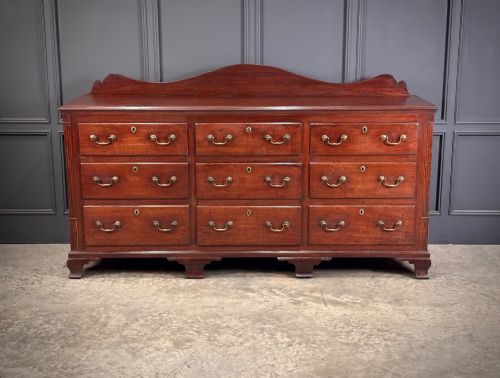
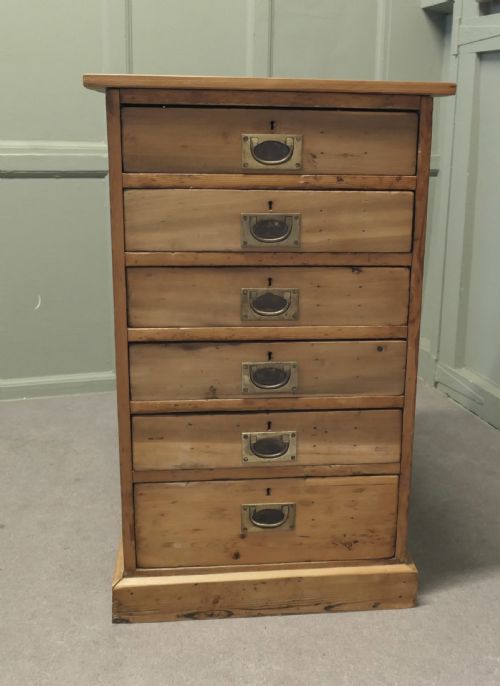
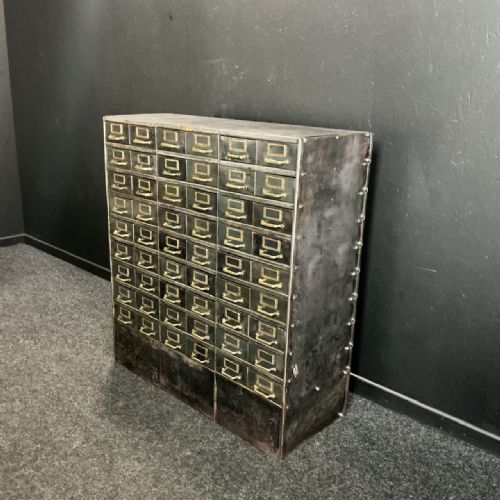
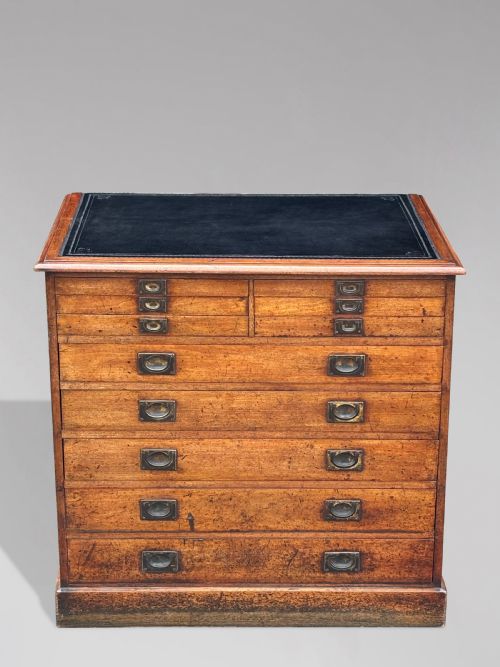
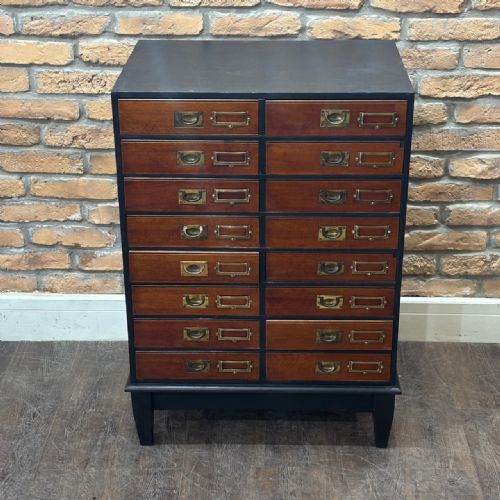
A brass handle filing cabinet gathers multi-drawer units designed for paperwork, correspondence, and small items into sturdy wooden frames. The selections here span the eighteenth, nineteenth, and twentieth centuries, taking the form of banks of drawers, campaign pieces, and specialised office storage.
Most examples you encounter lean towards mahogany and walnut construction, though sturdy pine and oak variants also appear alongside industrial steel and painted wood. Styles range from Georgian proportion and Victorian campaign build to Edwardian craftsmanship and utilitarian twentieth-century workshop forms.
Makers designed these multi-drawer pieces for functional clerical use in offices, studies, and commercial premises rather than formal display. Over decades of service, these cabinets have transitioned from workspace utility into practical storage for modern homes.
Materials and construction
Cabinetmakers built these pieces using dense hardwoods like mahogany and walnut alongside robust utility timbers such as oak, pine, and beech. Frame construction relies on traditional joinery to support the weight of numerous stacked drawers loaded with paper or small objects.
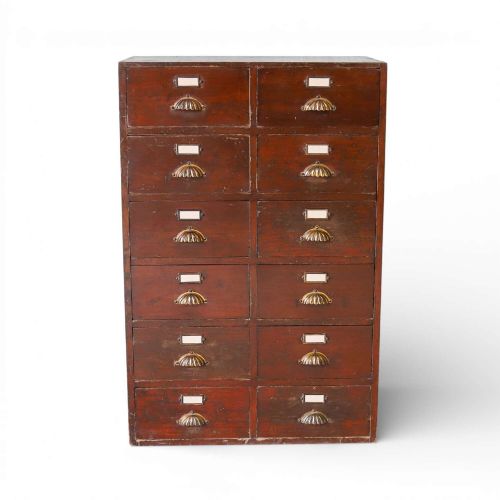
The defining hardware feature comprises brass pulls, shell handles, and integrated label holders secured to the drawer fronts. Selected pieces incorporate specialised mechanisms, patent systems, or campaign brass corners for transport and durability.
Some drawers retain century-old paper labels tucked behind their brass holders, recording vanished contents of long-closed offices.
Judging build and finish
Quality rests upon the integrity of the timber selection and the precision of the drawer construction. Cabinets featuring dense mahogany or figured walnut with substantial side panels outlast lighter or later pine alternatives.
Hardware integrity separates standard utility items from finer pieces. Original matching brass shell pulls, functional label holders, and smooth-running drawer runners indicate superior workshop origin and better preservation.
The Brass Handle Filing Cabinet Glossary
- Bank of drawers
- A multi-tiered furniture form containing numerous stacked shallow drawers designed for sorting documents or small goods. Such units serve as the primary structural format for most filing cabinets on this page.
- Shell pull
- A stamped or cast brass handle shaped like an inverted scallop shell, frequently incorporating a slot for a paper label. This hardware is typical on early twentieth-century filing and haberdashery drawers.
- Campaign style
- Portable furniture constructed with recessed brass handles and corner brackets intended for military travel. This design ensures that protruding hardware does not catch during transit.
- Haberdashery cabinet
- A multi-drawer retail or workshop storage unit featuring glass-fronted or wooden drawers used for organising small merchandise. These cabinets frequently double as domestic filing storage today.
- Patent file
- An office storage system incorporating mechanical sorting devices or spring-loaded retention arms. These specialised mechanisms identify commercial filing cabinets from the turn of the twentieth century.
Brass Handle Filing Cabinet: Frequently Asked Questions
How do I clean brass handles?
Clean brass hardware using a soft cloth and mild soapy water to remove surface dust without disturbing the aged patina. Avoid harsh chemical polishes that strip historical character from the metal.
Dry the brass thoroughly after cleaning to prevent moisture from damaging the surrounding wood drawer fronts.
Will modern paper fit these drawers?
Many older filing and bank drawers were built for historical document sizes rather than standard modern paper dimensions. You should check the internal drawer measurements against your specific storage requirements.
Shallow pine and mahogany drawers often suit letters, stationery, and craft supplies better than modern suspension files.
How do I date a cabinet?
Examine the secondary timbers inside the drawers, the style of the brass hardware, and the joinery methods used on the frame. Mahogany and oak pieces with hand-cut dovetails generally point towards eighteenth and nineteenth-century origins.
Industrial and utility pieces from the twentieth century often display simpler construction and standardised brass label pulls.
Can I use these in a living room?
These multi-drawer cabinets provide practical storage that integrates easily into domestic sitting rooms, studies, and hallways. The warm tones of mahogany, walnut, and oak pair well with both traditional and contemporary interiors.
Ensure the cabinet dimensions match your floor space, as banks of drawers often feature deep footprints designed for commercial use.