

Brass Handle Dressing Table
A brass handle dressing table brings together fine cabinet timber and utilitarian metalware for daily grooming.
Brass Handle Dressing Table
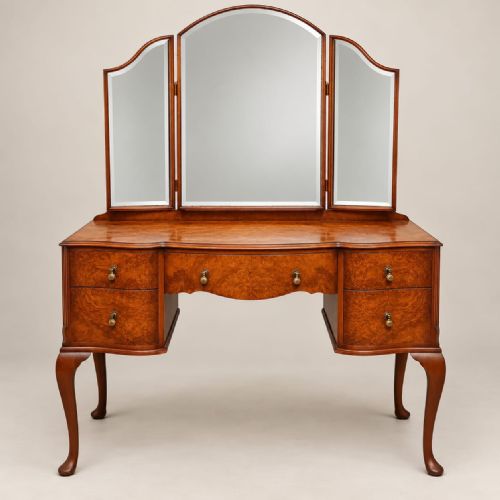
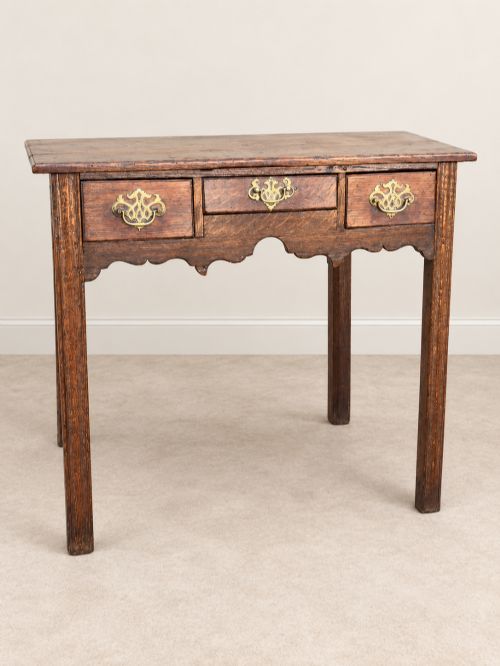
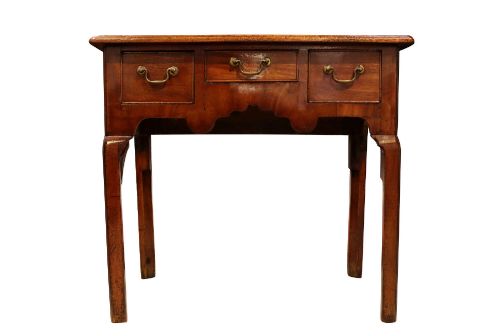
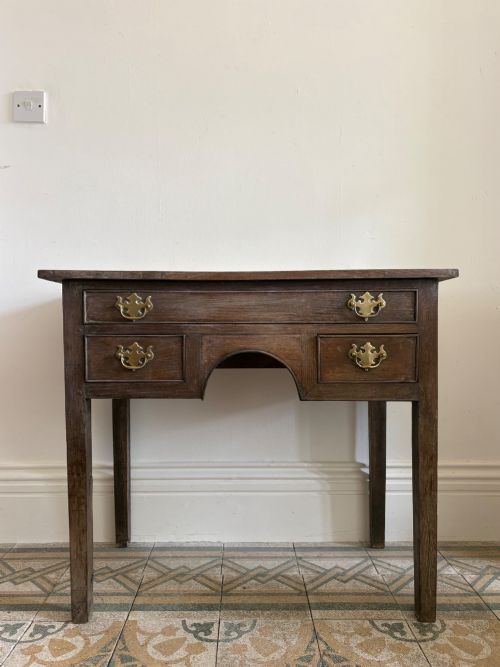
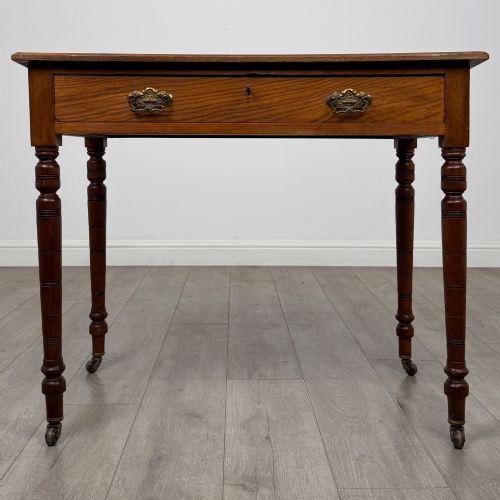
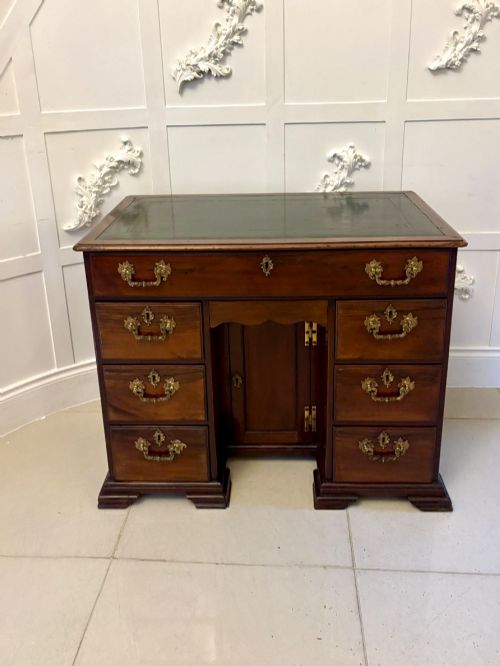
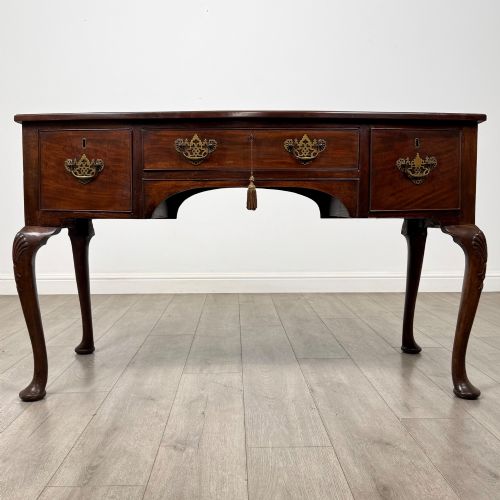
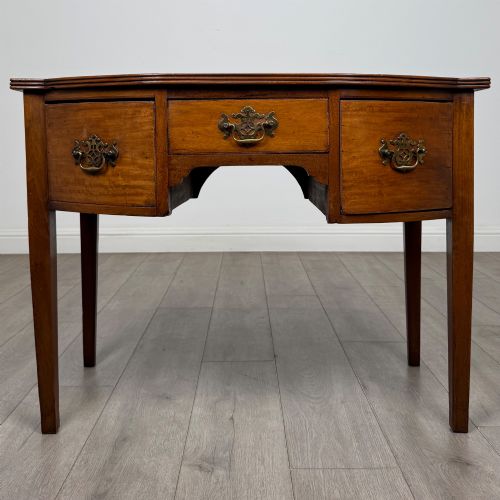
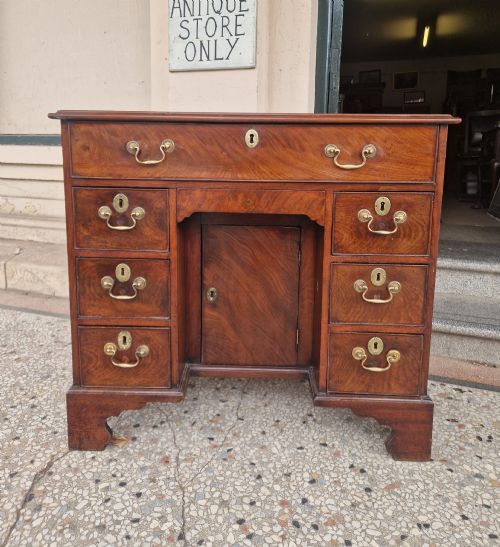
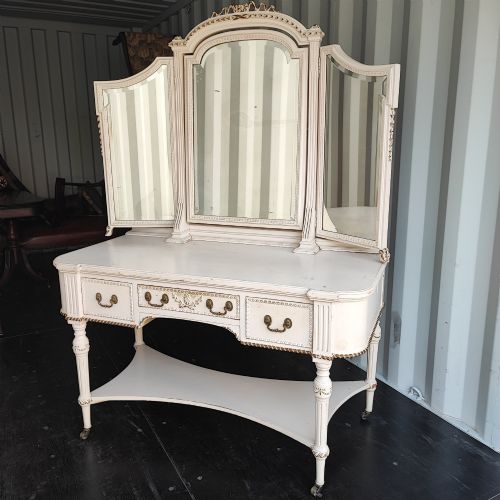
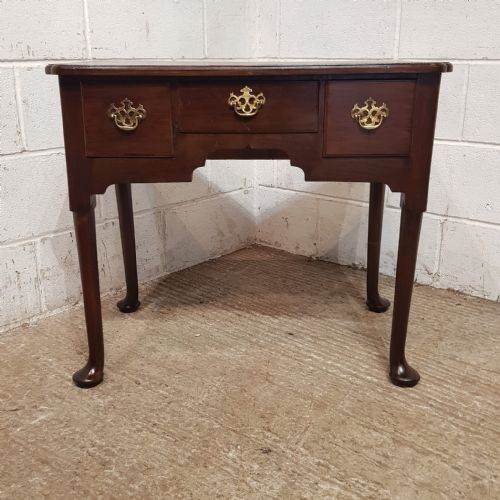
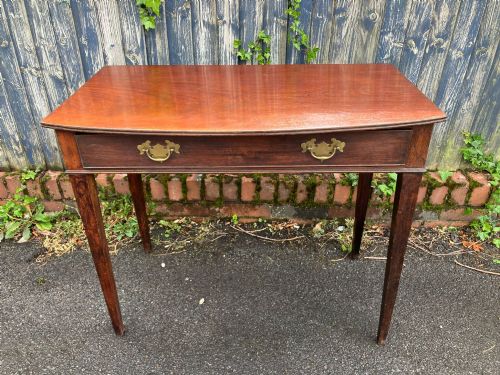
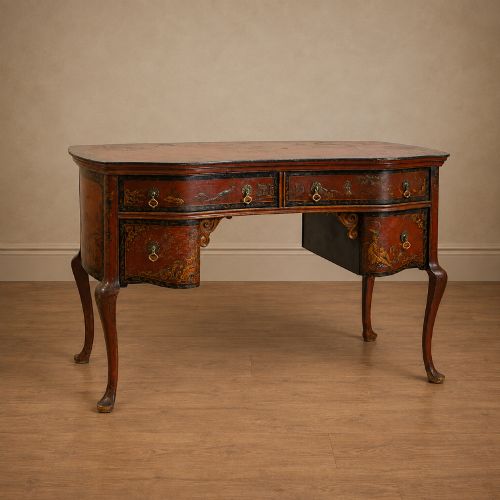
A brass handle dressing table draws on forms like the lowboy, writing desk, and kneehole table, spanning periods from the eighteenth century through the Edwardian era.
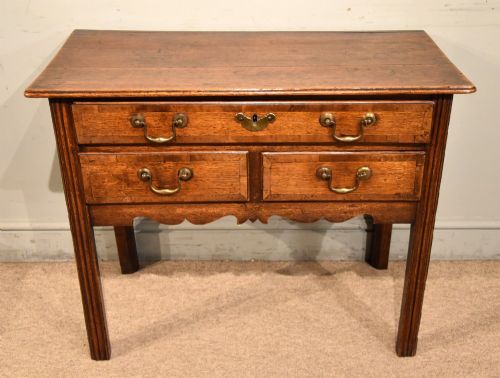
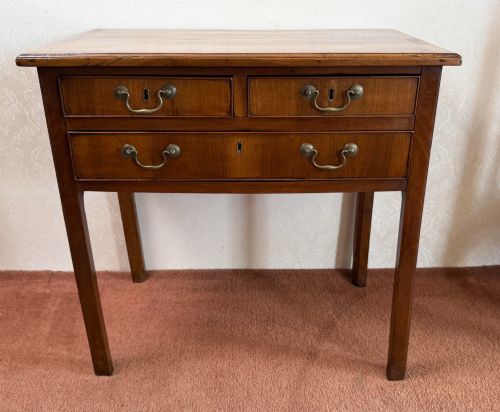
The version most commonly met on this page is a mahogany or oak lowboy or kneehole desk fitted with drawers and metal pulls.
Examples cross styles from Georgian and Queen Anne to Victorian and Edwardian revivals, utilising timber construction with brass hardware.
Materials and construction
Cabinet makers utilised dense hardwoods including mahogany, oak, walnut, and burr walnut, often built with dovetailed drawer construction.
Brass formed the handles, swan neck pulls, and finials, while secondary materials such as leather, glass, and gilt were applied to writing surfaces and mirrors.
Listings feature oak, mahogany, and walnut timbers alongside brass hardware across Georgian, Victorian, and Edwardian periods.
Judging quality in the range
Quality rests upon the selection of timber veneers, the precision of the cabinet joinery, and the integrity of the original brass handles.
Finer pieces show careful proportion in kneehole configurations and lowboy drawer arrangements, whereas simpler utility items rely on plain plank construction.
Maples of London·Jenners
The Brass Handle Dressing Table Glossary
- Lowboy
- A small table with drawers, commonly used as a dressing table or side table in the eighteenth century. It typically stands on four slender legs.
- Kneehole desk
- A desk or dressing table featuring a central recess for the knees flanked by pedestals of small drawers. This form became popular during the Georgian period.
- Lowboy and side table
- A dual designation reflecting how lowboys often double as side tables or dressing surfaces due to their modest height and drawer space.
- Swan neck handle
- A metal pull shaped like an elongated letter S, commonly attached to backplates on eighteenth and nineteenth-century drawer fronts.
- Burr walnut
- A figured wood veneer taken from the growth excrescences of walnut trees, prized for its swirling grain patterns on cabinet surfaces.
Brass Handle Dressing Table: Frequently Asked Questions
What is a lowboy dressing table?
A lowboy is a small table with one or more rows of drawers, used historically for personal grooming and dressing.
These pieces bridge the gap between side tables and desks, often featuring brass hardware on the drawer fronts.
How do I date a wooden dressing table?
Dating relies on observing timber choices, construction methods like dovetailing, and the style of the brass handles. Georgian and Victorian examples each display distinct proportions and decorative treatments.
Changes in revival periods also help separate eighteenth-century originals from later nineteenth and twentieth-century interpretations.
What woods were used for these tables?
Cabinet makers built these pieces primarily using mahogany, oak, and walnut. Burr walnut veneers and gilt accents frequently appear on higher-status examples.
Secondary woods support the primary structures beneath the polished exterior surfaces.
Where should I place a kneehole desk?
A kneehole dressing table fits well in a bedroom as a traditional dressing surface or in a study as a writing desk. Its compact footprint accommodates smaller spaces while offering storage drawers.
Placing the table away from direct heat sources protects the timber and veneer over time.