


Brass Handle Copper Pot
These brass handle copper pot pieces combine utilitarian warmth with enduring craft, bringing tactile history and honest metalwork into modern rooms.
Brass Handle Copper Pot
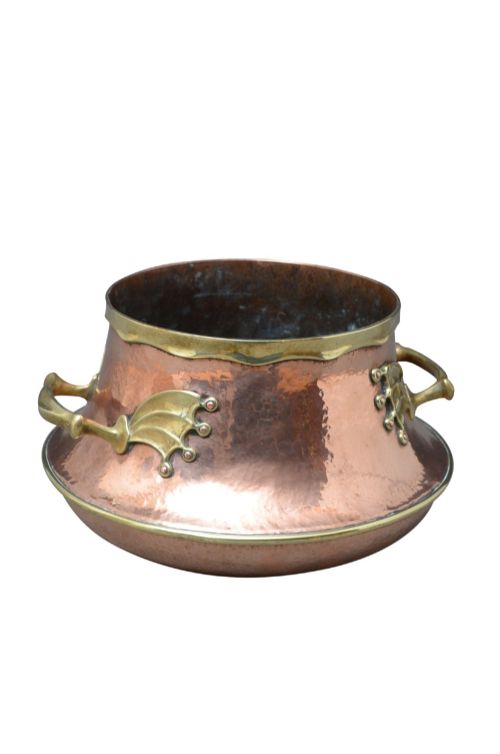
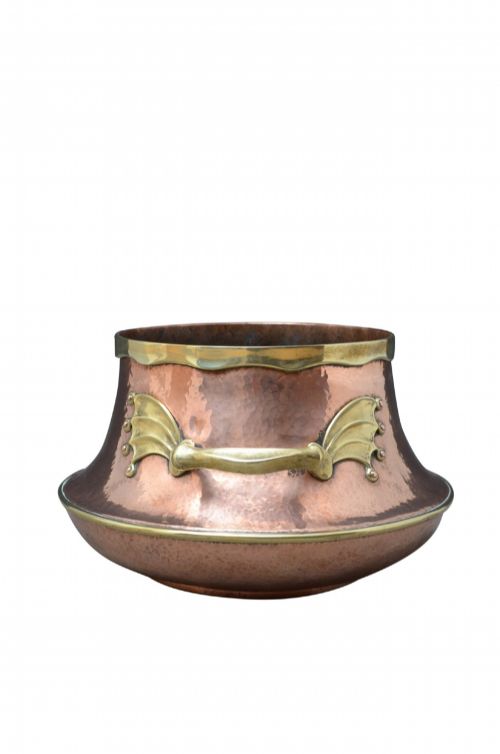
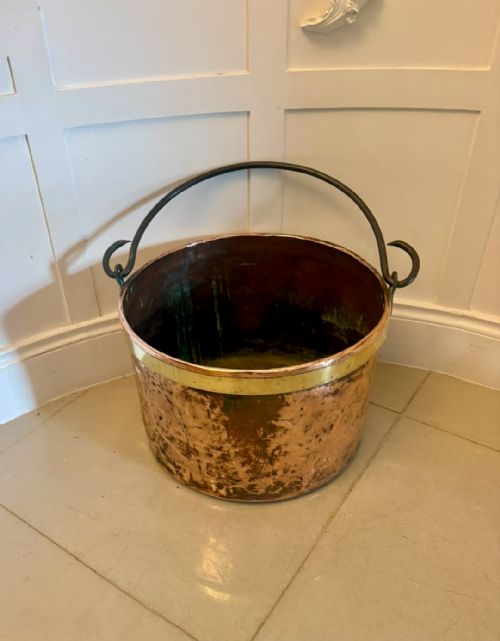
A brass handle copper pot is a utilitarian vessel that transitions from historic hearths and kitchens to contemporary interiors as a planter, bucket or display piece. These items span the Georgian, Victorian and Arts and Crafts periods, reflecting domestic and decorative changes across centuries.
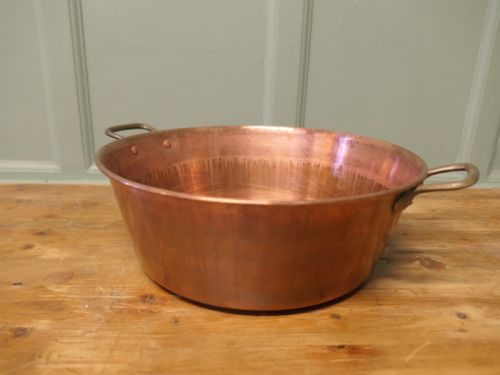
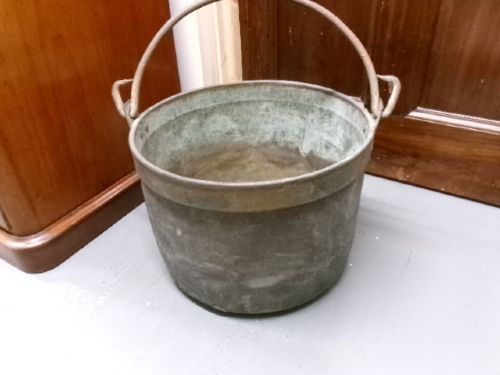
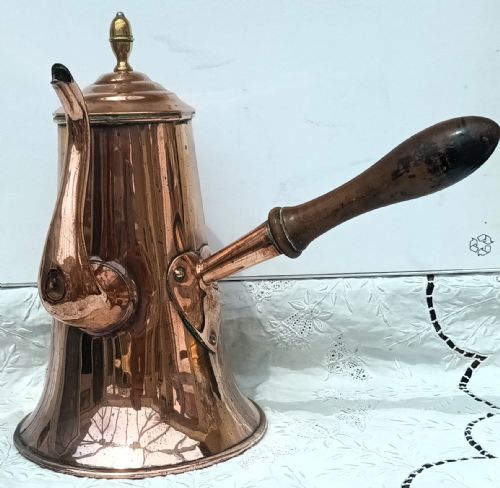
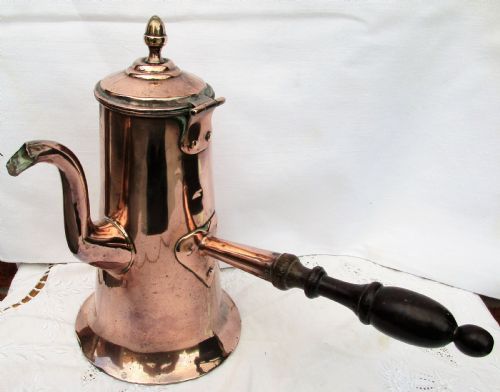
The version most commonly met on this page is a nineteenth-century Victorian or George III specimen, typically formed as a kettle, jam pan, cauldron or jardinière. These vessels combine heavy copper bodies with contrasting brass fittings, offering substantial weight and practical utility.
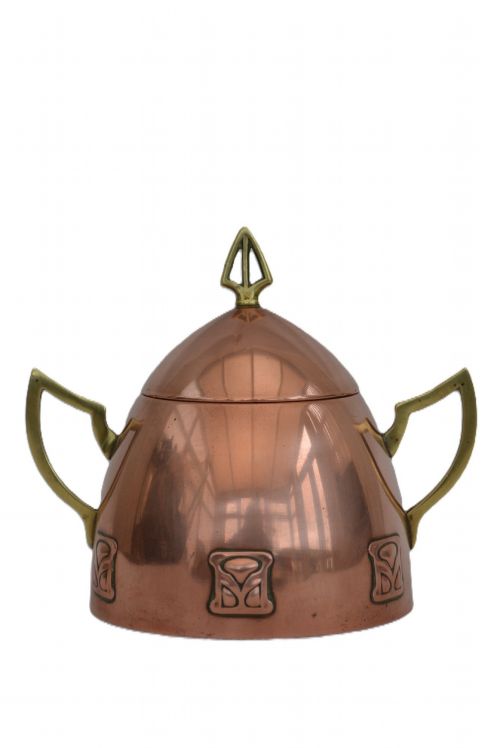
Makers and artisans produced these pots for kitchen service, fireplace tending and indoor planting, utilising robust metals intended for daily labour. Today, collectors encounter them in diverse regional styles ranging from rustic nineteenth-century utility to polished Art Nouveau and Art Deco forms.
Materials and construction methods
Makers formed the primary bodies of these vessels from hammered or sheet copper, chosen for its thermal conductivity and malleability. Handles and attachments utilise cast or wrought brass, affixed securely with rivets or integrated mounts.
Craftsmen often employed iron, tin or wood for supplementary structural elements, reinforcing rims and bases to withstand heavy use. Hammering techniques created textured surfaces on specific planters and cauldrons, adding rigidity and visual depth to the metal.
Listings feature copper pots and kettles spanning the George III, Victorian, Arts and Crafts, Art Nouveau and Art Deco periods.
Distinctions in quality and execution
Superior examples display balanced proportions, clean hammering and substantial metal gauge rather than thin, pliable sheets. The integration of the brass handle to the copper body reveals the maker's precision through secure riveting and sturdy bracket design.
The distinction between ordinary utility wares and finer decorative pieces rests in the crispness of surface decoration, such as embossing or smooth planishing. George III and Victorian items often show superior joint work and material thickness compared to lighter mass-produced alternatives.
William Soutter And Sons
The Brass Handle Copper Pot Glossary
- Jardinière
- An ornamental pot or stand for holding flowering plants or greenery. These vessels often double as log bins or coal buckets in domestic settings.
- Cauldron
- A large metal pot with a rounded base and a swing handle, traditionally used over an open fire. In later periods, makers adapted the form for decorative storage.
- Dinanderie
- Objects made of brass, copper, or bronze, particularly vessels and decorative items produced in European workshops. The term originates from the Belgian town of Dinant.
- Planishing
- A metalworking technique involving light hammering with a flat-faced hammer to smooth, shape, and harden sheet metal. This process creates a uniform surface texture.
- Preserve pan
- A wide, shallow cooking vessel designed for boiling fruits and sugars. Their broad bases allowed even heat distribution during jam making.
Brass Handle Copper Pot: Frequently Asked Questions
What were these copper pots originally used for?
These vessels served practical domestic functions around the Georgian and Victorian home, including boiling water, cooking preserves, and heating liquids over hearths.
Secondary uses involved tending fires, storing coal, and holding logs near the fireplace as part of everyday household management.
How do I clean a brass handle copper pot?
Maintenance requires gentle washing with mild soap and warm water to preserve the historical patina accumulated over generations.
Harsh chemical abrasives should be avoided to protect the integrity of the copper surface and the contrasting brass fittings.
How can I tell a Georgian pot from a Victorian one?
George III and early Georgian pieces often exhibit simpler, heavier forms associated with open hearth cooking and sturdy utility.
Victorian and later nineteenth-century examples frequently introduce decorative embossing, swing handles, and specialised formats like jardinières and jam pans.
Can I use these vintage pots for indoor plants?
Many of these vessels function well as planters or jardinières for housing potted houseplants within modern living spaces.
Their robust metal construction and waterproof properties make them suitable for displaying greenery while adding industrial texture to a room.