
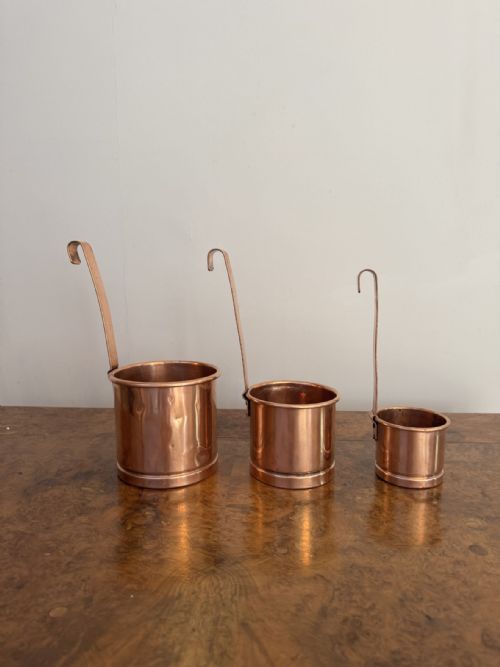
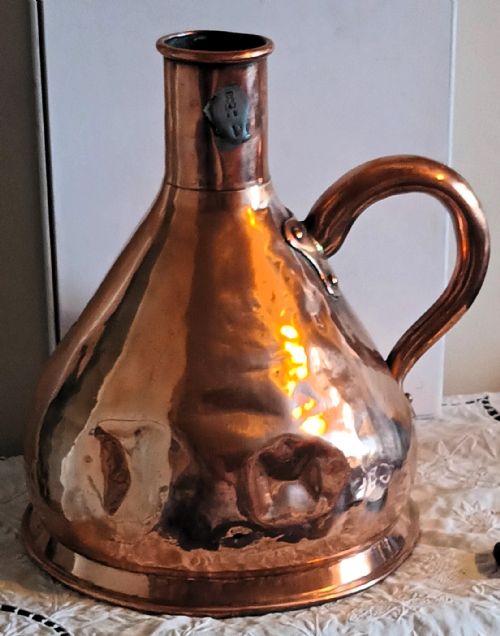


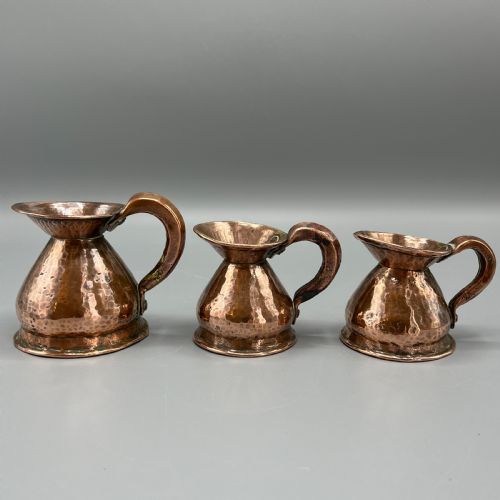


Copper Measuring Jug
These copper measuring jugs bring heavy gauge metal and practical tavern history straight from the Georgian and Victorian eras into modern kitchens.
Copper Measuring Jug
A copper measuring jug serves functional kitchen and tavern roles across the Georgian, Victorian, and Arts and Crafts periods, appearing in single pieces and graduated sets. These vessels range from small miniature apprentice pieces and pint sizes up to massive multi-gallon flagons and harvest jugs.
The most common forms on this page include standard imperial liquid measures, haystack measures, and tall pitchers designed for daily utility. Regional varieties such as Scottish measures and Jersey cans also emerge alongside decorated tavern pieces.
Makers and workshops stamped capacities, town names, and verification marks directly into the metal, connecting these functional objects to official trade standards of the nineteenth century.
Materials and construction
Heavy sheet copper forms the primary body of each measuring jug, joined with visible seams and reinforced with brass rims or handles for daily wear. Lead solder and tin linings stabilise the internal joints and provide a safe surface for liquid contents.
Makers shaped these vessels by hand-beating or spinning the metal over stakes, finishing the exterior with polished surfaces or retaining a dark patination. Brass components appear on handles, spouts, and rim collars to add structural strength.
Apprentice metalworkers practiced their craft by hammering tiny, fully functional pint jugs that easily fit in the palm of a hand.
Evaluating craftsmanship
The weight of the copper sheet and the integrity of the seams separate robust working tavern measures from lighter decorative items. Heavy gauge metal resists dents and maintains its structural shape through decades of heavy use.
Crispness in the stamped capacity marks, royal VR ciphers, and maker inscriptions indicates higher workshop standards. Original unpolished surfaces with deep, undisturbed patination retain greater historical integrity than over-buffed metal.
Joseph Sankey·J Bower·Loftus of Oxford Street London·S Hancock
The Copper Measuring Jug Glossary
- Haystack measure
- A distinct regional English measure shaped with a flared base and a tapered body resembling a stack of hay. These pieces originate primarily from the nineteenth century.
- Apprentice piece
- A small-scale model created by a trainee artisan to demonstrate mastery of metalworking techniques. These miniature measuring jugs replicate full-size tavern vessels in every detail.
- Imperial measure
- A standardised liquid capacity system established in nineteenth-century Britain. Jugs bearing these standards verify exact fluid volumes for ale, wine, or dry goods.
- VR mark
- A royal cypher standing for Victoria Regina, stamped onto measures to denote official government verification. These marks guarantee the accuracy of the vessel's volume.
- Seamed construction
- A method of joining flat copper plates together with folded edges and solder. Visible seams characterise authentic nineteenth-century hand-built vessels.
Copper Measuring Jug: Frequently Asked Questions
How do I know my copper measuring jug is old?
Examine the construction methods, looking for hand-beated surfaces, dovetail or folded seams, and heavy gauge copper rather than modern thin sheet metal. Nineteenth-century examples often carry stamped capacity marks, maker names, or official verification ciphers.
Check the base and handle attachments for signs of hand-soldering and wear consistent with age. Patina and minor dents from historical tavern or kitchen use further confirm period authenticity.
Were these jugs used for cooking or serving?
These vessels functioned primarily as liquid measures in taverns, markets, and domestic kitchens for portioning ale, wine, and milk. Their robust construction and tin-lined interiors allowed them to handle daily liquid transfer.
Graduated sets and large harvest jugs held larger volumes for communal tables or storage before being poured into smaller drinking vessels.
Can I use an antique copper measuring jug for liquids?
Many period measuring jugs feature internal tin linings designed to prevent the copper from reacting with acidic liquids or alcohol. However, historical solder may contain lead, requiring caution if used for consumption.
For most buyers, these pieces serve best as decorative items or for holding dry botanicals and utensils rather than active daily beverage service.
How should I clean antique copper?
Preserve the dark natural patination by dusting the surface gently with a dry cloth rather than applying aggressive chemical polishes. Removing the historical dark oxidation can diminish the visual character built up over centuries.
If polishing is necessary, use a mild, non-abrasive copper cream and rinse thoroughly to protect the metal from pitting.