


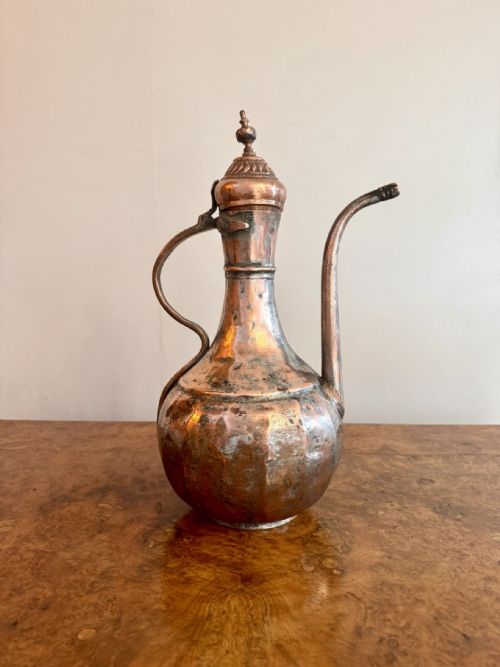


Hammered Copper Pot
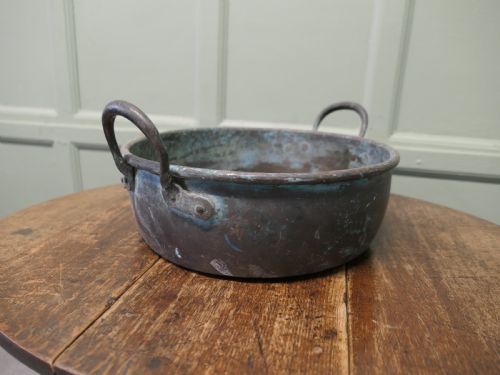
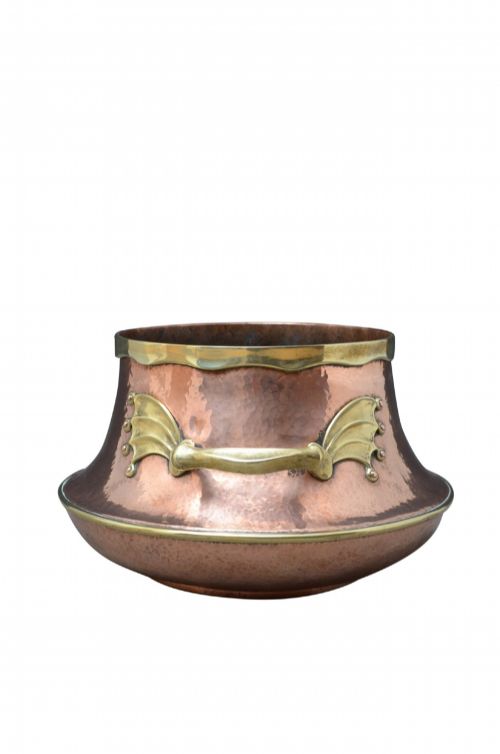
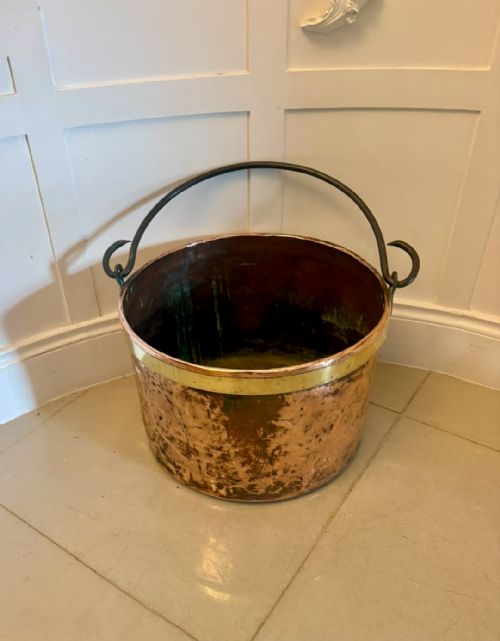
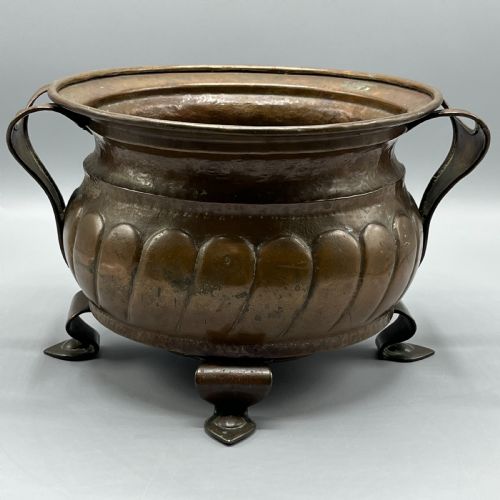
A hammered copper pot brings warmth and texture to a room, drawing the eye with its hand-worked surface and deep metallic tone.
Hammered Copper Pot
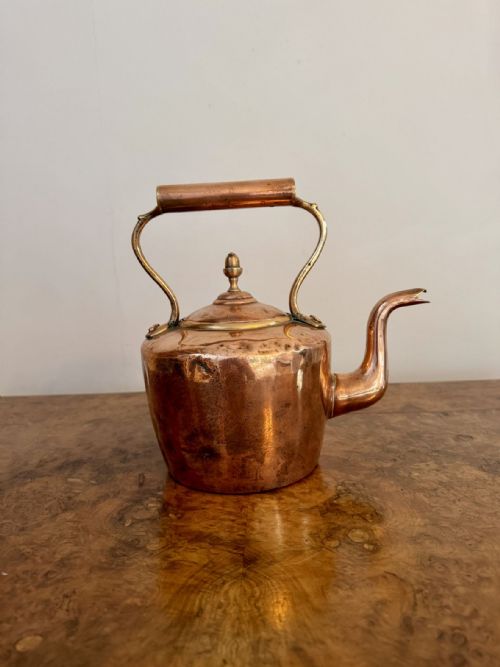
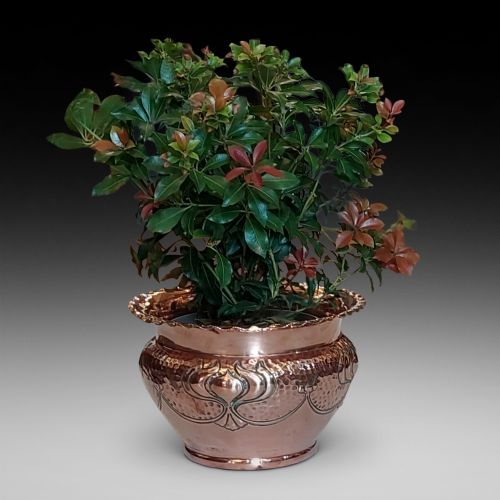
When you search for a hammered copper pot, you encounter an array of domestic and decorative vessels spanning utility and display. The selection here ranges from George III preserving pans and kettles to Arts and Crafts jardinières and Ottoman coffee pots.
You are most likely to meet Victorian and Edwardian examples, alongside earlier Georgian cookware and Middle Eastern pieces. These objects served diverse practical roles in the kitchen, hearth, and garden before finding favour as decorative interior items.
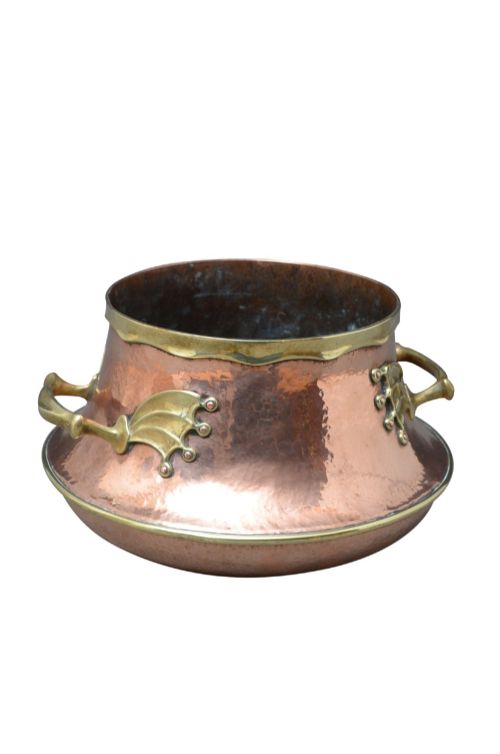
The forms encompass large cauldrons, log bins, wall vases, and breakfast collections shaped from solid metal. Each piece carries the physical marks of its production and subsequent history of use.
How they were made
Craftsmen shaped these vessels primarily from copper, often combining it with brass for handles, rims, and mounts, and occasionally incorporating iron, wrought iron, or tin linings. The foundational metal was beaten and worked by hand or raised from sheet metal to form seamless bodies or joined sections.
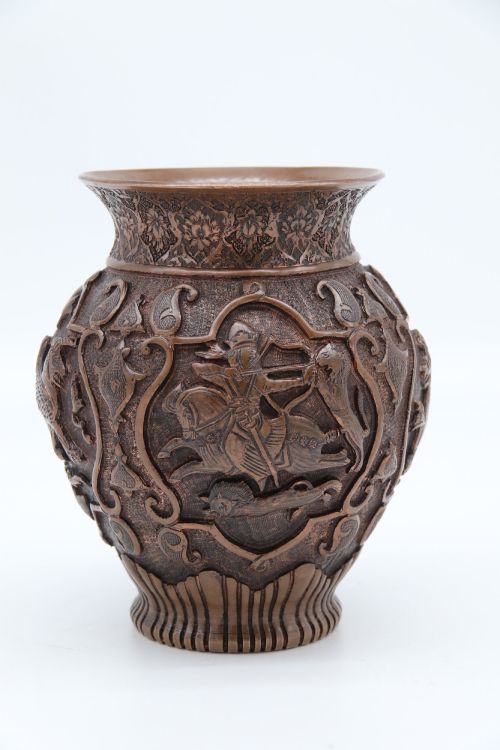
Surface texture arrived through manual hammering, embossing, or repoussé techniques that pushed the metal from behind to create raised decorative motifs. Rivets joined overlapping seams on heavy pans and bins, while finishing touches involved tinning the interior surfaces of cooking vessels for safe food preparation.
Materials across the inventory span copper, brass, iron, wrought iron, and tin.
What varies in quality
Quality rests upon the weight of the metal and the integrity of the construction, distinguishing substantial utility wares from lighter decorative items. Heavy gauge copper maintains its structural rigidity across large preserving pans and cauldrons without buckling under loads.
The finesse of the surface work also dictates the standing of a piece, separating straightforward utilitarian hammering from precise Arts and Crafts execution or detailed Middle Eastern repoussé. Well-integrated brass handles, secure riveting, and thoughtful proportions complete the distinction between ordinary vessels and superior examples.
The Hammered Copper Pot Glossary
- Repoussé
- A metalworking technique where the artisan hammers the design from the reverse side to create a raised relief on the front. This method appears frequently on Middle Eastern vases and decorative pots.
- Jardiniere
- An ornamental pot or stand designed to hold indoor plants or flowers. These items often feature wide bowls and decorative brass mounts.
- Dinanderie
- A term for objects made of brass, copper, or bronze, named after the Belgian town of Dinant. It applies to decorative cauldrons and planters.
- Cauldron
- A large metal pot with a large mouth, typically used over an open fire or hearth. Examples in the listings function as log bins and planters.
- Ferrat
- A specific historical term for a metal vessel used in domestic settings. These items reflect traditional European metalworking forms.
Hammered Copper Pot: Frequently Asked Questions
How do I clean a copper pot?
Copper develops a natural dark oxidation over decades, which many collectors prefer to leave undisturbed. If you wish to brighten the metal, use a mild proprietary copper cleaner without abrasive pads that might scratch the hand-beaten surface.
Avoid harsh chemical dips that strip away the character and historical patina. Gentle washing with warm soapy water and a soft cloth suffices for routine care.
Can I use these old pans for cooking?
Most antique copper pans require professional re-tinning on the interior before use with food, as the original tin lining often wears thin or exposes the underlying copper. Cooking acidic foods in unlined copper can cause chemical reactions.
Many buyers choose to display these vessels rather than cook with them, preserving their surface and historical integrity.
How do I date a copper pot?
Dating relies on observing construction methods, such as hand-cut dovetail joints, handmade rivets, and handle attachments. Earlier George III and Georgian pieces often display heavy forging marks and distinct rim profiles compared to later Edwardian production.
Stylistic cues like Art Nouveau sweeping lines or Arts and Crafts hand-beating patterns also help place a vessel within a specific era.
Where were these pots made?
The pieces originate from diverse workshops across Britain, Europe, and the Middle East. English kitchenware and Victorian country items share shelf space with imported Ottoman coffee pots and Indian repoussé vases.
Each region employed distinct forming techniques and decorative vocabularies tied to local domestic traditions.