


Brass Grille Side Cabinet
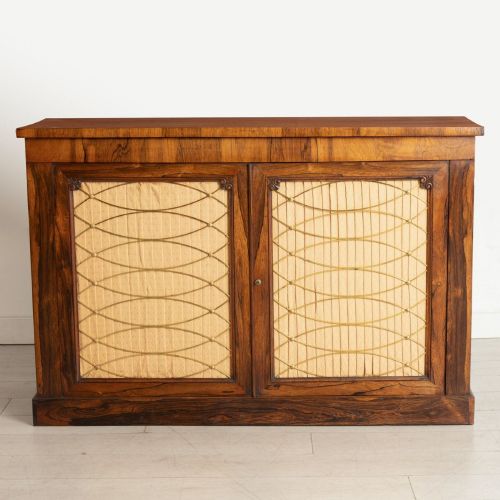
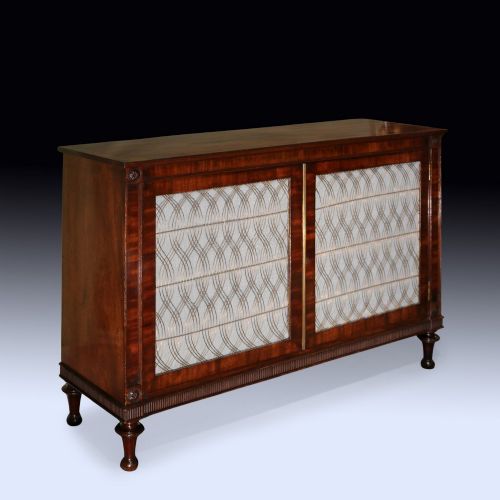
A brass grille side cabinet brings architectural refinement to a room, storing volumes and display items behind fine metalwork.
Brass Grille Side Cabinet
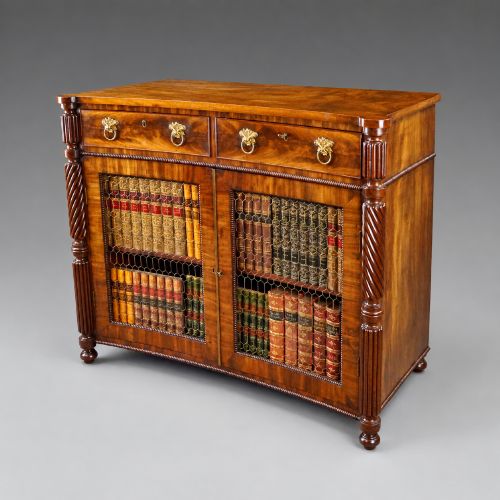
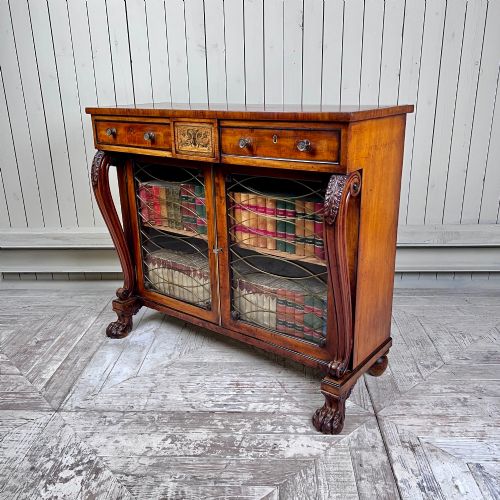
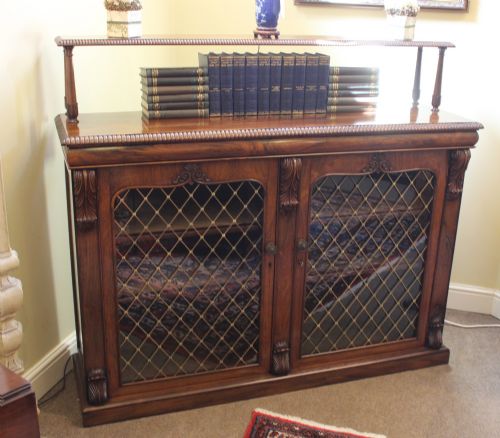
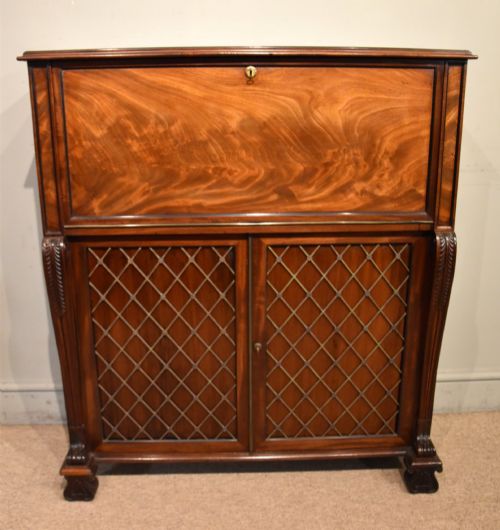
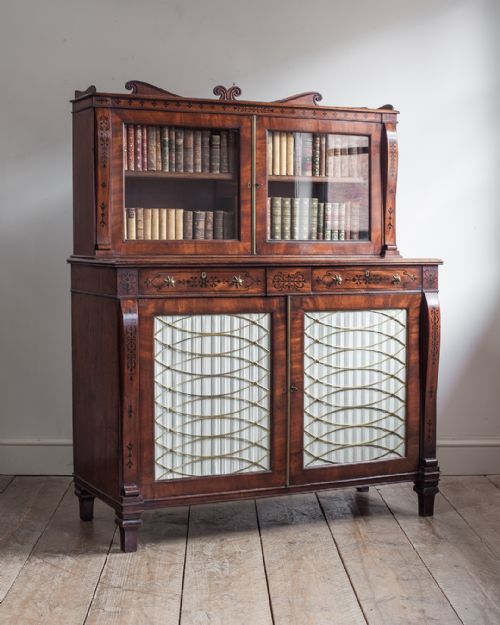
A brass grille side cabinet serves as a versatile piece for storage and display, appearing frequently across Regency and Victorian periods. These pieces combine lower cupboard storage with upper display functions, often taking the form of chiffoniers or bookcase cabinets.
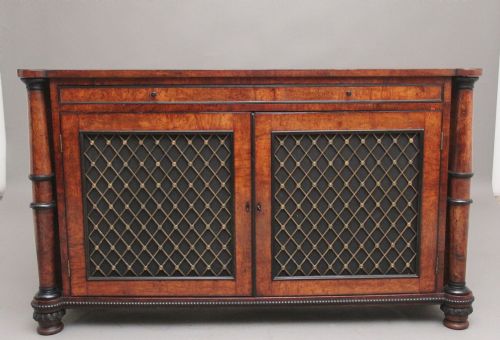
The materials span rich timbers like mahogany, rosewood, and pollard oak, frequently enhanced by delicate brass inlays and metal grilles backed with fabric or silk. Buyers will encounter numerous examples originating from the early nineteenth century alongside later nineteenth-century interpretations.
Makers and workshops of the nineteenth century produced these cabinets in various scales, from neat single door formats to substantial breakfront designs. The incorporation of brass grilles allowed ventilation for stored items while maintaining a decorative facade.
Craftsmanship and distinction
The calibre of a piece rests heavily upon the selection of timber veneers and the precision of the brass inlay work. Superior examples display continuous, well-matched grain patterns across the front doors and drawers, demonstrating deliberate planning by the maker.
The execution of the brass grille work separates standard production from exceptional craftsmanship, with finer grilles showing uniform gauge and tight interlocking joints. Furthermore, the inclusion of secondary woods and internal drawer construction reveals the original workshop standards.
Proportion and scale dictate the visual success of these cabinets, where neat, balanced dimensions command greater appreciation than bulky later adaptations. Original fabric backings behind the brass grilles also contribute to the integrity of the piece.
Formats on this page range from compact chiffoniers to large library bookcases and breakfront storage units.
Gillows·Holland & Sons
The Brass Grille Side Cabinet Glossary
- Chiffonier
- A low sideboard or cabinet featuring enclosed shelving below, frequently topped with a superstructure of shelves or a mirror. This form evolved during the Regency period for use in principal entertaining rooms.
- Breakfront
- A piece of furniture whose central section projects forward from the flanking outer sections. This architectural arrangement creates depth and shadow on larger library and side cabinets.
- Secretaire
- A cabinet or desk incorporating a pull-down writing flap that conceals small drawers and pigeonholes. It combines the utility of a writing desk with the enclosed storage of a standard cabinet.
- Stringing
- A narrow strip of contrasting wood or metal inlaid flush into the surface of a piece. It outlines panels and drawers to create geometric definition.
- Gonçalo Alves
- A dense exotic hardwood prized for its striking contrasting grain patterns. Makers utilised this timber during the Regency era for high-status cabinet work.
Brass Grille Side Cabinet: Frequently Asked Questions
What is a brass grille side cabinet?
A brass grille side cabinet is a low storage unit featuring doors fitted with woven or cast metal mesh rather than solid wood or plain glass. These pieces were designed to hold books, ceramics, and household linens in principal rooms.
The metal mesh provided ventilation for the interior while offering a decorative translucent barrier. They appear most commonly in nineteenth-century forms such as chiffoniers and low bookcase cabinets.
Where were these cabinets placed originally?
These cabinets stood primarily in formal drawing rooms, libraries, and dining parlours of substantial residences. Their low profile ensured they fit beneath dado rails or large wall mirrors without obstructing windows.
In modern interiors, they function effectively as media consoles, hallway storage units, or dining room servers. Their shallow depth allows them to occupy narrow spaces where standard sideboards prove too bulky.
How do I identify a Regency cabinet?
Regency cabinets typically exhibit classical Neoclassical proportions, clean architectural lines, and restrained ornamental detail. Common identifiers include rosewood or mahogany veneers accented with brass inlay and ebony stringing.
Makers of this period favoured architectural forms such as breakfronts and concave sides. The presence of fine brass grilles and turned feet further points towards early nineteenth-century manufacturing techniques.
Are the fabric linings inside the grilles original?
Fabric linings behind brass grilles experienced frequent replacement over the decades due to fading, staining, and tearing from daily use. Finding a cabinet with undisturbed original silk or fabric remains exceptional.
Restorers often renew these linings using traditional textiles that complement the interior timber. This maintenance preserves the protective barrier that keeps dust away from stored contents.