




William IV Secretaire
A william iv secretaire combines a practical writing drawer with grand cabinetry, offering refined storage for the discerning interior.
William IV Secretaire
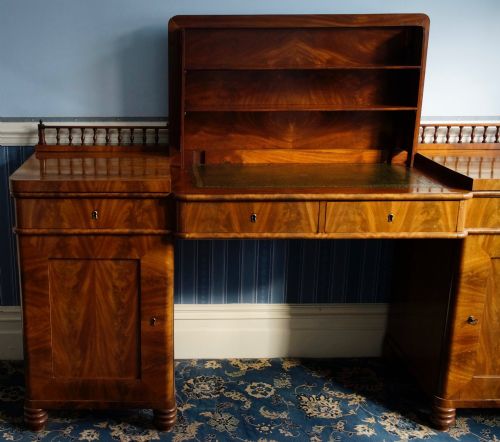
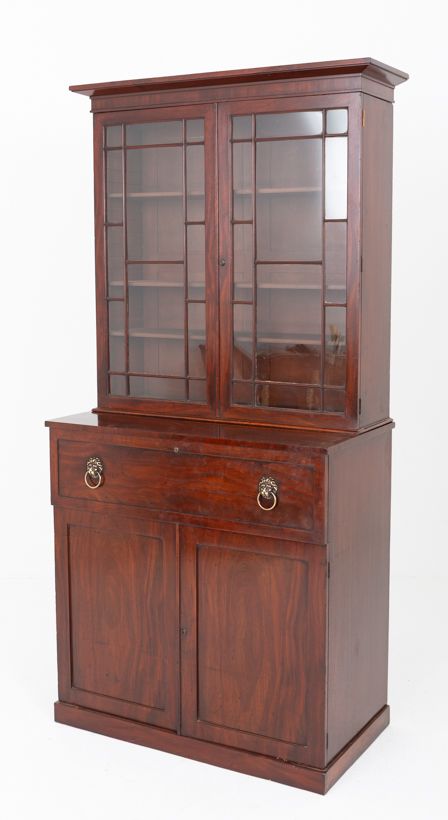
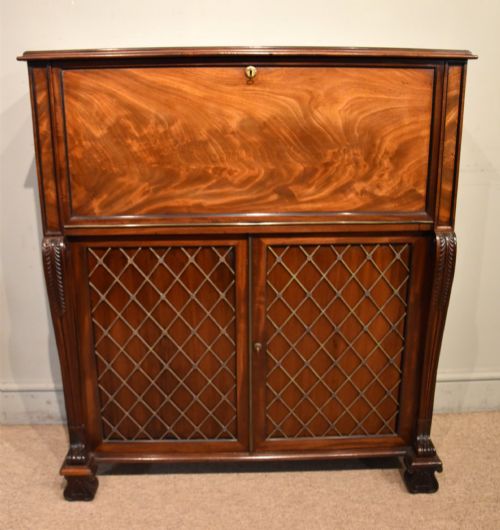
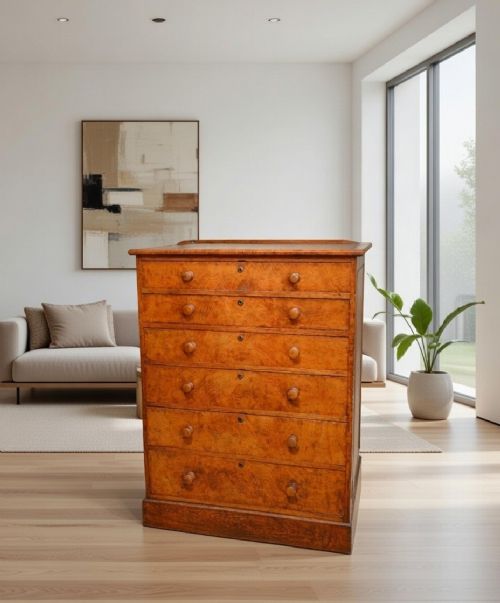
A william iv secretaire primarily manifests as a substantial bookcase or chest of drawers designed with a clever drop-down writing surface. Pieces on this page span several forms including tall secretaire bookcases, compact bureau bookcases, campaign chests, and low chiffoniers.
The dominant style aligns with the 19th century and the reign of William IV, often bridging Late Georgian and early Victorian aesthetics. Most examples encountered here are constructed from rich mahogany, flame mahogany, or pollard oak.
Makers and workshops of the period utilised substantial proportions and architectural glazed doors to create commanding library furniture. Buyers find both monumental breakfront bookcases and more intimate campaign chests amongst the selection.
Materials and Construction
Cabinetmakers of the era selected dense timbers such as mahogany and Cuban mahogany for structural integrity and deep natural grain patterns. Flame mahogany veneers were frequently applied to drawer fronts and door panels to create striking, symmetrical figure work.
Secondary hardwoods like oak provided sturdy drawer linings and internal dividers, while brass handles, key escutcheons, and campaign mounts added functional metallic accents. Glass doors on bookcase sections were framed in timber to display libraries while protecting volumes from dust.
William IV Secretaire Retail Price Guide 2026
Typical asking prices for william iv secretaire among the pieces listed under this phrase on Sellingantiques today, from the lower quarter to the upper quarter. They describe what is for sale here now, not the wider market.
Some secretaires hide miniature secret drawers behind false pigeonholes, designed for stashing private letters and sovereigns.
Evaluating Craftsmanship
Quality rests heavily on the selection of timber veneers and how cleanly the grain matches across large surfaces. Superior examples display carefully chosen flame mahogany or pollard oak with intense figuring that commands visual attention.
The engineering of the secretaire drawer itself dictates the grade of the piece, requiring smooth drop-front mechanisms, balanced internal writing compartments, and robust secret drawers. Finer items integrate secondary timbers like oak with precision dovetailing and heavy brass hardware.
Gillows
The William IV Secretaire Glossary
- Secretaire
- A desk or cabinet featuring a pull-out or drop-down drawer that conceals a writing surface and small pigeonholes. This clever mechanism allows a chest of drawers or bookcase to function as a fully equipped writing desk.
- Flame mahogany
- Timber veneer cut from the fork of the mahogany tree where the branch meets the trunk. This produces a dramatic, flickering flame-like pattern highly prized by 19th-century cabinetmakers.
- Pollard oak
- Wood taken from pollarded oak trees, yielding a dense cluster of tiny knots and complex grain rings. It provides a highly decorative speckled surface seen on select chests.
- Breakfront
- A cabinet design where the central section projects forward from the flanking outer cupboards or bays. This architectural arrangement adds depth and shadow to large bookcases.
- Campaign chest
- Portable furniture built in sections with recessed brass handles and corner brackets for military transport. These pieces separate into modular boxes for travel.
William IV Secretaire: Frequently Asked Questions
What is a secretaire bookcase?
A secretaire bookcase combines an upper glazed display section for books with a lower cabinet or chest containing a specialised writing drawer. The central drawer front folds down on hinges to reveal a leather-lined writing surface and compartments for stationery.
This multi-functional design saved space in 19th-century interiors by merging a library bookcase with a private desk. The upper shelves typically feature adjustable heights to accommodate varying book sizes.
How do I identify a William IV piece?
William IV furniture dates from the 1830s and sits between the Regency and early Victorian periods, marked by heavy proportions and restrained classical ornamentation. Look for architectural elements such as carved scroll corbels, robust feet, and substantial mahogany or pollard oak timbers.
These items often lack the extreme exuberance of later Victorian design, preferring clean architectural lines combined with deeply figured wood veneers. Brass fittings and campaign mounts are also characteristic of this decade.
Are secretaire drawers difficult to use?
The drop-down drawer relies on internal sliding arms or side hinges to support the writing flap securely when opened. Original mechanisms require gentle handling to preserve the internal pigeonholes and secret compartments.
Most writing surfaces are lined with leather or baize, providing a firm platform for correspondence. The weight of the fall-front is counterbalanced by the cabinetry structure.
Where were campaign secretaires used?
Campaign chests and secretaires were commissioned by British military officers and travellers for transport on long sea voyages and overland campaigns. The modular construction allowed heavy furniture to be dismantled into manageable boxes.
Brass binding protects the corners and edges from impact during transit, while recessed handles prevent snagging. These pieces bring robust utilitarian engineering into domestic settings.