


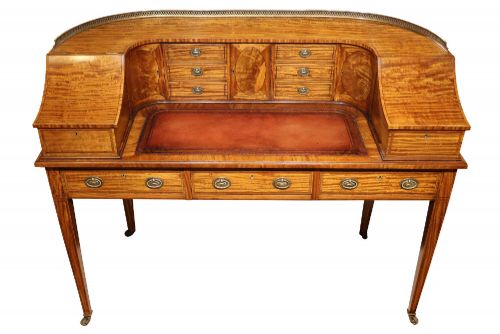


Brass Gallery Bureau
A brass gallery bureau is a writing desk topped with a decorative metal rail, offering both a structured workspace and refined period character.

Brass Gallery Bureau
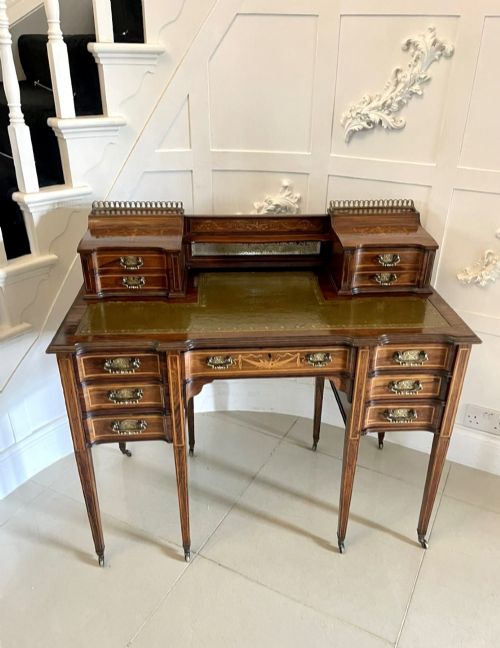
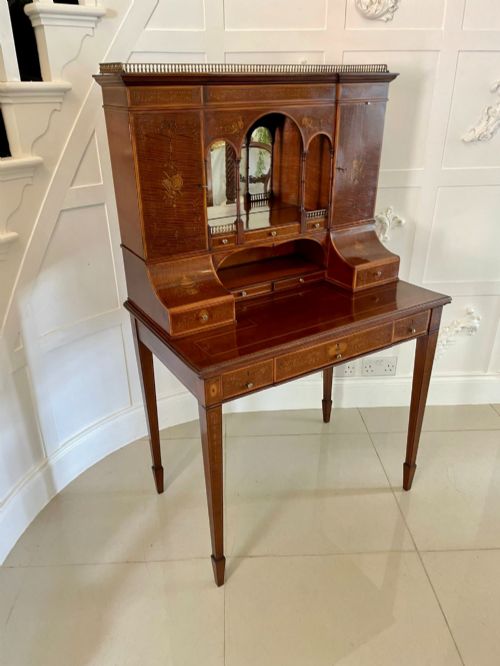
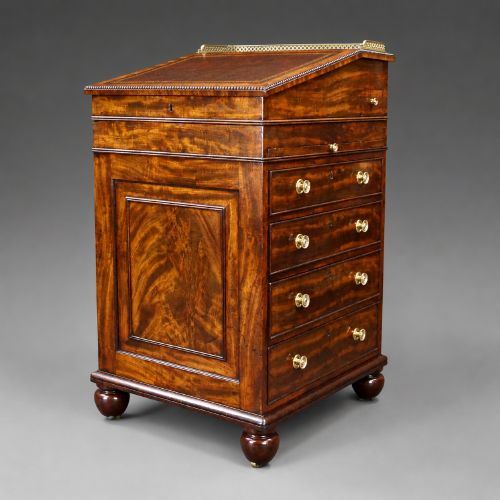
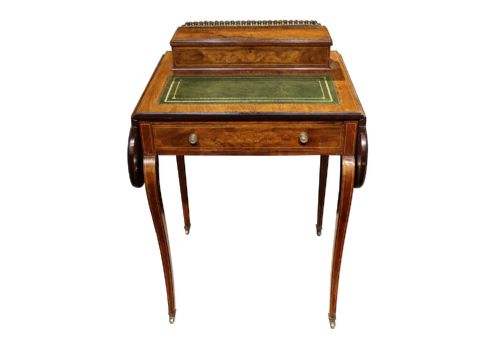
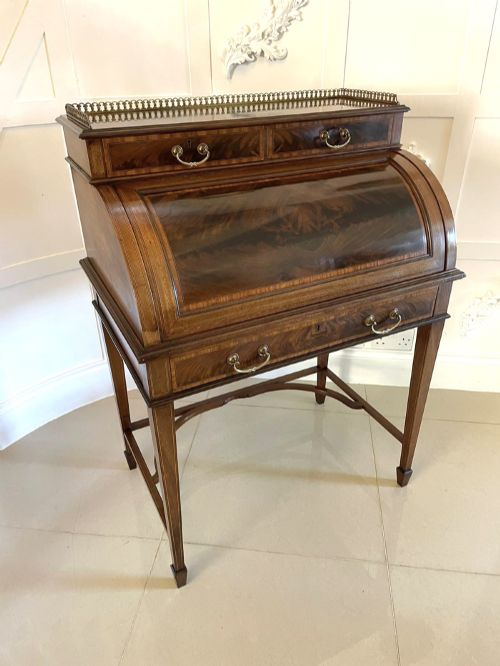
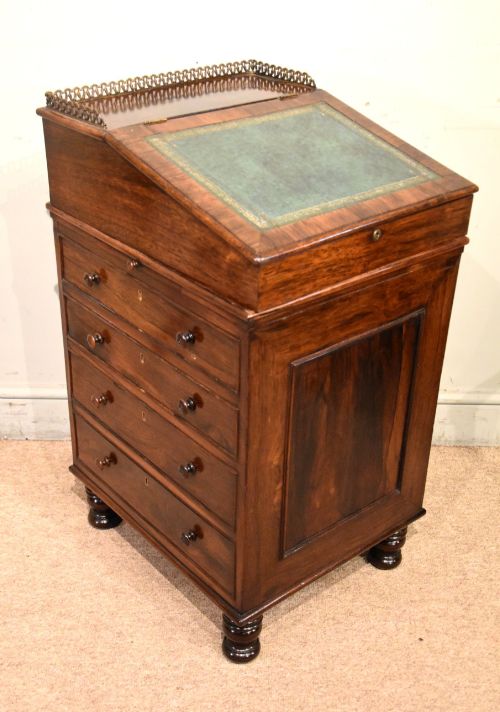
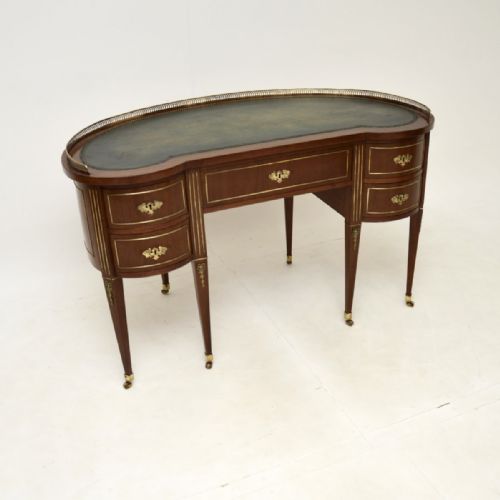
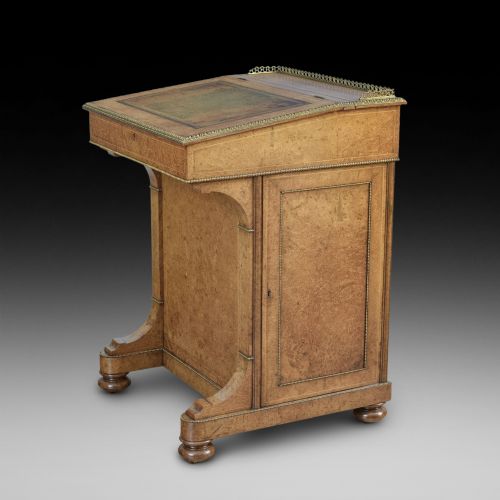
When you search for a brass gallery bureau, you encounter writing furniture defined by a pierced or solid metal rail mounted along the upper edge of the writing surface or superstructure. The pieces span Georgian, Regency, Victorian, and Edwardian periods, with the majority of examples dating to the later nineteenth and early twentieth centuries. Forms range from compact davenports and cylinder desks to elaborate Carlton House desks and freestanding writing tables.
The layout typically incorporates fitted interiors with small drawers, pigeonholes, and leather-inset writing surfaces designed for correspondence. Marquetry, crossbanding, and fine wood inlays frequently accent the main structure. These desks reflect the domestic requirements of past centuries, when dedicated writing furniture formed an essential component of a well-appointed room.
Materials and construction methods
Makers utilised dense cabinet timbers including mahogany, walnut, rosewood, and satinwood, often enhanced with contrasting veneers and delicate inlay work. Solid brass forms the defining gallery rails and handles, sometimes complemented by ormolu mounts or porcelain plaques on French-influenced pieces. Secondary timbers such as oak lined the internal drawers, ensuring structural longevity.
Joinery techniques relied on traditional dovetailed drawer construction and precise veneering methods to apply figured grains and decorative bandings. The metal galleries were cast or fabricated and securely pinned into the timber superstructure to withstand daily use. Leather writing inserts were typically pared thin and tooled in gold leaf before being adhered to the writing slope.
Carlton House desks and davenports represent the most frequent desk forms equipped with brass galleries.
Judging quality and craftsmanship
Quality rests in the selection of timber veneers and the crispness of the marquetry or stringing. Superior pieces display continuous grain matching, perfectly fitted internal stationery compartments, and substantial cast brass galleries rather than stamped metal alternatives. The weight of the drawers and the smoothness of the sliding cylinder or roll tops indicate the precision of the underlying joinery.
Signatures or stamps from established cabinet-making firms elevate a piece, though unsigned work executed with equal attention to detail remains highly collectible. The integration of secondary woods, the retention of original hardware, and the crispness of carved or inlaid details separate standard workshop production from exceptional examples.
Maple and Co·Gillows of Lancaster·Edwards and Roberts
The Brass Gallery Bureau Glossary
- Brass gallery
- A low metal rail fitted to the top edge of a desk to prevent items from rolling off. It typically consists of pierced brass spindles and columns.
- Carlton House desk
- A horseshoe-shaped writing desk featuring a tiered superstructure of small drawers and compartments. It usually incorporates a raised brass gallery along the upper curve.
- Davenport
- A compact desk featuring a sloped, leather-lined writing lid above a pedestal of drawers. The side often houses a pen box and additional stationery compartments.
- Cylinder desk
- A desk featuring a quarter-circle rotating wooden cylinder that conceals the writing surface and internal fittings when closed. It often includes a raised gallery on the flat top above.
- Marquetry
- The art of forming decorative patterns using thin veneers of different coloured woods, shells, or ivories. It frequently decorates the surfaces of Victorian and Edwardian desks.
- Crossbanding
- A strip of veneer applied across the grain of the main surface to form a decorative border. It often frames the perimeters of desk lids and drawer fronts.
Brass Gallery Bureau: Frequently Asked Questions
What is a brass gallery?
A brass gallery is a decorative metal railing attached to the top back or sides of a desk. It originally served the practical purpose of keeping inkwells and papers from sliding off the surface.
Over time, these railings evolved into stylistic signatures of Victorian and Edwardian cabinet making, cast in various patterns from simple spindles to pierced foliage designs.
How do I use a Carlton House desk?
A Carlton House desk provides a wrap-around arrangement of small drawers, pigeonholes, and compartments at arm's reach. You sit centrally while the tiered superstructure keeps your correspondence and writing materials organised.
Many examples include pull-out slides on the sides to extend your working area without disturbing the main writing surface.
Are these desks suitable for daily laptop use?
Many period writing desks accommodate modern laptops easily, provided the writing height and knee clearance match your chair. Compact forms like davenports may offer less legroom, so checking internal dimensions is essential.
Leather-inset surfaces provide a smooth mouse and writing area, though protective blotters help preserve antique leather from modern wear.
How do I distinguish Edwardian pieces from Victorian ones?
Edwardian desks often feature lighter satinwood finishes, delicate satinwood inlay, and neoclassical Sheraton Revival motifs. They tend to look brighter and more refined in their proportions.
Victorian pieces frequently utilise heavier timbers such as dark mahogany, walnut, or rosewood, combined with robust construction and richer grain patterns.