


Brass Footed Box
These brass footed box examples span tea caddies, jewellery boxes and foot stoves raised on metal supports.
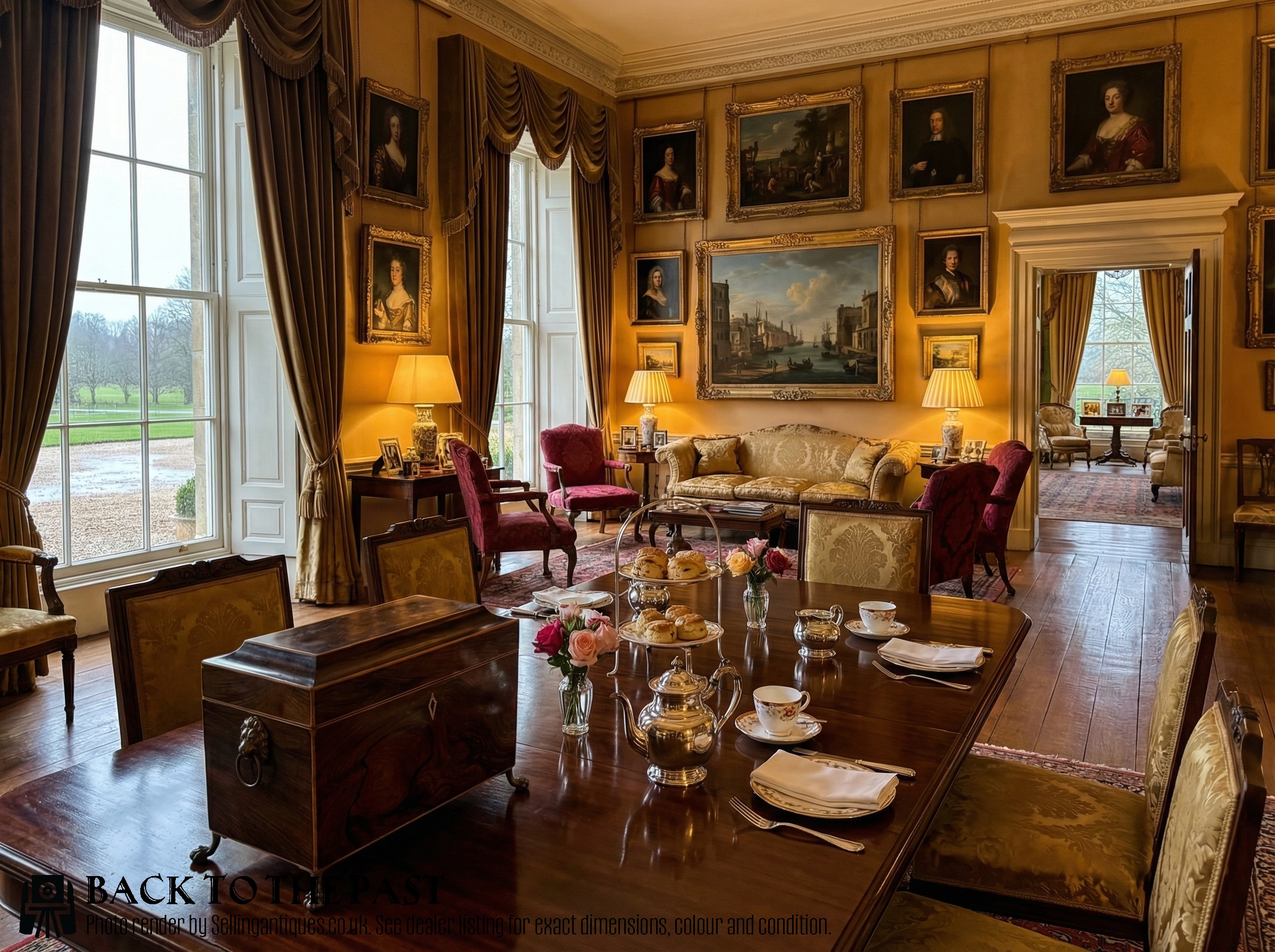
Brass Footed Box
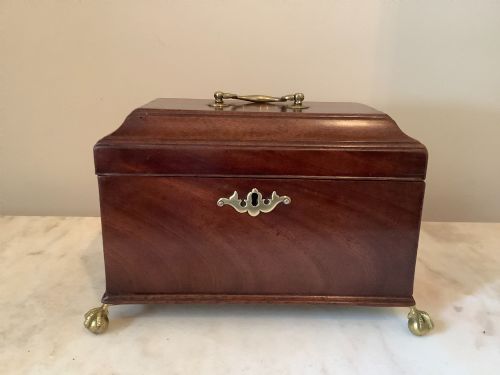
When you search for a brass footed box, you encounter a varied group of containers spanning tea caddies, jewellery caskets, writing slopes and foot stoves. These pieces serve to organise valuables, store tea or warm rooms, supported by brass feet or mounts.
The version you are most likely to meet on this page is formed from mahogany, rosewood or oak, originating in Georgian, Regency or Victorian periods. Many employ styles such as French Empire, 18th Century Dutch or Frisian Folk Art.
These items range from small tabletop containers for trinkets to larger fireside bins and jardinières. Their shared characteristic is the presence of elevated brass supports or decorative metal fittings lifting the wooden body.
How they were made
Carpenters and cabinet makers constructed the bodies using dense hardwoods including mahogany, rosewood, oak and satinwood, often applying veneers and intricate stringing. Metalworkers shaped brass through casting, repoussé embossing and engraving to create mounts, claw feet and handles.
Techniques such as chip carving, penwork and leather binding appear on specific examples alongside handmade joinery. Surface decoration relies on the natural grain of the timber combined with polished brass elements.
What varies in quality
The refinement of the cabinetwork and the crispness of the brass mounts determine where a piece sits in the hierarchy. Hand-engraved details and well-fitted interior compartments elevate certain items above simpler storage vessels.
The choice of timber, from plain pine and oak to figured mahogany, rosewood and Karelian birch, dictates the prestige of the construction. Preservation of original brass feet and internal components separates fine examples from altered pieces.
Edwards and Roberts
The Brass Footed Box Glossary
- Sarcophagus
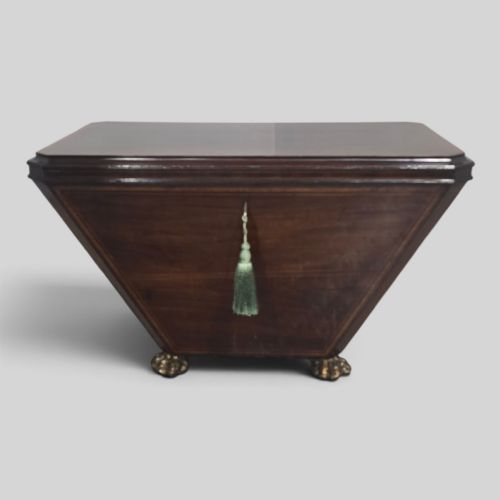
- A monumental chest form with a sloping or domed lid, frequently utilised for wine coolers and tea caddies during the Georgian and Regency eras. This shape references classical stone tombs.
- Cellarette
- A dedicated container designed to hold bottles of wine, usually lined and fitted with internal dividers. They often feature robust brass handles and heavy timber walls.
- Repoussé
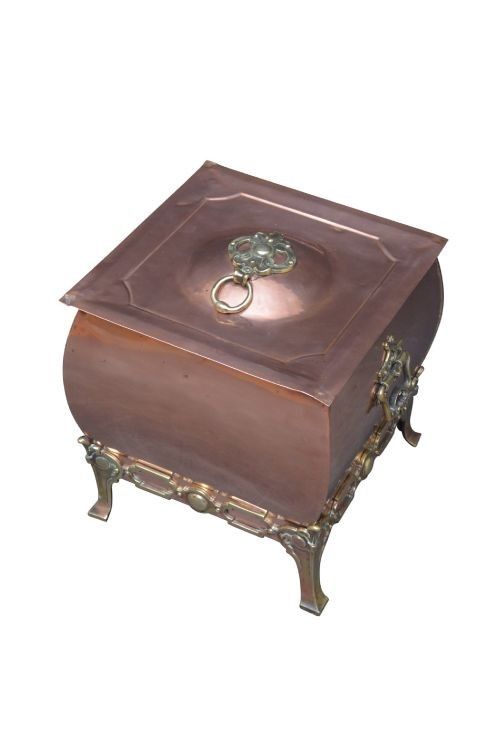
- A metalworking technique where the artisan hammers a design from the reverse side to create a raised pattern in relief. This method decorates many brass planters and foot stoves.
- Penwork
- The practice of decorating wooden surfaces with intricate ink drawings, often depicting classical scenes or floral motifs. It appears on specialised boxes from the Georgian period.
- Coffor Bach
- A traditional Welsh miniature coffer or chest, typically constructed from oak on raised feet. These small storage pieces date back to the early eighteenth century.
Brass Footed Box: Frequently Asked Questions
What were foot stoves used for?
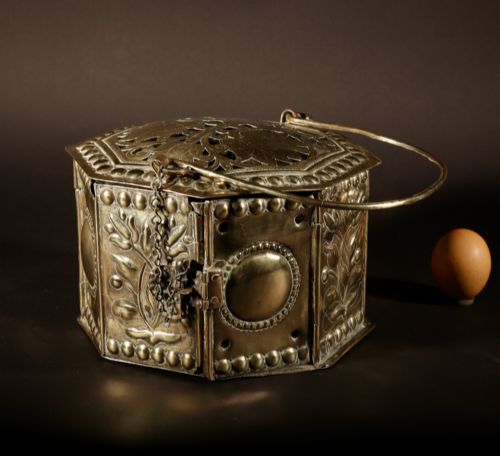
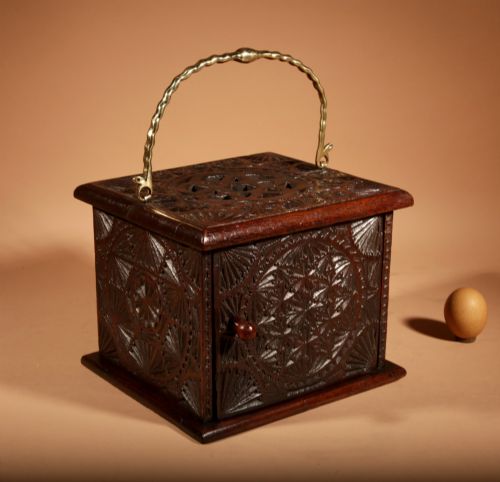
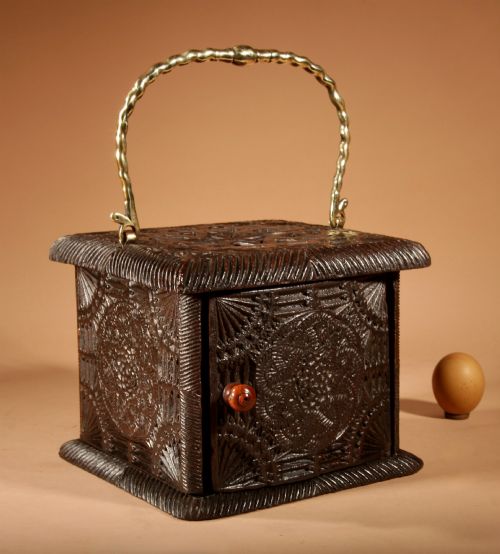
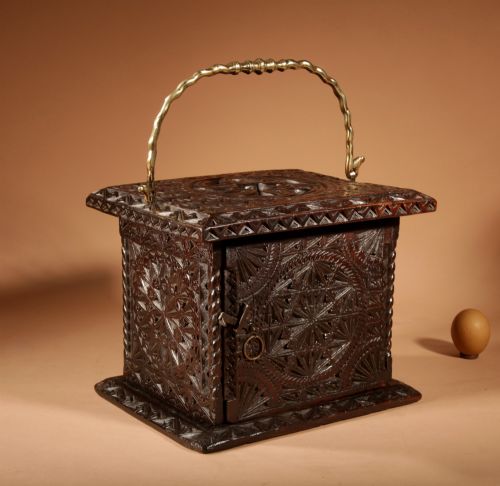
Foot stoves functioned as portable heating devices during cold weather, typically consisting of a wooden frame enclosing a metal container for hot embers. People rested their feet upon them in chilly rooms or carriages.
Examples often feature perforated wooden tops and hand-embossed brass panels to let warmth escape while protecting garments from direct contact with the heat source.
How do I identify a Regency box?
Regency containers frequently employ exotic timbers like rosewood and satinwood, occasionally inlaid with ebony or accented with brass lion paw feet. The lines lean toward classical symmetry inspired by ancient Rome and Greece.
Look for geometric brass stringing, ring handles and distinct sarcophagus or oblong tapered profiles that define the early nineteenth century aesthetic.
What is a sarcophagus tea caddy?
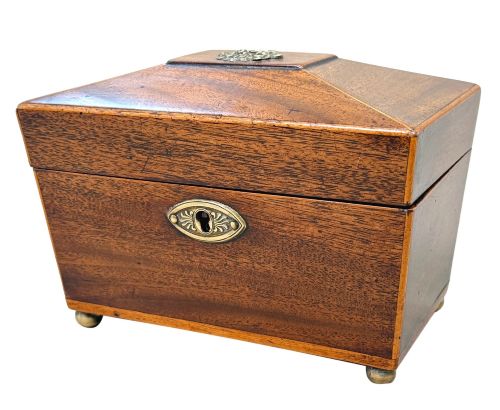
A sarcophagus tea caddy is a tabletop container shaped like a miniature tomb, resting on small feet and designed to store expensive tea leaves securely under lock and key. The heavy sloped lid helped preserve the aroma of the contents.
These containers date predominantly from the Georgian and Regency periods, constructed from figured mahogany or rosewood with fitted interior compartments.
How should I clean brass feet?
Brass feet benefit from gentle dusting with a dry microfibre cloth to remove surface grit without disturbing the surrounding wood. Avoid aggressive chemical polishes that strip away age-appropriate patination.
If cleaning is necessary, use a mild, non-abrasive metal cleaner applied sparingly with a cotton bud, taking care to shield the timber surfaces from contact.