
Dark Wood Caddy
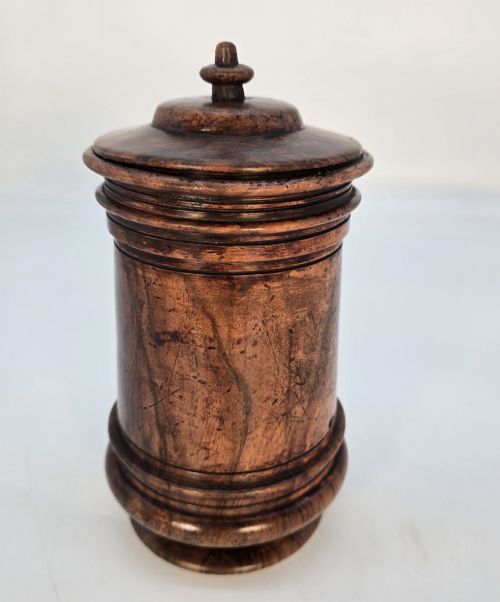
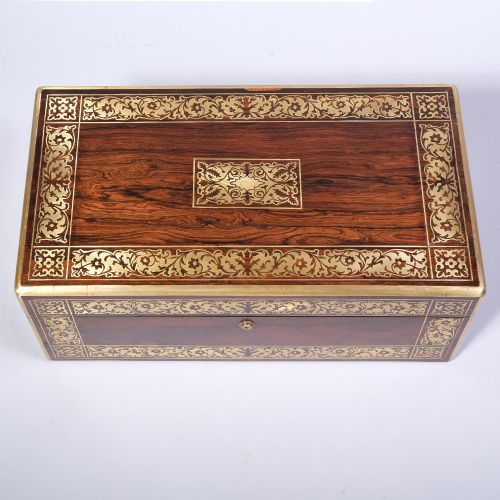
A dark wood caddy is a timber container made for storing leaf tea, carrying the polished grain of mahogany, rosewood, walnut, and coromandel into living spaces.
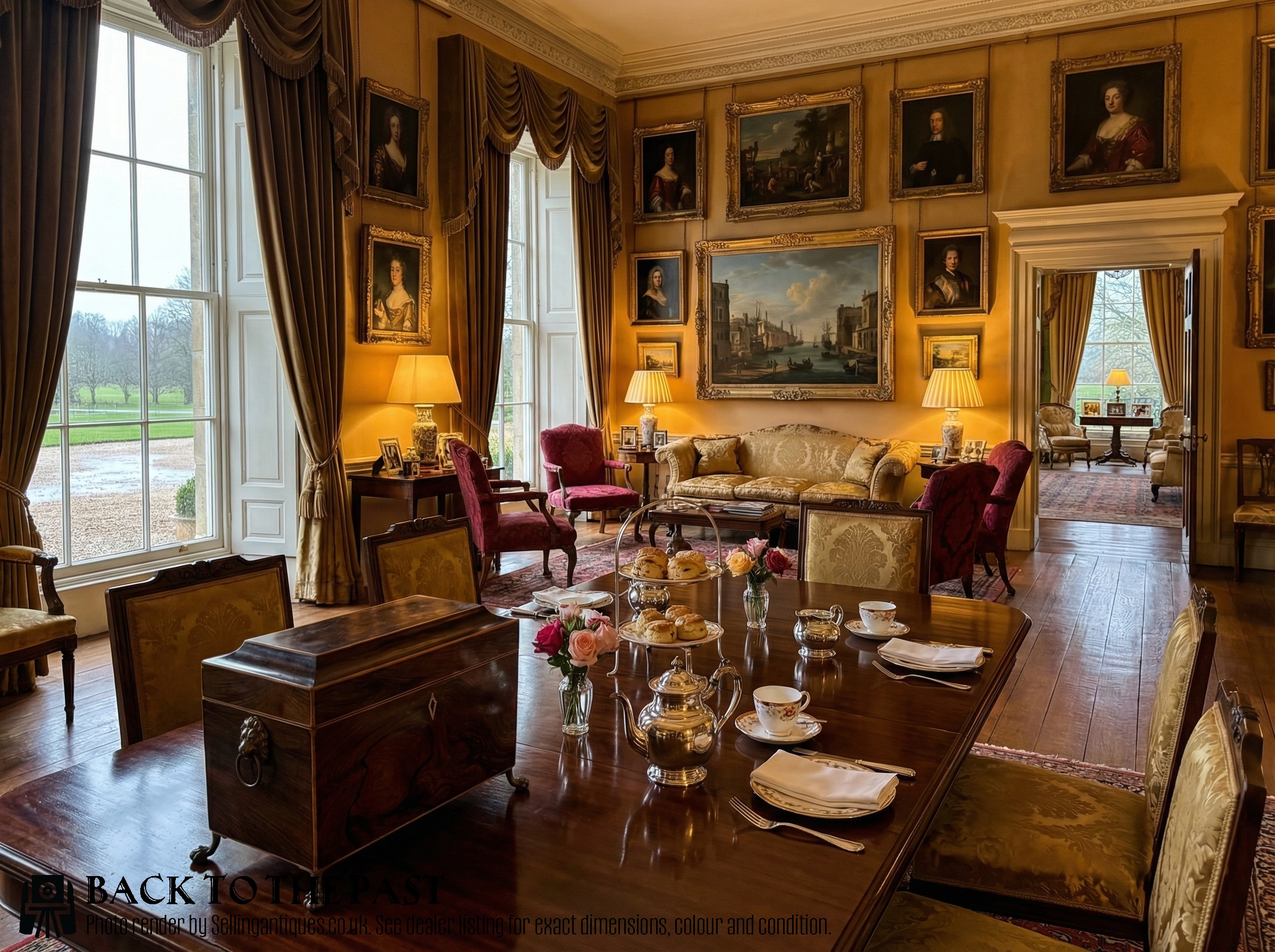
Dark Wood Caddy
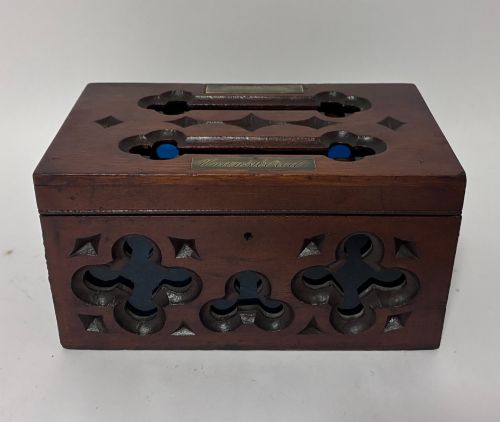
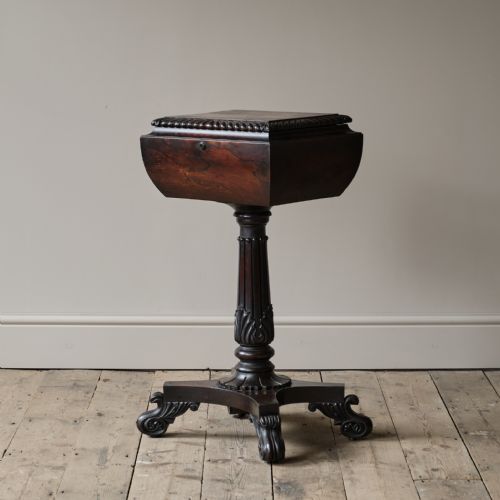
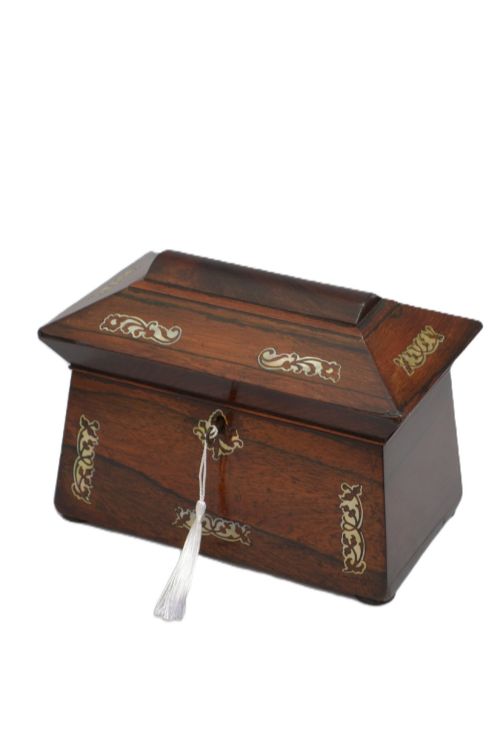
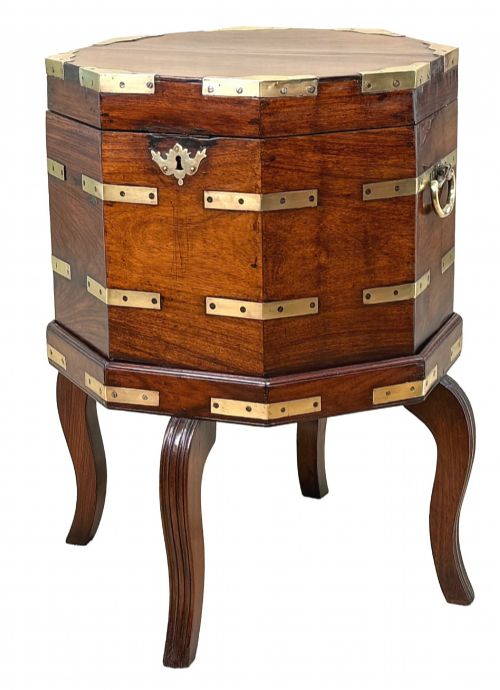
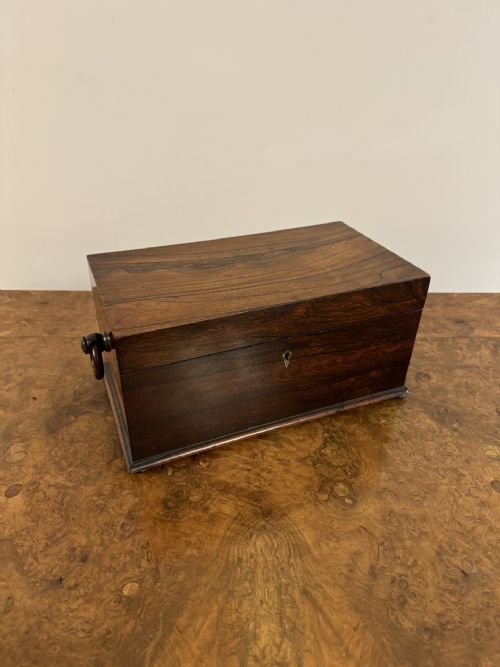
A dark wood caddy brings together containers made to hold dried tea leaves securely during periods when tea was a costly household commodity. Buyers searching this phrase encounter receptacles shaped as sarcophagi, rectangular boxes, and larger pedestal teapoys across this selection.
The material palette spans dense tropical timbers including mahogany, rosewood, walnut, and coromandel wood. Pieces emerge predominantly from Georgian, Regency, Victorian, and Edwardian eras, reflecting changing domestic fashions.
Factors of Quality
Quality rests upon the selection of timber grain, the precision of brass inlay, and the crispness of carved details. Superior specimens exhibit tightly figured rosewood or flame mahogany matched symmetrically across the lid and panels.
Internal arrangement determines standard; finer boxes retain intact interior foil lining, fitted wooden tea canisters with lids, and original working locks with matching keys. The joinery integrity and stability of the secondary wood substrate distinguish workshop tiers.
Early tea was so expensive that servants kept caddies firmly under lock and key to prevent pilfering.
Gillows
The Dark Wood Caddy Glossary
- Tea Caddy
- A box or container specifically designed for storing loose tea leaves. They often feature internal lidded compartments to separate different tea varieties.
- Teapoy
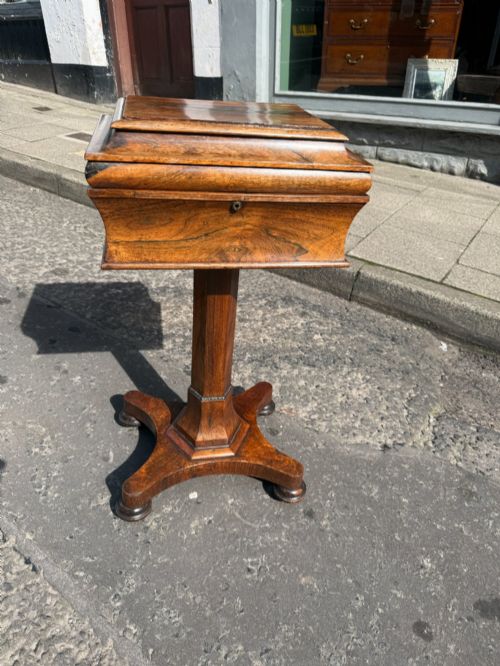
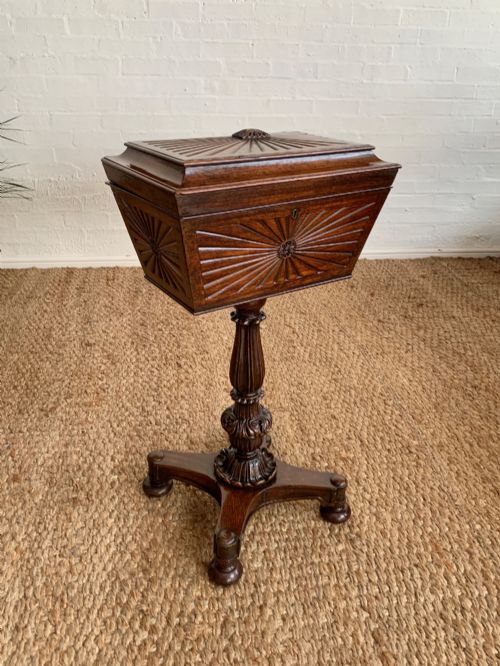
- A pedestal table or stand fitted with a lidded box on top for holding tea equipment. These pieces date frequently from the Regency and Victorian periods.
- Sarcophagus Form
- A box shape featuring a sloping, pedestal-mounted body reminiscent of ancient stone coffins. This silhouette proved popular for Regency rosewood and mahogany tea caddies.
- Cellarette
- A cabinet or box designed to hold bottles of wine and spirits securely. Examples appear in mahogany and padouk across Georgian and nineteenth-century inventories.
- Coromandel Wood
- A heavy, durable timber featuring dark brown stripes, sourced from Southeast Asia. Cabinetmakers utilised this exotic wood for high-status nineteenth-century boxes.
Dark Wood Caddy: Frequently Asked Questions
What is a dark wood caddy used for?
These containers were originally manufactured to store valuable tea leaves safely away from light, moisture, and air. Wealthy households kept them locked in formal rooms to manage household provisions.
Today, buyers repurpose these lidded boxes as decorative storage for jewellery, keepsakes, or desk accessories. Their fitted compartments accommodate modern trinkets just as well as historical tea canisters.
How do I date a mahogany tea caddy?
Dating relies on observing construction methods, timber choices, and decorative motifs like brass inlay or claw feet. Georgian pieces often display clean rectangular geometry, while Regency examples lean toward sarcophagus shapes.
Inspect the interior compartments and hinges for signs of hand-cut screws or handmade brass work. Secondary woods inside the box also offer clues regarding the manufacturing decade.
What is the difference between a tea caddy and a teapoy?
A tea caddy is a portable box designed to sit on a table or sideboard, housing loose tea leaves in internal compartments. It can be carried easily by hand or via side handles.
A teapoy is a larger, standalone piece of furniture featuring a box mounted on a central pillar or legs. This form functions as a small table with storage space built directly into the top.
How should I clean a rosewood caddy?
Dust the timber gently with a soft, dry cloth to remove surface particles without scratching the polished veneer. Avoid liquid polishes, water, or harsh chemical cleaners that might degrade antique finishes.
Maintain low humidity levels and keep the wood away from direct sunlight to prevent timber shrinkage and veneer cracking. Occasional applications of appropriate wax preserve the natural lustre of rosewood.