
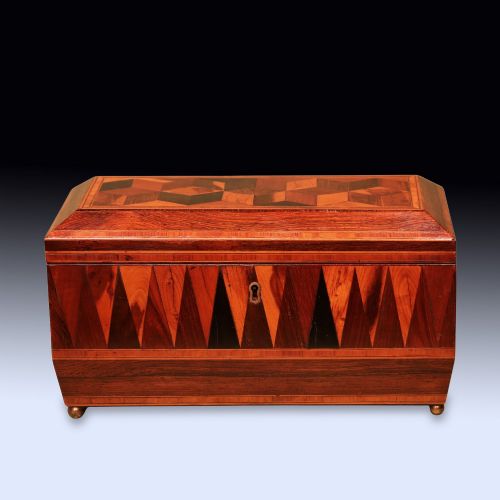


Regency Rosewood Caddy
A regency rosewood caddy brings the refined craftsmanship of the early nineteenth century directly into a modern drawing room.
Regency Rosewood Caddy
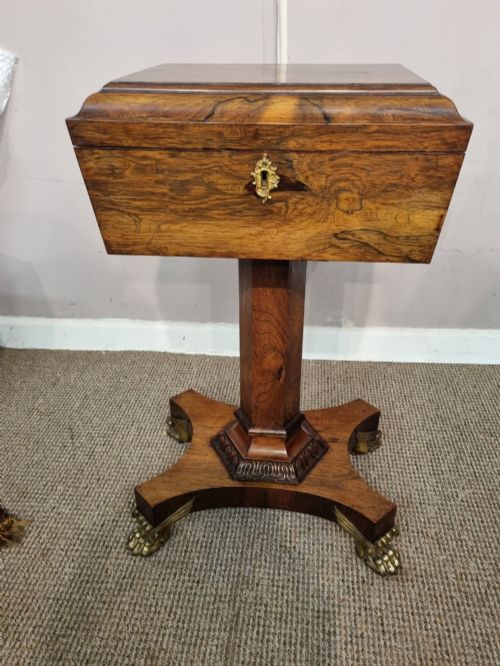
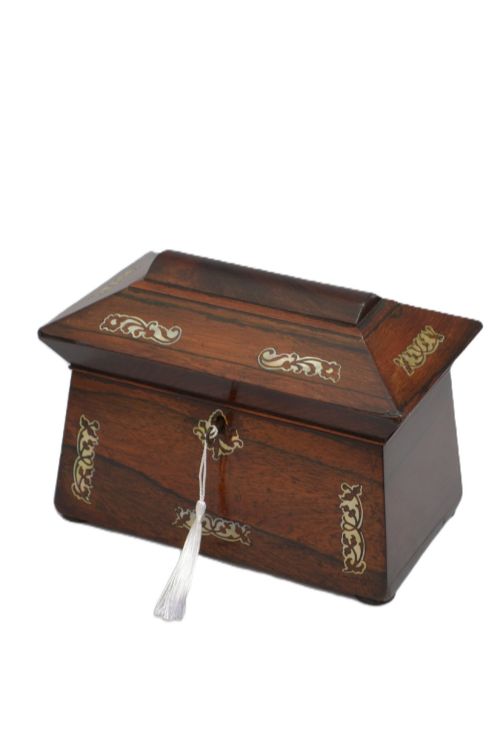
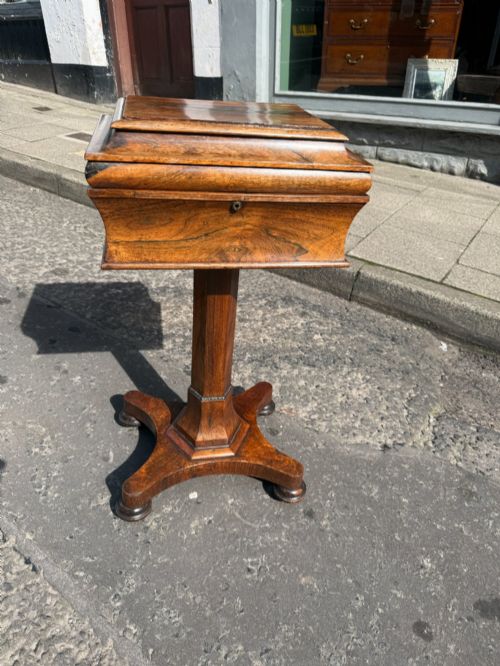
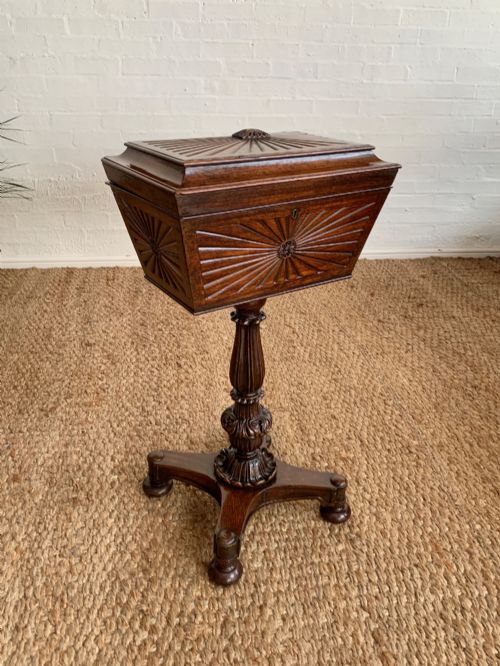
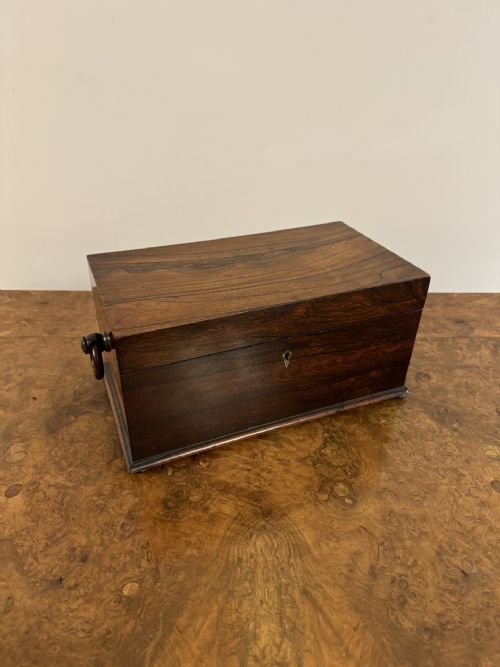
When searching for a regency rosewood caddy, a buyer encounters domestic storage chests originally designed to keep precious tea leaves secure under lock and key. The pieces seen most frequently on this page take the distinctive sarcophagus form, often resting upon bun feet or carved pedestal stands.
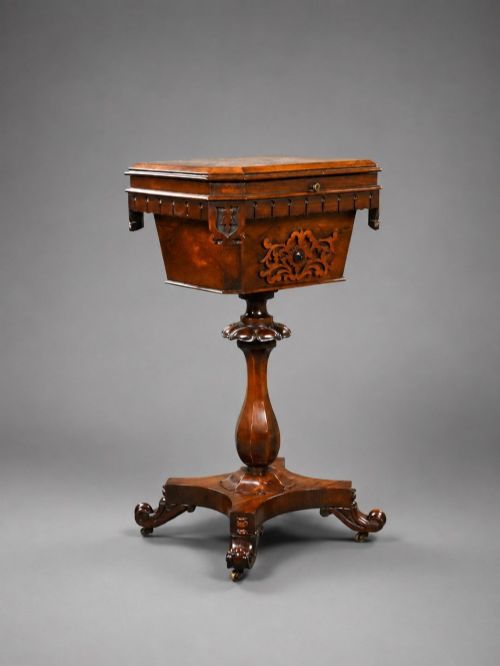
Makers of the period also produced variations such as tea poys, miniature sideboards, and sewing boxes sharing the same dark, heavily grained timber. Surviving examples span the Regency, Georgian, and William IV periods, extending into the nineteenth century.
Internal arrangements typically reveal lidded canisters and mixing bowls, demonstrating how households stored and blended dry leaves. These boxes served a central social function in period drawing rooms, reflecting the high status of tea as a commodity.
Evaluating the pieces
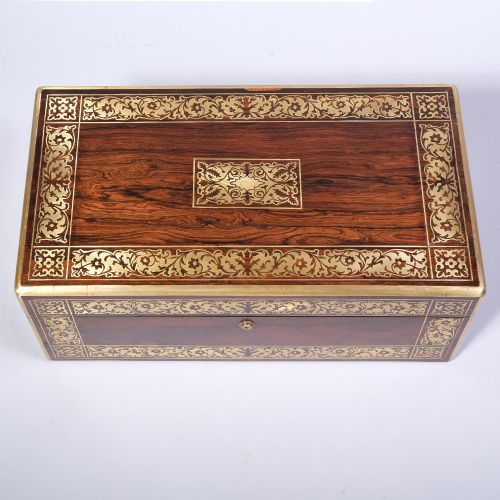
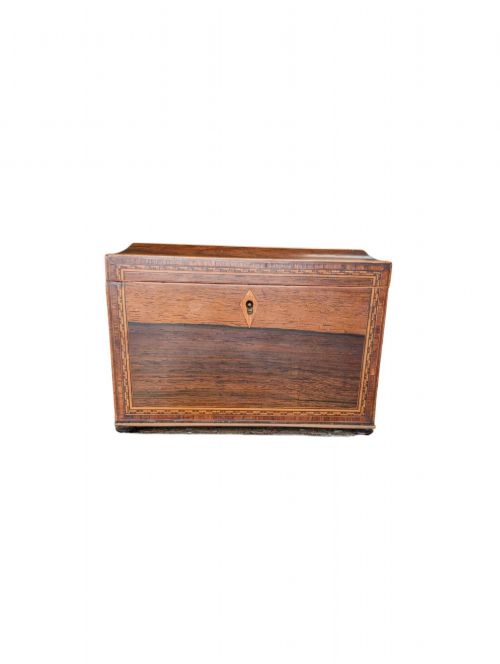
Quality rests upon the crispness of the brass inlay, the precision of the parquetry, and the selection of figured rosewood veneer across the exterior. Superior examples retain their original internal fittings, such as matching tea canisters and glass mixing bowls.
Proportion and architectural form separate standard production from exceptional work, particularly in sarcophagus shapes and pedestals. The integrity of the timber, stability of the carcase, and presence of working locks further distinguish the range.
Object forms span table boxes, sarcophagus tea caddies, sewing baskets, and pedestal-mounted teapoys.
The Regency Rosewood Caddy Glossary
- Sarcophagus form
- A box shape featuring a domed or peaked lid and a tapered body, echoing classical architectural tombs. This silhouette proved popular for luxury tea containers during the Regency period.
- Teapoy
- A freestanding tea caddy mounted on a central pillar with tripod or platform feet. These elevated pieces served multiple functions within the nineteenth-century drawing room.
- Parquetry
- A geometric mosaic of wood pieces used for decorative veneer. Makers combined contrasting timbers like boxwood and satinwood to create patterned borders.
- Mixing bowl
- A glass vessel housed centrally within the interior compartments. It allowed hosts to blend different grades of loose tea leaves before brewing.
Regency Rosewood Caddy: Frequently Asked Questions
What was a regency rosewood caddy used for?
These boxes stored precious loose tea leaves safely under lock and key in period drawing rooms. Households kept tea locked away due to its high financial value.
Inside, divided compartments held different varieties of black and green tea, alongside a glass bowl used for blending leaves before serving.
How do I tell a Regency caddy from a Victorian one?
Regency pieces typically display crisper brass inlay, sarcophagus silhouettes, and fine boxwood stringing executed around eighteen hundred to eighteen twenty. Timber selection prioritises heavily figured, dark rosewood.
Later nineteenth-century examples often shift toward heavier proportions, simpler internal layouts, and mother-of-pearl ornamentation without the same classical architectural restraint.
Did all tea caddies come with mixing bowls?
Many surviving examples include a central circular recess designed to hold a blown glass mixing bowl. This bowl served as the workspace where the host combined leaves from separate canisters.
Many pieces listed in archives retain these original glass vessels, though some lost them during daily domestic use over the centuries.
Can I use a teapoy as an occasional table?
These elevated boxes stand securely on central pedestals or table bases, making them suitable as small side surfaces in contemporary rooms. Their internal compartments remain accessible beneath the hinged lids.
Collectors often place them beside seating areas to function as decorative display surfaces while preserving their historical storage capacity.