



Marquetry Rosewood Caddy
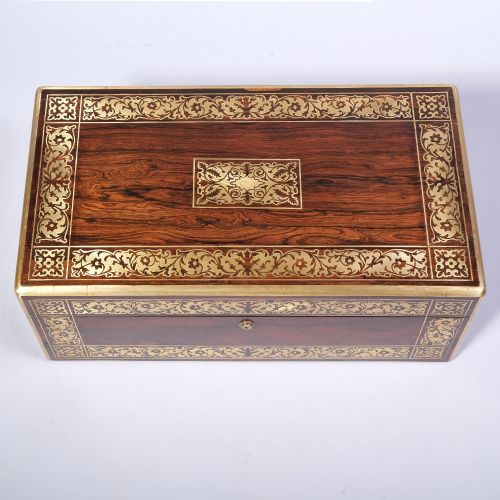
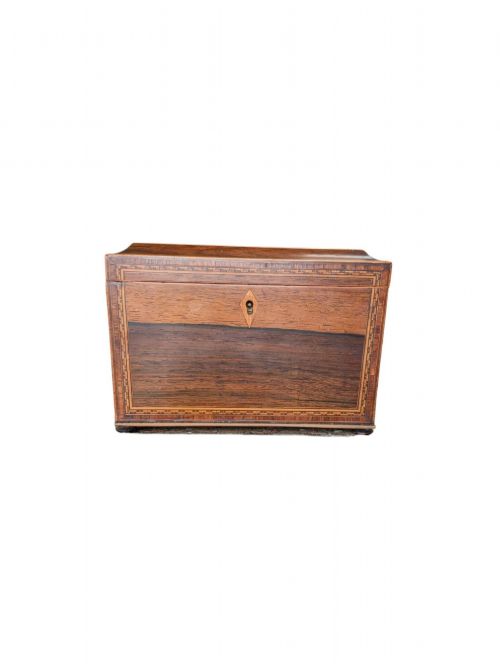
A marquetry rosewood caddy is a finely figured timber box built for storing tea or writing materials, offering rich grain and intricate inlay.
Marquetry Rosewood Caddy
A marquetry rosewood caddy represents a specialised group of antique boxes designed primarily for tea storage, sewing equipment, and correspondence. When searching for a marquetry rosewood caddy, buyers encounter pieces originating from the Georgian, Regency, and Victorian eras.
The selection ranges from simple tea caddies and teapoys to elaborate sewing boxes, writing boxes, and decorative containers. Examples often incorporate specialised regional techniques, such as Tunbridge Ware mosaic work, alongside traditional timber inlay.
Most specimens date across the nineteenth century, reflecting the period's domestic habits and the high status of imported tropical hardwoods. Forms vary from oblong tapered shapes to domed lids and pieces raised upon stands.
What varies in quality
Quality rests upon the precision of the timber selection and the complexity of the inlay work. Finer specimens display tightly controlled marquetry patterns and well-matched rosewood veneers across all visible surfaces.
The intricacy of the decorative technique separates standard production boxes from exceptional workshop pieces. Mosaic work featuring detailed pictorial scenes or complex geometric tiling demonstrates superior craftsmanship compared to simple linear stringing.
Structural integrity of the fitted interior compartments and the survival of original brass hardware influence the standing of an individual box. Cohesion between the exterior wood selection and the interior arrangement marks the work of skilled makers.
Marquetry Rosewood Caddy Retail Price Guide 2026
Typical asking prices for marquetry rosewood caddy among the pieces listed under this phrase on Sellingantiques today, from the lower quarter to the upper quarter. They describe what is for sale here now, not the wider market.
Victorian tea drinkers kept their leaves under lock and key because tea was too precious to leave to the servants.
Henry Hollamby
The Marquetry Rosewood Caddy Glossary
- Marquetry
- Decorative veneer work formed by fitting together small pieces of wood, bone, or other materials to create pictorial or geometric designs on a surface. This technique allows workshops to produce complex surface patterns across the lid and sides of a box.
- Rosewood
- A dense, heavy tropical timber prized for its dark colour and dramatic figuring. It serves as the primary structural and decorative wood for the majority of these nineteenth-century containers.
- Tunbridge Ware
- A specialised form of British woodworking originating in Kent, characterised by mosaic designs built from thousands of tiny tinted wood blocks. These tiny segments create detailed architectural or floral motifs.
- Teapoy
- A larger floor-standing container or small table fitted with interior compartments for storing tea. They often feature pedestals or stands and mirror the decorative vocabulary of smaller tabletop caddies.
- Stringing
- Thin lines of contrasting wood inlay used to outline panels and geometric borders on furniture and boxes. It provides a sharp visual boundary against the darker rosewood ground.
Marquetry Rosewood Caddy: Frequently Asked Questions
What was the original purpose of a tea caddy?
Tea caddies were manufactured to store dry tea leaves securely under lock and key, as tea was an expensive commodity during the Georgian and Victorian periods.
Inside, the boxes typically featured lidded compartments to keep different varieties of loose tea fresh and dry away from household moisture.
How do I distinguish Regency boxes from Victorian ones?
Regency boxes often exhibit clean architectural lines, bolder brass inlay, and tapered forms that reflect neoclassical design preferences. Victorian examples frequently incorporate busier surface decoration, including denser floral marquetry and elaborate mosaic panels.
Examining the internal fittings and the style of the wood grain helps clarify the chronological placement within the nineteenth century.
What is Tunbridge Ware inlay?
Tunbridge Ware inlay consists of microscopic wooden tiles arranged meticulously to form intricate mosaic pictures or geometric borders. Craftsmen bundled various naturally coloured woods together before slicing them crosswise to produce identical patterned strips.
These tiny sections were then applied to the exterior surfaces of boxes to create detailed pictorial lids.
How should I care for a rosewood surface?
Rosewood requires stable indoor humidity levels and protection from direct sunlight to prevent the timber from drying out or fading. Gentle dusting with a dry, soft cloth maintains the finish without introducing harsh cleaning agents.
Avoiding excess moisture protects both the delicate veneer and the internal bone or wooden fittings.