
Antique Vanity Casket
An antique vanity casket is a small, fitted chest meant for holding personal treasures, holding everything from scent bottles to jewels.
Antique Vanity Casket
An antique vanity casket sits on a dressing table or travels within a carriage, serving to hold personal valuables, trinkets, and cosmetics. The versions met most often on this page date from the nineteenth century into the early twentieth century, spanning Victorian, Edwardian, and Art Deco eras.
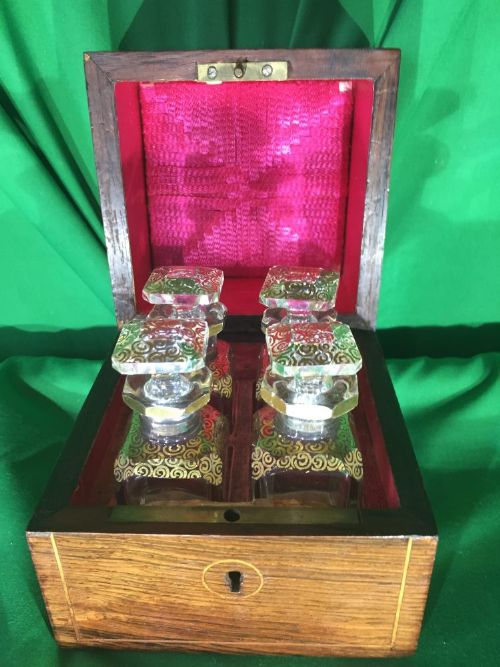
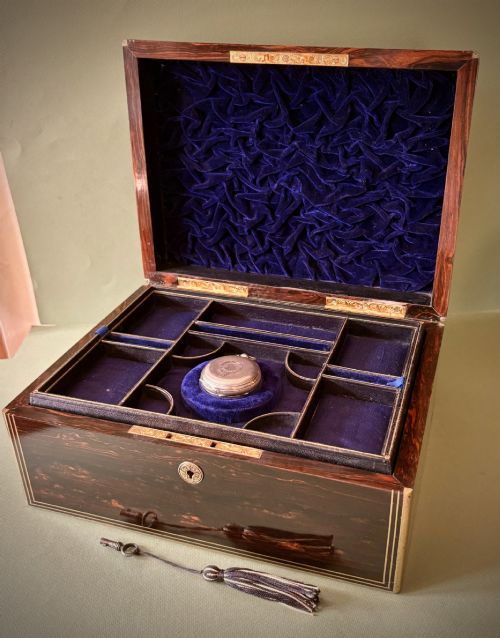
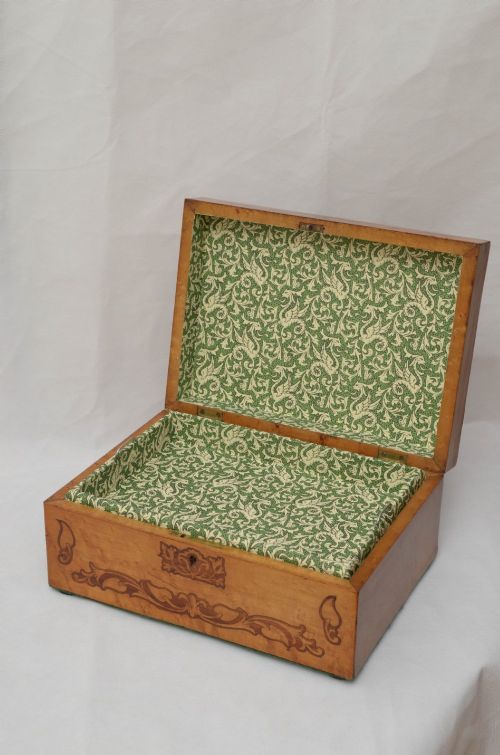
Makers constructed these caskets as fitted boxes, often containing compartments, trays, mirrors, and glass scent bottles. The form shifts from timber work boxes and writing slopes to metal-mounted crystal and solid silver dressing table boxes.
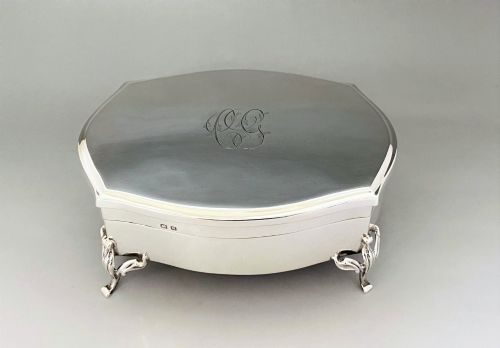
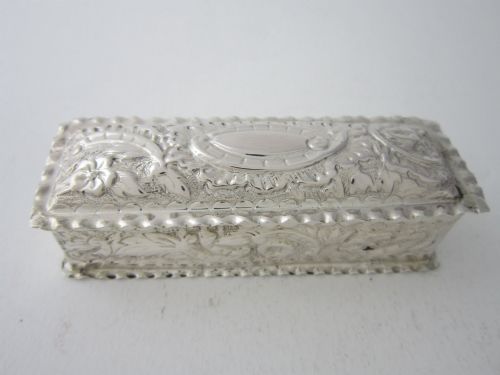
Origins vary widely across these listings, taking in English mahogany and rosewood pieces, French porcelain and gilt bronze caskets, and solid silver boxes bearing Birmingham assay marks.
How they were made
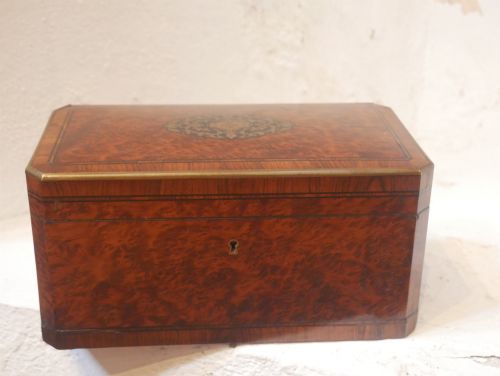
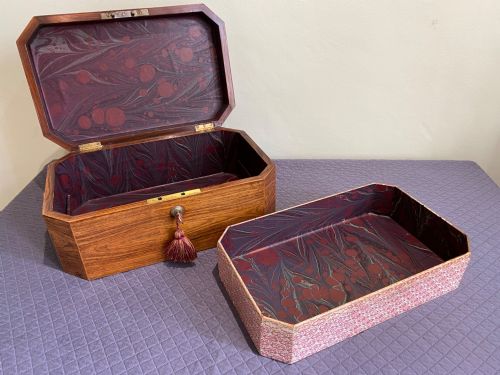
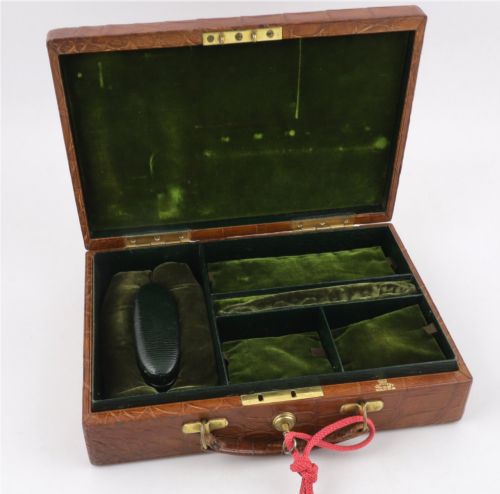
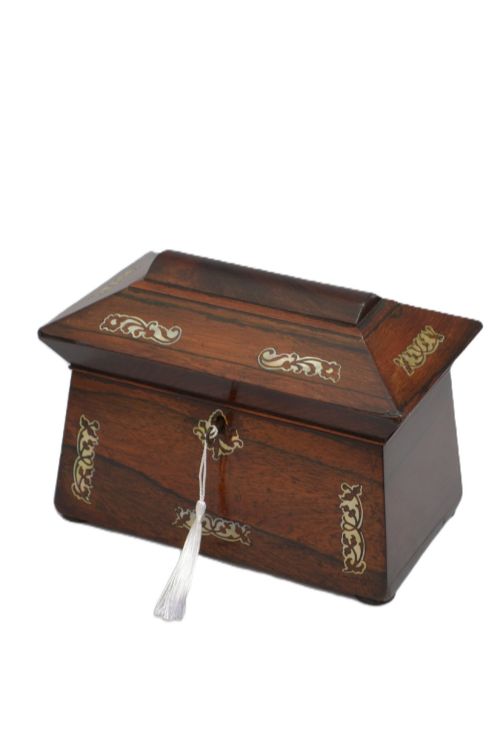
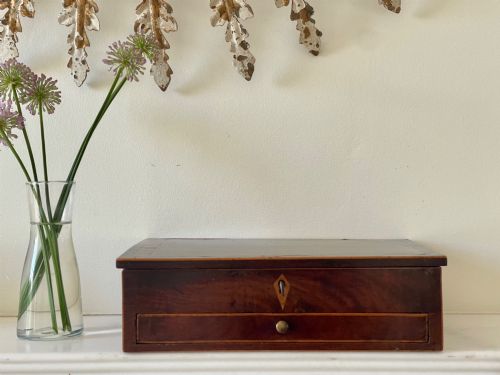
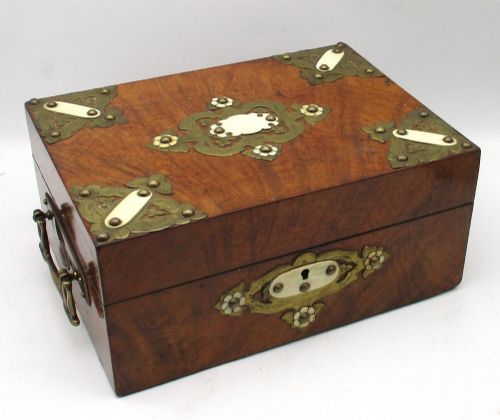
Carpenters built the wooden carcasses using dense timbers such as rosewood, burr walnut, coromandel, and mahogany, frequently applying tulipwood inlay or leather coverings. Interiors often received linings of velvet and silk to cushion fragile contents.
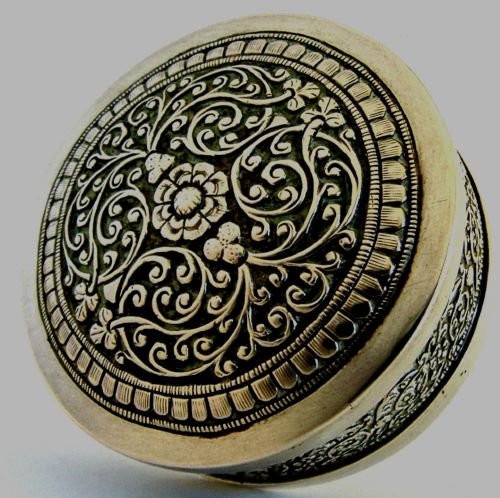
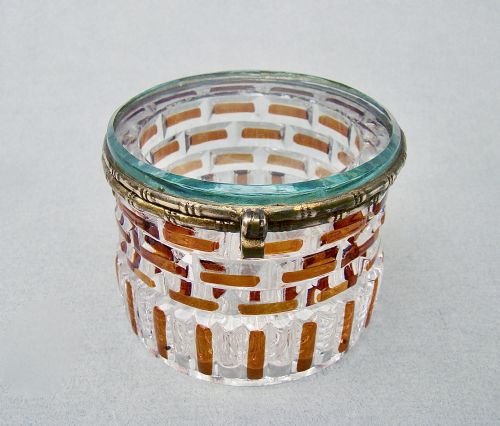
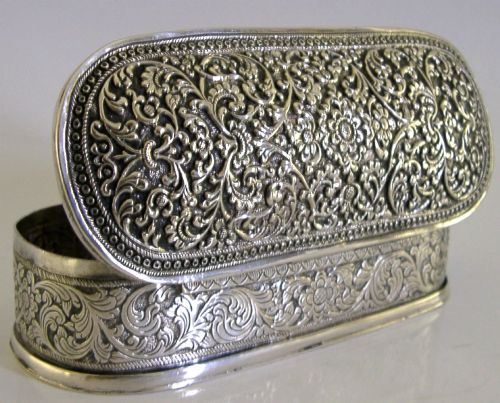
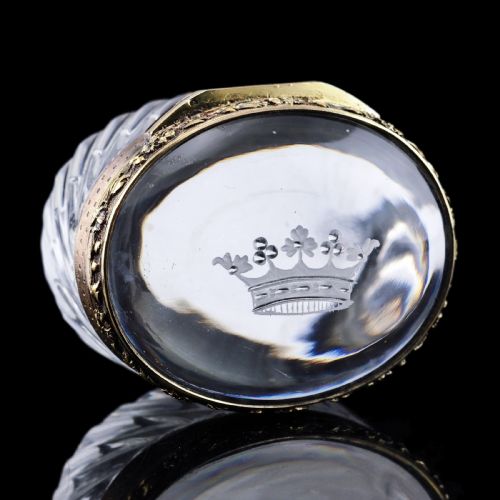
Silversmiths and metalworkers shaped sterling silver, gilt brass, and ormolu into mounts, frames, and entire boxes, sometimes incorporating tortoiseshell and mother-of-pearl panels. Glassmakers contributed cut crystal and amber glass bodies fitted with hinged metal lids.
Several boxes still retain their original glass scent bottles tucked tightly inside velvet slots.
What varies in quality
The refinement of the internal fittings defines the upper tier of these pieces, separating simple storage boxes from fully equipped dressing caskets. Retaining original glass scent bottles, working locks, and matching trays elevates a piece considerably.
Material selection and decorative execution dictate the grade of each casket. Finely figured burr woods, hand-painted porcelain panels, and substantial gauges of sterling silver reflect superior workshop standards.
Tahan Paris·J C Vickery·Mappin & Webb·A & J Zimmerman Ltd·William Hutton·L. Dujat
The Antique Vanity Casket Glossary
- Ormolu
- Gilded brass or bronze mounted onto furniture and boxes for decorative effect. This technique was widely utilised in French and Victorian pieces.
- Coromandel
- A dense, dark brown timber with striking black figuring imported from Asia. Cabinetmakers favoured it for luxury nineteenth-century boxes.
- Scent casket
- A specialised box designed specifically to secure multiple glass perfume bottles. These often include internal trays and velvet linings.
- Assay mark
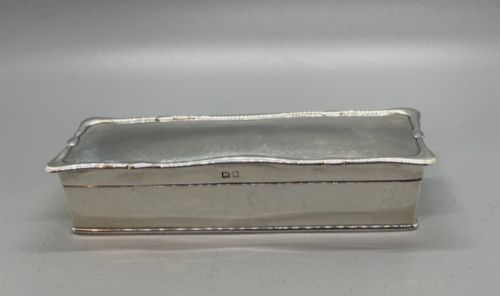
- A stamp indicating the purity of precious metal and the office of testing. English silver pieces frequently display these marks for Birmingham.
- Tantalus
- A locking wooden frame that holds decanters or bottles securely while displaying them. It prevents removal of the bottles until the lid is unlocked.
Antique Vanity Casket: Frequently Asked Questions
What is an antique vanity casket used for?
These boxes served to house personal grooming items, small jewels, and perfume bottles upon a dressing table.
Today, they function well for storing modern jewellery, watches, and small keepsakes securely.
How do I identify a Victorian vanity casket?
Victorian examples frequently utilise rich timbers like rosewood and walnut, often featuring brass stringing or mother-of-pearl inlay.
They commonly contain fitted velvet interiors designed to hold scent bottles or jewellery compartments.
Are silver dressing table boxes marked?
Solid silver pieces usually carry hallmarks indicating the metal purity, the assay office city, and the date letter.
Maker's marks are also stamped nearby, identifying the specific silversmith or manufacturing firm.
How do I care for a wood vanity casket?
Keep wooden boxes away from direct sunlight and steady heat sources to prevent timber splitting and veneer lifting.
Maintain the finish by dusting with a dry cloth and avoiding modern liquid polishes.