





Victorian Walnut Jewelry Box
A victorian walnut jewellery box is a fitted receptacle for personal valuables, combining rich timber grain with period craftsmanship.
Victorian Walnut Jewelry Box
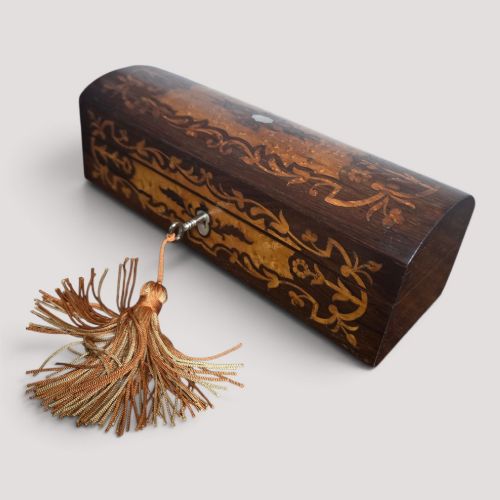
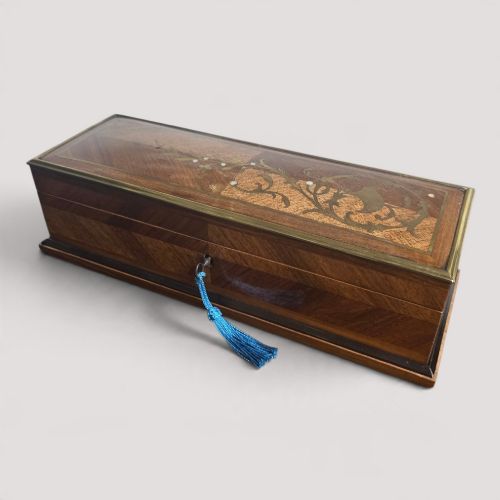
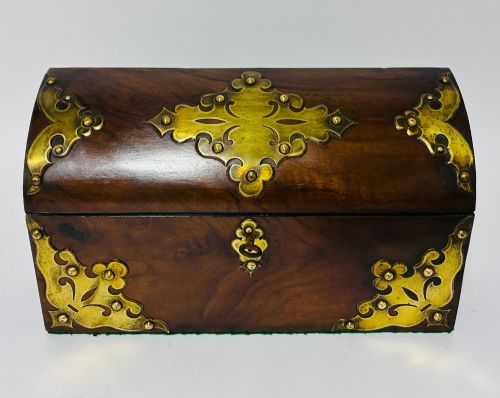
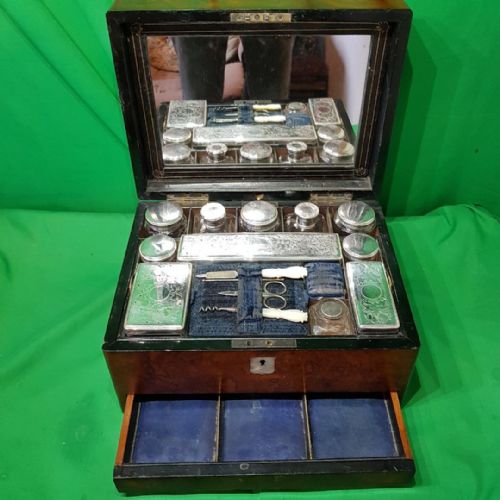
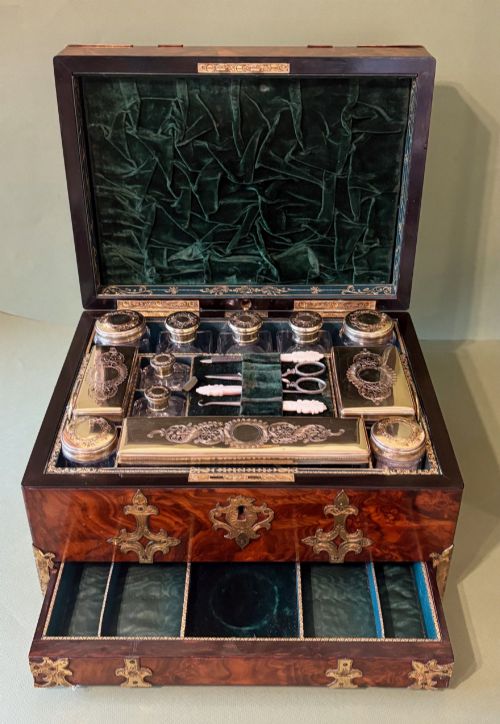
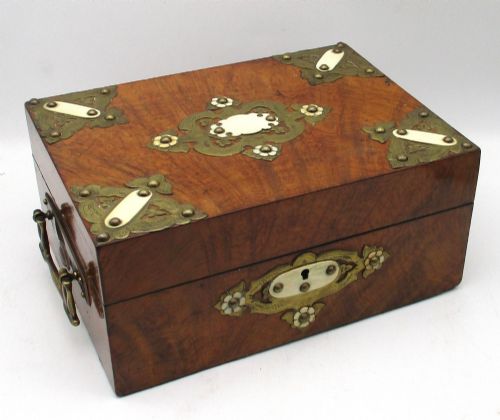
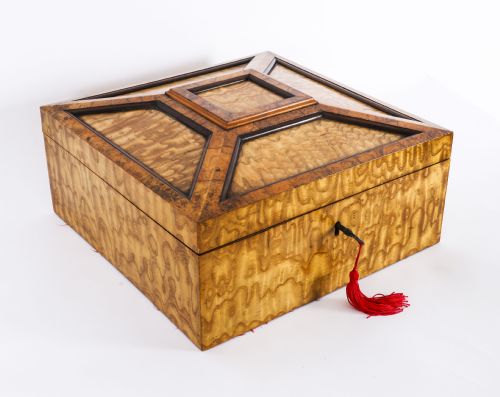
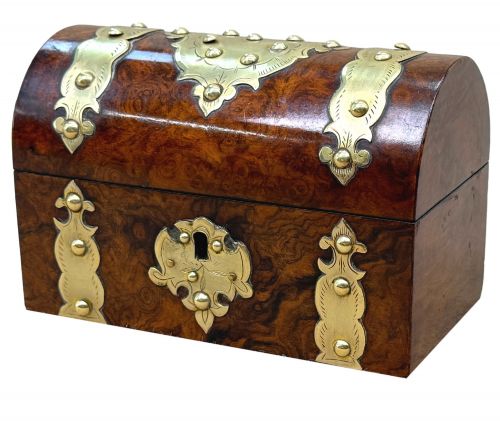
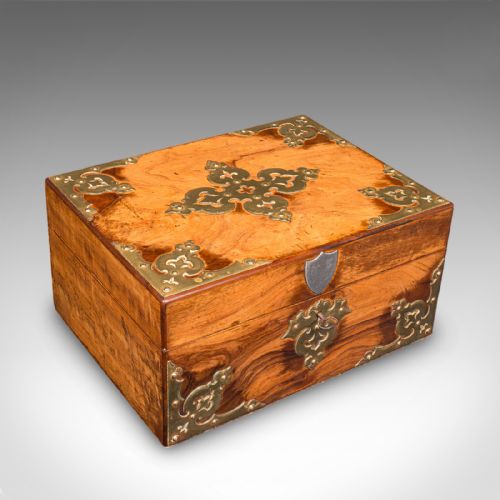
A victorian walnut jewellery box is a receptacle designed for storing personal valuables, frequently encountered in burr walnut timber across this selection. These pieces date predominantly from the nineteenth century, encompassing various forms from compact trinket containers to larger dressing cases equipped with fitted interiors and mirrors.
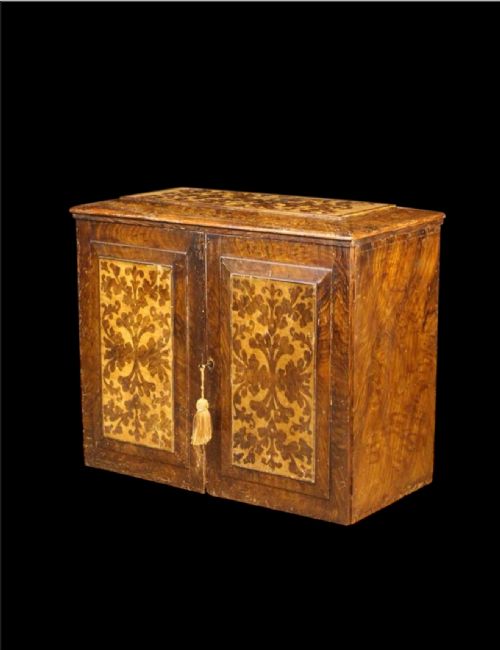
Beyond standard jewellery boxes, the selection includes related receptacles such as tea caddies, workboxes, stationery boxes, and tabletop cabinets. Many examples incorporate specialised compartments for rings, gloves, and sewing implements, reflecting the domestic habits of the period.
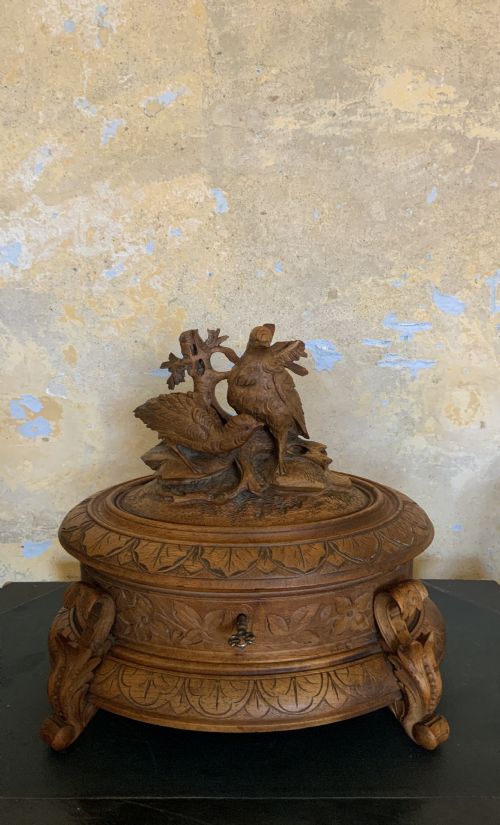
Stylistic variations range from plain figured timber surfaces to elaborate Black Forest carvings, Gothic Revival designs, and intricate Tunbridge inlay or Sorrento marquetry. These diverse forms demonstrate the adaptability of walnut as a medium for nineteenth-century decorative containers.
How they were made
Cabinet makers utilised solid walnut and decorative burr veneers applied to structural timber carcases to achieve rich surface patterns. Brass mounts, escutcheons, and hinges provided functional reinforcement and visual contrast against the dark wood.
Surface ornamentation involved specialised techniques such as parquetry, Tunbridge ware inlay, and Sorrento marquetry, creating geometric or pictorial motifs using various woods. Interiors were typically lined with velvet or similar textiles and fitted with glass components or leather-bound compartments.
Victorian Walnut Jewelry Box Retail Price Guide 2026
Typical asking prices for victorian walnut jewelry box among the pieces listed under this phrase on Sellingantiques today, from the lower quarter to the upper quarter. They describe what is for sale here now, not the wider market.
Listings feature walnut, burr walnut, brass, glass, and velvet across nineteenth-century forms including workboxes, tea caddies, and stationery boxes.
What varies in quality
The sophistication of the timber veneer and the precision of the parquetry or marquetry inlay distinguish superior examples from standard production. Burr walnut selections with particularly striking grain patterns indicate higher grade material sourcing by the cabinet maker.
Interior complexity and the integrity of the original velvet linings, fitted mirrors, and brass hardware determine the overall refinement of a piece. Items featuring integrated locking mechanisms with functioning keys and fully intact compartmentalised trays represent the upper tier of execution.
The Victorian Walnut Jewelry Box Glossary
- Burr walnut
- A figured wood grain obtained from walnut tree growths, prized for its swirling patterns in decorative cabinet work.
- Tunbridge inlay
- A form of mosaic woodwork produced in Kent using small blocks of naturally coloured timbers to form geometric or pictorial designs.
- Parquetry
- A geometric mosaic of wood pieces used for decorative surfacing on boxes and furniture.
- Bijouterie
- A glass-topped display case or box intended for small trinkets and valuable ornaments.
- Mule chest
- A traditional storage chest featuring one or more drawers at the base beneath a primary lidded compartment.
Victorian Walnut Jewelry Box: Frequently Asked Questions
What were victorian walnut jewellery boxes used for?
These boxes served to store and protect valuable personal ornaments, rings, and brooches in domestic settings.
Many examples included specialised trays, compartments, and integrated mirrors to facilitate daily grooming and dressing routines.
How do you identify a burr walnut finish?
Burr walnut is characterised by swirling, mottled grain patterns created by irregular tree growth rather than straight annual rings.
Cabinet makers sliced these growths into thin veneers to display the distinctive decorative figuring across the lids and panels of boxes.
What is Tunbridge ware inlay?
Tunbridge ware is a specialised mosaic technique utilising thousands of tiny wooden blocks of various natural colours.
Craftsmen assembled these blocks to create detailed geometric or floral motifs specifically applied to the surfaces of nineteenth-century boxes.
Are interiors usually original?
Many surviving pieces retain their original velvet or silk linings, fitted wooden trays, and internal mirrors.
Some examples show evidence of later reupholstery or replacement fittings due to natural wear over the decades.