

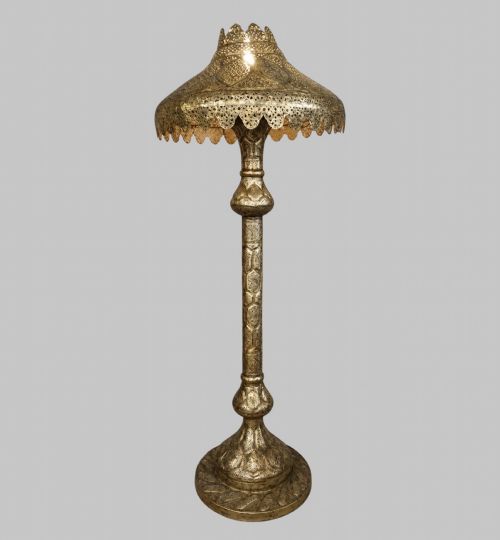
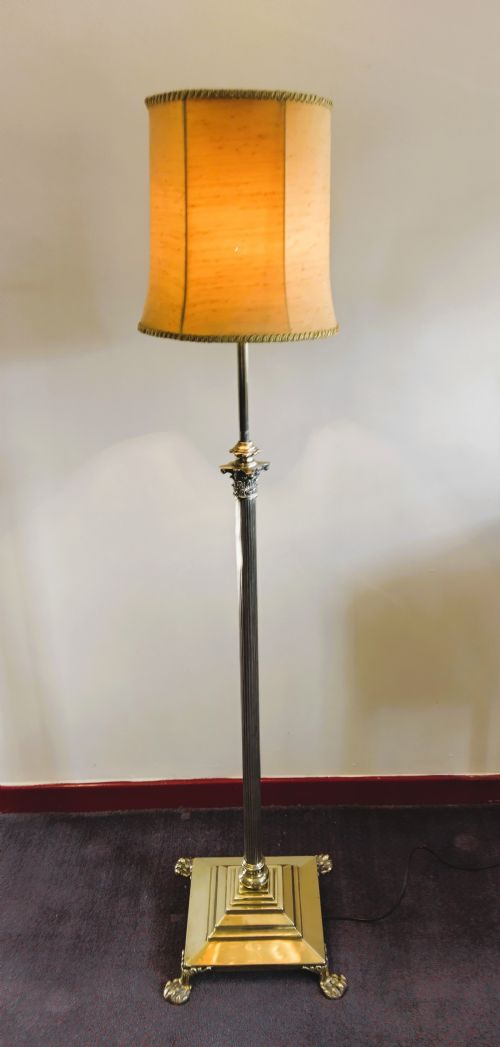
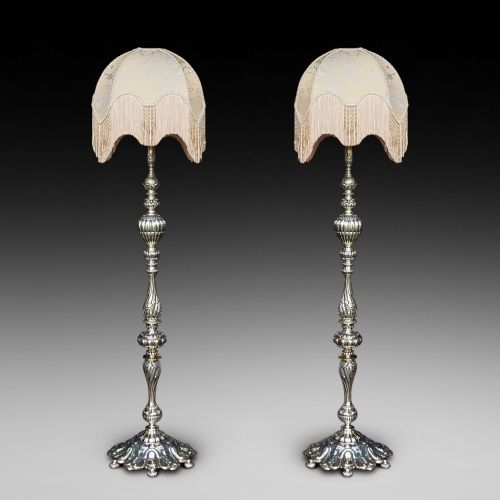
Brass Floor Standing Light
A brass floor standing light brings both height and a warm metallic gleam to a room, offering adjustable illumination suited to traditional and period interiors.
Brass Floor Standing Light
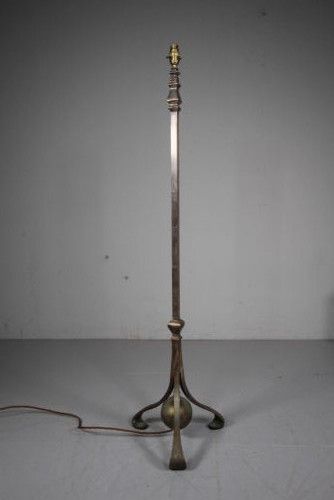
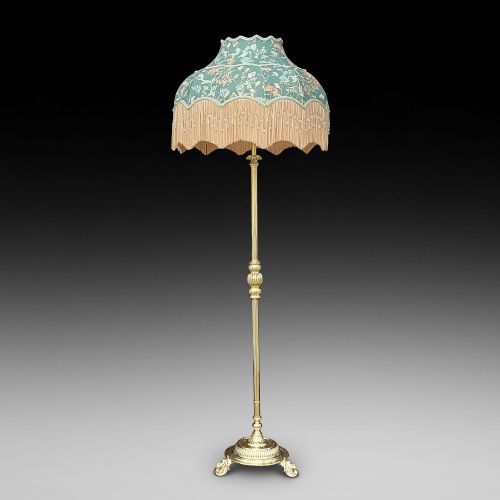
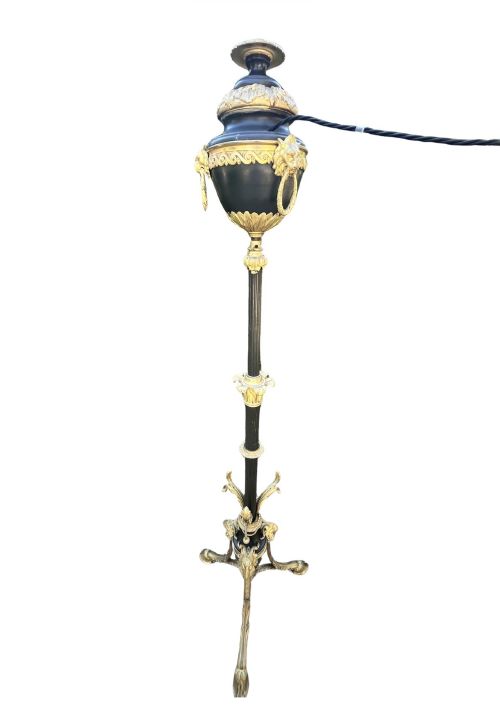
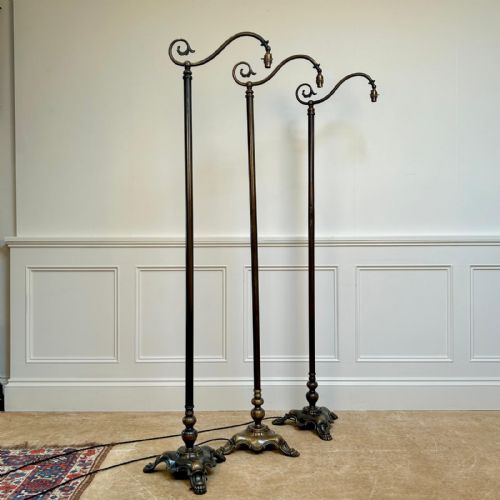
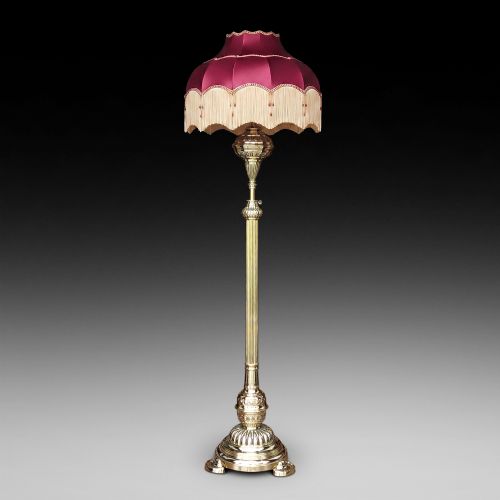
When searching for a brass floor standing light, you encounter tall upright standards designed to cast downward light or upward illumination across a room. The selections span standard lamps, floor lamps, and floor candlesticks originating from Victorian, Edwardian, and early twentieth-century workshops.
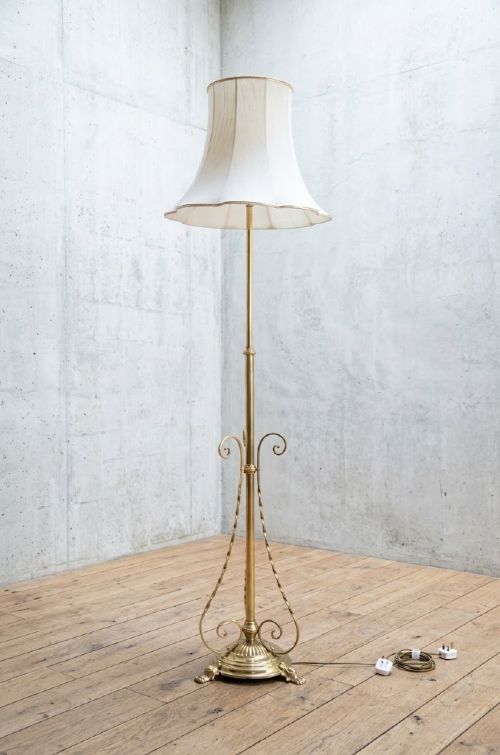
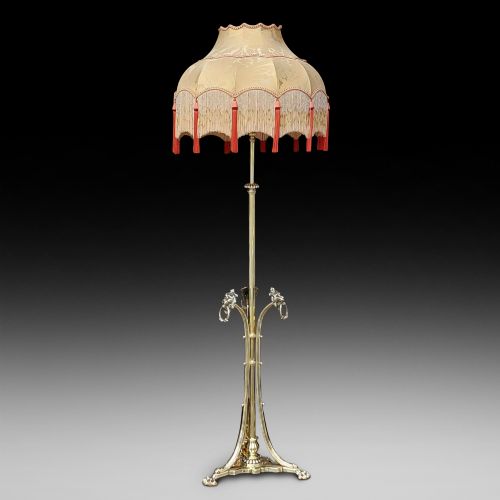
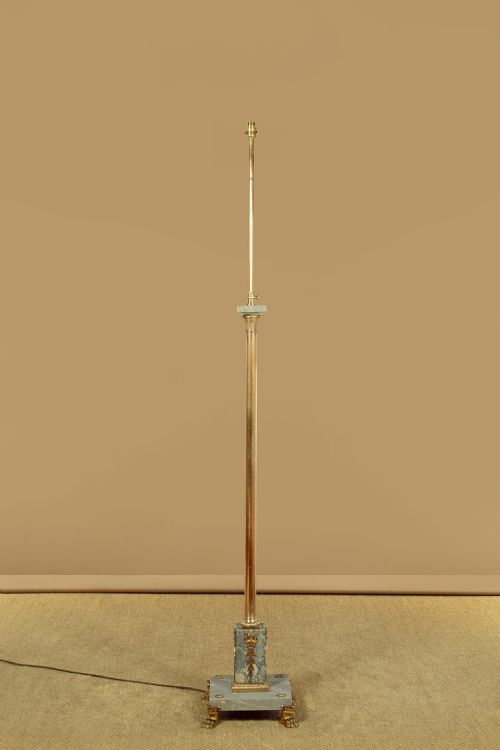
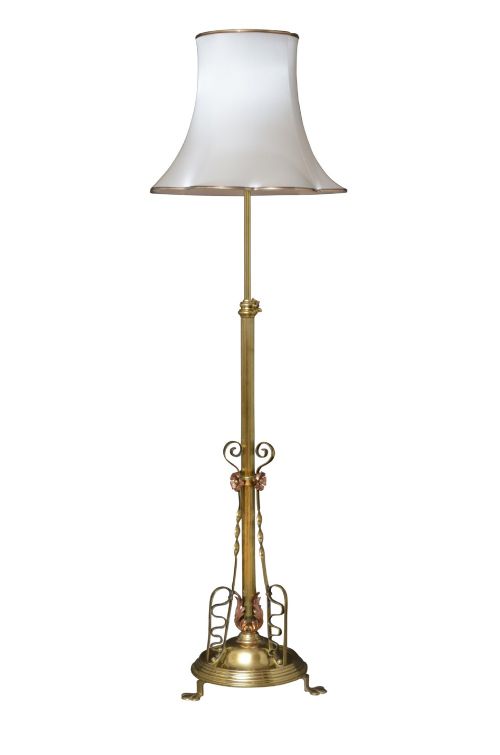
The most common versions met on this page are adjustable standard lamps, often adapted from earlier Victorian oil lamps or built in the Corinthian column and Art Nouveau styles. These pieces frequently feature telescopic mechanisms that allow you to alter the height depending on your seating arrangement.
Makers and designers from English Arts and Crafts, French Neoclassical, and Middle Eastern traditions contribute diverse decorative details. You will find tripod bases, heavy cast columns, and combinations of brass with copper, glass, and fabric shades.
Distinctions in craftsmanship
The distinction between standard examples and the finest pieces rests in the weight of the casting and the crispness of the decorative detail on the column and base. Heavy cast brass bases provide stability and support telescopic height adjustments without wobbling.
Superior quality shows in the execution of stylistic elements such as Corinthian fluting, Art Nouveau whiplash curves, or Arts and Crafts hand-beaten copper and brass surfaces. The precision of the screw keys and the seamless movement of extension mechanisms mark superior engineering.
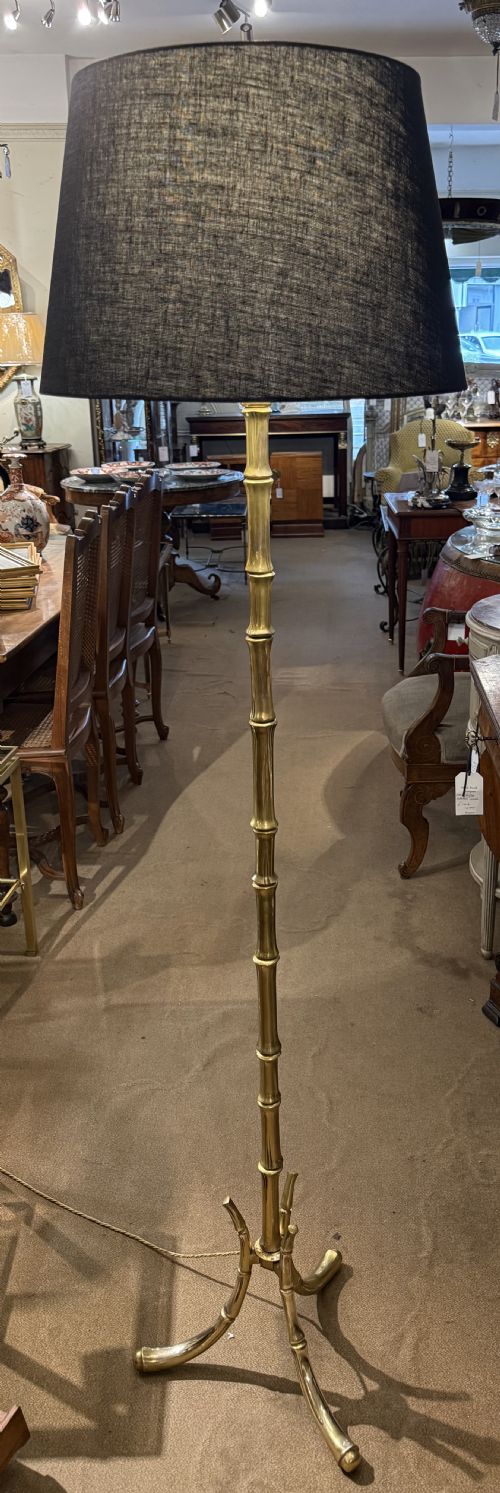
Listings feature brass floor standing lights spanning the Victorian, Edwardian, Arts and Crafts, and Art Nouveau periods, alongside later twentieth-century French designs.
Hinks of B'ham·Maison Bagues·Bleriot
The Brass Floor Standing Light Glossary
- Standard Lamp
- A term frequently used interchangeably with a floor lamp to describe a tall upright light fixture designed to stand directly on the floor. These pieces often support fabric shades and provide ambient room illumination.
- Corinthian Column
- A classical architectural column design featuring an ornate capital decorated with acanthus leaves. This motif appears frequently on nineteenth-century and Edwardian lamp standards.
- Telescopic
- An adjustable mechanism allowing the vertical shaft of the lamp to extend upwards or retract downwards. This feature originated on oil lamps to let users alter the height of the flame.
- Bouillotte
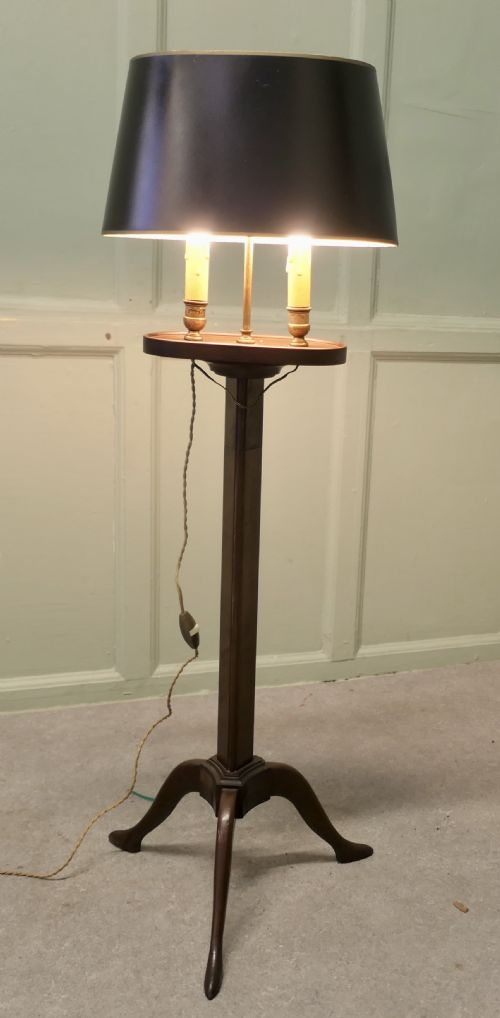
- A style of adjustable candle or lamp traditionally featuring a central column and a metal shade that slides up and down the stem. French examples often incorporate twin candle arms.
- Uplighter
- A lamp designed to cast its illumination upwards toward the ceiling rather than downwards through a shade. These forms often appear in twentieth-century pieces.
Brass Floor Standing Light: Frequently Asked Questions
How do I adjust the height safely?
Many period floor lamps feature a screw key or collar along the central shaft that loosens to permit telescopic movement. Support the upper section with one hand while releasing the mechanism to prevent sudden drops.
Ensure the cord has enough slack before raising the standard to avoid pulling on internal wiring. Once you reach the desired height, tighten the key firmly but gently to secure the column.
Were these originally oil lamps?
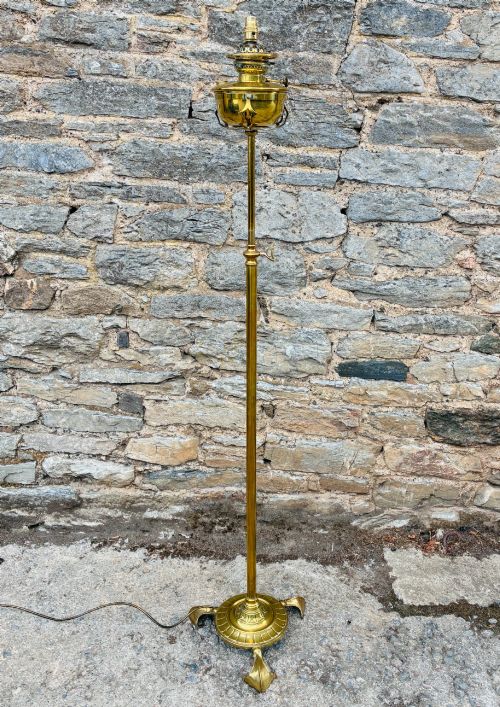
A large number of Victorian and Edwardian standards began life as oil-burning lamps featuring brass reservoirs and burners. These were subsequently converted to electricity as households adopted modern power.
This conversion process typically retains the original telescopic column and weighted base while hiding modern wiring through the central core. Such pieces bridge the gap between antique lighting mechanisms and contemporary domestic use.
How do I clean antique brass?
Dust the surface regularly with a soft, dry cloth to prevent the accumulation of grime in decorative recesses and openwork bases. Avoid harsh chemical cleaners that strip away the aged patination collected over decades.
If polishing is necessary, use a mild, non-abrasive metal cleaner specifically formulated for brass. Apply it sparingly with a cloth, working around engraved or hammered details rather than scrubbing.
Can I use modern lamp shades?
Most standard lamps accept a variety of shade styles provided the fitting matches the harp or shade carrier dimensions. You should consider the overall height and weight of the standard when selecting a shade to maintain visual balance.
Fabric shades diffuse the light effectively for reading corners, whereas glass shades reflect the period aesthetic of earlier oil lamp configurations. Ensure the wattage of your bulb does not exceed the limit recommended for the vintage fitting.