

Brass Floor Standing Lamp
These brass floor standing lamps illuminate rooms with height-adjustable stems and solid metal bases, offering both practical task lighting and period character.
Brass Floor Standing Lamp
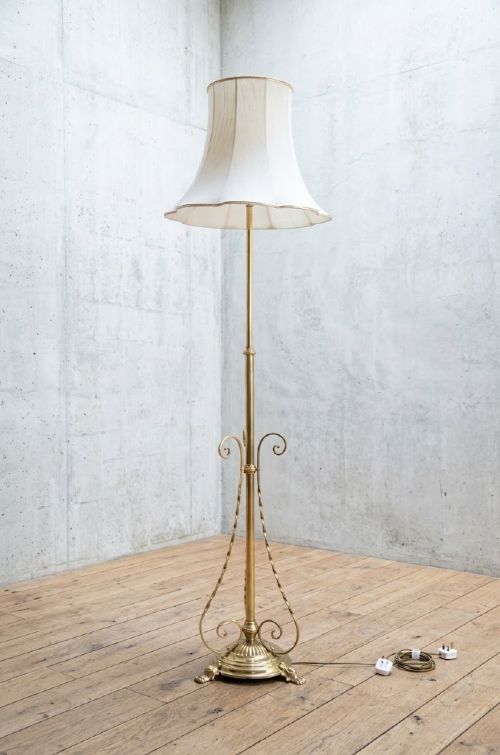
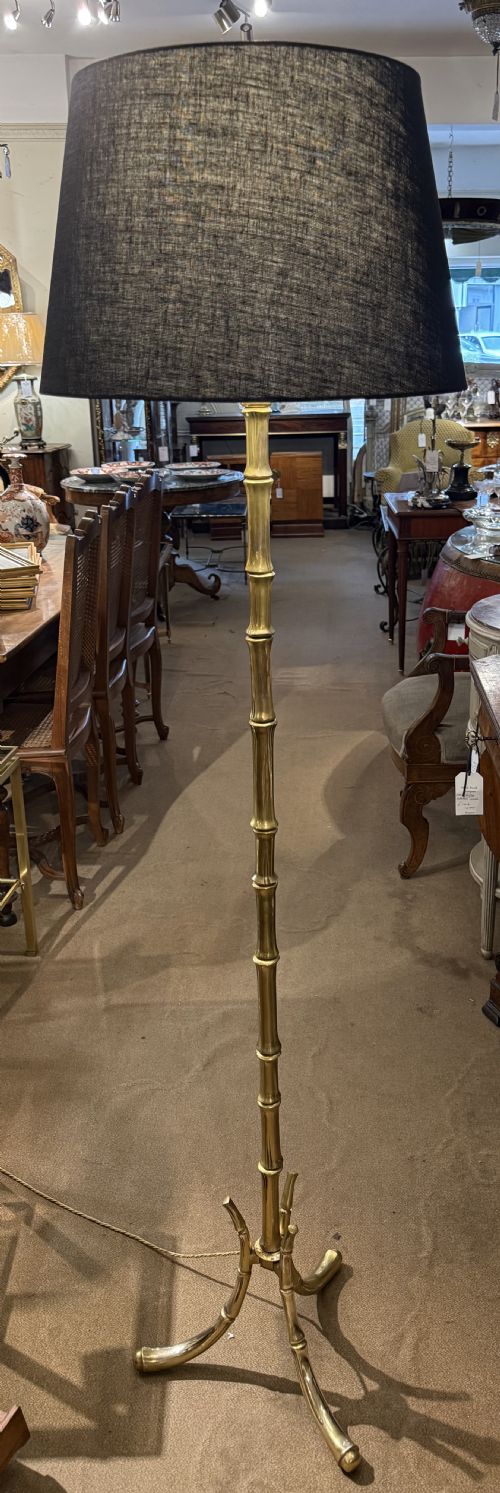
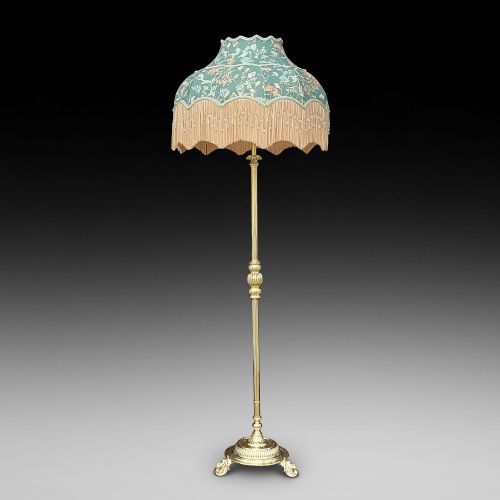
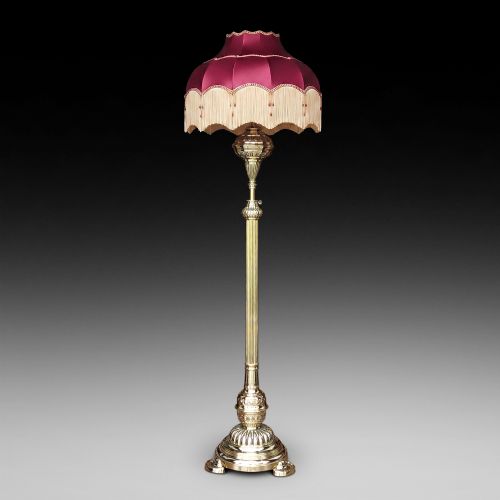
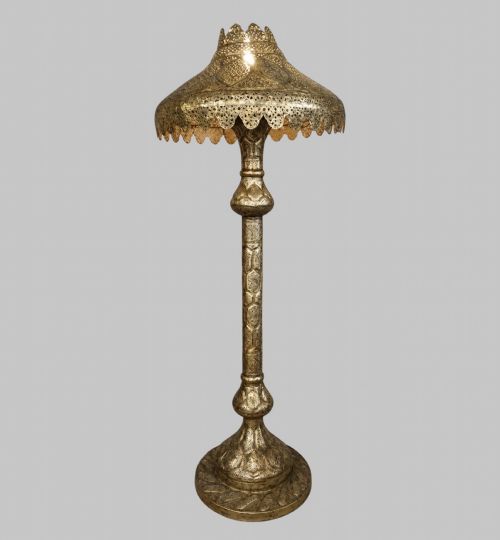
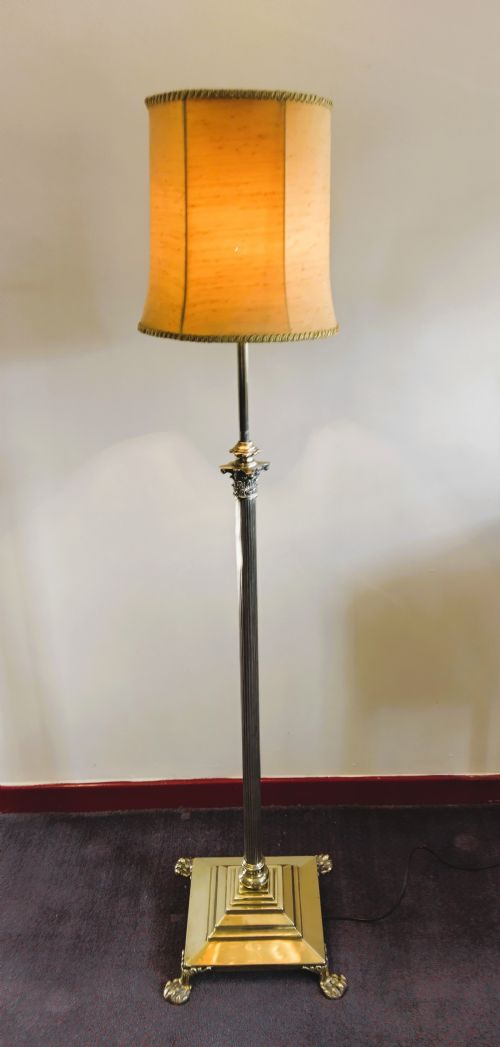
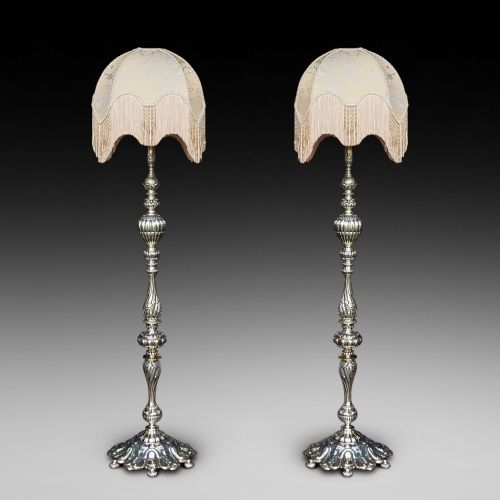
A brass floor standing lamp provides elevated illumination through standard, telescopic or adjustable columns designed to stand directly on the floor. When searching for a brass floor standing lamp, buyers encounter pieces spanning from the Victorian era through the Edwardian period and into the 1920s and 1930s. Common forms include converted oil lamps, Corinthian columns, and reading lamps fitted with fabric shades or glass components.
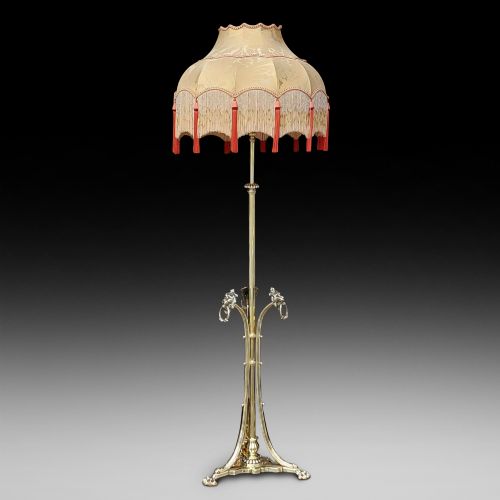
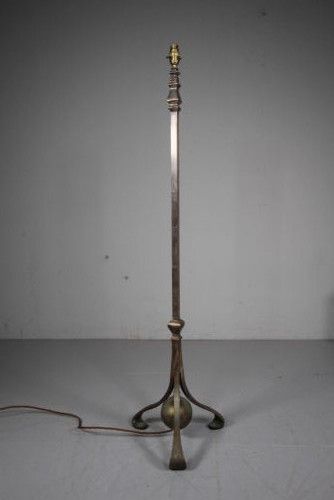
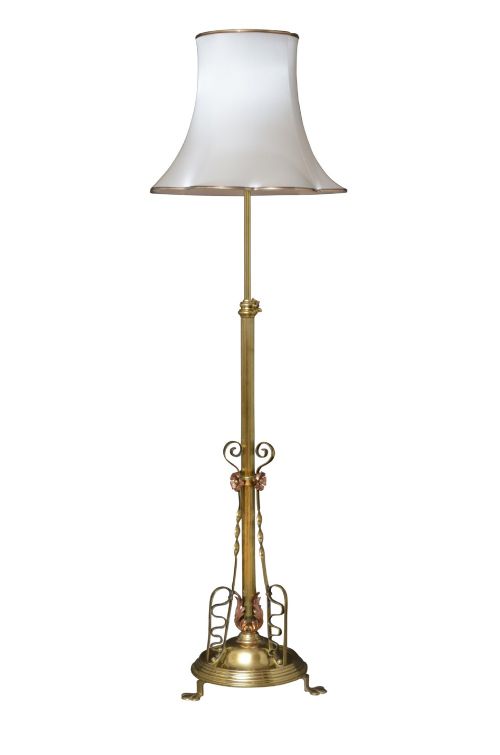
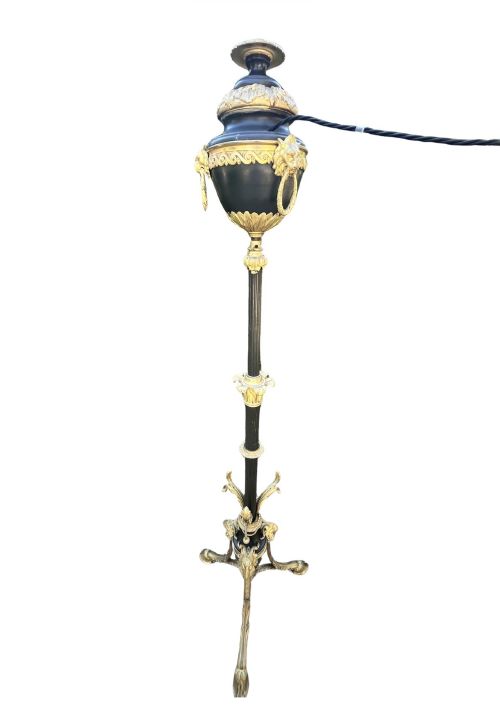
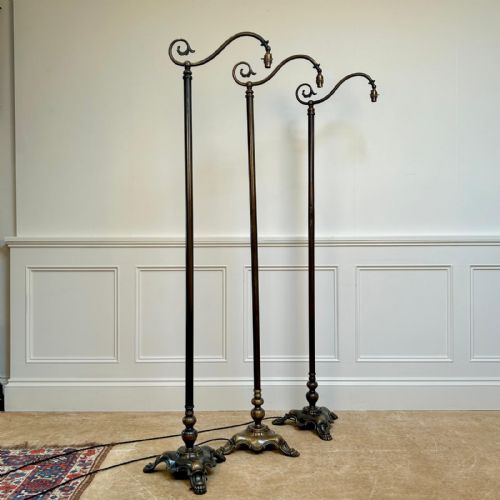
The selection ranges from simple Arts and Crafts tripod designs to ornate Neoclassical and Art Nouveau creations featuring floral openwork. Many examples incorporate height adjustment mechanisms, allowing the stem to extend for versatile placement beside seating or desks. French Empire, Hollywood Regency, and Middle Eastern Moorish styles also appear among the varied formats.
How They Were Made
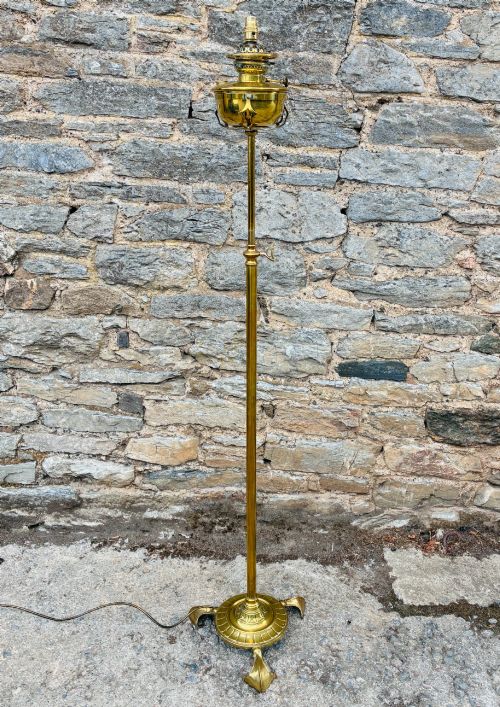
Construction relies primarily on brass, often paired with copper, cast iron, or marble for weighted bases that ensure stability. Many nineteenth-century examples originate as oil lamps later converted to electric power, retaining their original telescopic brass mechanisms and screw keys.
Decorative detailing involves cast metal ornamentation, ebonised wood elements, and crystal or cranberry glass inserts. Makers utilised heavy gauge brass for standard columns, securing structural integrity in adjustable stems and scroll arms.
Listings feature brass floor lamps spanning from the 1850s Victorian era through Edwardian models to 1930s Art Deco and Neoclassical designs.
What Varies in Quality
Weight and gauge of the metal define the physical substance of the piece, distinguishing heavy cast brass columns from lighter tubular alternatives. Superior examples maintain rigidity across telescoping sections and feature crisp casting detail in Corinthian capitals or organic Art Nouveau motifs.
Integrity of period components, such as original burners, weighted bases, and integrated shade holders, separates standard production from finer workshop pieces. The presence of maker marks or specialist elements like cranberry glass fonts further elevates the distinction of the object.
Hinks of B'ham·Maison Bagues·Bleriot
The Brass Floor Standing Lamp Glossary
- Telescopic
- An extendable two-part stem mechanism allowing the lamp height to be adjusted up and down. This feature is commonly found on Victorian and Edwardian standard lamps designed for reading.
- Standard Lamp
- A traditional British term for a floor-standing lamp that supports a shade. These tall fixtures typically sit beside armchairs or sofas.
- Corinthian Column
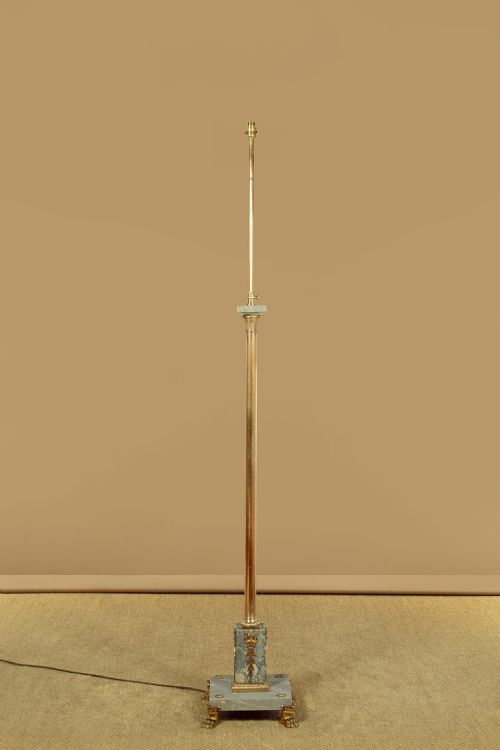
- A decorative architectural column style featuring ornate acanthus leaf capitals at the top of the shaft. Victorian makers frequently adapted this classical form for tall floor lamps.
- Bouillotte
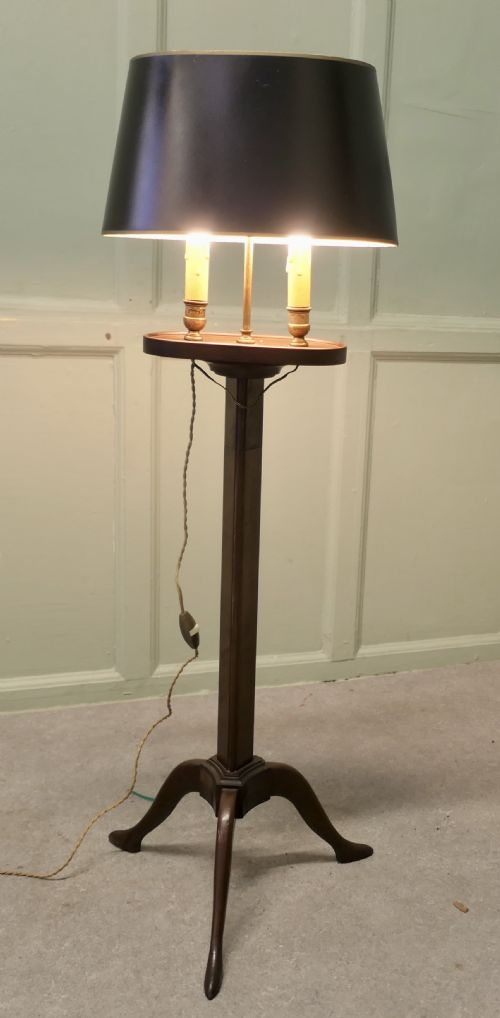
- A type of adjustable multi-candle or multi-light lamp originating in France, often featuring a metal shade. These pieces bring a formal, refined silhouette to interior spaces.
- Uplighter
- A lamp designed to direct its light upward toward the ceiling rather than downward through a shade. These fixtures became popular during the early twentieth century for ambient room illumination.
Brass Floor Standing Lamp: Frequently Asked Questions
How do I adjust the height?
Many period examples utilise a sliding telescopic inner stem secured by a side screw key or thumb screw. Loosening this mechanism allows the upper section to raise or lower before locking into position.
Ensure you support the weight of the lamp fixture with one hand while adjusting the stem to prevent sudden slipping or damage to internal wiring.
Can I use modern shades?
Most standard lamp holders accommodate modern slip fitter or spider fittings with standard shade carrier rings. It is important to match the proportions of the shade to the height and heavy brass base of the floor lamp.
Fabric shades or glass galleries sit securely on the existing frame mounts, though older lamps may require specific shade ring adapters.
Are these lamps safe to use?
Many antique and vintage floor lamps have been rewired or converted from oil lamps to electricity during their lifespan. Inspecting the cord, plug, and internal socket ensures the electrical components meet modern safety standards.
Consulting a qualified electrician for a professional check or rewire is recommended before plugging in older brass columns.
How do I date a brass lamp?
Dating relies on stylistic clues such as Neoclassical columns, Art Nouveau floral openwork, or Arts and Crafts simplicity. Materials like cast iron bases, cranberry glass fonts, and specific manufacturing marks also indicate the period of origin.
Comparing the construction of the adjustment screw and the heaviness of the brass casting helps place the piece within the nineteenth or early twentieth century.