

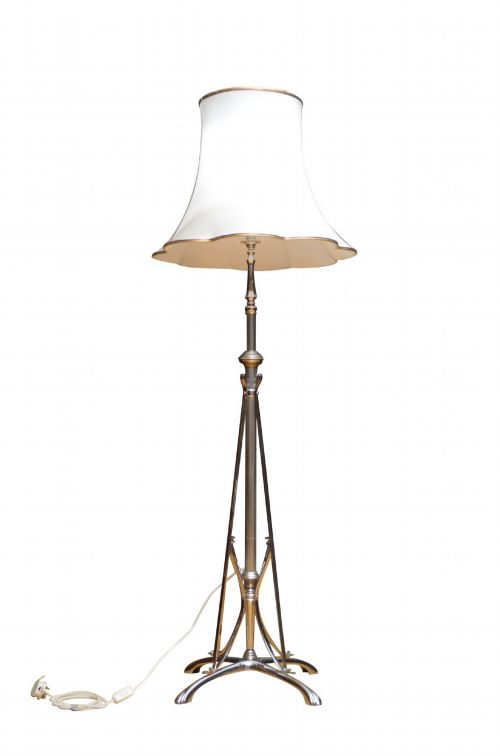


Metal Floor Standing Light
These metal floor standing light examples bring functional height and steady illumination to a room, spanning periods from the Victorian era through the Art Deco decades.
Metal Floor Standing Light
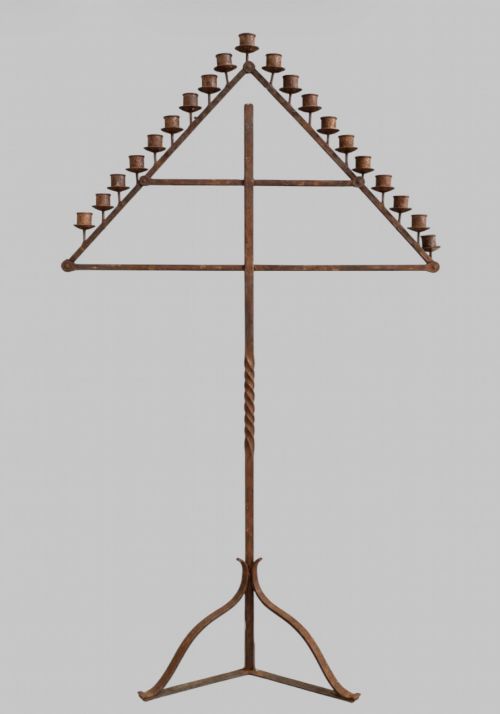
A metal floor standing light serves as a commanding vertical element in a room, combining structural height with deliberate illumination. When you explore this selection, you encounter standard lamps, telescopic designs, and torchieres alongside earlier candle-bearing formats like floor candelabra and lantern stands.
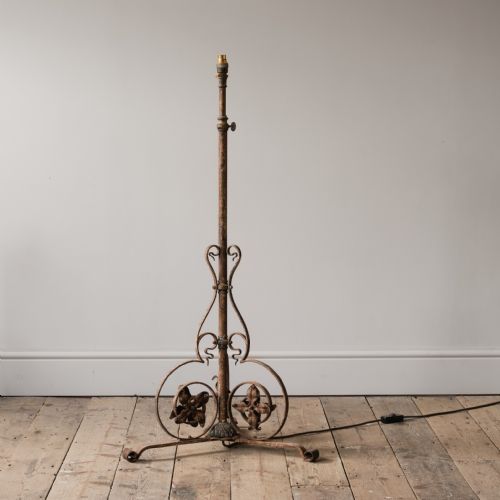
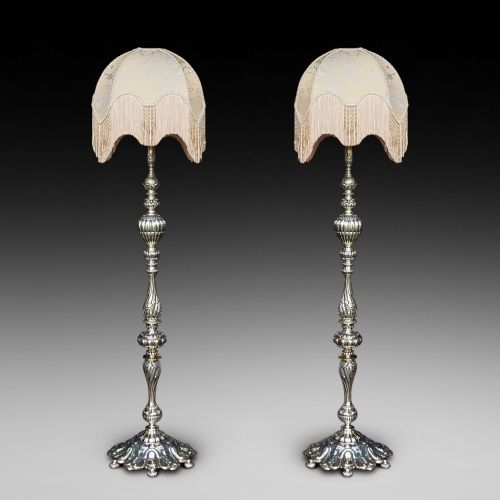
The versions you meet most frequently on this page date from the Victorian period through the nineteen-thirties. Standard lamps with adjustable arms sit alongside heavy brass uprights, while wrought iron pieces bring architectural weight from the nineteenth and early twentieth centuries.
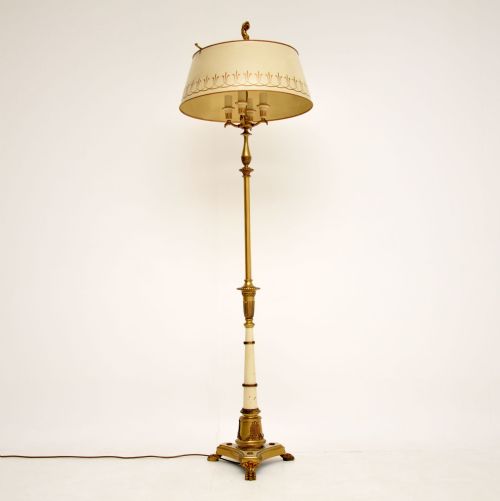
Makers and designers worked across distinct stylistic movements, producing French Neoclassical, Art Nouveau, Arts and Crafts, and Art Deco interpretations. Whether electrified or adapted from earlier oil and gas configurations, these upright pieces anchor a space through solid mass and height.
Materials and construction
Blacksmiths and metalworkers shaped these objects using brass, wrought iron, cast iron, copper, and bronze, often pairing them with fabric shades or glass elements. Heavy bases provided stability for tall telescopic shafts and adjustable scroll arms.
Techniques varied from forged ironwork to cast or spun brass components, with patinated or silvered finishes applied to the metal surfaces. Many surviving examples show adaptations from oil or gas burning to electrical wiring, retaining their original mechanical screw keys and height-adjustment mechanisms.
One early twentieth century entry arrives as a genuine Bleriot searchlight, bringing aviation heritage straight to the living room floor.
Judgement of quality
Quality rests in the weight of the metal and the precision of the mechanical adjustments, such as smooth telescopic movement and secure brass keys. Superior pieces display crisp casting detail or skilful hand-forging that maintains structural integrity across a tall frame.
Proportion and material authenticity define the upper tier of these objects. Heavy gauge brass, substantial cast iron bases, and integrated bronze or copper components indicate higher grade manufacturing compared to lighter commercial alternatives.
Bleriot·RENE MATHIEU·W A S Benson
The Metal Floor Standing Light Glossary
- Torchere
- A tall ornamental stand designed to hold a light or candle at an elevated position. These pieces often feature slender vertical shafts supported by heavy weighted bases.
- Candelabra
- A branched candlestick holder designed to support multiple candles simultaneously. Floor-standing variants provide substantial architectural presence in large rooms.
- Telescopic
- A descriptor for a standard lamp featuring an inner shaft that slides upward to adjust the overall height. These mechanisms usually lock into place with a threaded key.
- Scroll arm
- A curved metal support extending from the top of a standard lamp to hold the light source outward. This decorative feature often allows for directional adjustment.
- Up-lighter
- A lighting fixture directed upward to wash ceilings or walls with reflected illumination. Art Deco examples in this format rely on metal bowls or shades.
Metal Floor Standing Light: Frequently Asked Questions
What is a metal floor standing light?
A metal floor standing light is a tall vertical fixture designed to illuminate a room from a fixed floor position. These objects include adjustable standard lamps, multi-candle candelabra, and heavy torchieres.
Constructed from materials like brass, wrought iron, and copper, they combine structural support with functional lighting across periods from the Victorian era to the mid-twentieth century.
How do I use a telescopic lamp?
Telescopic standard lamps feature an internal sliding shaft that raises or lowers the light source. You loosen the central thumbscrew or key, adjust the height to your preference, and tighten the mechanism to secure it.
This adjustment allows the lamp to serve multiple functions, from reading light to ambient room illumination.
Were these lights originally electrified?
Many nineteenth and early twentieth century examples began life as oil lamps, gas fixtures, or candle standards. Makers subsequently adapted them for electricity as domestic power became widespread.
These conversions often preserve the original weighted bases, telescopic collars, and switch mechanisms while updating the internal wiring for modern use.
How do I identify Art Deco metal lights?
Art Deco metal floor lights, dating from the nineteen-twenties and thirties, typically feature geometric lines, stepped bases, and uplighter bowls. They utilise metals such as chromium, brass, or painted iron to create streamlined silhouettes.
Unlike ornate Victorian or Edwardian designs, these pieces favour minimalist verticality and industrial styling.