
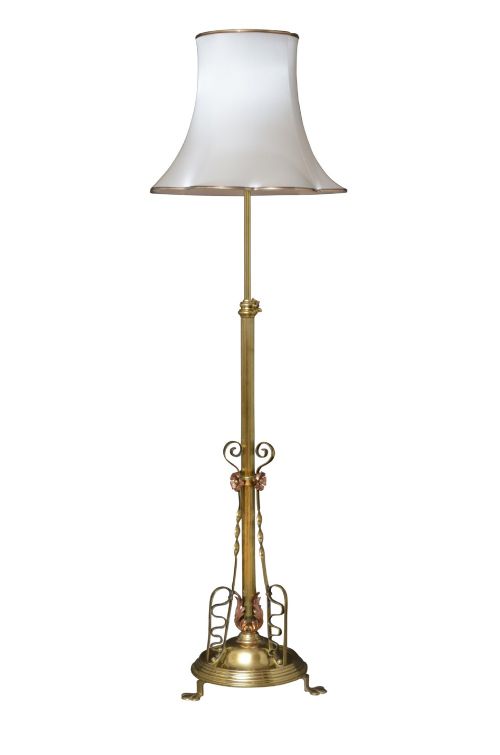
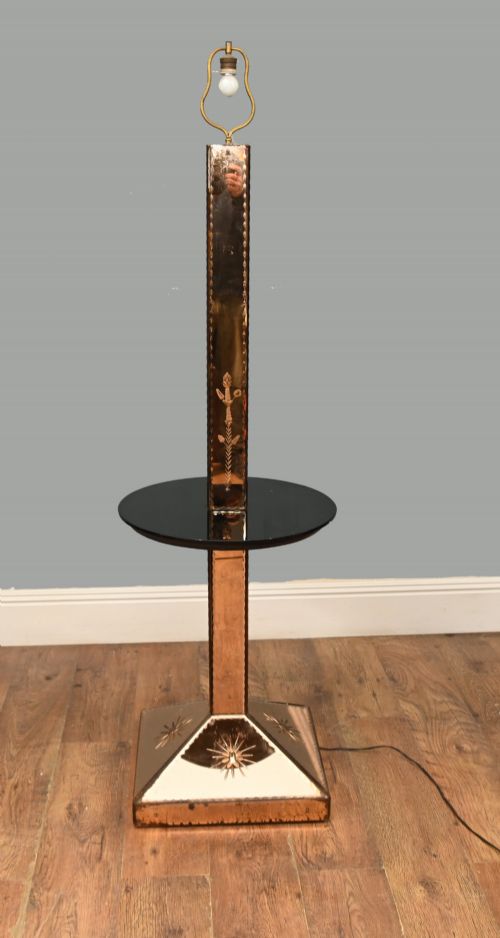


Copper Standard Lamp
A copper standard lamp brings height and warmth to a room, combining substantial metalwork with a commanding upright form.
Identifying your copper standard lamp
A copper standard lamp stands as a tall floor lighting fixture, combining metal shafts with adjustable or telescopic mechanics. These pieces originate across the Victorian, Edwardian, and Art Nouveau periods, alongside Arts and Crafts designs.
The most common versions pair beaten or polished copper bodies with brass fittings, occasionally incorporating iron or white metal details. Many early examples began life as oil lamps before conversion to electricity, while others utilise extending mechanisms for adjustable height.
Forms range from simple country house floor standards to elaborate Tibetan ceremonial horns adapted for lighting. Collectors encounter both single pieces and matched pairs within the historical record.
Materials and construction
Extending mechanics utilise telescopic brass tubes sliding within outer copper shafts to provide adjustable height. Standard lamps frequently incorporate heavy weighted bases to ensure stability for the tall upright frame.
Retail Price Guide 2026
Typical UK retail prices for copper standard lamp, calculated from the Sellingantiques database of over a million retail prices indexed since 2003. This retail price guide relies exclusively on Sellingantiques data; no external sources or auction records are used, so the figures do not describe the wider market.
One remarkably imaginative maker turned a genuine Tibetan ceremonial horn into an unexpected floor lamp.
Judging the range
Quality separates simple production pieces from sophisticated designer work through the refinement of adjustment mechanisms and metal finishing. Art Nouveau and Arts and Crafts examples often show superior artistic ambition in their organic lines and surface texture.
The integrity of the original construction, such as the weight of the base and the precision of telescopic joints, dictates the physical presence of the floor lamp. Retaining original metal patination rather than over-polished surfaces preserves historical character.
W A S Benson
The Copper Standard Lamp Glossary
- Telescopic
- An extending mechanism allowing the upright shaft to adjust in height. This feature uses inner and outer metal tubes sliding smoothly together.
- Art Nouveau
- A decorative style characterised by flowing, organic lines and natural motifs. Pieces from this period often display sinuous curves in their brass and copper mounts.
- Arts and Crafts
- A design movement valuing handcraftsmanship and simple forms over mass production. Items from this tradition frequently showcase visible beaten copper textures.
- Standard Lamp
- A heavy-based floor standing lighting column designed to illuminate a room from a vertical position. These objects place light sources at an elevated level.
Frequently Asked Questions
How do I date a copper standard lamp?
Dating relies on stylistic clues such as Art Nouveau whiplash curves, Arts and Crafts hand-beaten textures, or Victorian telescopic brass fittings. Historical records show these pieces span the late nineteenth and early twentieth centuries.
Construction methods also help establish age, particularly the presence of original oil reservoirs converted later to electric wiring. Comparing base weights and joint designs clarifies the manufacturing era.
Were these always electric lamps?
Many early floor standards began as oil lamps before being converted to accept modern electrical fittings. Burner assemblies were swapped or adapted as homes transitioned to electricity.
Retaining parts of the original oil mechanism adds interest for collectors who appreciate the historical evolution of domestic lighting.
How do I maintain the copper finish?
Maintaining the metal involves gentle dusting and occasional cleaning with appropriate metal care products. Avoiding harsh abrasive cleaners protects the natural ageing and patination built up over decades.
Leaving the surface unlacquered allows the copper to develop a rich, honest appearance through normal handling and exposure to air.
Can I adjust the height on these lamps?
Many period floor standards incorporate telescopic mechanisms designed to alter the overall height. These extending shafts slide up and down and lock into position using thumb screws or internal catches.
Care should be taken when adjusting older brass and copper tubes to avoid damaging the historical sliding components.