

Brass Fitted Wooden Chest
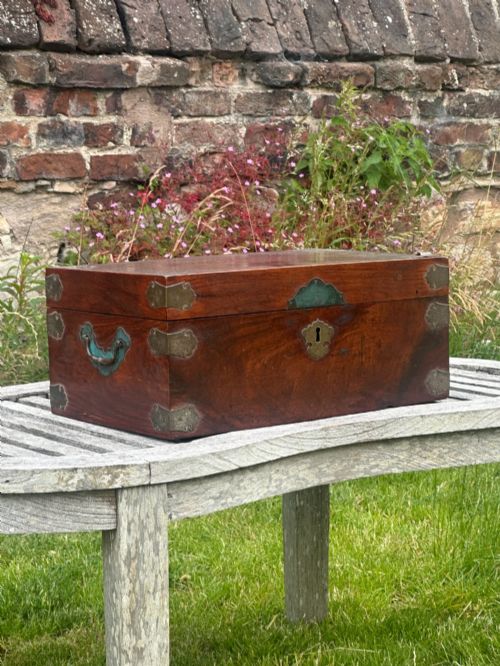
A brass fitted wooden chest brings sturdy portable craftsmanship into a room, offering robust storage shaped by travel and trade.
Brass Fitted Wooden Chest
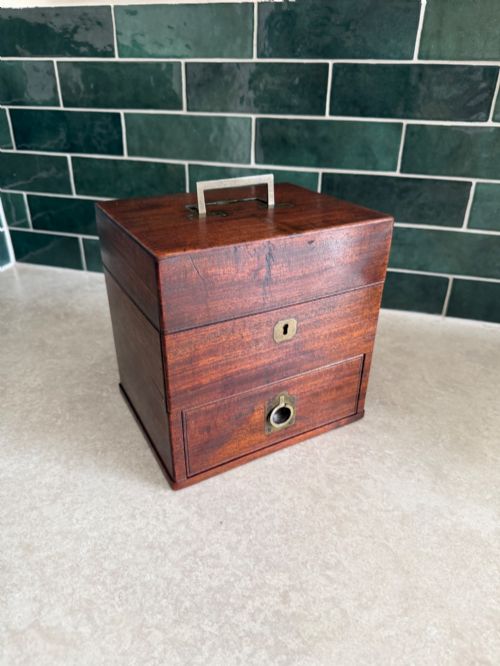
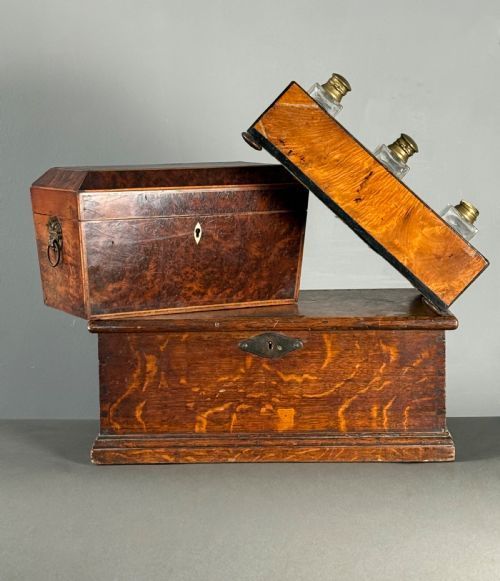
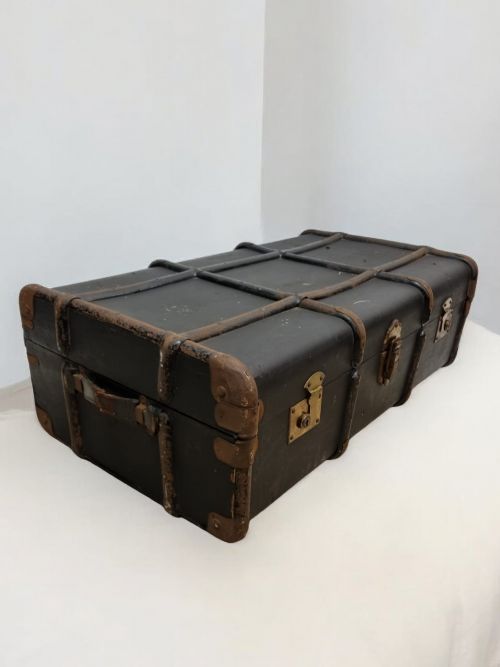
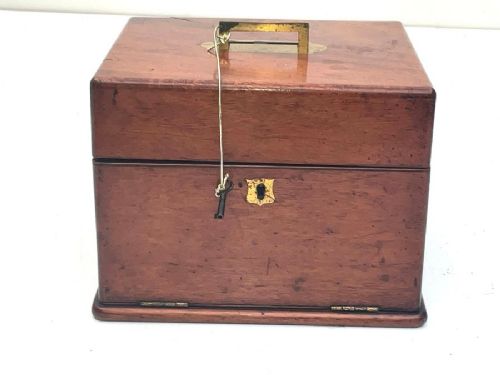
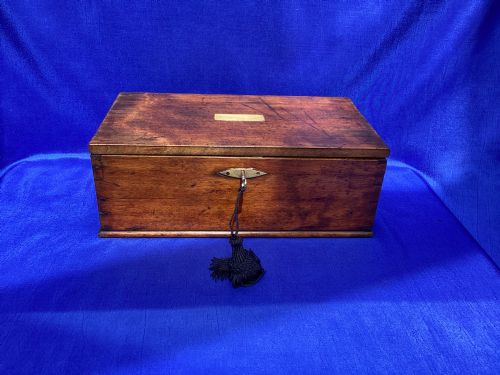
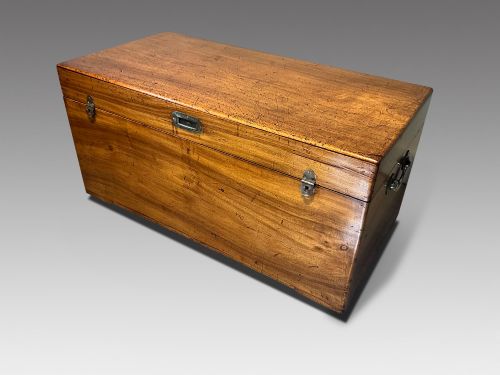
A brass fitted wooden chest encompasses everything from large campaign trunks intended for long journeys to compact tabletop apothecary boxes and tea caddies. When searching for a brass fitted wooden chest, buyers frequently encounter pieces spanning the Georgian, Victorian and Edwardian eras, as well as colonial production.
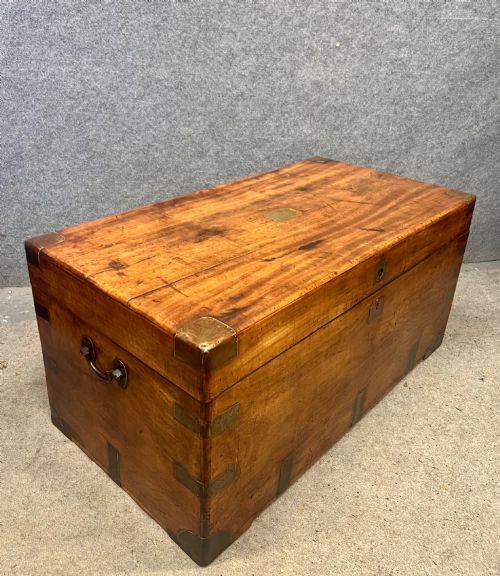
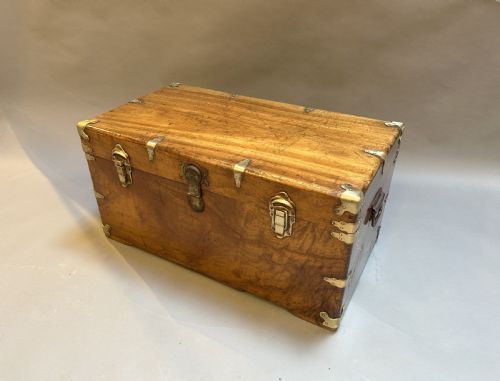
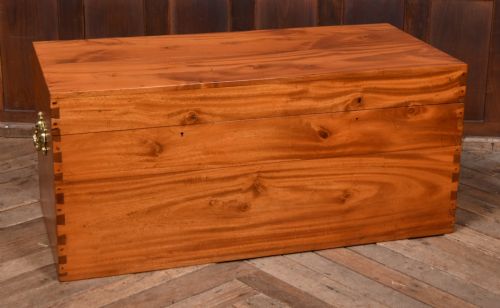
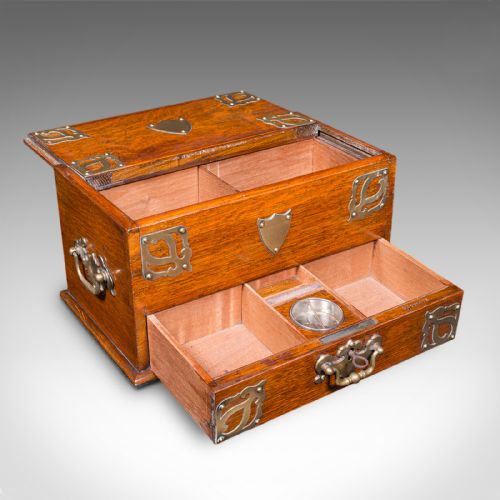
The forms vary widely across the inventory, ranging from massive camphor wood blanket trunks and teak storage chests to rosewood jewellery boxes, wine coolers and fitted decanter cases. Many examples display the heavy brass corners, straps and flush-fitting drop handles characteristic of travel furniture designed to withstand rough handling.
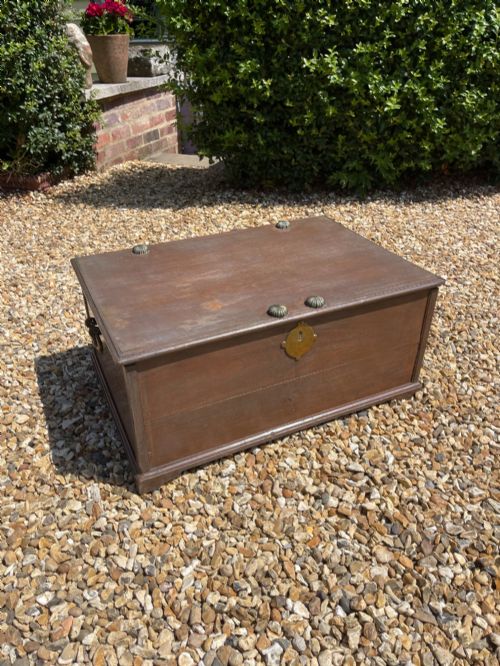
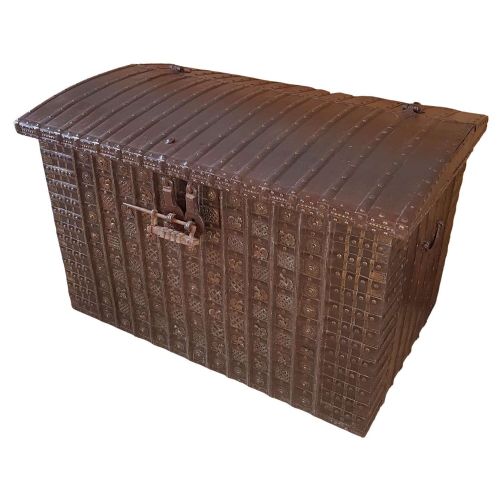
Origin and timber often dictate the character of the piece, with British campaign equipment sitting alongside Anglo-Indian and regional Indian chests constructed from dense tropical woods. These functional containers survive in various formats, serving modern interiors equally well as coffee tables, blanket boxes or decorative storage.
How they were made
Makers constructed these chests using durable hardwoods such as mahogany, teak, oak, camphor wood and rosewood, selected for their resilience against warping and splitting in transit. Camphor wood proved particularly popular for blanket and steamer trunks because its natural aroma repelled insects during long voyages.
To reinforce the corners, lids and seams against heavy impacts, craftsmen applied brass banding, corner brackets and reinforced plates secured with numerous small brass screws or rivets. Flush handles and recessed lock plates were mortised directly into the wood so that protruding metal would not catch on ropes or packing cases during transport.
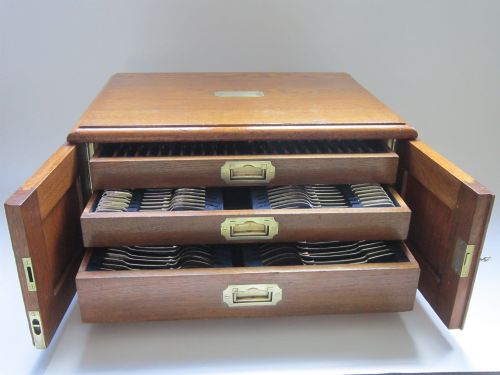
Interior arrangements often involved complex fitted compartments, pigeonholes, secret drawers and partitioned trays lined with velvet or leather. Specialised boxes like apothecary cases and decanter boxes incorporated precision wooden dividers tailored to hold glass bottles, stoppers and delicate instruments securely.
The inventory spans the Georgian, Regency, Victorian, and Edwardian periods.
What varies in quality
The standard of a brass fitted wooden chest depends heavily on the precision of its joinery and the weight of the metal hardware. Superior pieces exhibit tight dovetail corners, well-fitted internal partitions and thick brass mounts that sit perfectly flush with the surrounding timber surface.
The choice and figuring of the wood timber also mark out the higher tier of production, showing rich grain patterns, particularly in camphor wood, burr birch, coromandel or flame mahogany. Retaining original locking mechanisms, functioning keys, internal glass bottles, and complete fitted trays elevates the integrity of the piece substantially.
Holtzapffel and Co·Maple and Co·Walker and Hall
The Brass Fitted Wooden Chest Glossary
- Campaign chest
- A portable set of drawers or a trunk built in sections with recessed brass hardware, designed for easy dismantling and transport by military officers on active service.
- Apothecary box
- A small fitted wooden box containing internal compartments and glass bottles intended for storing medicines and chemical compounds safely.
- Camphor wood
- An aromatic tropical timber widely used for shipping trunks because its natural scent protects textiles from moth damage.
- Tantalus
- A locked wooden beverage cabinet holding decanters in place with a metal bar, designed to display the contents while preventing unauthorized access.
- Cellarette
- A lockable container used for holding wine bottles near the dining table, often heavily lined or fitted internally.
Brass Fitted Wooden Chest: Frequently Asked Questions
What is a brass fitted wooden chest?
A brass fitted wooden chest is a storage container built from sturdy timber and reinforced with brass corners, straps, and hardware.
These pieces were originally designed for travel, military campaigns, or specialised domestic storage such as medicine and cutlery.
How were these chests used originally?
Officers, merchants, and travellers used them to transport uniforms, documents, and personal belongings across long distances.
Smaller versions served specific household purposes, keeping medical supplies, tea caddies, decanters, or jewellery organised and secure.
How do I style a chest at home?
Large trunks work effectively as coffee tables in a living room while simultaneously providing hidden interior storage for blankets.
Smaller boxes and apothecary chests fit neatly on sideboards, desks, or shelves to display collections or hold everyday items.
How can I tell different periods apart?
Georgian and Regency pieces often feature clean, elegant proportions in mahogany with subtle brass stringing or classic campaign mounts.
Victorian and Edwardian examples frequently incorporate heavier brass banding, robust oak or camphor construction, and more elaborate internal fittings.